

Laser tattoo removal isn't a simple surface-level erasing of the skin; it's a permanent biological eviction of ink particles that relies on your body's own immune system. If you've ever wondered is laser tattoo removal permanent, the answer lies in how advanced laser technology shatters pigment so your lymphatic system can carry it away forever. While approximately 24% of Americans regret at least one tattoo, many hesitate to start treatment because they fear permanent scarring or "ghosting" where a faint outline remains. You want the certainty that once the process is complete, your skin will return to its natural state without a trace of the past.
In this clinical guide, we'll explain the reality of achieving total clearance using modern tools like picosecond and Q-switched lasers. You'll learn why these devices are now the industry standard, holding a 68% market share for their ability to target ink while protecting the surrounding tissue. We'll also break down the factors that influence your specific timeline, from ink depth to the number of sessions required for 100% permanence. By understanding the science behind the process, you can replace anxiety with a clear, professional plan for total skin restoration.
Key Takeaways
- Understand why the answer to is laser tattoo removal permanent is yes, as fragmented ink is biologically processed and removed by your lymphatic system.
- Learn how clinicians use the Kirby-Desai scale to provide an objective prediction of your removal timeline based on ink depth and skin type.
- Distinguish between the myth of laser-induced scarring and the reality of how professional aftercare ensures healthy skin recovery.
- Discover how advanced laser technology targets stubborn pigments like blues and greens to prevent "ghosting" and achieve total clearance.
- Review the functional steps of the clinical process, starting with a professional consultation to establish a clear roadmap for success.
Is Laser Tattoo Removal Permanent? Understanding the Results
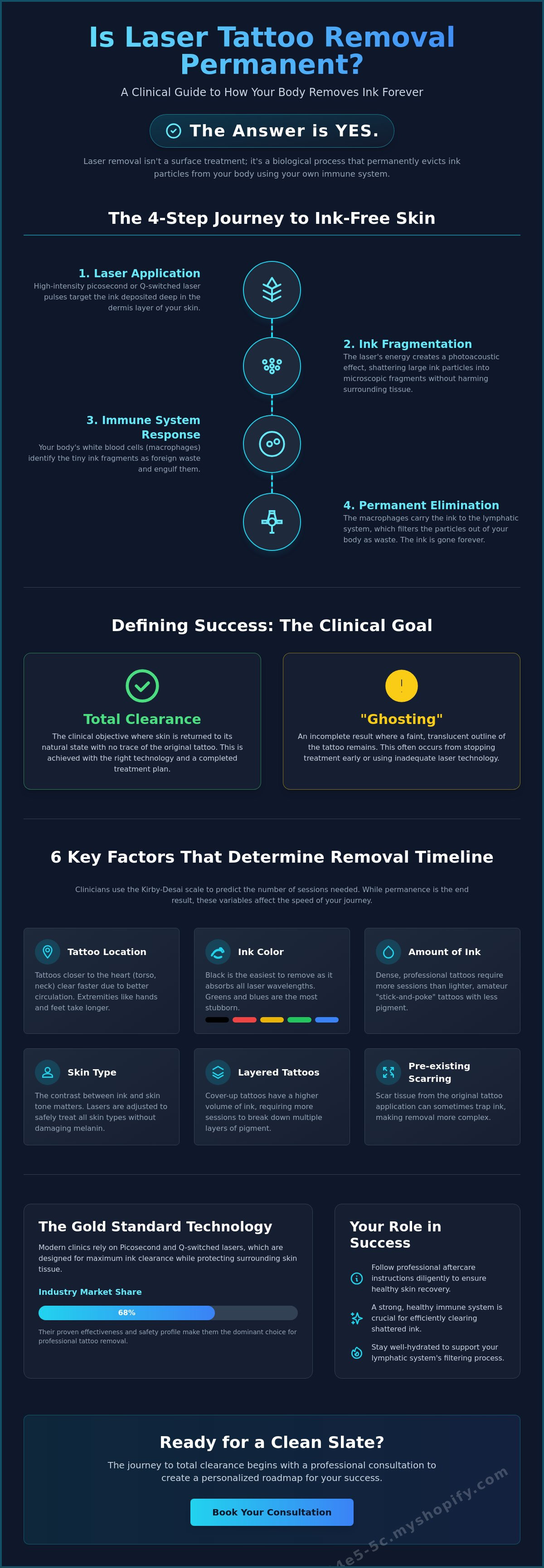
Laser tattoo removal is a clinical process that results in the permanent fragmentation and removal of ink particles from the body. When a tattoo is first applied, the ink is deposited into the dermis, the stable middle layer of your skin. This layer is designed to hold pigment in place for a lifetime. However, laser technology disrupts this structural stability. People frequently ask, is laser tattoo removal permanent? The answer is yes, because once the ink is shattered and processed by your biological systems, it cannot reform or reappear. Unlike topical fading creams that only target the surface, modern tattoo removal techniques focus on deep-tissue ink destruction to ensure the results are final.
It's vital to distinguish between "fading" and "total clearance" before starting your treatment. Fading is a strategic choice for those who want to lighten an existing tattoo to make room for a cover-up. Total clearance is the clinical goal for patients who want their skin to return to its original, bare state. Because the laser shatters the ink into particles small enough for the body to carry away, the removal is not a temporary mask but a total exit of the foreign pigment from your system.
The Mechanism of Permanent Ink Elimination
The process of permanent removal relies on the photoacoustic effect. High-intensity laser pulses strike the ink at incredibly high speeds. This rapid energy transfer causes the ink to shatter into microscopic fragments without burning the surrounding skin. Once the ink is broken down, your body's immune system begins the heavy lifting. Specialized white blood cells, known as macrophages, identify these tiny fragments as waste and consume them. These cells then transport the pigment to the lymphatic system, which serves as the body's exit route. Because your lymphatic system filters these particles out of your body entirely, the ink is gone forever.
Total Clearance vs. Ghosting: Defining Success
In the world of professional laser removal services, success is measured by the absence of residual pigment. "Ghosting" occurs when a faint, translucent outline of the original tattoo remains after treatment. This usually happens when sessions are cut short or if the laser technology cannot reach certain depths of the dermis. The clinical goal of a professional med spa is total clearance, where no "ghost" images remain. Achieving this level of permanence depends heavily on patient health. High levels of hydration and a functional immune system are necessary for the "permanent" exit of ink. When the body is healthy, it processes the shattered pigment more effectively, ensuring a clear and clean final result. Whether you are clearing a small name or a large sleeve, the biological removal of that ink is a one-way process.
Variables That Determine Complete Pigment Elimination
Clinicians use the Kirby-Desai scale to provide an objective assessment of removal success. This tool evaluates six distinct factors: skin type, tattoo location, ink color, amount of ink, scarring, and layered tattoos. The location of the ink is particularly important. Tattoos located closer to the heart benefit from higher vascularity and stronger blood flow. This allows the lymphatic system to transport shattered ink fragments more efficiently than it can for tattoos on the hands or feet. When patients ask is laser tattoo removal permanent, they must understand that while the technology is powerful, these biological variables determine the speed of that permanence. According to the FDA on laser tattoo removal, the type of laser must be matched to the specific pigment to avoid incomplete results. Black ink is the easiest to target because it absorbs all laser wavelengths, while stubborn greens and blues require specialized frequencies to achieve total clearance.
Ink Quality and Depth
Professional tattoos typically use higher-quality, concentrated inks placed deep within the dermis. This makes them more persistent than amateur "stick-and-poke" tattoos, which often use less stable pigments and inconsistent depths. Layered tattoos or cover-ups present a unique challenge for total clearance. Because there is a higher volume of pigment to process, reaching the bottom layer takes additional time and more sessions. The chemical composition of the ink also dictates how easily the body can break it down. Some older inks contain metallic elements that require more energy to shatter effectively. Identifying these factors during an initial consultation is the first step toward a successful outcome.
The Biological Factor: Your Lymphatic System
Your body performs the final stage of the removal process. Research suggests that smoking significantly hinders the clearance of ink because it constricts blood vessels and slows the immune response. A six to eight week gap between sessions is a functional necessity. This period allows the skin to heal and gives white blood cells enough time to clear the microscopic debris. Regular exercise and proper hydration improve circulation, which directly increases the rate of pigment disposal. If you are ready to begin this process, you can explore our laser removal services to schedule a professional assessment and receive a personalized treatment plan.
Addressing the Myth of Incomplete Removal and Scarring
A common objection among patients is the fear that a permanent scar in the shape of the tattoo will remain after the ink is gone. This concern stems from older, more aggressive removal methods like dermabrasion or acid peels. Modern laser technology operates on the principle of selective photothermolysis. This means the laser energy targets only the pigment, leaving the surrounding skin tissue intact. When patients ask is laser tattoo removal permanent, they should feel confident that the goal is total clearance of the ink, not a permanent replacement of that ink with scar tissue. Clinical success means the skin returns to its natural state without structural damage.
Scarring is rarely caused by the laser itself; it is typically a result of poor aftercare or unqualified operators. If an operator uses incorrect settings or if a patient fails to follow clinical instructions, the skin may suffer damage. According to the Mayo Clinic on tattoo removal, some variation in skin color is a possible side effect, but total scarring is avoidable with professional care. Choosing a med spa over a standard tattoo shop ensures that the procedure is performed under medical oversight with high-performance equipment. This professional environment reduces the risk of infection and long-term skin texture changes.
Modern Technology and Skin Safety
Q-switched and Picosecond lasers are the gold standard for maintaining skin integrity. These devices deliver energy in ultra-short bursts, measured in nanoseconds or picoseconds. This speed ensures that the energy reacts with the ink before heat can transfer to the skin. Professional protocols include skin-cooling techniques and precise calibration based on the patient's skin type. These functional safety measures are what make the removal process both permanent and safe for the dermis. By minimizing thermal damage, clinicians can target deep ink layers without compromising the health of the surface skin.
The Truth About Hypopigmentation and Hyperpigmentation
Temporary pigment changes are a normal part of the healing cycle. Some patients may notice the treated area looks lighter or darker than the surrounding skin. Hypopigmentation is the temporary loss of natural skin melanin during laser treatment. Hyperpigmentation refers to a temporary darkening of the skin. Unlike the tattoo ink itself, these changes are not permanent. They typically resolve within several months as the skin naturally regenerates and melanin production returns to its baseline state. To learn more about how clinical treatments can support this regeneration, you can discover La Belle Peau Skincare Clinic and their expert resource on dermal rejuvenation. Understanding the difference between residual ink and these temporary shifts is key to managing expectations while waiting for is laser tattoo removal permanent results to fully manifest.
The Clinical Timeline: Why Permanence Takes Time
While the answer to is laser tattoo removal permanent is a definitive yes, the timeline to achieve that status is a gradual clinical journey. The process requires a series of specific phases to ensure the skin remains healthy while the ink is removed. It begins with an initial consultation and patch test. This step allows the clinician to observe how your skin reacts to the laser and to calibrate the equipment for your specific pigment type. The actual treatment session follows, where the laser shatters the ink particles within the dermis.
Immediately following the procedure, the body enters a 48-hour inflammatory response. You may notice redness or minor swelling as your immune system recognizes the shattered pigment as foreign material. This leads into the 6-8 week lymphatic clearance phase. During this time, white blood cells transport the microscopic ink fragments out of the body. Once this window closes, a professional assessment is performed to determine the effectiveness of the pass and to plan the subsequent session. This structured approach ensures that each treatment builds upon the last until total clearance is achieved.
Why You Cannot Rush Permanent Results
Scheduling sessions too close together is counterproductive and increases the risk of skin damage. Your body needs adequate time to "clean up" the debris created during the shattering phase. If you treat the area again before the lymphatic system has finished its work, you aren't removing more ink; you're simply stressing the skin. Patience is a functional requirement for achieving 100% clearance without scarring. To begin your clinical journey with a professional assessment, you can book your laser removal services today to establish a safe and effective roadmap.
Managing Sun Exposure in Florida
Living in high-UV areas like Bradenton requires extra vigilance during the removal process. The question of is laser tattoo removal permanent often depends on how well you protect the area from environmental factors during the healing window. A tan increases the melanin levels in your skin, which can cause the laser to target your natural pigment instead of the tattoo ink. This interference often leads to delays in your schedule. Using a high-SPF sunscreen is mandatory to protect the treated area from permanent hyperpigmentation. Many patients choose to schedule their most intensive removal sessions during months with lower UV levels to ensure the safest possible outcome. Protecting your skin from the Florida sun is just as important as the laser treatment itself for maintaining long-term skin health.
Professional Removal at Organic Skin & Body Med Spa
Organic Skin & Body Med Spa operates with a commitment to formal, transparent, and functional clinical care. Our facility provides a sterile, medical-grade environment where safety and results are the primary objectives. We utilize advanced laser technology designed to target the full spectrum of ink colors, including those stubborn pigments discussed earlier in this guide. Because the question is laser tattoo removal permanent depends on the precision of the equipment used, we prioritize high-performance devices that ensure effective ink shattering with minimal tissue trauma.
Our approach integrates clinical efficiency with restorative principles. By maintaining a professional setting, we mitigate the risks associated with non-medical facilities. Every procedure follows a strict protocol to ensure that the skin recovers its natural health while the lymphatic system processes the shattered pigment. This focus on clinical excellence provides the foundation for achieving total clearance and long-term skin health.
Your Bradenton Laser Tattoo Removal Experts
Located at 8523 East State Road 70, Bradenton, FL, our clinic serves as a central hub for professional aesthetic services. We are recognized as a top-rated spa in Bradenton FL, offering specialized oversight for high-margin laser procedures. This professional supervision is critical for complex treatments like tattoo removal, where settings must be adjusted based on real-time skin response. Patients benefit from our local expertise and our dedication to providing a clear, step-by-step roadmap toward their skin goals.
Beyond Removal: Holistic Skin Health
Achieving a permanent result is only one part of the journey. We support the skin’s recovery phase through our specialized organic skin care protocols, which focus on nourishment and hydration. Once the removal process is complete, many patients explore further rejuvenation options to refine their skin texture. For example, our HydraFacial treatments offer a way to deeply cleanse and hydrate the skin, ensuring the area where the tattoo once resided looks its best. If you are ready to confirm that is laser tattoo removal permanent for your specific needs, schedule your free tattoo removal consultation today.
Achieve Total Skin Clearance with Clinical Precision
Understanding the science behind ink fragmentation and lymphatic disposal provides the clarity needed to start your journey. We've established that the answer to is laser tattoo removal permanent is a definitive yes, provided the treatment follows a structured clinical timeline. Successful clearance depends on shattering the pigment at the correct depth and allowing your body the necessary time to process those fragments. By addressing variables like ink color and location with professional precision, you can avoid the risks of ghosting or skin damage.
At Organic Skin & Body Med Spa, we provide a sterile, medical-grade environment for your recovery. Our expert clinicians in Bradenton utilize advanced laser technology to create transparent, results-oriented treatment plans tailored to your skin's unique needs. You don't have to live with a tattoo that no longer represents who you are. Take the first step toward restoring your skin's natural appearance by visiting our facility for a professional assessment. Book Your Free Laser Tattoo Removal Consultation today and gain the confidence of a clear, ink-free future.
Frequently Asked Questions
Is laser tattoo removal truly 100% permanent?
Yes, laser tattoo removal is 100% permanent because it relies on the biological removal of ink particles. When the laser shatters the pigment, your immune system's white blood cells consume the fragments and transport them to the lymphatic system. Once these particles are filtered out of your body, they cannot reform or return to the skin. This process ensures that the answer to is laser tattoo removal permanent remains a definitive yes for patients who complete their full treatment plan.
Can all colors of ink be permanently removed?
Most ink colors can be permanently removed, though some require more sessions than others. Black ink is the most responsive because it absorbs all laser wavelengths effectively. Stubborn pigments like vibrant greens, blues, and yellows require specialized wavelengths found in modern picosecond lasers. While these colors are more resistant, professional clinical protocols are designed to target them until total clearance is achieved across the entire spectrum.
Will I have a permanent scar after my tattoo is removed?
Scarring is not a standard outcome of modern laser treatment. Professional devices use selective photothermolysis to target only the ink while leaving the surrounding skin tissue unharmed. Most instances of scarring are actually the result of the original tattooing process or improper aftercare. If you follow your clinician's instructions and protect the area from irritation, your skin should heal without any permanent structural damage or marks.
How many sessions will it take to permanently clear my tattoo?
Total clearance typically requires between 6 and 10 sessions. The exact number depends on the density of the ink, the age of the tattoo, and its location on your body. Tattoos located on the torso or closer to the heart often clear faster because they benefit from stronger blood flow and more efficient lymphatic drainage. Your clinician will provide a personalized roadmap during your initial consultation based on these variables.
Does the skin look normal after the tattoo is gone?
In the vast majority of cases, the skin returns to its natural, baseline appearance. You might notice temporary changes in skin tone, such as lightening or darkening in the treated area, during the healing months. These shifts are not permanent and resolve as your skin’s melanin production returns to normal. Once the healing cycle is complete, the area where the tattoo once resided will match the surrounding skin.
What happens if I stop my laser removal sessions early?
If you stop your sessions before the clinical protocol is complete, the tattoo will remain in a faded or partially visible state. Laser removal works in layers, shattering the topmost ink first before reaching deeper pigment. While the ink already processed by your body is permanently gone, the remaining layers stay trapped in the dermis until they are treated. Completion is necessary for total skin clearance.
Can I get a new tattoo over the area where I had a permanent removal?
You can get a new tattoo in the same location once the skin has fully recovered. Clinicians recommend waiting at least three months after your final removal session before applying new ink. This window ensures the dermis is stable and healthy enough to hold new pigment effectively. Many patients choose removal specifically to clear space for a higher-quality cover-up or a completely new design.
Is the pain of laser removal permanent or temporary?
The discomfort associated with laser removal is strictly temporary and only lasts for the duration of the treatment. Most patients describe the sensation as similar to a rubber band snapping against the skin. Any residual sensitivity or heat in the area typically subsides within 24 to 48 hours. There are no long-term or permanent painful side effects once the skin has finished its natural healing response.