

A monthly waxing appointment is often viewed as a standard grooming necessity, yet it functions as a recurring cycle of skin trauma and temporary results. For those living in the Florida heat, this cycle frequently leads to chronic ingrown hairs, redness, and the uncomfortable "prickly" phase that occurs between sessions. When evaluating laser hair removal vs waxing, it is essential to consider more than just the immediate cost. You must look at the long-term impact on your skin health and your personal schedule.
We understand the frustration of dealing with "strawberry legs" and the constant need for maintenance. This comprehensive 2026 guide provides a transparent breakdown of procedural costs, pain levels, and skin health outcomes to help you determine which method aligns with your lifestyle goals. We will analyze the 5-year financial horizon and the technical mechanisms of permanent hair reduction. This information ensures you can choose a path toward smoother skin texture and greater daily efficiency without the ambiguity of traditional hair removal methods.
Key Takeaways
- Analyze the technical mechanics of laser hair removal vs waxing to understand why one provides temporary removal while the other offers permanent follicle reduction.
- Evaluate the long-term skin health benefits of medical-grade laser treatments, specifically their role in correcting surface trauma like "strawberry legs" and chronic ingrown hairs.
- Review the 5-year financial trajectory of each method to determine the return on investment for a permanent reduction strategy versus a recurring waxing subscription.
- Assess the safety protocols and professional advantages of receiving treatments in a specialized Med Spa environment compared to a standard salon setting.
- Identify the specific candidacy criteria for advanced laser technology to ensure your skin type and hair profile are suitable for optimal results.
Understanding the Mechanics: How Laser and Waxing Differ
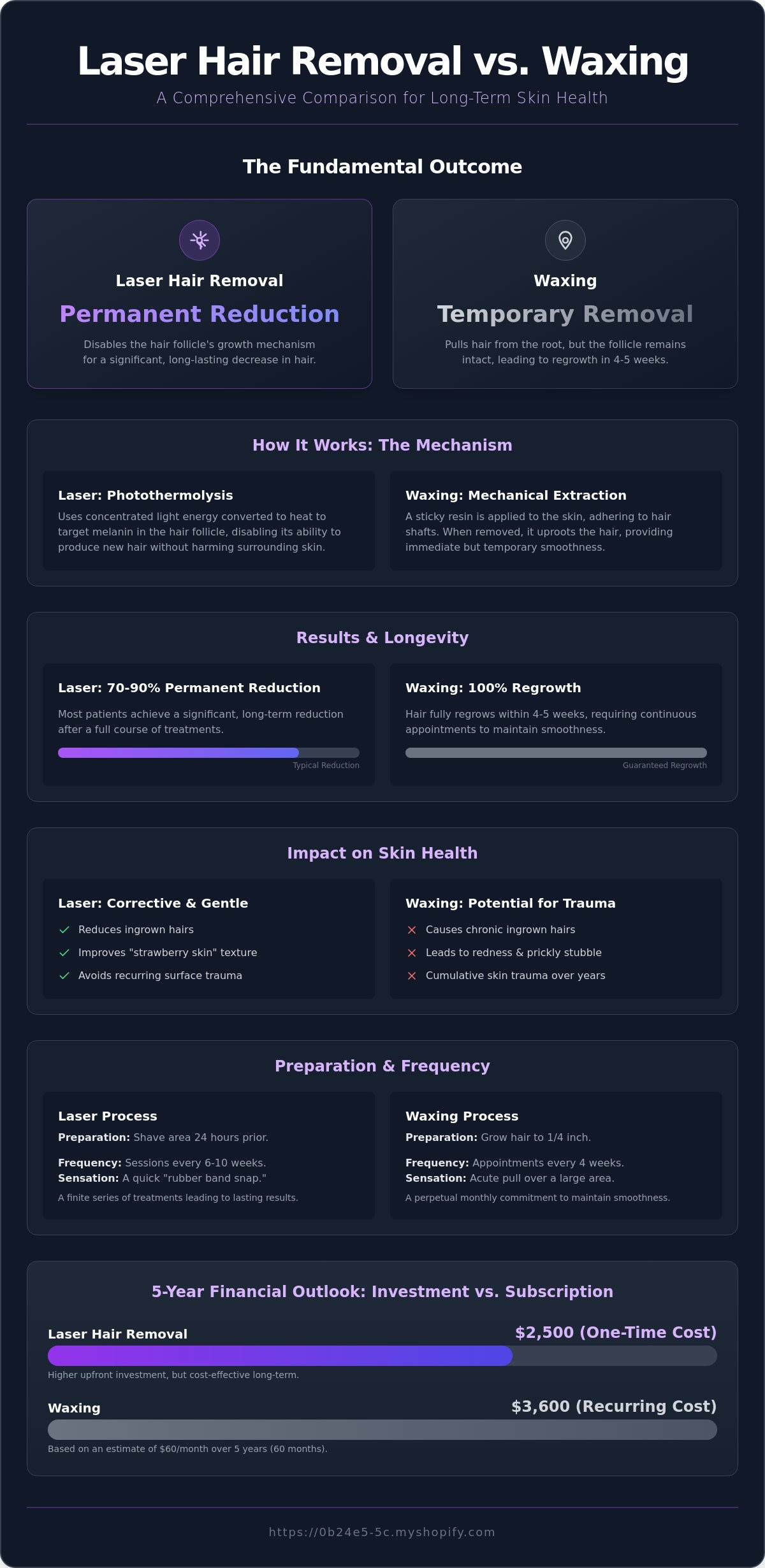
Choosing between laser hair removal vs waxing requires a clear understanding of the biological and technical processes involved. Waxing is a mechanical extraction method. It involves applying a resin or sugar-based substance to the skin, which adheres to the hair shaft and is then pulled away, uprooting the hair from the follicle. This provides immediate but temporary smoothness. Laser hair removal is a light-based medical procedure. It utilizes specific wavelengths of light to target the melanin in the hair, converting light energy into heat to disable the follicle's growth mechanism.
Technology in 2026 has significantly improved the safety and inclusivity of these treatments. The development of multi-wavelength diode lasers, which combine Alexandrite, Diode, and Nd:YAG wavelengths into a single device, allows practitioners to treat a wider range of Fitzpatrick skin types effectively. This advancement addresses the limitations of earlier systems that were primarily safe for individuals with high contrast between skin and hair color. Modern sensors now adjust energy output in real-time, ensuring the surrounding skin remains protected regardless of the patient's pigment profile.
The Waxing Cycle: Temporary vs. Residual Growth
Waxing forces the hair into the anagen, or active growth, phase. While repeated extraction can sometimes lead to thinner regrowth over many years, the hair eventually returns because the follicle remains intact. A primary functional disadvantage of waxing is the "1/4 inch rule." For the wax to grip the hair shaft effectively, you must allow for a period of regrowth. This creates an "awkward phase" of visible stubble every four to five weeks. Additionally, decades of mechanical pulling can lead to cumulative skin trauma and potential skin laxity in sensitive areas.
The Laser Mechanism: Photothermolysis Explained
Laser systems are engineered to destroy the hair follicle by targeting the germative cells responsible for hair production. Because human hair grows in asynchronous cycles, multiple sessions are required to ensure every follicle is treated during its active stage. Selective Photothermolysis is the core principle of laser safety, ensuring that the light energy targets the hair pigment without damaging the surrounding skin tissue. This precision allows for long-term reduction without the recurring surface irritation associated with manual extraction.
It is essential to distinguish between permanent hair removal and permanent hair reduction. The FDA clears professional laser devices for "permanent hair reduction," which is defined as a significant, long-lasting decrease in the number of hairs regrowing after a treatment course. Most patients achieve a 70% to 90% reduction. While results are durable, dormant follicles can activate due to hormonal changes, necessitating occasional maintenance sessions. This differs fundamentally from waxing, which offers no path toward a permanent reduction in hair density.
Performance Comparison: Results, Pain, and the Bradenton Lifestyle
The functional experience of laser hair removal vs waxing varies significantly in both preparation and sensation. Preparation requirements are fundamentally different for each method:
- Waxing: Requires approximately one-quarter inch of hair growth to allow the resin to grip the hair shaft effectively.
- Laser: Requires the treatment area to be shaved within 24 hours of the session so the energy targets the follicle root.
You shouldn't arrive with long hair for a laser appointment, as it reduces efficacy and increases surface heat. Sensory feedback also differs. Most patients describe a laser pulse as a brief "rubber band snap" against the skin. Waxing involves an acute, mechanical pull affecting a larger surface area simultaneously. While pain is subjective, the localized nature of laser pulses is often more tolerable for sensitive areas.
Frequency is another critical procedural difference when comparing laser hair removal vs waxing. A standard waxing schedule requires appointments every four weeks to maintain smoothness. Laser treatments are typically spaced six to ten weeks apart to align with natural hair growth cycles. While waxing is a perpetual monthly commitment, a laser series is a finite sequence of treatments designed to achieve lasting results.
Activity and Environment: Sun, Salt, and Sweat
Living in Bradenton requires specific adjustments to your hair removal schedule due to high UV levels. You must avoid direct sun exposure on the treated area for at least 48 hours following a laser session. Increased skin sensitivity post-treatment makes UV protection essential to prevent hyperpigmentation. If you're planning a beach day at Anna Maria Island, you should schedule your laser appointment at least two days prior.
Waxing also presents environmental challenges. Freshly waxed skin is prone to irritation from saltwater and sand. Don't underestimate the impact of the Gulf of Mexico; entering the water immediately after a wax increases the risk of folliculitis or minor infections in the open follicles. Active residents should also consider sweat. While you can return to the gym quickly after waxing, we recommend waiting 24 hours after laser treatments to ensure the skin has fully cooled. To ensure safety, it's wise to choose a board certified doctor or a medical director who oversees the facility protocols.
Results Longevity: The 5-Year Outlook
The long-term outcomes of these methods diverge sharply over a five-year horizon. Two years after completing a laser series, most individuals maintain a 70% to 90% reduction in hair density. Maintenance typically involves a single touch-up session once or twice a year. Conversely, two years into a waxing routine, the patient is still attending 12 to 15 appointments annually with no permanent change in follicle activity.
Results depend on hair density and hormonal factors. If you're ready to transition from temporary fixes to long-term solutions, exploring professional Laser Removal Services can provide the clarity needed for your skin health goals. Laser outcomes provide a smoother skin texture that persists through the summer months without the "prickly" regrowth phase inherent to waxing.
Skin Health: Addressing Ingrown Hairs and Surface Trauma
The long-term impact on skin integrity is a primary differentiator when evaluating laser hair removal vs waxing. Waxing relies on adhesives to grip the hair shaft, which often results in the removal of the top layer of the epidermis alongside the hair. This repetitive stripping of the skin barrier can lead to chronic sensitivity and increased trans-epidermal water loss. In contrast, laser technology bypasses the surface of the skin to deliver energy directly to the follicle, preserving the epidermal layer and maintaining its protective function.
The appearance of "strawberry legs" is a common side effect for regular waxers. This occurs when the follicle is left open and becomes clogged with oil or dead skin cells, or when the hair is broken just below the surface. These dark spots are aesthetically disruptive and can lead to a rough, uneven texture. Hyperpigmentation is an additional risk associated with waxing, particularly when using hot wax. The combination of heat-induced inflammation and post-treatment sun exposure can trigger melanin overproduction, resulting in dark patches that are difficult to resolve.
The Medical Solution for Folliculitis
Laser treatments serve as a corrective medical solution for individuals suffering from chronic folliculitis or razor bumps. By disabling the hair follicle entirely, the laser eliminates the physical trigger for internal inflammation. Dermatologists frequently recommend this transition for patients whose skin cannot tolerate the mechanical trauma of uprooting hair. An ingrown hair occurs when the hair shaft fails to emerge from the skin, triggering a localized inflammatory response and subsequent pustule formation. Removing the hair source prevents these painful occurrences and allows the skin to heal permanently.
Long-Term Skin Texture Improvements
The aesthetic outcome of laser treatment is often described as a "glow" factor. Without the constant irritation of waxing or the "chicken skin" appearance of inflamed follicles, the skin surface becomes refined and more even-toned. This improved texture is sustainable because the skin is no longer subjected to monthly trauma. To maximize these results, incorporating medical-grade organic skin care into your post-treatment routine can provide the necessary hydration and soothing agents to support rapid epidermal recovery. This combination of advanced technology and high-quality topical care ensures that the skin remains resilient and smooth over time.
Financial Analysis: The ROI of Permanent Reduction
Evaluating laser hair removal vs waxing requires a shift from viewing grooming as a monthly expense to viewing it as a long-term capital investment. Waxing functions as a perpetual subscription. As of 2026, the estimated annual cost for a Brazilian wax performed every five weeks is approximately $780. Over a ten-year horizon, this single service area represents a $7,800 expenditure, yet the hair continues to grow back at the same density. Laser treatment represents a finite series of sessions designed to deliver permanent results, effectively ending the recurring payment cycle.
Hidden costs often skew the perceived value of waxing. Maintaining skin health between wax appointments requires a consistent regimen of retail products, including specialized exfoliants, ingrown hair serums, and post-wax oils. These items can increase your annual grooming budget by 15% to 20%. There is also the time factor to consider. The average person spends roughly 10 to 15 hours per year attending waxing appointments and managing the "prickly" regrowth phase. Laser technology eliminates these logistical requirements, providing a significant return on your personal time.
The Break-Even Point
The break-even point for laser hair removal typically occurs between the third and fifth year of treatment. While the initial package requires a higher upfront cost, the absence of monthly service fees and maintenance products makes it "free" compared to the ongoing costs of waxing after this period. It's vital to avoid low-power or "cheap" laser deals. Inadequate equipment often requires more sessions and delivers subpar results, which negates the financial benefits. The true ROI is found in the permanent reduction of hair and the intangible value of being ready for the Bradenton beaches at any moment.
This sense of readiness is a major benefit when preparing for group celebrations or business gatherings across Florida. For those organizing professional retreats and looking for a unified team look, Adorb Custom Tees provides expert advice on coordinating high-quality branded apparel for corporate events.
Professional Med Spa vs. Salon Waxing
Choosing a professional environment ensures that you receive medical-grade technology and expert oversight. High-output lasers used in a clinical setting are more efficient than the lower-grade devices found in standard salons. This efficiency translates to fewer required sessions and more reliable follicle destruction. Bundling treatments at a qualified Bradenton spa center can further optimize your investment. By selecting an experienced professional from the start, you avoid the "re-do" costs associated with poor treatment efficacy. If you're ready to finalize your long-term grooming strategy, we invite you to explore our professional Aesthetician Services to determine the most cost-effective plan for your needs.
Choosing Your Path: Consultation and Treatment in Bradenton
Selecting the appropriate method between laser hair removal vs waxing depends on your physiological profile and long-term grooming objectives. While earlier technologies were limited to specific contrasts, the 2026 systems used in professional environments accommodate a broader range of candidates. We utilize a comprehensive checklist to determine your suitability for treatment:
- Fitzpatrick Skin Type: Assessing how your skin responds to UV and light energy.
- Hair Pigment Density: Identifying the melanin levels required for effective follicle targeting.
- Medical History: Reviewing medications, such as photosensitizing drugs, that may impact safety.
- Skin Condition: Checking for active infections or recent corrective treatments.
A professional evaluation is necessary because certain biological factors can influence the efficiency of the laser or the safety of the procedure. The Med Spa environment offers a distinct safety advantage over a standard waxing salon. Because laser procedures involve high-intensity light energy, they require clinical oversight and strict adherence to medical-grade protocols. At Organic Skin & Body Med Spa, we focus on corrective skin treatments that prioritize long-term epidermal health. This professional setting ensures that every session is conducted with precisely calibrated equipment. Our practitioners are overseen by medical directors, providing a level of procedural safety that standard beauty salons cannot replicate.
What to Expect During Your Med Spa Consultation
Your journey begins with a personalized treatment mapping session. We don't conduct generic sales meetings; instead, we provide technical assessments where we perform a test patch to observe how your skin reacts to specific laser wavelengths. Performing this step is critical for preventing adverse reactions and ensuring the energy levels are optimized for your unique physiology. We also discuss your specific hair reduction goals, whether you desire complete removal or significant thinning to manage daily grooming more easily. By integrating professional aesthetician services, we can address concurrent skin concerns like texture or hydration, ensuring a holistic improvement in your skin's appearance following the transition from waxing.
Preparing for Your Appointment
Adhering to pre-treatment protocols is essential for achieving the best results and maximizing your return on investment. You must arrive with the treatment area cleanly shaved so the laser energy can reach the follicle root without being absorbed by surface hair. Strict sun avoidance is required for at least two weeks before your session to prevent skin sensitivity. After your treatment, we recommend incorporating high-quality organic products to soothe the skin and maintain the moisture barrier. These steps, combined with our advanced technology, provide a clear path toward permanent hair reduction for those choosing between laser hair removal vs waxing. Schedule your laser hair removal consultation in Bradenton today.
Advancing Your Long-Term Skin Health Strategy
Choosing between laser hair removal vs waxing is a decision that impacts your financial budget, skin texture, and daily schedule. While waxing offers a temporary solution through mechanical extraction, it requires a perpetual cycle of appointments and maintenance products. Transitioning to a medical-grade laser series provides a measurable return on investment by achieving significant permanent reduction in hair growth. This approach effectively resolves chronic issues like "strawberry legs" and painful ingrown hairs, allowing your skin to recover its natural smoothness and resilience. Just as you prioritize clinical excellence for your own health, ensuring your pets have access to professional urgency is essential; for those seeking high-standard emergency support, you can explore 24 Hour Vetcare to see how award-winning facilities operate.
At Organic Skin & Body Med Spa, our expert aestheticians in Bradenton, FL, utilize advanced medical-grade laser technology to ensure safe and precise results for various skin types. We prioritize corrective skin health and integrate organic care to support your epidermal barrier throughout the treatment process. If you're ready to move beyond the temporary fixes of the past toward a more efficient grooming routine, we invite you to Book Your Professional Laser Hair Removal Consultation in Bradenton. We look forward to providing the professional guidance needed to help you achieve your long-term skin health goals.
Frequently Asked Questions
Is laser hair removal more painful than a Brazilian wax?
Laser hair removal is generally considered less painful than a Brazilian wax for most patients. While waxing involves the simultaneous mechanical pulling of multiple hair follicles from the root, a laser pulse targets specific areas with a sensation often compared to a rubber band snapping against the skin. Most individuals find this localized heat more manageable than the acute trauma associated with manual wax extraction.
How many sessions of laser hair removal equal the cost of a year of waxing?
When evaluating laser hair removal vs waxing from a financial perspective, approximately three to four laser sessions typically equal the expense of one year of professional waxing. Because waxing is a perpetual monthly requirement, the cumulative cost of appointments eventually exceeds the finite investment of a laser package. Most patients reach a financial break-even point within three to five years of starting their laser series.
Can I get laser hair removal if I have a tan from the Florida sun?
You should not receive laser treatments while you have an active tan. The laser targets melanin, so increased pigment in the skin can lead to energy absorption in the epidermis rather than the follicle root. This increases the risk of surface burns or hyperpigmentation. You must wait until your skin returns to its natural baseline color before proceeding with a scheduled session.
Does laser hair removal work on blonde or gray hair?
Laser hair removal is not effective on blonde, gray, or white hair. The technology relies on the presence of melanin in the hair shaft to absorb light energy and convert it to heat. If the hair lacks sufficient pigment, the laser cannot disable the follicle. We recommend a professional consultation to assess your hair color and determine if you are a suitable candidate for light-based treatments.
What happens if I stop laser hair removal after only three sessions?
Stopping treatment after only three sessions will result in significant hair regrowth over time. Laser treatments are strategically spaced to catch follicles in the active growth phase, and three sessions are insufficient to target every cycle. While you may notice temporary thinning or a delay in growth, the results won't be permanent without completing the full recommended series of treatments.
Is it safe to get waxed while undergoing laser hair removal treatments?
It is not safe or effective to wax while you are undergoing a laser treatment series. Waxing removes the hair root entirely, which leaves the laser with no target to destroy during your session. You should only shave between appointments. Shaving preserves the root beneath the skin surface, allowing the laser to effectively disable the follicle during your next scheduled visit.
How long do I have to wait to go to the beach after laser hair removal?
You should wait at least 48 hours before going to the beach after a session. Freshly treated skin is highly sensitive to UV rays and saltwater, which can cause significant irritation or pigment changes. When comparing laser hair removal vs waxing, both require a recovery period, but the sun-avoidance requirement for laser is critical for preventing long-term skin damage in high-UV environments.
Can laser hair removal fix the dark spots caused by ingrown hairs?
Laser hair removal can effectively resolve dark spots and "strawberry legs" caused by chronic ingrown hairs. By stopping the growth of the hair that triggers internal inflammation, the skin is finally able to enter a corrective healing phase. Over time, the surface texture refines and post-inflammatory hyperpigmentation fades, leading to a more even-toned and smoother appearance across the treated area.