

Approximately 24% of Americans with tattoos have at least one they regret. If you're among them, you've likely wondered if it's actually possible to get a tattoo 100% removed without leaving a trace. Achieving complete tattoo removal is more than just a laser setting; it's a biological partnership between advanced light technology and your body's immune response. While you might feel frustrated by slow progress or anxious about permanent skin ghosting, total clearance is a reachable clinical goal.
In the field of medical aesthetics, where leading practitioners like Atrium Aesthetics set high standards for patient care, complete tattoo removal is defined as the total elimination of visible ink from the skin's surface without significant scarring or textural changes. While many clients expect the laser to simply vaporize the pigment, the reality is a complex biological interaction. The laser acts as a catalyst, but your body serves as the primary mechanism for clearance. Understanding this distinction helps set realistic expectations for the timeline and the number of sessions required.
We recognize the common anxieties surrounding the total cost of multiple sessions and the length of the recovery process. This guide provides the scientific requirements, realistic timelines, and clinical variables necessary to achieve an ink-free result. You'll gain a clear roadmap of the journey ahead, including how specific ink colors and skin tones impact your results. We'll also explain how professional laser tattoo removal protocols work to break down pigments while maintaining your skin's healthy texture and integrity.
Key Takeaways
- Understand how the Kirby-Desai Scale and your lymphatic system work together to determine the feasibility of total ink clearance.
- Learn why the final 10% of ink is often the most challenging to treat and how to ensure it's successfully cleared.
- Discover how UV exposure in Florida affects your treatment safety and why avoiding a tan is critical for preventing hypopigmentation.
- Establish a realistic timeline for complete tattoo removal by identifying the specific variables that influence your body’s unique healing pace.
- Identify how a clinical approach to laser removal services prioritizes skin texture and integrity while targeting deep pigment layers.
Defining Complete Tattoo Removal: Science vs. Expectations
In the field of medical aesthetics, complete tattoo removal is defined as the total elimination of visible ink from the skin's surface without significant scarring or textural changes. While many clients expect the laser to simply vaporize the pigment, the reality is a complex biological interaction. The laser acts as a catalyst, but your body serves as the primary mechanism for clearance. Understanding this distinction helps set realistic expectations for the timeline and the number of sessions required.
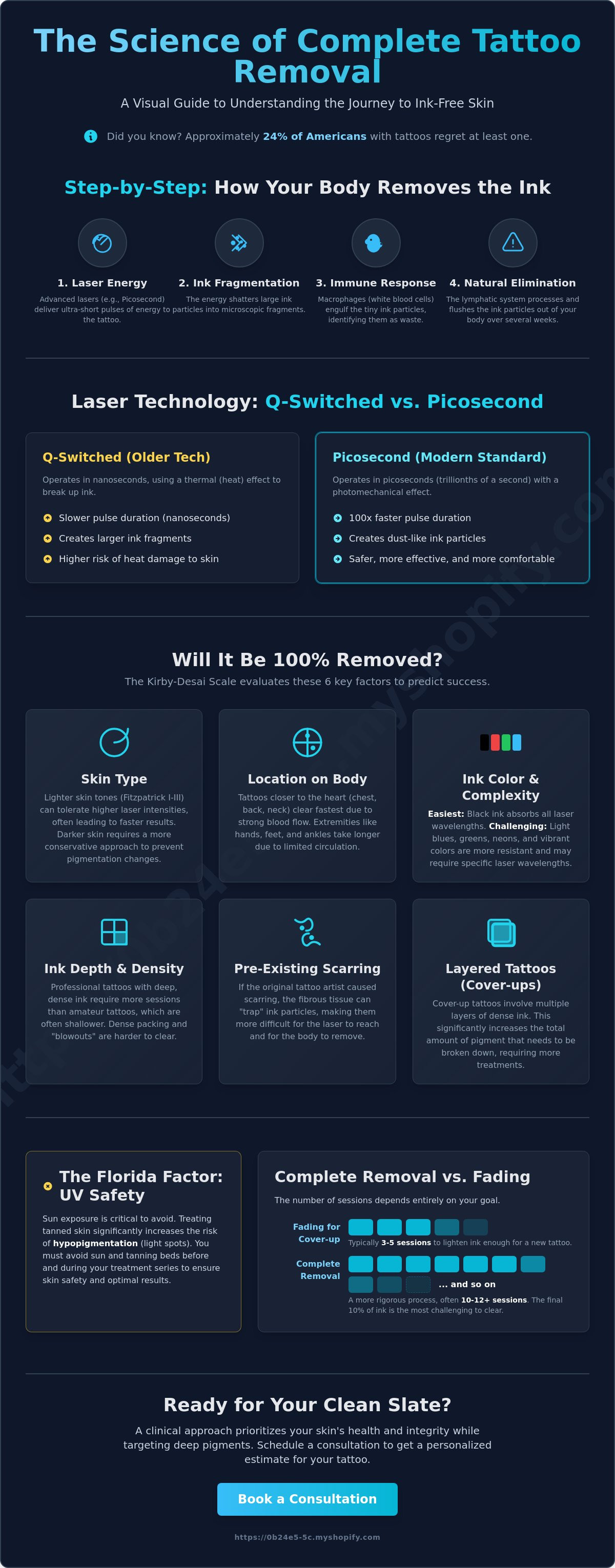
There is a fundamental difference between fading a tattoo for a cover-up and achieving total clearance. Fading typically requires three to five sessions to lighten the pigment enough for an artist to apply new ink. In contrast, total removal demands a more rigorous approach to reach the deepest layers of the dermis. High-quality tattoo removal techniques rely on the body's lymphatic system to act as a biological garbage disposal, filtering out shattered ink particles over several weeks. If the immune system is sluggish or the ink particles remain too large, complete tattoo removal cannot occur.
The Role of Phagocytosis in Ink Elimination
Once a laser shatters ink into microscopic fragments, specialized white blood cells called macrophages identify these particles as foreign objects. Through a process called phagocytosis, these cells consume the ink and transport it to the lymph nodes for permanent disposal. Your internal health plays a decisive role in this stage. Factors such as consistent hydration, a functional immune system, and adequate circulation determine how quickly these cells can clear the site. Phagocytosis is the critical biological mechanism that facilitates total ink clearance following laser treatment.
Laser Technology: Q-Switched vs. Picosecond
Achieving complete tattoo removal requires technology that can address various ink depths and colors. Traditional Q-switched lasers operate in nanoseconds, using thermal energy to break up pigment. Modern picosecond technology delivers energy in trillionths of a second. This creates a photomechanical effect that shatters ink into much smaller particles than older systems can manage. Because different colors absorb light at specific frequencies, a variety of wavelengths is necessary. For example, 1064nm is standard for black ink, while 532nm targets red and orange tones. A single-wavelength laser often fails to reach total clearance because it cannot interact with the full spectrum of pigments present in professional tattoos.
Variables That Determine If Total Clearance Is Possible
Clinical practitioners use the Kirby-Desai Scale to calculate the likelihood of achieving complete tattoo removal. This scoring system evaluates six specific criteria: your skin type on the Fitzpatrick Scale, the tattoo's location, the ink colors used, the total amount of ink, the presence of scarring, and whether the tattoo was layered over another. By assigning numerical values to these variables that determine tattoo removal success, technicians can provide a more accurate estimate of the required session count. Understanding these factors is essential for managing expectations regarding the final outcome.
Location significantly influences the clearance rate. Tattoos located closer to the heart benefit from higher vascularity and stronger blood flow. This allows the lymphatic system to transport shattered ink particles more efficiently. Conversely, tattoos on the hands or ankles often require more time to clear because of limited circulation in the extremities. Skin type also dictates the procedural approach. While lighter skin can often tolerate higher laser intensities, darker skin types require a conservative strategy to prevent hyperpigmentation or hypopigmentation. This balance between power and safety is vital for maintaining skin health throughout the process.
Ink Color and Chemical Complexity
Black ink is generally the most straightforward to treat because it absorbs all laser wavelengths. In contrast, modern professional inks often contain complex chemical compounds designed for vibrancy and longevity. Neon pigments, light blues, and certain greens are particularly stable and may resist standard laser settings. Amateur tattoos, which often use less dense carbon-based inks at shallower depths, typically respond faster than professional-grade artwork. The chemical stability of the pigment determines how many passes the laser must make to achieve a full breakdown.
Depth and Density of the Original Tattoo
The physical structure of the tattoo also matters. Deeply placed ink or "blowouts" from the original application require more energy to reach. If the tattooing process caused significant scarring, the resulting fibrous tissue can trap ink particles, making them harder for macrophages to access. You can explore our professional laser removal services to see how we address these structural skin challenges through targeted treatment plans. Older tattoos generally clear faster than new ones because the immune system has already spent years naturally breaking down the pigment. Layered tattoos or "cover-ups" present the greatest challenge, as they significantly increase the total volume of ink that must be processed by the body.
Complete vs. Partial Removal: Avoiding the 'Ghosting' Effect
Many patients reach a stage where their tattoo is 90% gone, yet a faint shadow or outline remains visible. This phenomenon is known as "ghosting." It occurs when the concentration of ink particles drops below a certain threshold, making it difficult for the laser to target the remaining pigment effectively. The FDA on tattoo removal methods indicates that while lasers are the gold standard, individual biological responses dictate the final success of the clearance. This plateau effect is a common hurdle in the journey toward complete tattoo removal, requiring a shift in clinical strategy to address the final microscopic fragments of ink.
Differentiating between residual ink and post-inflammatory hyperpigmentation (PIH) is a critical step in the final stages of treatment. PIH is a temporary darkening of the skin caused by the body's inflammatory response to the laser's heat, not the ink itself. You can distinguish PIH from ink because it typically lacks the defined structure of the original tattoo and often fades with proper sun protection and time. Another challenge is paradoxical darkening. This happens when certain pigments, often found in cosmetic tattoos or light-colored inks, contain metallic oxides that turn black or grey when exposed to laser energy. Identifying these changes early allows for adjustments in wavelength to ensure the skin returns to its natural tone.
Managing the Final 10% of Pigment
Reaching total clearance often requires advanced protocols specifically designed for stubborn "shadow" ink. As the ink density decreases, the laser's settings must be refined to capture smaller, deeper particles that were previously shielded by upper layers of pigment. If the skin's texture appears slightly altered after several sessions, advanced laser treatments like Morpheus8 can be utilized to remodel the tissue. These fractional technologies help smooth the dermis and improve overall skin quality, ensuring the area looks as natural as the surrounding untreated skin once the ink is gone.
Scarring vs. Clearance
A common misconception is that laser treatments are the primary cause of scarring. In reality, most visible scars were created by the tattoo artist's needle during the original application. These scars only become apparent as the pigment clears away. To maintain skin integrity over a 12 to 24 month removal journey, you must prioritize rest periods. Spacing sessions 8 to 12 weeks apart gives the dermis sufficient time to heal and allows the lymphatic system to flush out debris. Rushing the process increases the risk of tissue damage. Patience is a functional requirement for achieving a clear result without compromising the skin's healthy texture.
The Florida Factor: Removing Tattoos in Bradenton
Residents of Bradenton face unique environmental challenges when seeking complete tattoo removal. Florida's high UV index is the primary external factor influencing the safety and efficacy of laser treatments. Melanin behaves similarly to tattoo ink by absorbing light energy. If your skin is tanned, the laser cannot easily distinguish between the ink and your natural pigment. This creates a significant risk of hypopigmentation, which appears as permanent white spots where the skin has lost its natural color. A specialist who understands these regional risks will adjust treatment protocols to protect your skin's integrity throughout the process.
The local climate also affects the immediate recovery period following a session. High heat and humidity in Bradenton can lead to increased sweating, which may irritate the treated area or increase the risk of bacterial growth if not managed correctly. Proper aftercare in this environment requires a disciplined approach to moisture control and temperature management. Choosing a provider with local expertise ensures that your treatment plan accounts for these specific atmospheric variables, reducing the likelihood of adverse reactions.
Sun Safety Protocols for Removal Patients
Adhering to a strict 6-week rule is mandatory for achieving safe results. You must avoid direct sun exposure on the treatment area for at least six weeks before and after every session. If you must be outdoors, you should apply a physical sunblock containing Zinc Oxide or Titanium Dioxide. These minerals sit on top of the skin to reflect UV rays rather than absorbing them into the dermis. When researching spas in Bradenton FL, look for providers who prioritize these safety standards in their clinical consultations to ensure your skin remains healthy.
Lifestyle Adjustments for Optimal Clearance
Your daily habits in Florida's active outdoor culture can either support or hinder your progress. Physical activity improves circulation and lymphatic drainage, which helps your body flush out shattered ink particles more quickly. However, you should avoid intense exercise for the first 48 hours post-treatment to prevent excessive heat buildup in the tissue. Proper hydration is also essential, as it supports the metabolic processes required for ink elimination.
Specific aftercare tips for the Bradenton climate include:
- Wear loose, breathable cotton clothing to prevent friction and allow the skin to stay cool.
- Keep the treated area dry and avoid swimming in pools or the Gulf until the skin has fully closed.
- Utilize cold compresses during the first 24 hours to manage localized heat and swelling.
Planning your sessions during the cooler months or ensuring total occlusion from the sun is the most effective way to reach your goal. You can review our specialized laser removal services to learn more about how we customize treatments for the unique Florida environment.
Your Journey at Organic Skin & Body Med Spa
Organic Skin & Body Med Spa provides a structured environment for those seeking complete tattoo removal. Our process begins with a technical assessment that prioritizes transparency and clinical accuracy. Unlike high-volume chains that may focus solely on session count, we emphasize a boutique experience that integrates skin health into the corrective protocol. We use a direct and objective tone to communicate your procedural needs. This ensures you understand exactly what's required for your specific case. Each treatment plan is a functional partnership between our technology and your body's biological response.
We customize the laser protocol for your specific ink and skin goals. This involves selecting specific wavelengths and pulse widths that align with your tattoo's chemical composition. If you have a multi-colored piece or a deep "blowout" from the original application, we adjust the energy levels to maximize ink shattering while protecting the surrounding tissue. Our goal is to move you from regret to a clean slate in Bradenton through a sequence of facts and instructions that keep you informed at every stage.
What to Expect During Your Consultation
During your initial assessment, we perform a detailed evaluation using the Kirby-Desai scale. This allows us to assign a numerical value to your tattoo based on factors like ink density, layering, and location. We develop a realistic multi-year timeline for total clearance so you aren't surprised by the duration of the journey. You'll receive clear information on session intervals, which are typically spaced 8 to 12 weeks apart to allow for maximum lymphatic drainage. This functional approach ensures you have a clear roadmap from the first day. We provide exact quotes for our laser removal services based on the square inch measurements of your ink.
Holistic Support for Skin Recovery
Maintaining your skin's barrier is essential during a 12 to 24 month removal journey. We integrate organic skin care into our clinical protocols to support the dermis and minimize the risk of textural changes. While the laser targets the pigment, the surrounding tissue must remain hydrated and resilient. Treatments like HydraFacials can support general skin health by maintaining optimal moisture levels and clearing the pores in untreated areas. Our Bradenton specialists guide you through every phase, ensuring your path to clear skin is both safe and effective. Moving from regret to a clean slate requires patience and a partnership with a provider who understands the biological complexity of complete tattoo removal.
Achieve Your Goal of Clear Skin
Achieving total clearance requires a technical understanding of how your body and laser technology interact. You've learned that your lymphatic system is the primary driver of success and that variables like ink depth and UV exposure in Bradenton determine your unique timeline. By following a structured clinical protocol and respecting the necessary healing intervals, you can overcome the plateau effect and avoid permanent ghosting. This biological partnership is essential for successful complete tattoo removal.
Organic Skin & Body Med Spa provides the professional oversight needed for this journey. Our approach combines advanced laser technology with customized treatment plans for Florida lifestyles to ensure your skin remains healthy throughout the process. Our certified medical aesthetics specialists use objective data and the Kirby-Desai scale to guide every session accurately. We prioritize transparency and functional results at every stage of the corrective process.
Book Your Complete Tattoo Removal Consultation in Bradenton to begin your professional assessment. Transitioning from a permanent regret to a clean slate is a clinical reality when you follow a precise, science-based roadmap.
Frequently Asked Questions
Can a tattoo be 100% removed without leaving a shadow?
Yes, 100% clearance is achievable for many patients. Success depends on the ink's chemical composition and your body's ability to process the shattered particles. While some tattoos may leave a faint "ghost" image or shadow due to deep pigment or skin changes, modern picosecond technology significantly increases the probability of complete tattoo removal. A thorough clinical assessment helps determine if your specific tattoo is a candidate for total elimination.
How many sessions are typically required for complete removal?
Complete tattoo removal typically requires between 6 and 12 sessions. The exact number is determined by the Kirby-Desai scale, which considers factors such as ink density, layering, and location. Tattoos located further from the heart or those with professional-grade pigments often require more sessions. You'll receive a more accurate estimate following a physical evaluation of the tattoo's characteristics and your skin type.
What colors are the hardest to remove completely?
Green, light blue, and neon pigments are the most difficult colors to remove. These specific wavelengths require specialized lasers that can target their unique chemical structures. Black and red inks are generally the easiest to treat because they absorb a broader spectrum of laser energy. If your tattoo contains multiple colors, your treatment plan will likely involve different wavelengths to address each pigment effectively.
Will laser tattoo removal leave a scar on my skin?
Laser treatments rarely cause scarring when performed by trained specialists using appropriate protocols. Most visible scars associated with tattoo removal were actually created by the tattoo needle during the original application. These existing scars become visible only after the ink is cleared away. Following strict aftercare instructions and allowing the skin to heal between sessions is the most effective way to maintain healthy skin texture.
How much time should I wait between removal sessions?
You should wait a minimum of 8 to 12 weeks between sessions. This interval is necessary because the laser only shatters the ink; your lymphatic system must then transport the particles out of your body. Rushing the process doesn't speed up removal and increases the risk of skin damage. Giving your immune system adequate time to work ensures safer and more efficient clearance during the corrective process.
Does complete tattoo removal hurt more than getting the tattoo?
Most patients report that the sensation is similar to a quick snap of a rubber band against the skin. While the discomfort level can be higher than getting the tattoo, the sessions are significantly shorter. A small tattoo can often be treated in less than a minute. We use cooling methods during the procedure to manage localized heat and improve your overall comfort throughout the session.
Can I get a new tattoo in the same spot after complete removal?
You can get a new tattoo in the same area once the skin has fully recovered. It's recommended to wait at least three to six months after your final removal session before applying new ink. This waiting period ensures the dermis has regained its full integrity and the inflammatory response has completely subsided. A healthy skin base allows for better pigment retention for your new artwork.
What happens if I stop treatment before the tattoo is completely gone?
If you stop treatment prematurely, the remaining ink will stay in your skin indefinitely. The laser shatters the ink into smaller fragments during each session, but the body can only remove what has been broken down. Without subsequent sessions to target deeper or more stubborn layers, the tattoo will simply appear faded or "ghosted." You won't achieve complete tattoo removal without finishing the full clinical protocol.