

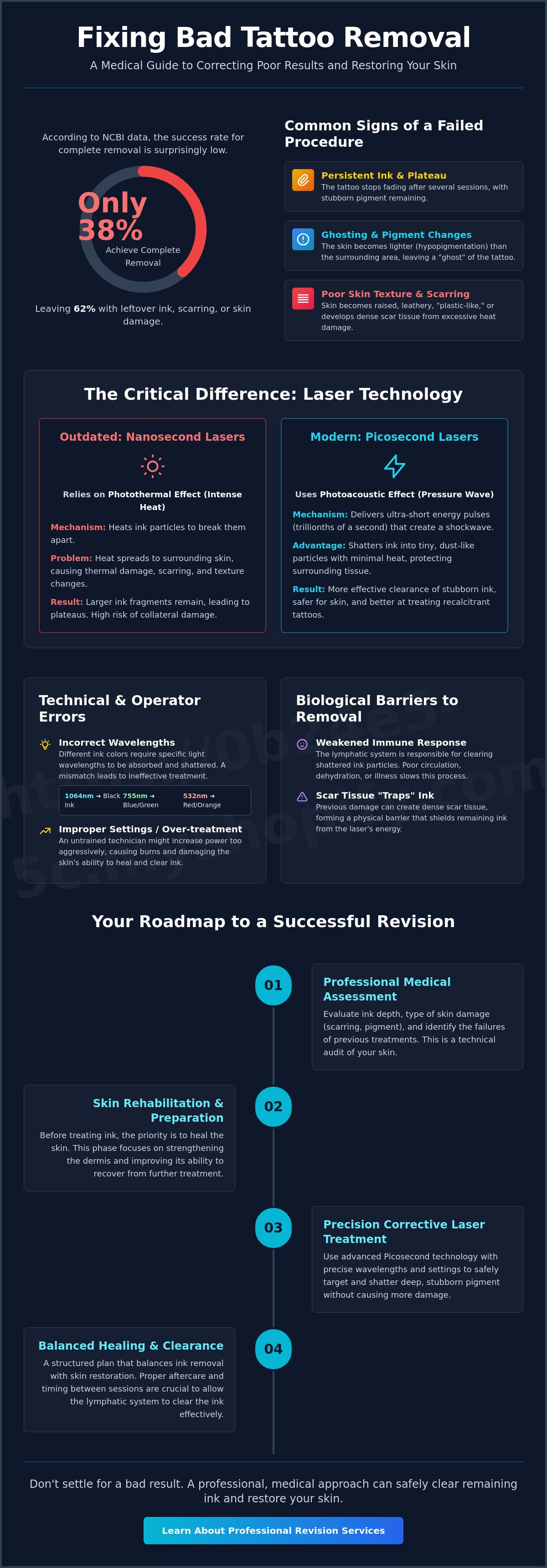
According to NCBI data, only 38% of patients achieve complete tattoo removal after their initial laser treatments. This statistic highlights a frustrating reality for many; the process often stops before the ink is gone, or it leaves behind visible scarring and altered skin texture. If you're struggling with a plateaued result or damaged tissue, fixing bad tattoo removal requires a specialized medical approach that prioritizes skin rehabilitation alongside pigment clearance. It's a technical process that demands precision to avoid compounding existing damage.
Key Takeaways
- Identify the specific technical factors, such as outdated equipment or improper settings, that lead to persistent ink and skin ghosting.
- Understand the specialized medical requirements for fixing bad tattoo removal by adjusting laser parameters to safely target deep pigment.
- Distinguish between various types of skin damage, including texture changes and pigment issues, to select the appropriate corrective path.
- Learn how a structured preparation phase strengthens the dermis and improves the skin's ability to heal during revision.
- Develop a professional roadmap that balances the clearance of remaining ink with the restoration of natural skin texture.
Understanding the Causes of Bad Tattoo Removal Results
Identifying a failed procedure is the first step in corrective care. "Bad" results often manifest as persistent ink that hasn't moved in months, ghosting where the skin is lighter than the surrounding area, or significant changes in skin texture. When the process is handled incorrectly, the skin may become raised or leathery. These outcomes often stem from a mismatch between the laser's capabilities and the tattoo's specific characteristics. Fixing bad tattoo removal starts with a technical audit of why the initial treatments failed to produce the promised results.
Outdated technology is a primary culprit for poor clearance. Older nanosecond lasers rely heavily on photothermal effects, which means they use heat to break up pigment. This heat can easily spread to the surrounding tissue, causing damage that complicates future sessions. Additionally, if a technician lacks proper training, they might increase power settings too quickly to force a result. This over-treatment creates a cycle of damage that makes the skin less receptive to further fading.
Technical Failures: Wavelengths and Pulse Widths
Successful Tattoo removal requires specific wavelengths of light to target specific ink colors. For example, black ink responds well to 1064nm, while red requires 532nm. If a clinic uses a laser that doesn't offer the correct wavelength for your specific pigment, the ink will eventually plateau. It simply won't absorb enough energy to shatter further, regardless of how many sessions you attend.
Pulse width also plays a critical role in skin safety. Modern medical-grade lasers use picosecond pulses, which are trillionths of a second. This speed creates a photoacoustic effect, shattering ink into dust-like particles without the excessive heat buildup of older systems. Without this precision, the dermis absorbs too much thermal energy. This often leads to the "leathery" or "plastic" texture many patients experience after low-quality treatments, making fixing bad tattoo removal a matter of both ink clearance and skin repair.
Biological Factors in Removal Success
Your body's lymphatic system is the final stage of the removal process. The laser breaks the ink, but your immune system must carry those particles away. If you have poor circulation or the skin is unhealthy, this clearance happens slowly. Hydration and skin health are not just suggestions; they're functional requirements for the ink to actually leave your body. If the skin is dehydrated or compromised, it can't recover quickly enough to allow for effective subsequent sessions.
Previous scarring can also "trap" ink within the dermis. When the skin is damaged by an aggressive laser treatment, it forms dense, fibrous scar tissue. This tissue acts as a physical barrier, shielding the remaining ink from future laser pulses. In these cases, the focus must shift to rehabilitating the skin's integrity before the remaining pigment can be successfully addressed. Without restoring the skin's health, the ink remains locked in place.
The Science of Corrective Laser Removal
Corrective procedures differ significantly from standard removal because the skin is often compromised by previous attempts. A professional assessment must evaluate the depth of the remaining pigment and the density of any scar tissue present. If the dermis is already damaged, the laser must be calibrated to bypass fibrous tissue without causing additional thermal stress. This level of precision is essential for laser tattoo removal when the initial results are unsatisfactory. Fixing bad tattoo removal involves analyzing the specific wavelength absorption of the remaining ink to ensure the energy reaches the target without being blocked by surface-level scarring.
Overcoming the Ink Removal Plateau
Many patients experience a plateau after five to seven sessions. This often happens when older technology cannot shatter the smaller, deeper ink particles that remain. Recalcitrant tattoos require a shift in strategy. Instead of simply increasing the power, which risks burns, a medical expert uses high-precision laser technology. These systems deliver energy in shorter bursts to target stubborn pigment that has become resistant to standard treatment. Advanced laser removal services are designed to break down ink into much smaller fragments than traditional lasers, allowing your lymphatic system to finally clear the "stuck" pigment.
Safety Protocols for Revision Treatments
Safety is the primary concern during a revision. The FDA on tattoo removal emphasizes that laser treatments are medical procedures with inherent risks, including scarring and pigment changes. To mitigate these risks during a "fix," technicians utilize advanced cooling techniques to protect the epidermis. This prevents the outer layer of skin from overheating while the laser works on the deeper dermis. It's a delicate balance of delivering enough energy to be effective while maintaining a safe temperature for the surrounding tissue.
Healing time is the most overlooked factor in successful revision. While standard treatments occur every six to eight weeks, corrective sessions often require twelve weeks or more. This extended interval allows the body to fully process the shattered ink and for the skin's natural barrier to strengthen. Rushing the process on already stressed skin is a common cause of further damage. Fixing bad tattoo removal requires a medical-grade consultation—a standard upheld by specialized practices like MG Plastic Surgery—to determine the exact physiological state of your skin before proceeding. This assessment ensures the skin has the structural integrity to withstand further treatment without developing permanent texture changes or "ghosting" effects.
Managing Skin Damage: Addressing Scarring and Texture
Addressing the aftermath of a failed procedure requires a clear understanding of dermal complications. When initial removal attempts use excessive heat or improper techniques, the skin often reacts with pigmentary changes or structural damage. Common issues include hyperpigmentation, where the skin darkens, or hypopigmentation, which leaves white "ghost" patches. In more severe cases, keloid scarring or a leathery texture may develop. According to research on the Complications of Tattoos and Tattoo Removal, these side effects are often manageable if the focus shifts from ink clearance to tissue rehabilitation. Fixing bad tattoo removal isn't just about the remaining pigment; it's about restoring the skin's natural integrity.
Restoring skin health is a functional requirement before the final ink can be targeted. If the dermis is compromised by scar tissue, the laser energy cannot reach the pigment effectively. This often leads to the plateaued results discussed in previous sections. By prioritizing skin rejuvenation, we create a clear path for the laser to shatter the remaining ink in later sessions. This dual-focus approach ensures that the end result is healthy, clear skin rather than a scarred silhouette of the original tattoo.
Correcting Texture with Morpheus8 and Microneedling
Raised or leathery skin texture occurs when aggressive laser pulses cause collagen to bundle irregularly. To resolve this, Morpheus8 combines microneedling with radiofrequency (RF) energy to remodel the dermal layers. The needles create controlled micro-injuries while the RF energy heats the deeper tissue, breaking down dense scar tissue and stimulating healthy collagen production. This process smooths the skin surface and increases flexibility. We typically recommend a specific timeline for combining these treatments, often starting with skin-tightening sessions before attempting final ink clearance. This sequence ensures the tissue is healthy enough to allow the lymphatic system to clear the shattered pigment effectively.
Treating Pigmentation Issues
Post-inflammatory hyperpigmentation (PIH) is a frequent result of over-treatment. It appears as dark, muddy patches that can obscure the remaining tattoo ink. Resolving these issues requires a pause in laser treatments to allow the inflammatory response to subside. During this corrective phase, sun protection is non-negotiable. UV exposure triggers additional melanin production, which can make PIH permanent or harder to treat. Using professional-grade organic skin care can support the dermal healing process by providing the skin with essential nutrients without harsh chemicals. Once the skin tone has stabilized and the texture has softened, specialized laser removal services can safely target the ink. Fixing bad tattoo removal requires this patient, multi-step approach to ensure the final result meets medical standards for safety and aesthetics.
Your Roadmap to Successful Tattoo Revision
Correcting a failed procedure requires a methodical, multi-stage strategy. It isn't a single session but a structured progression designed to heal the skin while systematically eliminating pigment. This roadmap begins with a comprehensive medical evaluation to determine the extent of previous damage and the composition of the remaining ink. By following a clear sequence, patients can transition from a state of skin distress to a successful clearance phase. Fixing bad tattoo removal demands this level of organization to ensure that every pulse of energy serves a specific purpose in the rehabilitation process.
The "Skin First" preparation phase is a critical component of this roadmap. It focuses on strengthening the dermis to ensure it can withstand the photoacoustic impact of corrective lasers. Once the skin integrity is confirmed, the active corrective removal phase begins. This stage uses targeted wavelengths tailored to the specific depth and color of the recalcitrant ink. Finally, post-treatment rehabilitation ensures long-term skin maintenance, preserving the texture and elasticity of the treated area.
Step 1: The Professional Consultation
A professional consultation is the foundation of the revision process. During this meeting, a medical aesthetician examines the tattoo for signs of substandard work, such as "blowouts" or deep dermal scarring. They review your medical history and the specific protocols used in previous failed attempts. This information is vital for setting realistic expectations for final ink clearance. Complete clearance might not always be the immediate goal; often, the first priority is stabilizing the skin's health to prevent further complications. If you're ready to begin your assessment, you can schedule a consultation for laser removal services to establish your personalized plan.
Step 2: The Corrective Treatment Cycle
The corrective treatment cycle prioritizes efficacy over frequency. While it's tempting to seek rapid results, fewer sessions using optimized power settings and correct wavelengths produce better outcomes than repeated low-power pulses. A medical expert monitors the skin's inflammatory response in real time to ensure no new damage occurs between sessions. If the remaining ink reacts unexpectedly, the plan is adjusted immediately. This flexibility prevents the plateau effect and ensures that the removal continues to progress. We carefully track changes in pigment density and skin texture at every appointment, ensuring the path to clearance remains safe and effective.
Professional Tattoo Removal Revision in Bradenton, FL
Bradenton residents facing the challenges of a stalled or damaged removal process require a facility that combines technical precision with an understanding of local environmental factors. Florida's high UV index significantly impacts how the skin responds to laser energy and how it heals between sessions. At Organic Skin & Body Med Spa, our protocols are specifically designed to account for these variables. We provide the expertise necessary for fixing bad tattoo removal by integrating our knowledge of skin physiology with advanced medical-grade equipment. This ensures that every session moves you closer to your goal without compromising the health of your dermis.
Our facility offers a full suite of skin rejuvenation tools that are often missing from general removal clinics. While some locations only focus on the ink, we understand that the health of the surrounding tissue is equally important. By utilizing Laser Skin Treatments and RF & Microneedling, we can address the texture changes and scarring discussed in earlier sections. This integrated approach allows for a more efficient revision process, as we can pivot between ink clearance and skin repair based on your specific needs. It's this focus on total skin health that makes us a trusted choice for those needing a professional revision.
A Holistic Approach to Corrective Care
Located at 8523 East State Road 70, our med spa offers easy access for the Bradenton community. We integrate professional aestheticians into every stage of the removal journey to monitor skin response and suggest supportive treatments. This medical-grade environment is essential for procedures that involve breaking the skin barrier or targeting deep dermal layers. A sterile, controlled facility minimizes the risk of complications and ensures that all safety protocols are strictly followed during your corrective sessions. We prioritize a stress-free environment to help manage the anxiety often associated with fixing bad tattoo removal.
Next Steps: Booking Your Assessment
Preparing for your first visit is a straightforward process. You'll need to gather any records of your previous removal sessions, including the type of laser used and the total number of treatments you've received. This history allows our team to identify exactly where the previous protocol failed and why the ink has plateaued. During your initial assessment, we'll examine the current state of the pigment and the structural integrity of your skin tissue. We'll then develop a roadmap that balances ink clearance with necessary skin rehabilitation. You can Schedule your corrective consultation at Organic Skin & Body Med Spa to begin your customized revision plan and restore your skin's appearance.
Restoring Your Skin's Health and Clarity
Successful revision requires shifting the focus from simple ink clearance to comprehensive dermal repair. As established, addressing textured scarring or pigment plateaus involves precise medical protocols and patience. Fixing bad tattoo removal is a technical sequence that prioritizes the structural integrity of your skin. By utilizing advanced wavelengths and allowing for extended healing intervals, it's possible to clear stubborn ink while rehabilitating damaged tissue. This methodical approach ensures that your skin recovers its natural texture as the remaining pigment fades.
Organic Skin & Body Med Spa has served the Bradenton and Sarasota community since 2026. Our expert aestheticians specialize in skin revision and utilize medical-grade laser technology to deliver results where previous attempts have failed. Book Your Corrective Tattoo Removal Consultation Today to receive a professional assessment tailored to your specific needs. You don't have to live with the visible reminders of a failed procedure; a structured medical plan can restore your skin's appearance safely and effectively. We're here to help you move forward with confidence.
Frequently Asked Questions
Can a scarred tattoo still be removed with a laser?
Yes, a scarred tattoo can still be removed, but the scar tissue must be addressed first. Fibrous tissue often traps ink, making it difficult for standard lasers to be effective. By using treatments like Morpheus8 or microneedling to break down the scar tissue, we can soften the skin. Once the skin's texture is improved, corrective lasers can safely reach and shatter the remaining pigment without causing further damage.
How long should I wait between a bad removal session and a corrective one?
You should wait a minimum of 12 weeks before starting a corrective treatment cycle. Stressed or damaged skin requires a longer recovery period than healthy tissue to prevent permanent complications. Rushing into another session can lead to further scarring or pigment issues. A medical aesthetician will evaluate your skin's structural integrity during a consultation to ensure it has sufficiently healed before proceeding with more laser energy.
What is the difference between laser fading and full removal?
Laser fading is a strategic process used to lighten a tattoo enough for a successful cover-up. Full removal aims to clear all visible pigment from the dermis. When fixing bad tattoo removal, we often find that previous attempts only achieved partial fading because the wrong wavelengths were used. A corrective plan focuses on the final clearance of recalcitrant ink that has stopped responding to standard treatments.
Why did my tattoo turn a strange color after my last removal attempt?
Strange color shifts, such as a tattoo turning black or gray, are usually caused by ink oxidation. This happens when certain pigments containing metal oxides react to the laser's thermal energy. It is a common occurrence with white, flesh-toned, or permanent makeup inks. Correcting these shifts requires specific laser wavelengths that can target oxidized minerals. We adjust our protocols to address these chemical changes without overheating the surrounding tissue.
Is corrective tattoo removal more painful than the first attempt?
Corrective removal isn't necessarily more painful, though your skin may be more sensitive if it's already compromised. We use advanced cooling systems to protect the epidermis and maintain a comfortable temperature throughout the session. Because corrective care focuses on precision and skin health, the process is often more controlled than the aggressive treatments that caused the initial damage. Most patients find the structured, medical approach much easier to tolerate.
Can Morpheus8 help with the scarring from a botched tattoo removal?
Morpheus8 is highly effective for remodeling the skin after a botched removal attempt. It uses RF microneedling to penetrate the deeper dermal layers and break up the dense, irregular collagen that forms scar tissue. This treatment is essential for fixing bad tattoo removal when the skin has become raised, leathery, or lost its natural elasticity. It smooths the surface and prepares the skin for final pigment clearance.
How many sessions will I need to fix a bad tattoo removal result?
The number of sessions depends on the depth of the remaining ink and the extent of the skin damage. Most corrective plans require between 3 and 6 sessions after an initial skin rehabilitation phase. We prioritize fewer, more effective treatments over frequent, low-power sessions. This approach ensures steady progress while giving your body's lymphatic system enough time to clear the shattered ink particles between appointments.
Is it possible to fix hypopigmentation (white spots) from a laser?
Hypopigmentation is difficult to treat, but it can sometimes be improved through professional skin rejuvenation. These white spots occur when the laser damages the melanocytes, or pigment-producing cells. If the damage isn't permanent, specialized treatments can help stimulate the skin's natural pigment response. We focus on restoring skin health and using medical-grade skincare to support the recovery of a more even skin tone over several months.