

The fluid-filled bubble forming over your treated ink might look like a complication, but it is actually your body's biological liquid bandage designed to facilitate ink clearance. Seeing these changes can cause immediate anxiety, especially when you are unsure about laser tattoo removal blisters what to do to ensure proper healing. While the sight is often unsettling, this reaction is a standard part of the inflammatory response as your immune system begins to process fragmented pigment.
It's natural to feel concerned about potential skin damage or the discomfort associated with the healing process. This guide provides a professional protocol for managing blisters after laser tattoo removal or other laser skin treatments. You will learn how to protect the area in Florida's humid climate, specific steps for functional home care, and the objective criteria for determining when a blister requires professional medical attention. Following these clear instructions ensures that your skin recovers safely without compromising the results of your treatment.
Key Takeaways
- Understand why blisters are a standard biological response to laser energy and how they serve as a protective barrier for your skin.
- Learn the immediate protocols for laser tattoo removal blisters what to do, such as using cold compresses and elevation to reduce localized pressure.
- Discover why you should never pop these blisters, as keeping the skin intact prevents infection and minimizes the risk of long-term scarring.
- Identify how to adapt your aftercare for the humid Florida environment to protect your healing skin from moisture and UV exposure.
- Know the specific signs that indicate you should contact a professional at Organic Skin & Body Med Spa for a healing assessment.
Understanding Why Blisters Form After Laser Tattoo Removal
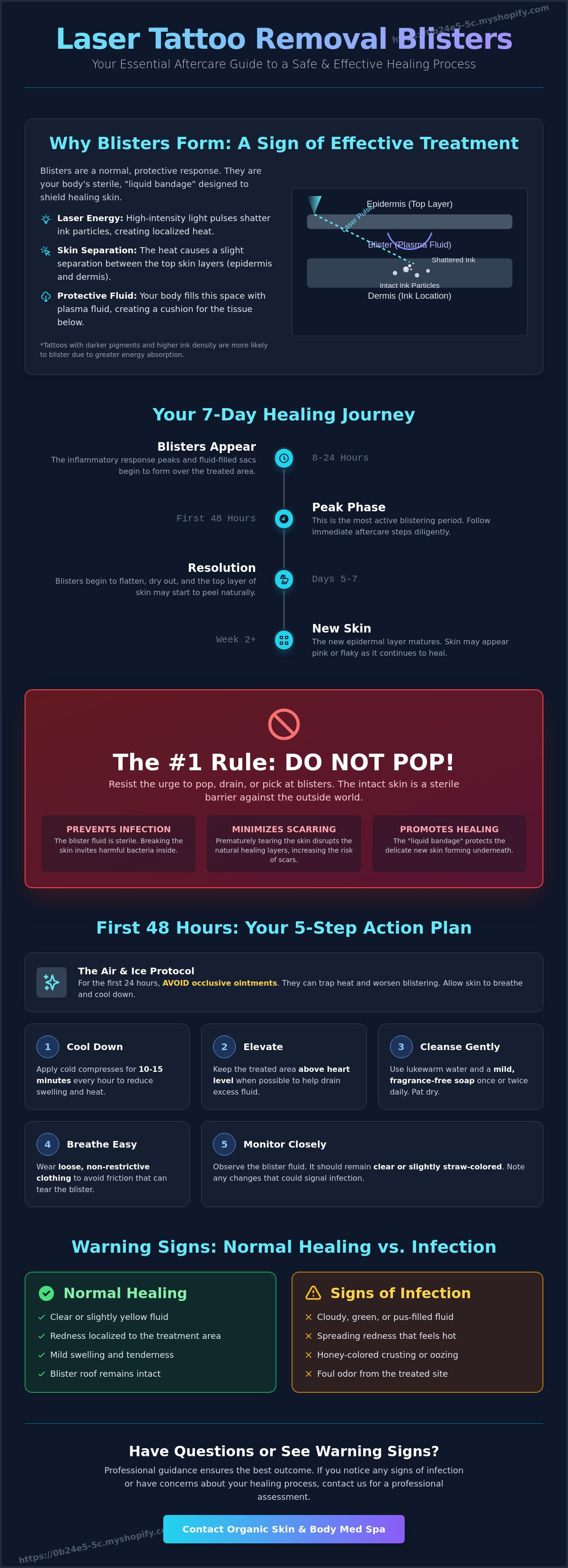
A laser-induced blister is a sterile, fluid-filled sac that forms between the epidermis and the dermis. This reaction occurs because modern laser tattoo removal methods utilize high-intensity light pulses to target ink particles. These pulses create photo-acoustic shockwaves. These shockwaves generate localized heat within the dermis as the ink absorbs the energy and fragments. This rapid temperature increase causes the skin layers to separate slightly, allowing plasma to fill the space. It is a protective mechanism that shields the underlying tissue during the initial recovery phase.
The density and color of your tattoo directly influence this biological reaction. Darker pigments and tattoos with high ink saturation absorb more laser energy, which increases the likelihood of blistering. Once the laser shatters the ink into microscopic particles, your lymphatic system begins the process of clearing these fragments from the body. If you are wondering about laser tattoo removal blisters what to do, understand that this fluid serves as a natural cushion while the deeper layers of skin recover. This process is functional and indicates that the laser successfully reached the targeted pigment.
Normal Healing vs. Signs of Infection
Distinguishing between a standard healing response and a secondary infection is vital for skin safety. A healthy blister typically contains clear or slightly straw-colored fluid. The surrounding skin may appear red, but this redness should remain localized to the treatment area. Warning signs of infection include:
- Honey-colored crusting or oozing.
- Spreading redness that feels increasingly hot to the touch.
- Pus or cloudy, green-tinted fluid inside the sac.
- Foul odors emanating from the treated site.
While a heat blister is a mechanical response to energy, an allergic reaction to the ink often involves intense itching and swelling that extends far beyond the original tattoo borders. If the fluid inside the blister becomes cloudy, it no longer qualifies as a sterile healing response.
The Timeline of Post-Laser Blistering
Blisters do not always appear immediately after your session at a facility like Organic Skin & Body Med Spa. They typically manifest between 8 and 24 hours post-treatment as the inflammatory response peaks. Current 2026 clinical protocols emphasize that the most active blistering phase occurs within the first 48 hours. Most superficial blisters follow a predictable 5-to-7-day healing window before the skin begins to flatten and peel. Knowing the timeline helps patients manage laser tattoo removal blisters what to do without unnecessary anxiety during the first week of recovery. Once the blister resolves, the skin may appear pink or flaky as the new epidermal layer matures.
Immediate Steps: What to Do When You Notice Blistering
When you identify a blister, your immediate actions determine the speed and safety of the recovery process. Understanding laser tattoo removal blisters what to do starts with stabilizing the localized temperature of the skin and preventing further irritation. If you observe fluid accumulation within the first 24 hours, follow these five procedural steps to stabilize the site:
- Step 1: Apply cold compresses for 10 to 15 minutes every hour. This reduces the internal temperature of the dermis and limits the size of the blister.
- Step 2: Elevate the treated area above the level of your heart whenever possible. This uses gravity to assist the lymphatic system in draining excess fluid and reduces localized pressure.
- Step 3: Cleanse the area gently once or twice daily. Use lukewarm water and a mild, fragrance-free soap to remove surface bacteria without disrupting the blister roof.
- Step 4: Avoid restrictive clothing. Friction from tight fabrics can cause the blister to tear prematurely, which increases the risk of scarring.
- Step 5: Monitor the fluid level and color over the first 48 hours. The fluid should remain clear or slightly yellow.
The Air and Ice Protocol for the First 24 Hours
The primary objective during the initial 24 hours is heat dissipation. Occlusive ointments, while useful later, should be avoided immediately after your session. These substances act as insulators and can trap residual thermal energy within the tissue, potentially worsening the blister. Instead, use the air and ice protocol to allow the skin to breathe. This prevents secondary heat trapping that can lead to deeper tissue damage. When applying ice packs, always place a clean, thin barrier like a paper towel between the ice and your skin to prevent thermal shock. This objective approach aligns with FDA information on tattoo removal regarding the management of common side effects.
Topical Applications: What is Safe to Use?
Once the initial heat has dissipated and the blister has stabilized, protecting the skin becomes the priority. Use medical-grade petroleum jelly during the late-stage healing phase to keep the skin supple and prevent the blister roof from cracking. Antibiotic ointments are generally unnecessary for sterile blisters and may cause contact dermatitis in some patients. Adopting organic skincare principles can help soothe surrounding irritation without exposing sensitive tissue to harsh chemicals. Maintaining this precise aftercare routine ensures a smooth transition between your laser removal services appointments.
To Pop or Not to Pop? The Medical Perspective on Drainage
The decision to intervene with a blister requires careful consideration of the physiological risks involved. In nearly all clinical scenarios, the blister roof should remain intact. This layer of skin serves as a natural sterile barrier that protects the underlying tissue from environmental pathogens while the body regenerates new epidermal cells. Removing this barrier prematurely exposes the raw dermis, which significantly increases the risk of localized infection and permanent scarring. Standard Laser Tattoo Removal Aftercare protocols emphasize that the fluid inside the blister is sterile plasma meant to cushion the wound.
When you are deciding on laser tattoo removal blisters what to do, your primary goal is to maintain the integrity of this "liquid bandage." If a blister is located in a high-friction area, such as the ankle or under a waistband, you should protect it with a loose, non-stick bandage rather than attempting to drain it. This prevents accidental rupture during daily movement. Maintaining this seal ensures that the healing environment remains controlled and free from outside contaminants.
When Draining is Necessary
While preservation is the goal, certain conditions make professional drainage a safer alternative to leaving a blister alone. If a blister is exceptionally large or is located directly over a joint, the internal pressure can cause significant physical pain. If you're confused about laser tattoo removal blisters what to do in this scenario, contact your provider for a professional assessment. If drainage is required, it must be performed using a single-use sterile lancet to avoid introducing bacteria. A small incision at the base of the blister allows the fluid to escape while keeping the skin roof draped over the wound for continued protection.
The Risks of Improper Blister Popping
Improperly popping or picking at the skin leads to permanent texture changes in the dermis. This often results in hypopigmentation or hyperpigmentation, where the treated area becomes lighter or darker than the surrounding skin. These pigment changes can be more difficult to correct than the original tattoo. The skin over a blister must remain intact to prevent scarring. Secondary infections caused by introducing bacteria into an open wound can stall the healing process and negatively impact the final results of your laser removal services. If the blister breaks on its own, clean the area immediately and apply a thin layer of protective ointment.
Managing Tattoo Aftercare in the Florida Climate
Environmental conditions in Bradenton and Sarasota present unique challenges for post-laser recovery. High relative humidity levels soften the stratum corneum, which is the outermost layer of your skin. This softening makes the roof of a blister more susceptible to tearing or accidental rupture. If you're managing laser tattoo removal blisters what to do in this climate, you must prioritize keeping the area dry and ventilated. Excessive moisture from sweat or environmental humidity leads to maceration. This is a condition where the skin becomes white and soggy, which compromises its structural integrity and slows the healing process.
UV exposure is an equally significant risk factor in Florida. Newly treated skin lacks the melanin protection of healthy tissue. Exposing a healing blister to direct sunlight can cause post-inflammatory hyperpigmentation. This results in permanent dark spots that are often more difficult to resolve than the original ink. To maintain your skin's health, avoid outdoor activities during peak UV hours for at least 72 hours following your session. If you work outdoors, wear loose, UV-protective clothing that doesn't rub against the treated site.
Sun Protection and Pigmentation
Exposing a blistered tattoo to Florida's intense sun triggers an overproduction of melanin in the healing tissue. This leads to long-term discoloration. If you're removing a tattoo on the face or neck, you must also be mindful of surrounding areas. For example, patients often combine removal with treatments for glabellar lines to achieve a smoother brow, but both procedures require strict sun avoidance. Wear wide-brimmed hats or use physical sun blocks containing zinc oxide on the skin surrounding the blister. Don't apply sunscreen directly onto an open or active blister.
Humidity and Bacterial Growth
In a tropical environment, standard plastic wraps or heavy bandages trap heat and perspiration. This creates a breeding ground for bacteria. Use moisture-wicking bandages that allow for gas exchange while keeping the wound sterile. Understanding laser tattoo removal blisters what to do in a high-humidity environment is essential for preventing secondary complications like skin breakdown. If the skin under your bandage becomes overly soft, remove the covering in a clean environment to let it air dry. Avoid swimming in pools, hot tubs, or the Gulf of Mexico until the blisters have completely flattened. If you need a professional assessment of your progress, you can book a session for laser tattoo removal to ensure your skin is recovering correctly.
When to Contact Organic Skin & Body Med Spa
Organic Skin & Body Med Spa provides professional oversight for every stage of the recovery process. Our technicians in Bradenton are trained to distinguish between a standard biological response and a procedural complication. If you remain uncertain about laser tattoo removal blisters what to do, contacting our office ensures you receive objective guidance based on your specific skin type and treatment history. We maintain a commitment to procedural safety and functional results for all patients. Our team monitors your healing progress between sessions to ensure the dermal layers remain healthy and prepared for subsequent treatments.
We provide clear instructions for scheduling a post-treatment check-up if you observe any of the warning signs discussed in previous sections. For those looking to improve overall skin texture or address skin laxity after a series of removal sessions, we often discuss advanced laser treatments like Morpheus8. This integrated approach ensures that your skin doesn't just lose the ink, but also maintains its structural integrity.
Our Professional Oversight Process
We customize laser energy settings for every session to minimize the risk of excessive blistering while maximizing ink fragmentation. Our facility utilizes PicoSure technology to deliver energy in short pulses. This fragments ink efficiently with less heat damage to the surrounding tissue than older laser systems. This precise approach protects the integrity of your skin for future aesthetician services. Our staff is available to answer immediate aftercare questions during business hours. This level of oversight prevents the confusion often caused by conflicting online advice.
Booking Your Next Step
Consistency is the most important factor in a successful removal journey. Proper management of the blister phase leads to faster recovery times. It can even reduce the total number of sessions required to clear the ink. Once your skin has fully regenerated, you can move forward with the next phase of treatment. To begin your process with a focused clinical plan, schedule your laser tattoo removal consultation with our team today. We focus on transparency and functional care to help you reach your aesthetic goals safely.
Securing Your Skin’s Health During Tattoo Clearance
Managing the recovery phase of your ink clearance journey requires patience and strict adherence to clinical protocols. You now understand that while blisters are a standard biological response, their successful resolution depends on maintaining a sterile environment and avoiding Florida's intense sun exposure. Knowing exactly laser tattoo removal blisters what to do allows you to navigate the first week of healing without unnecessary stress or the risk of permanent scarring. These steps ensure your skin remains a healthy canvas for the remainder of your treatment plan.
As Bradenton’s leading medical aesthetics facility, Organic Skin & Body Med Spa implements formal, transparent aftercare protocols to protect your results. Our specialists in advanced laser skin rejuvenation are here to guide you through every session and healing window. If you're ready to proceed with a safe and effective treatment plan, Book a Professional Tattoo Removal Consultation in Bradenton. Consistent aftercare and professional oversight ensure that your skin remains resilient throughout the entire process. We're here to help you move forward with confidence.
Frequently Asked Questions
Is it normal to get blisters after laser tattoo removal?
Blistering is a standard physiological response to the thermal energy used during laser tattoo removal. It indicates that the laser has successfully targeted the ink particles, causing the skin to create a sterile, fluid-filled barrier for protection. While not every patient experiences this reaction, it is particularly common with tattoos that have dense or dark pigment.
How long do laser tattoo removal blisters take to heal?
Most blisters follow a predictable healing timeline of 5 to 10 days. During the first 48 hours, the blister may continue to fill with fluid before stabilizing. Between days 3 and 7, the body typically reabsorbs the fluid, causing the blister to flatten and eventually flake off as the new skin layer matures beneath it.
Should I pop a blister if it is very large?
You should not pop a blister, regardless of its size, as the intact skin roof acts as a natural barrier against bacteria. If the blister is so large that it causes significant physical pain or is located on a joint where it is likely to tear, contact a professional to discuss laser tattoo removal blisters what to do. A medical aesthetician can perform a sterile drainage if deemed clinically necessary.
Can I put Neosporin on my tattoo removal blisters?
It is generally recommended to avoid antibiotic ointments like Neosporin unless specifically directed by a medical professional. These products can cause localized allergic reactions or trap excess heat in the skin. Instead, use a thin layer of medical-grade petroleum jelly once the initial heat has dissipated to keep the skin supple and prevent the blister from cracking prematurely.
What happens if a blister pops accidentally?
If a blister ruptures accidentally, clean the site immediately with lukewarm water and mild, fragrance-free soap. Don't remove the loose skin, as it still provides a layer of protection for the raw dermis underneath. Apply a thin layer of sterile petroleum jelly and cover the area with a loose, non-stick bandage to prevent secondary infection and facilitate safe healing.
Can I shower with blisters after my laser session?
When should I be worried about a blister after tattoo removal?
How can I prevent blisters from forming in the first place?
While blistering is often unavoidable for certain ink densities, you can minimize the severity by following strict immediate aftercare. Using cold compresses for 10 to 15 minutes every hour and elevating the treated area helps dissipate heat. Additionally, choosing advanced technology used in professional laser removal services can reduce thermal damage to the surrounding tissue compared to older systems.