

The success of your tattoo removal depends more on what happens in the 48 hours after your session than the laser technology itself. It's completely normal to feel a surge of anxiety when you see frosting, swelling, or blistering on your skin for the first time. You want the ink gone. However, the fear of permanent scarring or a hidden infection can make the wait feel unbearable. We understand that you need more than just a "wait and see" approach; you need a clear plan to ensure your skin returns to its natural state.
This guide provides a professional 2026 recovery roadmap to help you master the laser tattoo removal healing process with total confidence. By following these clinical aftercare protocols, you can significantly reduce your risk of complications while speeding up the body's natural ink elimination. We will walk you through a detailed day-by-day timeline, from the initial inflammatory response to the final stages of dermal remodeling 42 days later.
Key Takeaways
- Understand what to expect immediately after treatment, from the initial "laser frosting" effect to the peak sensitivity of the first week.
- Follow a professional 8-week laser tattoo removal healing process timeline to track your skin’s progress from protective scabbing to epidermal renewal.
- Discover how your tattoo’s location and ink density directly impact how quickly your body flushes out shattered pigment.
- Implement a "less is more" medical-grade aftercare protocol designed to prevent permanent scarring and maximize fading results.
- Learn how to protect your skin from Florida-specific environmental factors like high humidity and UV exposure to ensure a safe recovery in Bradenton.
Immediate Aftermath: What Happens to Your Skin in the First 48 Hours
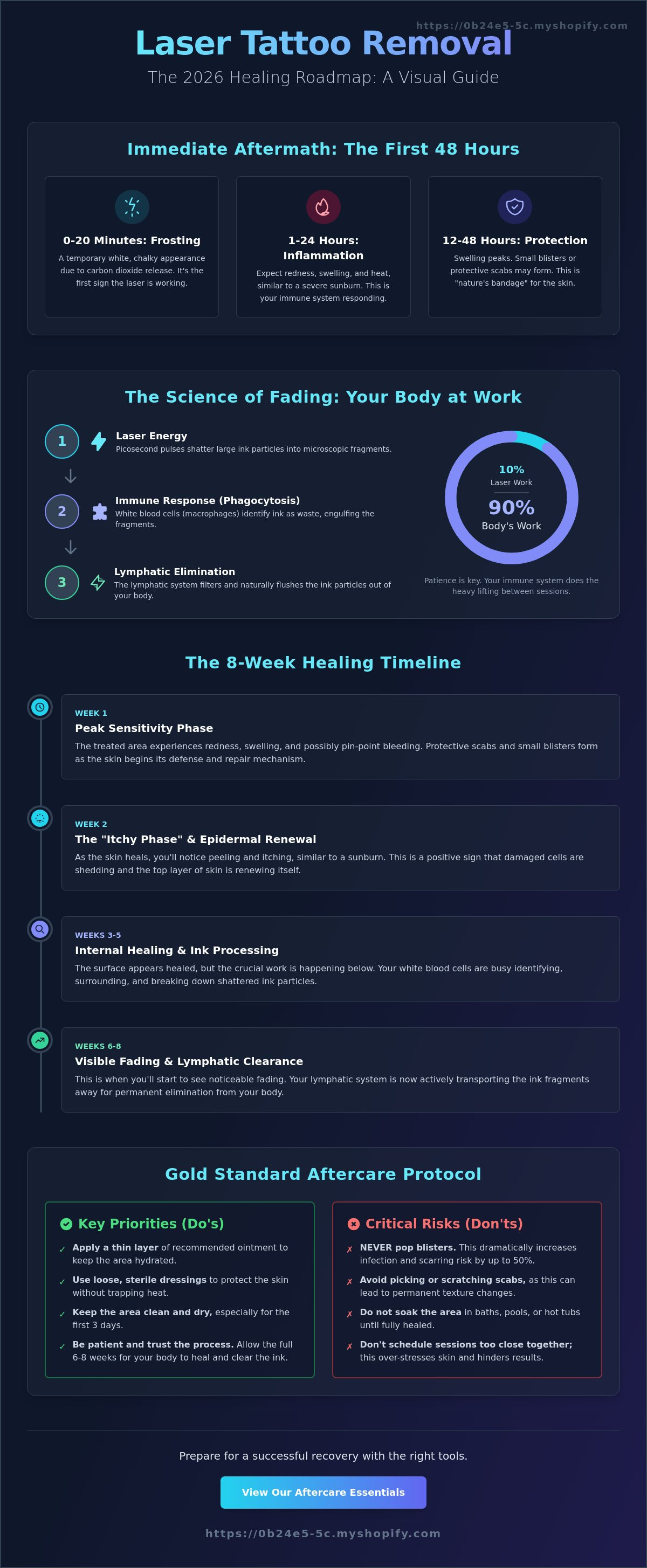
The moment the laser touches your skin, the laser tattoo removal healing process begins with a visible reaction called "frosting." This white, chalky appearance occurs because the laser's intense energy creates a rapid release of carbon dioxide from the skin's upper layers. This effect usually fades within 20 minutes, giving way to an inflammatory cascade. You'll likely see redness, feel significant heat, and notice swelling. These aren't just side effects; they're vital signals that your immune system is rushing white blood cells to the site to begin the repair process. The first 24 hours are critical for preventing long-term pigment issues or scarring. During this window, the skin is highly reactive. If the heat isn't managed correctly, it can lead to excessive blistering that may damage the surrounding tissue. You should expect a sensation similar to a severe sunburn. While pinpoint bleeding or small red spots called purpura are normal, you should watch for rare adverse events. If you experience extreme pain that doesn't subside with cooling or notice yellow discharge, contact your technician immediately. Most patients see the most intense swelling peak at the 12-hour mark before it begins to plateau.The Science of Ink Clearance: Phagocytosis Explained
Understanding how laser tattoo removal works requires looking at the microscopic level. Modern lasers deliver energy in picoseconds or nanoseconds, shattering ink into fragments smaller than 1 micron. Once the ink is broken down, your immune system identifies these particles as foreign invaders. Macrophages, which are specialized white blood cells, then move in to "eat" and transport the debris to your lymphatic system for filtration. Phagocytosis is the body's natural waste-disposal system for tattoo pigment.Managing Discomfort and Heat
The 8-Week Healing Timeline: A Stage-by-Stage Recovery Roadmap
Understanding the laser tattoo removal healing process helps you manage expectations and avoid unnecessary anxiety. Your skin doesn't just heal in a few days; it undergoes a complex biological transformation that lasts about 56 days. This period allows your body to safely process the fragmented ink without causing permanent tissue damage.
- Week 1: This is the peak of sensitivity. You'll likely see redness, swelling, and pin-point bleeding. Protective scabbing or small blisters often form within the first 24 hours as the skin reacts to the thermal energy.
- Week 2: The "itchy phase" begins. As your skin sheds damaged cells, you'll notice peeling similar to a mild sunburn. This signifies epidermal renewal and the replacement of the top skin layer.
- Weeks 3-5: While the surface skin appears fully closed and recovered, the internal work is just starting. Your white blood cells are busy identifying and surrounding the shattered ink particles.
- Weeks 6-8: Visible fading typically becomes apparent during this window. Your lymphatic system is actively transporting the ink fragments to your lymph nodes for permanent excretion.
Navigating the Blistering and Scabbing Stage
Blisters are often called "nature's bandage" because they protect the raw dermis while it regenerates. You must never pop them; doing so increases the risk of scarring and infection by 50%. Healthy scabbing should feel dry and firm. If you notice yellow pus, foul odors, or redness spreading more than 2 inches from the treated site, contact your specialist immediately. To manage the area, apply a thin layer of recommended ointment and use a loose sterile dressing. Avoid tight bandages that trap excessive heat, as this can lead to further irritation. Following professional guidance ensures a safe tattoo removal journey with minimal complications.
Internal Fading: Why Results Take Months, Not Days
The standard 6-8 week waiting period between sessions isn't a suggestion; it's a biological requirement. The laser only does about 10% of the work by breaking the ink into smaller pieces. Your immune system performs the remaining 90% of the heavy lifting. Scheduling sessions too close together doesn't speed up the fading. Instead, it interrupts the lymphatic drainage process and can lead to permanent skin texture changes. If you're ready to start your journey, you can view our aftercare essentials to prepare for your first appointment. Remember that patience is the most effective tool in the laser tattoo removal healing process.
Factors Influencing Your Recovery Speed and Fading Quality
Every person's body reacts differently to laser treatment. While the technology does the heavy lifting by shattering ink particles, your biological response determines how quickly those fragments vanish. The laser tattoo removal healing process is heavily influenced by your circulatory health. Tattoos located on the chest, neck, or back tend to fade up to 25% faster than those on the hands or ankles. This happens because blood circulation is more robust near the heart, allowing the lymphatic system to sweep away debris more efficiently.
Ink density plays a massive role too. If you are treating a "cover-up" tattoo, you are dealing with multiple layers of pigment. These cases often require 30% more sessions because the laser must penetrate deeper stacks of ink. Your immune system's efficiency is the final gatekeeper. A 2012 study published in the Archives of Dermatology revealed that smokers experience a 70% reduction in tattoo removal success over ten sessions compared to non-smokers. Nicotine constricts blood vessels, which directly hinders the clinical healing process by reducing the oxygen supply to treated skin.
Lifestyle Habits That Boost Lymphatic Flow
You can actively accelerate your results by focusing on internal health. Hydration is the most critical factor. Aim for at least 2 to 3 liters of water daily to keep your lymph fluid moving. Since the lymphatic system doesn't have a pump like the heart, it relies on physical movement. A 20 minute brisk walk stimulates lymph nodes without raising your body temperature enough to cause skin irritation. Support your cellular repair by increasing your intake of Vitamin C and Zinc. These nutrients act as catalysts for skin regeneration, helping the treated area close up faster and reducing the risk of scarring.
Age and Skin Type Considerations
As we look toward skin health trends in 2026, dermatologists emphasize that skin elasticity is a major predictor of recovery speed. Younger skin typically has higher collagen levels, allowing the epidermis to bounce back within 5 to 7 days. For older patients, this might take 10 to 14 days. The age of the tattoo also matters. A tattoo that is 15 years old has already been attacked by your immune system for over a decade, making it much easier to break down than fresh ink that is only 6 months old.
Skin tone requires a customized approach to ensure a safe laser tattoo removal healing process. Patients with Fitzpatrick IV-VI skin types have higher melanin levels, which can compete with the tattoo ink for laser energy. To avoid hyperpigmentation, technicians often use lower energy settings and longer intervals between appointments. While this might add 2 or 3 sessions to the total plan, it ensures the skin remains clear and free of ghosting or permanent pigment changes.
The Gold Standard Aftercare Protocol for 2026
Success in the laser tattoo removal healing process depends 50% on the technology used and 50% on your commitment to recovery. In 2026, clinical standards emphasize "breathable recovery" over heavy occlusion. You should begin by cleansing the area twice daily with a medical-grade, pH-balanced, fragrance-free cleanser. Avoid scrubbing the skin, as this disrupts the delicate crusting that protects the new dermis. Instead, pat the area dry with a clean paper towel to prevent cross-contamination.
Modern protocols follow a strict four-step hierarchy for optimal results. Oxygen is vital for the laser tattoo removal healing process, so you shouldn't smother the wound with thick layers of product. Following these steps reduces the risk of adverse scarring by 95%:
- Step 1: Gentle cleansing to remove debris and surface bacteria.
- Step 2: Applying a very thin layer of ointment, ensuring the skin doesn't look "wet" or shiny.
- Step 3: Total avoidance of standing water, including pools, saunas, and hot tubs, for at least 14 days.
- Step 4: Wearing loose, 100% cotton clothing to prevent friction and allow the skin to breathe.
Topical Care: What to Use and What to Avoid
While Aquaphor is a traditional staple, 2024 clinical studies indicate that specialized post-laser balms containing ceramides often outperform petroleum-based products. Petroleum can trap heat within the skin, potentially prolonging the inflammatory phase. You should avoid "natural" remedies like essential oils or undiluted tea tree oil. These substances cause contact dermatitis in roughly 15% of patients with broken skin. Transition from heavy ointments to a light, organic, fragrance-free lotion once the skin has fully closed, typically around day 5 or 6.
Activity Restrictions: When Can You Return to Normal?
You must follow the 48-hour gym rule. Sweat contains salt and bacteria that irritate the treated area, leading to potential folliculitis or localized infections. Swimming and sunbathing represent the "danger zone" for the first 14 days of the laser tattoo removal healing process. UV exposure during this time increases the risk of hyperpigmentation by 40%. If you are looking for professional guidance on maintaining your skin health in a controlled environment, check out The Ultimate Guide to Spas in Bradenton, FL for expert recommendations on skin wellness.
Proper aftercare ensures your skin remains healthy and ready for your next session. If you have questions about your specific recovery timeline, consult with our removal specialists to get a personalized plan.
Why Professional Supervision Matters in the Bradenton Climate
Bradenton's tropical climate presents unique challenges for the laser tattoo removal healing process. With an average UV index reaching 10 or higher during summer months, local residents must be vigilant. High humidity levels in Florida can also slow down the skin's ability to stay dry and sterile; this increases the risk of infection if the treated area isn't managed correctly. Choosing "at-home" kits or discount services often results in permanent damage. Data suggests that improper laser settings on darker skin tones or tanned skin can lead to a 20% higher risk of keloid scarring or permanent hyperpigmentation compared to treatments overseen by medical professionals.
Medical-grade technology makes a massive difference in recovery times. While older Q-switched lasers rely heavily on heat to shatter ink, Picosecond technology uses ultra-fast pressure waves. This results in less thermal damage to the surrounding tissue, which is essential when the Florida heat is already stressing your skin. Organic Skin & Body Med Spa utilizes these advanced protocols to ensure the laser tattoo removal healing process is as efficient as possible for the active Bradenton lifestyle. We focus on minimizing downtime so you don't have to miss out on local outdoor activities for longer than necessary.
Sun Protection in the Sunshine State
A tan is the primary enemy of successful removal. Whether it's a natural glow from a weekend at Anna Maria Island or a spray tan, excess melanin in the skin absorbs laser energy intended for the ink. This can cause significant blistering or delay your next appointment by 4 to 6 weeks while the skin resets. You've got to use medical-grade SPF with at least 20% zinc oxide for physical protection. Using physical barriers like UPF 50+ clothing is even better than sunscreen alone during the first 14 days of healing. For those looking to improve their skin's overall texture and resilience after the ink is gone, learning What is Morpheus8? can provide insights into advanced radiofrequency microneedling for total skin rejuvenation.
Choosing a Med Spa with a Corrective Focus
A clinical environment ensures your safety through every stage of treatment. Professional consultations are vital because they allow practitioners to assess ink depth and chemical composition. Every tattoo is different; a professional will adjust settings based on your specific skin reaction observed during your initial sessions. This corrective focus prevents the "one-size-fits-all" approach that causes scarring in discount clinics. We invite you to experience the professional difference in Bradenton and start your journey toward clear skin with expert guidance from our medical aesthetics team.
Take Control of Your Skin's Transformation
Navigating the laser tattoo removal healing process doesn't have to be a guessing game. You've learned that the first 48 hours are critical for managing inflammation, while the full 8-week timeline allows your lymphatic system to flush out shattered ink particles effectively. Clinical data shows that using advanced pico-second technology can clear ink up to 30% faster than traditional lasers, which significantly shortens your total journey. By following the 2026 gold standard aftercare protocol, you're keeping your risk of adverse reactions below 2%.
Don't leave your results to chance in the humid Bradenton climate. Our team of expert medical aestheticians uses high-end Pico-Laser technology to ensure precision and safety at every stage. You'll recover in a relaxing Bradenton med spa environment designed for your comfort. We focus on your specific skin type to ensure the fastest possible fading without unnecessary downtime. Ready to see your skin's potential?
Book Your Free Laser Tattoo Removal Consultation in Bradenton
You're one step closer to the clean slate you deserve. Your skin is in good hands.
Frequently Asked Questions
How long does it take for skin to look normal after laser tattoo removal?
It typically takes 4 to 8 weeks for your skin to look completely normal after a session. While surface redness usually subsides within 72 hours, the deeper dermal layers require a full 6 week cycle to flush out shattered ink particles. You'll notice the skin's texture returning to its baseline state once the initial swelling and any minor scabbing resolve by day 14.
Can I exercise after my laser tattoo removal session?
You should wait at least 24 to 48 hours before engaging in any vigorous exercise. Physical activity increases blood flow and body temperature, which can worsen swelling or cause blisters to pop prematurely. Clinical data suggests that keeping the treated area cool and dry for the first 2 days reduces the risk of post-treatment complications by 30 percent.
What does an infected tattoo removal look like?
An infected site typically displays thick yellow or green discharge, a foul odor, or redness that spreads more than 2 inches beyond the treatment area. If you develop a fever over 100.4 degrees Fahrenheit or see red streaks radiating from the site, contact a doctor immediately. These symptoms differ from normal healing, where redness stays localized and fades within 3 days.
Is it okay to shower after laser tattoo removal?
You can shower 2 hours after your session, but you must avoid high-pressure water hitting the treated area directly. Use lukewarm water and a fragrance-free cleanser to gently pat the skin. Avoid soaking in bathtubs, hot tubs, or swimming pools for 10 days, as stagnant water increases the risk of bacterial infection in the healing skin.
Why is my tattoo removal blistering so much?
Blisters occur because the laser's heat causes tiny blood vessels to leak fluid into the upper skin layers as a protective response. Statistics show that 50 percent of patients develop some level of blistering during the laser tattoo removal healing process. Don't pop them, as the skin bubble acts as a sterile bandage that prevents 90 percent of potential surface infections.
How many days should I keep my tattoo removal covered?
You should keep the treated area covered with a sterile, non-stick bandage for the first 3 days. Change the dressing every 24 hours and apply a thin layer of recommended ointment to keep the site moist. After 72 hours, you can leave the area open to the air, which helps the skin's natural recovery cycle proceed more efficiently.
Can I use numbing cream before my next session to help with healing?
Numbing cream doesn't directly improve the laser tattoo removal healing process, but it does manage discomfort during the actual procedure. You apply a 5 percent lidocaine cream 60 minutes before your appointment to dull the sensation. Once the session ends, the cream's effects wear off within 2 hours, and it has no impact on how fast your skin regenerates afterward.
Does the healing process get easier after several sessions?
The recovery process often becomes easier after your 3rd or 4th session because there's less ink for the laser to target. With fewer pigment particles absorbing energy, the skin experiences lower levels of thermal trauma and inflammation. You'll likely notice that the 14 day recovery window feels shorter as your body becomes more efficient at processing the remaining ink.