

Why does a small ink design on your finger often take significantly longer to fade than a large piece on your torso? While many expect rapid results for smaller surface areas, tattoo removal on hands is a biological marathon dictated by your body's circulatory system. It's natural to feel frustrated by the persistent visibility of the ink or to worry about potential scarring on delicate, highly mobile joints. These concerns are valid, as the extremities require a specialized approach to ensure the skin remains healthy throughout the treatment series.
This article provides a transparent look at the technical realities and biological challenges involved in clearing ink from the hands and fingers. You'll learn exactly why the distance from your heart affects the removal timeline and how professional protocols balance laser intensity with skin safety. We'll also examine the role of picosecond technology and the specific steps necessary to achieve complete clearance without permanent texture changes.
Key Takeaways
- Learn how the "Distance from the Heart" rule and lymphatic circulation dictate the timeline for tattoo removal on hands.
- Understand how ink density and specific color pigments influence the number of sessions required for complete clearance.
- Identify essential preparation steps, including sun avoidance and skin hydration, to protect your skin during the removal process.
- Discover how advanced laser technology and organic skincare principles work together to support skin barrier recovery on highly mobile joints.
The Unique Challenges of Tattoo Removal on Hands and Fingers
Tattoo removal on hands is a specialized laser procedure designed specifically for the body's extremities. Unlike treatments on the back or thighs, where thick layers of muscle and subcutaneous fat provide a significant buffer, the hands present a distinct anatomical landscape. A common misconception suggests that because the skin on the hands is thin, the ink should be easier to reach and remove. This is a myth. While the skin is indeed thinner, the lack of fatty tissue and the distance from the heart create biological barriers that slow down the clearance process. Professional protocols must account for these factors to ensure the skin remains intact while effectively breaking down pigment.
Expectations for tattoo removal on hands are often higher because the area is impossible to ignore. You see your hands every time you type, drive, or shake someone's hand. This constant visibility makes the intervals between sessions feel longer than they actually are. While a tattoo on the shoulder might be forgotten for weeks, hand ink is a persistent reminder of the progress yet to be made. This psychological factor requires a transparent understanding of the timeline from the very first consultation.
Visibility and Professional Implications
Anatomy of the Hand and Laser Safety
The anatomy of the hand requires a conservative and precise approach to laser safety. Ink particles in this area sit in close proximity to bones, tendons, and vital ligaments. Professional Tattoo removal techniques utilize specific wavelengths that target only the pigment, leaving the surrounding structural tissues unharmed. Treating the knuckles and joints is particularly complex. The skin in these areas is frequently in motion, which can affect the healing process if the laser settings are too aggressive. We prioritize the preservation of skin texture, ensuring that the removal of ink does not result in stiffness or scarring that could impede the hand's natural mobility. Each session is calibrated to the specific depth of the ink while respecting the delicate nature of the finger's surface.
Why Hand Tattoos Require More Patience: The Circulation Factor
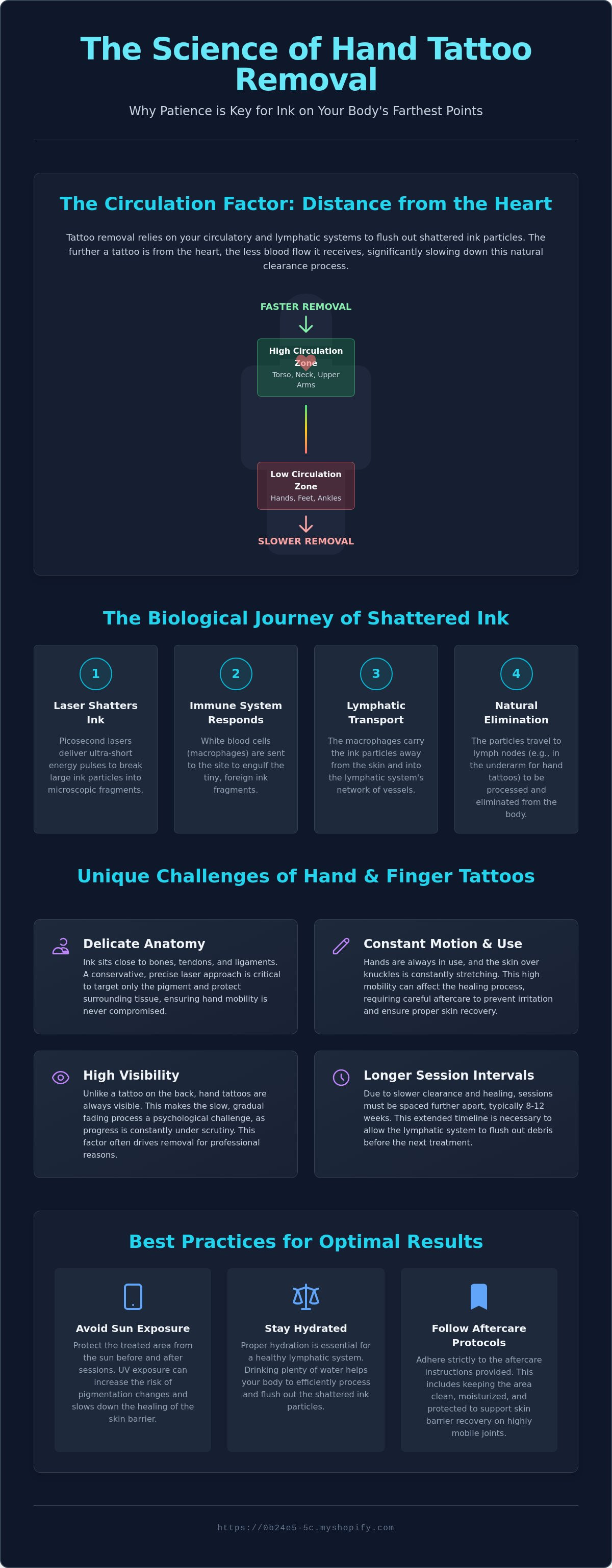
The effectiveness of laser treatment depends entirely on your body's physiological ability to eliminate shattered ink particles. While the laser provides the necessary energy to break down pigment into microscopic fragments, it's the circulatory and lymphatic systems that perform the actual removal. For patients undergoing tattoo removal on hands, the biological timeline is extended because of the "Distance from the Heart" rule. This principle states that the further a tattoo is located from the body's core, the slower the clearance rate will be. Because the hands and fingers are at the furthest points of the extremities, they receive less robust blood flow compared to the torso or upper arms.
Blood flow is the primary vehicle for transporting immune cells to the site of the shattered ink. In the fingers, blood vessels are smaller and circulation is more susceptible to changes in external temperature. When your hands are cold, peripheral vasoconstriction further reduces the efficiency of this transport process. According to the FDA on tattoo removal, various factors including the location of the tattoo and the individual's immune system response determine how quickly results become visible. On the hands, this biological "flush out" phase simply takes more time than it does on fleshier, more central areas of the body.
The Lymphatic System Journey
The lymphatic system serves as the body’s waste management for pigment. Once the laser shatters the ink, white blood cells called macrophages engulf the particles and carry them through the lymphatic channels to the nearest lymph nodes. For a hand tattoo, these particles must travel all the way up the arm to the axillary lymph nodes in the underarm. This long transit route is why a biological "cooldown" period of eight to twelve weeks is required between sessions. Attempting to treat the area again before the lymphatic system has cleared the previous round of debris is inefficient and doesn't speed up the overall process.
Managing Expectations for Fading
It's common for the first few sessions of tattoo removal on hands to show minimal visible change. This phenomenon, known as delayed fading, occurs because the initial laser passes often target the densest, topmost layers of ink. Because the circulation in the fingers is slower, it may take several weeks for the first signs of lightening to appear. You can marginally improve this efficiency by staying active; regular exercise increases systemic circulation and supports lymphatic drainage. If you're ready to begin this process with a realistic, medically supervised plan, you can explore our laser removal services to learn more about our specific protocols for extremities.
Factors Influencing Your Hand Tattoo Removal Timeline
While circulatory efficiency establishes the baseline for ink clearance, the physical characteristics of the tattoo itself determine the technical complexity of each session. Several variables influence how many treatments you will need for successful tattoo removal on hands. These include the chemical composition of the ink, the depth of pigment delivery, and your specific skin type on the Fitzpatrick scale. Professional lasers must be calibrated to these unique factors to ensure that the energy effectively shatters the ink without causing thermal damage to the surrounding tissue.
The depth of the ink is often dictated by the method of application. Professional tattoos typically use high-density pigments delivered to a uniform depth in the dermis. In contrast, "hand-poked" or amateur tattoos often feature irregular depths and varying concentrations of ink. According to Laser Tattoo Removal science, the success of the procedure relies on the laser's ability to reach these specific depths while matching the absorption spectrum of the pigment. Your skin type also dictates the speed of the process; individuals with darker skin tones require more conservative laser settings to protect the natural melanin, which can extend the total number of sessions required for complete clearance.
Ink Composition and Pigment Volume
The chemical makeup of the ink significantly impacts the removal timeline. Black ink is the most straightforward to treat because it absorbs all laser wavelengths. Vibrant finger tattoos featuring neons, light blues, or greens require specific frequencies and often more sessions to achieve full fading. Heavy linework on the knuckles is particularly stubborn because artists often use higher pigment volumes in these areas to prevent the tattoo from fading naturally due to movement. If your tattoo contains white or flesh-toned highlights, these may contain titanium dioxide, which can occasionally darken when exposed to laser energy, requiring a modified clinical approach.
The "Friction Factor" on Fingers
The specific location on the hand introduces unique environmental challenges. Tattoos on the back of the hand generally respond more predictably than those on the fingers. The palm-side of the fingers and the "side-walls" of the digits are notoriously difficult to treat because the skin texture is different and the ink is often placed deeper to survive the high-friction environment. Frequent handwashing and the constant mechanical motion of the joints can irritate the skin during the initial 48-hour recovery phase. This constant activity increases the risk of ink migration or blurring between sessions, making it essential to follow strict post-treatment protocols to maintain the integrity of the skin's surface.
Preparing for Laser Tattoo Removal in Bradenton, FL
Proper preparation is the foundation of a safe clinical outcome. For those seeking tattoo removal on hands, the pre-treatment phase is particularly rigorous due to the high level of environmental exposure this area receives. You must ensure your skin is in a baseline state, free from irritation or significant pigment changes, to allow the laser to target the ink accurately. Following a strict protocol reduces the risk of adverse reactions and supports the biological timeline required for effective ink clearance. Success isn't just about the technology; it's about the condition of the skin before the first pulse occurs.
The Florida Sun Factor
Bradenton's climate presents a unique challenge for extremity treatments. Tanned skin cannot be safely treated with lasers because the increased melanin in the epidermis competes with the tattoo ink for the laser's energy. This competition significantly increases the risk of burns or permanent hyperpigmentation. Your hands are constantly exposed to UV rays, especially while driving. We recommend wearing UPF-rated driving gloves or applying a high-SPF physical blocker containing zinc oxide throughout the entire removal process. Even a minor tan can delay your next session by several weeks until the skin returns to its natural tone.
Pre-Session Protocol
Your appointment begins with a clean surface. Thoroughly wash your hands to remove all lotions, perfumes, or residues that could interfere with the laser pulse. You should also avoid caffeine and alcohol for at least 24 hours before your session. These substances can increase skin sensitivity and alter your blood flow, potentially leading to more discomfort or increased pinpoint bleeding. A professional consultation is the first step to assess your skin health and determine if you're a candidate for immediate treatment. This assessment ensures that your skin barrier is strong enough to handle the laser energy without compromising the underlying tissue.
Certain medications and supplements can complicate the laser's impact on your skin. Avoid blood-thinning agents such as aspirin, ibuprofen, and fish oil for three to five days before your session, as these increase the likelihood of bruising and swelling. Preparing a healing kit beforehand ensures you don't have to scramble post-treatment. This kit should include a fragrance-free, gentle cleanser and a specialized ointment to maintain the skin barrier. If you're ready to begin your journey toward clear skin, you can schedule your initial aesthetician services to establish your customized treatment plan for tattoo removal on hands.
The Organic Skin & Body Med Spa Approach to Hand Tattoo Removal
Successful tattoo removal on hands requires a balance between aggressive pigment shattering and meticulous skin preservation. At Organic Skin & Body Med Spa, we recognize that the skin on your fingers and knuckles is under constant mechanical stress. Our clinical protocol focuses on high-precision laser application followed by an organic recovery phase to ensure the skin barrier remains resilient. We provide a professional, transparent environment where your treatment plan is tailored to the specific chemical composition of your ink and your unique physiological response.
Our facility in Bradenton maintains a clinical-yet-comfortable atmosphere, prioritizing your safety and comfort during every session. We operate under strict Florida medical regulations, ensuring that every procedure is supervised and performed by qualified professionals trained on the latest equipment. By combining medical-grade technology with a holistic focus on skin health, we address both the technical and biological requirements for complete ink clearance.
Advanced Laser Precision in Bradenton
We utilize picosecond laser technology, which represents the 2026 industry standard for effective ink removal. Unlike older nanosecond systems that rely heavily on heat, picosecond lasers deliver ultra-short pulses of energy that create a photomechanical effect. This process shatters ink particles into much smaller fragments without causing significant thermal damage to the surrounding hand tissue. Our technology features adjustable wavelengths, which is essential for treating the multi-colored designs often found on the extremities. You can learn more about our facility and the standards we maintain by exploring The Best Spas in Bradenton, FL: A Complete 2026 Guide.
Healing with an Organic Edge
We invite you to Book a Free Tattoo Removal Consultation to start your journey toward clear skin. During this initial meeting, we'll assess your tattoo's density and provide a realistic timeline for your specific removal goals.
Achieving Complete Clearance for Your Hand Tattoos
Successfully navigating tattoo removal on hands requires an understanding of your body's unique biological pace. We've explored how lymphatic circulation and specific ink characteristics dictate your timeline. While the extremities present anatomical challenges, professional intervention ensures these are managed safely. Our facility combines state-of-the-art laser technology with organic post-care protocols to protect your skin's integrity. Every procedure is performed by certified laser technicians within a relaxing med spa environment designed for your comfort.
You don't have to settle for ink that no longer represents your professional or personal goals. By following a customized plan and respecting the necessary healing intervals, you can achieve the clear, unscarred results you desire. We focus on providing the technical precision needed for delicate areas like the fingers and knuckles. Ready to begin your journey? Schedule Your Free Tattoo Removal Consultation in Bradenton to receive a personalized assessment of your ink. We're here to guide you through every stage of the process with transparency and clinical expertise.
Frequently Asked Questions
Is tattoo removal on the hands more painful than other areas?
The hands and fingers are generally more sensitive than fleshier areas like the arm or back. This sensitivity occurs because the skin is thinner and sits closer to nerve endings and bone. We utilize specialized cooling technology during the procedure to manage discomfort and ensure the session remains tolerable for the client.
How many sessions will I need to remove a finger tattoo?
Most finger tattoos require between 8 and 12 sessions for complete clearance. The exact number depends on the ink's depth and whether the tattoo was applied professionally or by an amateur. Because the extremities have slower circulation, the body takes more time to process the shattered pigment after each session of tattoo removal on hands.
Can I drive myself home after a hand tattoo removal session?
You can safely drive yourself home immediately following your treatment. The procedure involves local skin cooling or topical numbing rather than systemic anesthesia, so your cognitive and motor functions remain unaffected. If the treated area feels tender, you should ensure it doesn't interfere with your grip on the steering wheel or your ability to signal.
Will laser tattoo removal leave a scar on my knuckles?
Laser treatments rarely cause scarring when performed with the correct wavelengths and professional post-care protocols. While the knuckles are highly mobile joints, our advanced picosecond technology minimizes thermal damage to the skin's surface. Following our organic post-care instructions is essential to prevent irritation that could lead to texture changes during the healing phase.
How much does hand tattoo removal cost in Bradenton, FL?
The cost of tattoo removal on hands varies based on the total surface area and the complexity of the ink colors. Smaller designs on the fingers typically fall into a different price bracket than full-coverage pieces on the back of the hand. We provide specific pricing assessments during a private consultation once we evaluate your skin type and ink density.
What happens if my hand tattoo gets sun exposure after treatment?
Sun exposure on recently treated skin significantly increases the risk of hyperpigmentation and blistering. If your hands are exposed to UV rays without protection, the skin may develop dark spots or heal unevenly. You must use a physical sunblock containing zinc oxide or wear UPF-rated gloves to protect the area throughout the entire removal process.
Can I wear rings or jewelry during the healing process?
You should avoid wearing rings or bracelets for at least 72 hours after your session. Jewelry can trap bacteria against the treated skin or cause friction that irritates the area as it begins to heal. Once any initial swelling or redness has subsided, you may resume wearing jewelry if the skin surface is completely intact and free of irritation.
How long should I wait between hand tattoo removal sessions?
We recommend waiting 8 to 12 weeks between each session. This interval allows your lymphatic system enough time to transport the shattered ink particles away from the extremities and toward the lymph nodes. Treating the area too frequently doesn't speed up the process and can increase the risk of skin irritation or permanent damage.