

Achieving a renewed complexion in Bradenton doesn't require the harsh downtime or synthetic chemicals often associated with traditional resurfacing, making a professional Organic Face Peel an ideal alternative. Many Florida residents experience stubborn hyperpigmentation and texture issues but hesitate to use aggressive synthetics due to skin sensitivity. It's a common concern that professional resurfacing might leave the skin irritated or vulnerable for weeks after a treatment.
These professional peels utilize professional-grade botanical acids to effectively resurface the skin while maintaining its natural integrity. You'll discover how these plant-based formulations provide a precise middle ground, offering the safety of organic ingredients alongside the clinical potency needed for real dermal transformation. These treatments provide smoother skin texture and a glowing complexion without the irritation of traditional chemical peels.
This guide explains the technical process of botanical acid renewal and the specific benefits for sun-damaged skin. It also details how these treatments integrate into a professional skincare regimen to reduce the appearance of pores and manage sun exposure effects. We'll examine the regulatory standards for Florida facial specialists and the importance of professional application for safety and efficacy.
Key Takeaways
- Distinguish between professional-grade botanical resurfacing and retail masks to ensure you receive clinical-level exfoliation and safety.
- Identify how naturally sourced Alpha Hydroxy Acids (AHAs) and Beta Hydroxy Acids (BHAs) penetrate the dermal layers to clear pores and refine texture.
- Evaluate the comparative benefits of an Organic Face Peel regarding reduced downtime and visible flaking when compared to synthetic chemical treatments.
- Follow a precise 48-hour preparation protocol, including the suspension of retinols and physical scrubs, to maximize the efficacy of your professional skin analysis.
- Learn how to integrate botanical peels as a functional maintenance step between more intensive treatments such as Morpheus8 or SkinPen microneedling.
Understanding the Organic Face Peel: Nature’s Answer to Skin Renewal
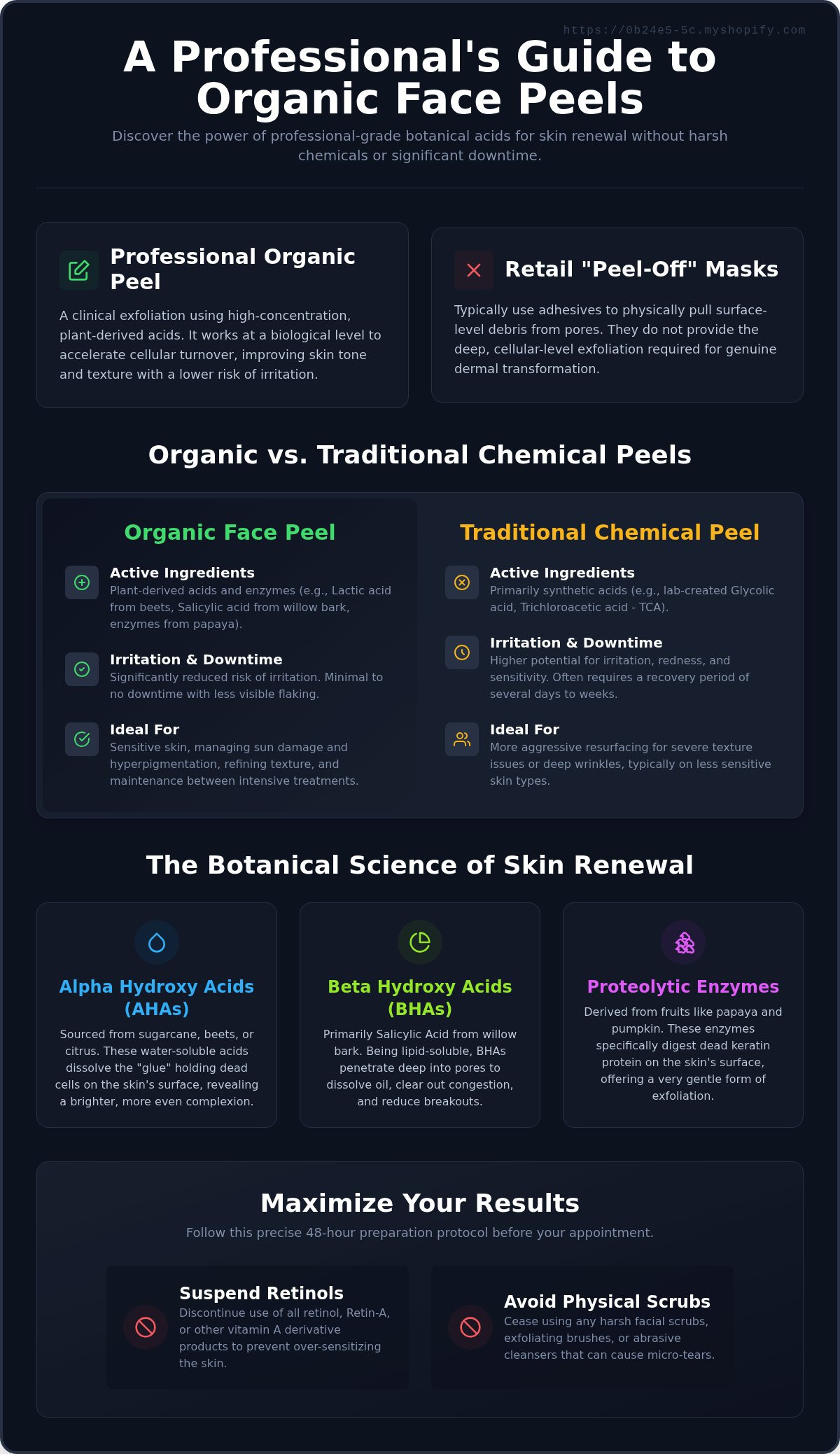
An Organic Face Peel represents a specialized professional exfoliation method that utilizes high-concentration, plant-derived acids to stimulate skin renewal. Unlike synthetic alternatives, these treatments rely on botanical sources to achieve clinical results. In a medical spa environment, this is categorized as corrective organic skincare. It bridges the gap between traditional holistic facials and aggressive medical procedures by providing measurable results with a lower risk of irritation.
It's vital to distinguish these professional treatments from the "peel-off" masks found in retail stores. Retail products typically use adhesives to physically pull debris from the surface. In contrast, a professional organic peel works at a biological level to accelerate cellular turnover and improve skin tone. To better understand the technical differences between various resurfacing methods, one might ask: What is a Chemical Peel? While traditional peels often use synthetic acids, organic versions achieve similar resurfacing goals using nature-derived compounds like lactic acid from beets or citric acid from citrus fruits.
The Core Purpose of Professional Exfoliation
The skin naturally undergoes a process called desquamation, where dead cells are shed to make room for new ones. As we age or face environmental stressors, this process slows down. This leads to a dull, uneven texture. Professional organic acids work by dissolving the intercellular glue that holds these expired cells to the surface. By removing this barrier, the skin's ability to absorb active ingredients from serums and moisturizers increases significantly. This makes your entire home care routine more effective. It ensures that nutrients actually reach the living layers of the dermis rather than sitting on top of dead debris.
Who is the Ideal Candidate for an Organic Peel?
Many clients in Bradenton deal with "Florida skin," which is characterized by chronic sun exposure and early signs of photo-aging. These individuals are often ideal candidates for an Organic Face Peel. This treatment is particularly effective for:
- Individuals with sensitive skin who react poorly to synthetic glycolic acids.
- Clients across various Fitzpatrick skin types seeking safe hyperpigmentation management.
- Those looking to refine skin texture and reduce pore appearance without significant downtime.
- Patients needing a maintenance step between more intensive procedures like Morpheus8.
Because botanical acids are generally less inflammatory, they provide a controlled way to manage skin health. This professional treatment provides a functional solution without the typical recovery period. It serves as an excellent entry point for those new to clinical skincare or as a maintenance step for seasoned clients who want to sustain their results between laser sessions.
The Botanical Science: How AHAs and Fruit Enzymes Resurface Skin
The efficacy of a professional Organic Face Peel relies on precisely stabilized botanical compounds that mirror the skin's natural chemistry. These formulations primarily utilize Alpha Hydroxy Acids (AHAs) derived from natural sources like sugarcane and fermented milk. Reviewing The Science of AHAs reveals how these molecules weaken the cellular bonds in the stratum corneum to facilitate exfoliation. It's a common misconception that botanical acids are less potent than their synthetic counterparts; in a clinical setting, they provide a controlled renewal process that respects the skin's biological rhythm.
Beta Hydroxy Acids (BHAs), specifically salicylic acid sourced from willow bark, perform a distinct lipid-soluble function. This chemical structure allows BHAs to penetrate deep into the follicles to clear sebum and debris that often lead to congestion. Proteolytic enzymes derived from papaya and pumpkin complement these acids by specifically digesting keratin proteins on the skin's surface. This enzymatic action ensures an Organic Face Peel remains a viable option for those with sensitive complexions because it only targets dead protein matter. Botanical antioxidants neutralize free radicals to protect newly revealed skin cells from environmental damage and oxidative stress.
Primary Botanical Acids and Their Functions
Professional protocols often combine multiple acids to target diverse dermal concerns simultaneously. Lactic acid, fermented from plant sources, acts as a humectant to provide hydration while brightening the complexion. Malic and tartaric acids, sourced from apples and grapes, provide the gentle resurfacing necessary for delicate skin areas. Azelaic acid, commonly found in grains, is utilized to address persistent redness and hyperpigmentation. These ingredients work in synergy to provide a comprehensive organic skin care experience that achieves clinical outcomes without the need for synthetic additives.
The Role of Soothing Agents in Organic Formulations
Maintaining the skin's pH balance is a critical component of professional resurfacing. Organic formulations integrate concentrated aloe vera and chamomile to mitigate post-peel inflammation and reinforce the skin barrier. Herbal extracts like green tea offer a high concentration of polyphenols for robust antioxidant defense during the vulnerable post-exfoliation phase. Professional aestheticians select these balanced formulations to ensure that the acidity required for effective renewal doesn't compromise the skin's protective lipid layer. This functional approach ensures the skin remains hydrated and resilient throughout the corrective process.
Organic Peels vs. Traditional Chemical Peels: A Comparative Analysis
The primary distinction between professional organic resurfacing and traditional chemical treatments lies in the source and concentration of active ingredients. Traditional peels often utilize synthetic acids, such as lab-created glycolic or trichloroacetic acid (TCA), designed to induce rapid, aggressive exfoliation. While effective, these synthetic formulations can sometimes trigger post-inflammatory hyperpigmentation (PIH), particularly in individuals with darker skin tones or those frequently exposed to the Florida sun. Conversely, an Organic Face Peel utilizes botanical acids that are naturally buffered by the vitamins and minerals present in the parent plant. This slow and steady approach prioritizes long-term skin health over immediate, high-intensity trauma.
Choosing between these methods requires an understanding of how the skin responds to different pH levels and acid concentrations. The FDA information on Alpha Hydroxy Acids highlights that the safety and efficacy of any peel depend on these technical factors. Synthetic peels often aim for a deep "controlled injury" to force cellular regeneration. Organic versions focus on supporting the skin's natural desquamation process without compromising the lipid barrier. This makes botanical options a more sustainable choice for ongoing maintenance and corrective work in a medical spa setting.
Downtime and Recovery Expectations
Clinical recovery refers to the time needed for the skin to physically heal from a procedure, while "social downtime" describes the period where visible flaking or redness makes a client feel uncomfortable in public. Deep chemical peels often result in a "frosting" effect, where the skin turns white as proteins coagulate, followed by several days of heavy peeling. An Organic Face Peel typically bypasses this phase. Most clients experience an immediate "glow" rather than significant irritation. This lack of visible trauma allows for an immediate return to daily activities, making it a functional choice for busy professionals in Bradenton.
Efficacy for Specific Skin Concerns
The choice of peel depth is often dictated by the severity of the skin concern. Traditional deep chemical peels may be superior for treating deep cystic acne or severe structural scarring that requires significant dermal remodeling. However, organic acids are highly effective for managing surface-level issues like melasma, sunspots, and general dullness. Botanical formulations provide a lower risk profile for those prone to sensitivity. A professional consultation is the most reliable way to determine if a client's specific skin condition requires the intensity of a synthetic acid or the nourishing resurfacing of a botanical protocol.
The Professional Experience: Preparing for Your Appointment in Bradenton
A successful Organic Face Peel begins with a comprehensive skin analysis conducted by a licensed aesthetician. This evaluation ensures that the selected botanical acids align with your specific skin type and current dermal health. In a clinical setting, a professional identifies underlying conditions that may affect the peel’s outcome, such as active inflammation or compromised barrier function. This professional oversight is what differentiates a medical spa treatment from unregulated home applications. It ensures that the corrective process remains safe and predictable.
The procedure follows a precise sequence to ensure safety and efficacy. First, the skin undergoes a thorough cleansing to remove surface lipids and environmental pollutants. The botanical acid solution is then applied in controlled layers. During this phase, it's common to feel a mild tingling sensation as the acids interact with the stratum corneum. Finally, the solution is neutralized or removed, and soothing botanical agents are applied to stabilize the skin’s pH. This structured approach prevents over-exfoliation and minimizes the risk of adverse reactions.
Pre-Treatment Guidelines for Optimal Results
To achieve a predictable response from your Organic Face Peel, you must adhere to a specific pre-peel protocol. You should discontinue the use of topical prescriptions, such as retinoids or high-strength AHAs, at least 3 to 5 days before your appointment. Avoid physical scrubs or aggressive manual exfoliation for 48 hours prior to the session. Proper hydration is essential; well-hydrated skin responds more predictably to acid application and heals faster. Bradenton residents must be particularly cautious with sun exposure. If you've sustained a sunburn within 7 days of your appointment, the treatment must be rescheduled to prevent complications.
Post-Peel Care and Maintenance
After your session, you might experience mild redness or "purging," where the skin temporarily develops small blemishes as deep-seated impurities come to the surface. This is a functional part of the renewal process. The "golden rule" of post-peel care is to never pick, peel, or scrub the skin. Forcing the exfoliation process can lead to scarring or post-inflammatory hyperpigmentation. For long-term maintenance, many clients find that alternating these peels with other hydration-focused treatments is beneficial. You can learn more about scheduling in our guide on how often should you get a hydrafacial.
In the Florida climate, post-treatment sun protection is mandatory. Botanical acids increase sun sensitivity for up to one week following the procedure. You must apply a broad-spectrum SPF of 30 or higher daily, even on overcast days. This step protects the newly revealed cells and prevents the return of hyperpigmentation. To begin your skin transformation, you can schedule a professional skin analysis with our licensed team today.
Maximizing Skin Health at Organic Skin & Body Med Spa
Organic Skin & Body Med Spa implements a holistic, results-oriented approach to skin health. By combining botanical purity with clinical expertise, the facility provides a space where corrective treatments occur within a professional, medical environment. The use of an Organic Face Peel is a cornerstone of this strategy. It allows licensed aestheticians to manage cellular turnover effectively while preparing the skin for more intensive modalities. This transparent methodology ensures that every procedure serves a specific functional purpose in your long-term skin rejuvenation plan.
Integrating Peels with Advanced Aesthetics
This commitment to holistic care often includes exploring natural ways to support the body’s recovery and overall vitality. For those seeking innovative ways to enhance their wellbeing, Numans.no offers specialized solutions in health and natural pain relief that align with a proactive approach to self-care.
Professional resurfacing acts as a vital preparatory step for high-intensity energy treatments. For instance, an Organic Face Peel can prime the dermal layers by removing obstructive dead cell buildup, which allows for more uniform energy delivery during what is morpheus sessions. This synergy between botanical acids and radiofrequency microneedling maximizes the collagen induction response. Additionally, these peels serve as essential maintenance between SkinPen microneedling treatments or laser resurfacing. By maintaining a consistent exfoliation schedule, you preserve the structural improvements achieved through more invasive procedures. This integrated protocol ensures that your results don't plateau over time.
Why Choose Our Bradenton, FL Location?
Selecting a facility for corrective skincare requires a focus on both convenience and clinical standards. Our med spa is located on East State Road 70, providing accessible care for residents of Bradenton and Lakewood Ranch. Unlike general spas in bradenton fl, our facility operates as a medically supervised environment. This distinction is critical for safety when using professional-grade botanical acid concentrations. Licensed aestheticians monitor your skin's progress across multiple sessions, adjusting protocols based on real-time dermal responses. This level of professional oversight ensures that your skin renewal journey remains both effective and safe.
The environment at Organic Skin & Body Med Spa is designed to be stress-free and restorative. While the focus remains on corrective outcomes, the procedural experience is relaxing. We invite you to experience a professional consultation where we can map out a customized plan for your skin. Whether you're addressing Florida sun damage or seeking a smoother texture, our team provides the technical expertise required for meaningful change. We focus on providing clear directions and transparent expectations for every client who enters our facility.
Begin Your Skin Renewal Journey in Bradenton
Professional botanical resurfacing provides a functional middle ground between basic holistic facials and aggressive synthetic treatments. By utilizing stabilized plant acids, you achieve measurable improvements in skin texture and tone without the prolonged clinical recovery typical of traditional chemical options. These treatments serve as a vital maintenance step, ensuring your skin remains healthy and receptive to advanced procedures. It's a straightforward process to integrate these corrective sessions into your existing wellness routine to maintain a radiant complexion.
Selecting a professional Organic Face Peel ensures that your treatment is overseen by corrective skin specialists within a medically supervised environment. Our licensed medical aestheticians provide the technical analysis needed to customize your protocol specifically for the challenges of the Florida climate. This structured approach to skincare allows you to address sun damage and hyperpigmentation with transparency and precision. We invite you to experience a relaxing med-spa environment dedicated to your long-term dermal health.
Schedule Your Professional Organic Peel in Bradenton today to begin your transformation. We look forward to providing the expert care your skin requires to reach its full potential.
Frequently Asked Questions
Will my skin actually peel after an organic face peel?
Visible peeling depends on the specific botanical acid concentration and your skin's current condition. While some clients experience micro-flaking, others notice only a temporary tightness followed by a renewed glow. Unlike deep synthetic peels that cause sheets of skin to shed, organic formulations focus on microscopic exfoliation. This means you achieve cellular turnover without the intense physical peeling that requires social downtime or clinical recovery.
How often should I schedule a professional organic peel?
A standard maintenance schedule involves receiving a professional Organic Face Peel every 4 to 6 weeks. This timeline aligns with the natural 28-day skin cell renewal cycle. If you're addressing specific concerns like hyperpigmentation from Florida sun exposure, your aesthetician might recommend a series of treatments spaced closer together. Consistency ensures that the skin remains in a state of active renewal and prevents the accumulation of dead surface debris.
Can I get an organic face peel if I have active acne?
Yes, specific organic peels are designed to address active congestion and inflammatory acne. Formulations containing willow bark, which is a natural source of salicylic acid, are lipid-soluble. This allows them to penetrate deep into pores to clear sebum and debris. A professional skin analysis is required to ensure the skin barrier isn't too compromised for acid application. Your aesthetician will adjust the protocol to reduce inflammation without causing further irritation.
Is an organic peel safe during pregnancy?
Many botanical acids are considered safe during pregnancy, but you must consult with your healthcare provider before scheduling any professional resurfacing. Lactic acid and fruit enzymes are often preferred over salicylic acid or retinol-based treatments during this time. Because hormonal changes can increase skin sensitivity, our specialists prioritize gentle, hydrating formulations. Always disclose pregnancy or nursing status during your consultation to ensure the safest protocol selection for your needs.
How long does a professional organic peel appointment take?
A typical appointment for an Organic Face Peel lasts approximately 45 to 60 minutes. This duration includes a preliminary skin analysis, thorough cleansing, the acid application phase, and the subsequent neutralization process. If the treatment is integrated with other services like a Hydrafacial, the session may extend to 75 minutes. This efficient timeframe makes the procedure a functional option for clients who need corrective results without a significant time commitment.
What is the difference between an organic peel and a regular facial?
A regular facial focuses primarily on surface hydration, relaxation, and manual extractions. In contrast, an organic peel is a corrective treatment that uses high-concentration botanical acids to induce biological changes in the skin. While a facial provides immediate comfort, a professional peel targets deeper concerns such as cellular turnover, fine lines, and stubborn hyperpigmentation. It's a technical procedure designed to produce measurable dermal improvements rather than temporary surface brightness.
Can I go in the sun after my peel in Bradenton?
You must avoid direct sun exposure for at least 48 to 72 hours following a professional resurfacing treatment. Because the peel removes the protective outer layer of dead skin, the new cells underneath are highly vulnerable to UV damage. In the intense Florida climate, wearing a broad-spectrum SPF 30 or higher is mandatory. Failure to protect the skin post-peel can lead to increased sensitivity and the development of new sunspots.
Are there any side effects to botanical-based peels?
Potential side effects are generally mild and temporary, including slight redness, a tingling sensation during application, or minor micro-flaking. These reactions typically resolve within 24 to 48 hours as the skin stabilizes. Because organic formulations use naturally buffered acids, the risk of severe chemical burns or permanent scarring is significantly lower than with synthetic alternatives. Following the provided post-care instructions is the most effective way to ensure a predictable recovery.