

What matters most for microneedling safety isn’t just the treatment itself. It’s whether the procedure is appropriate for your skin and health, and whether it’s performed and followed by suitable care. If you’re asking, “is microneedling safe,” it’s sensible to consider pain, irritation, infection, and recovery before deciding. Temporary redness, swelling, and sensitivity are common, while infection and scarring are less common but important risks to understand.
Safety depends on candidacy, technique, and aftercare. Active infections, open wounds, certain skin conditions, a history of keloid scarring, bleeding disorders, pregnancy, breastfeeding, and some medications may affect whether treatment is suitable. Radiofrequency (RF) microneedling also differs from standard microneedling because it adds heat energy, so its risks and recovery may vary.
This guide covers expected short-term effects, warning signs that need medical attention, and factors to discuss during an individual assessment. It also explains how SkinPen microneedling differs from Morpheus8 RF microneedling, both offered at Organic Skin & Body Med Spa in Bradenton. Use the information to prepare questions and make a more informed decision.
Key Takeaways
- Whether microneedling is safe for you depends on your skin, health history, medications, and treatment plan.
- Professional microneedling, at-home devices, and RF microneedling differ in purpose and safety considerations.
- Disclose skin concerns, health conditions, and recent procedures during an assessment.
- Prepare by sharing relevant health information and following the specific pre- and post-care guidance you receive.
- Learn what to consider when exploring SkinPen microneedling in Bradenton.
Is microneedling safe? What the treatment does to your skin
Professional microneedling may be appropriate for some people, but safety depends on individual skin and health factors, the technique used, and aftercare. The procedure uses fine needles to create controlled punctures in the skin, with the aim of prompting a repair response. That response may support changes in skin texture, but reactions and results vary, and no particular outcome is guaranteed. Microneedling is also known as collagen induction therapy.
What happens during a microneedling treatment?
A professional device moves across the treatment area, creating small punctures in the skin. The treatment depth and pattern depend on the device, area, and plan. Technique matters because the skin’s response can vary with how the procedure is performed and how a person heals. Microneedling creates a controlled injury, but it doesn’t produce a uniform response, so treatment and recovery aren’t identical for everyone.
Standard microneedling and RF microneedling are different procedures. RF devices deliver radiofrequency energy along with needling, which changes the treatment and its considerations. Before proceeding, make sure you understand which device and procedure are planned.
Which reactions are expected, and which need attention?
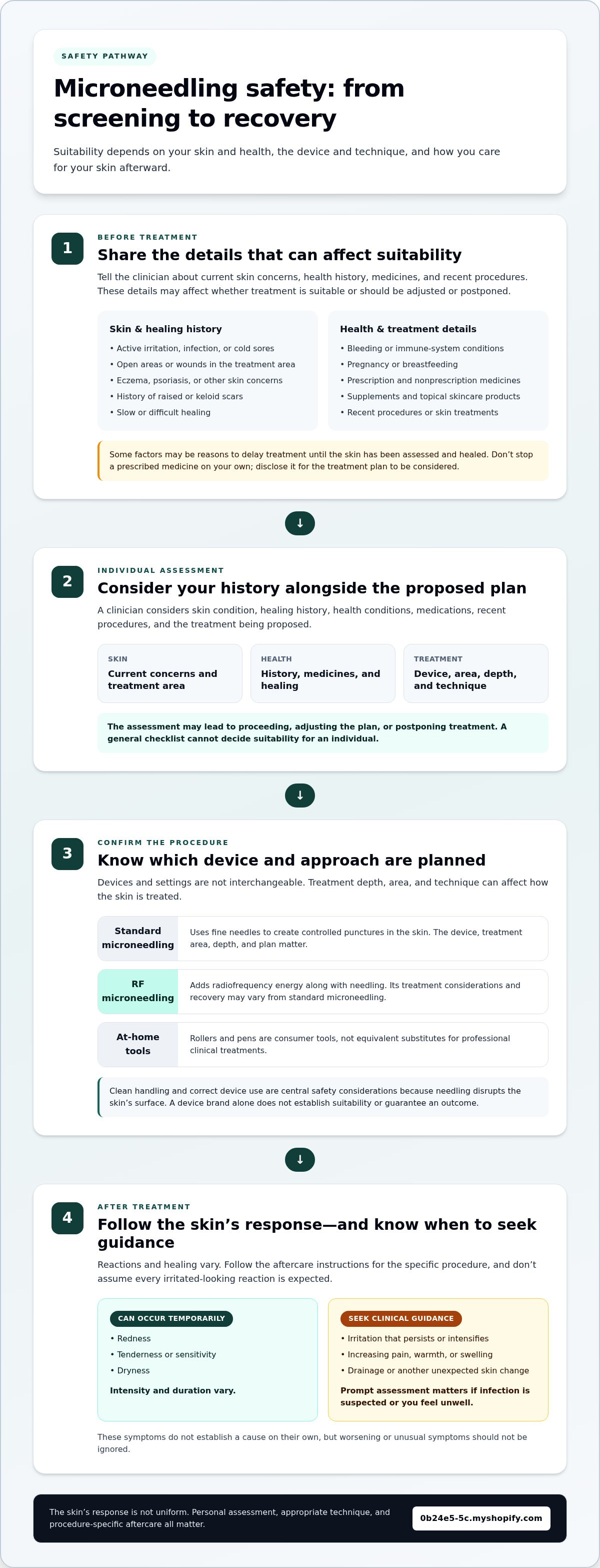
Temporary redness, tenderness, sensitivity, or dryness can occur after treatment. These effects may be part of the skin’s response to needling, but their intensity and duration vary. Follow the aftercare instructions for your specific procedure. Don’t assume every reaction is expected simply because the skin looks irritated.
Temporary redness or sensitivity may occur, but worsening or unusual symptoms need clinical attention. Seek clinical guidance if irritation persists or intensifies, or if you notice increasing pain, warmth, swelling, drainage, or another unexpected skin change. These symptoms don’t establish a cause on their own, but they shouldn’t be ignored. Prompt assessment is especially important if you suspect infection or feel unwell.
So, is microneedling safe? It may be suitable when the person, device, and treatment approach are appropriate, but it isn’t risk-free or right for everyone. An individual assessment can help identify factors that may affect treatment or healing. Organic Skin & Body Med Spa offers SkinPen microneedling in Bradenton. Before treatment, make sure you understand your candidacy and the plan being considered.
How microneedling risks relate to skin, health, and treatment technique
Safety isn’t determined by the device alone. Skin condition, healing history, health conditions, medications, recent procedures, and the proposed treatment all help determine whether microneedling may be suitable. An assessment gives the clinician an opportunity to consider these factors and decide whether to proceed, adjust the plan, or postpone treatment.
Which skin or health factors should be discussed first?
Tell the clinician about active irritation, a skin infection, cold sores, open areas, or wounds in the planned treatment area. These may be reasons to delay treatment until the skin has been assessed and healed. Also mention a history of raised or keloid scars, slow or difficult healing, eczema or psoriasis, bleeding or immune-system conditions, and pregnancy or breastfeeding.
Share a complete list of prescription and nonprescription medicines, supplements, and topical skincare products. Some may affect bleeding, skin sensitivity, or healing. Recent procedures can also influence timing. Don’t stop a prescribed medicine on your own; disclose it so the treatment plan can be considered in light of your health needs.
Suitability needs to be assessed individually, not inferred from a general checklist. A checklist can help you prepare, but it can’t account for every health history, skin response, or treatment detail.
Why do device, depth, and technique matter?
Microneedling devices and settings aren’t interchangeable. Needle depth, treatment area, and technique can affect how the skin is treated. RF microneedling adds radiofrequency energy and has separate considerations. A device’s brand name alone doesn’t show that a particular treatment is appropriate or guarantee an outcome. The device and planned approach need to be considered alongside your skin and health history.
Clean handling and correct device use are central safety considerations because needling disrupts the skin’s surface. The FDA guidance on microneedling devices outlines device-related considerations and potential risks. Understand the procedure and follow the device-specific preparation and aftercare directions you’re given. A general online checklist can’t replace an individual assessment.
If you’re considering microneedling in Bradenton, bring your medication list and note any recent skin treatments or current concerns to your assessment. Organic Skin & Body Med Spa offers SkinPen microneedling and Morpheus8 RF microneedling. You can review microneedling treatment options and consider questions about your skin and proposed treatment plan.
Is professional microneedling safer than at-home or RF microneedling?
These approaches differ in who performs the procedure, what the device is designed to do, and how much assessment is involved. Professional standard microneedling and RF microneedling are clinical treatments. At-home rollers and pens are consumer tools, not equivalent substitutes. None is automatically suitable for every person. The answer to “is microneedling safe” depends partly on the method, the skin being treated, and how the device is used.
| Approach | Who performs it and purpose | Depth, energy, and assessment |
|---|---|---|
| Professional standard microneedling | A trained treatment professional uses a device intended for professional skin treatment. | Needle depth and technique are set for the treatment plan. Assessment helps identify skin or health factors that may affect suitability. |
| At-home rollers or pens | The user operates a consumer tool, often for a different purpose and with a different design than professional equipment. | Tools vary, and their use may still irritate or injure skin. Personal assessment may be absent, so correct use and hygiene are important considerations. |
| RF microneedling | A treatment professional uses a device that combines needling with radiofrequency energy. | Needles and energy both factor into the treatment plan. Assessment should consider the device, settings, skin, and individual health factors. |
What is different about at-home microneedling?
Consumer tools and professional devices may differ in design, intended use, and how they interact with skin. Incorrect use, inadequate cleaning, or sharing a device can raise concerns about irritation or infection. Don’t use a tool on irritated or broken skin, and don’t share it. If you use or are considering an at-home device, discuss it with a qualified clinician, especially before professional treatment. Yale Medicine offers further microneedling treatment details.
Does RF microneedling have different considerations?
Yes. RF microneedling delivers radiofrequency energy as well as creating needle punctures, so it isn’t identical to standard microneedling. Morpheus8 is an RF treatment offered by Organic Skin & Body Med Spa, while SkinPen is its standard microneedling service. Neither approach is universally safer. The appropriate option depends on individual assessment and treatment goals. For more about the RF method, read the Morpheus8 RF microneedling guide.
How to prepare for microneedling and support safer recovery
Preparation starts with a clear account of your health and skin history. Use the steps below to get ready, and follow the treatment-specific directions you receive rather than relying on a generic routine. Preparation and aftercare can differ by device, treatment plan, and individual response.
What should you discuss before your appointment?
Before treatment, gather details that may inform your assessment. Be ready to discuss:
- Prescription and nonprescription medications, supplements, and skincare products you use.
- Allergies, active skin changes, irritation, infections, or wounds.
- Relevant health conditions, previous healing difficulties, or a history of unusual scarring.
- Recent skin procedures and any concerns about your recovery.
Ask which treatment is planned and how its device type may affect preparation or expected downtime. If you’re in Bradenton or elsewhere in Florida, mention how much time you expect to spend outdoors and discuss how sun exposure may factor into preparation and recovery. Don’t stop prescribed medication or make major skincare changes unless your clinician advises you to.
What should you do after microneedling?
Follow the aftercare instructions for your specific treatment. Avoid adding products or activities based on a general online routine, since guidance may differ for standard microneedling and RF microneedling. If an instruction is unclear, ask the treating clinic to explain it before you proceed. Keep the instructions accessible so you can refer to them during recovery.
Some temporary sensitivity or redness may occur, but don’t dismiss worsening or unexpected symptoms. Contact the clinic promptly if irritation increases, persists, or comes with concerning changes such as increasing pain, warmth, swelling, or drainage. Seek timely clinical guidance if you suspect infection or aren’t sure whether a reaction is expected.
So, is microneedling safe for you? Preparation can’t remove every risk, but sharing relevant information and following individualized directions can support a considered treatment decision. Organic Skin & Body Med Spa offers SkinPen microneedling in Bradenton. Explore microneedling treatment options as you prepare questions about treatment and recovery.
Considering SkinPen microneedling in Bradenton? Choose an informed next step
A sound safety decision takes several factors into account: your candidacy, the treatment technique, the device, and the care instructions for recovery. No general checklist can determine whether treatment is right for you. An individual assessment can help clarify whether SkinPen microneedling fits your skin and health history, or whether a different plan or timing may be more appropriate.
Organic Skin & Body Med Spa offers SkinPen microneedling in Bradenton. SkinPen is standard microneedling, while Morpheus8 is an RF treatment that combines microneedling with radiofrequency energy. These aren’t interchangeable procedures. Knowing which treatment is being discussed helps you ask informed questions about its purpose, potential risks, preparation, and recovery.
What to expect when discussing SkinPen microneedling
Bring a current list of medications and skincare products, along with details about allergies, relevant health conditions, previous healing concerns, and recent skin procedures. Describe your treatment goals and any current changes or irritation in your skin. Complete information helps make the discussion more specific to you.
An individual assessment should cover possible risks and what recovery may involve for the proposed treatment. Ask what preparation is recommended, which aftercare instructions apply, and what symptoms should prompt follow-up. A friend’s experience or a general description of recovery can’t predict your response.
How to decide whether to take the next step
Before making a decision, make sure you understand the essentials:
- Which treatment is being considered: SkinPen microneedling or RF microneedling?
- How do your skin, health history, medications, and healing experience affect candidacy?
- What potential risks and recovery considerations apply to your treatment plan?
- What preparation and aftercare instructions should you follow?
Clear answers can help you weigh potential benefits against risks without treating a device name as a safety guarantee. If you’re unsure, take time to consider the information and discuss remaining questions as part of your assessment. You don’t need to base your decision on general claims about microneedling.
For local readers, explore skin rejuvenation treatments at Organic Skin & Body Med Spa and consider what you’d like to discuss about individual suitability. The goal is an informed decision, whether you proceed with SkinPen microneedling or decide it isn’t right for you.
Make an Informed Choice About Microneedling
So, is microneedling safe? It may be appropriate for some people, but the answer depends on individual candidacy, treatment technique, device type, and aftercare. Share relevant health history, medications, skincare products, and recent procedures during your assessment. Ask which reactions may be expected, what symptoms need attention, and how to prepare for the specific treatment being considered.
Standard microneedling and RF microneedling aren’t the same procedure. Organic Skin & Body Med Spa in Bradenton, Florida, offers SkinPen microneedling and Morpheus8 RF treatment. Understanding the difference can help you discuss which approach may suit your needs without assuming either is right for everyone.
A thoughtful decision starts with clear information and realistic expectations. If you’re considering your next step, explore skin rejuvenation treatments and prepare questions about candidacy, risks, and recovery. An individualized discussion can help you move forward at a pace that feels informed and comfortable.
Frequently Asked Questions
Is microneedling safe for all skin types?
No. Microneedling isn’t automatically appropriate for every skin type or condition. Whether microneedling is safe for you depends on factors such as current skin health, healing history, treatment area, and device settings. Skin tone alone doesn’t determine suitability. Share any history of irritation, pigmentation changes, scarring, or skin conditions during an individual assessment so the treatment plan can be considered for your needs.
Can microneedling cause infection or scarring?
Yes. Infection or scarring can occur, although temporary redness, tenderness, or sensitivity are more common reactions. Needling disrupts the skin, so device handling and cleanliness matter. Follow the aftercare directions for your procedure, and don’t use shared or improperly handled tools. Seek clinical guidance for worsening pain, warmth, swelling, drainage, prolonged irritation, or unusual skin changes rather than assuming they’re part of normal recovery.
How long does redness last after microneedling?
Redness commonly settles within about 24 to 48 hours after standard microneedling, though recovery varies. Some people may have sensitivity or other visible effects for longer, and the skin can take several days to heal fully. RF microneedling may involve different recovery considerations. Follow the aftercare instructions for your specific procedure, and contact the clinic if redness worsens, lasts longer than expected, or comes with concerning symptoms.
Is at-home microneedling safe?
At-home rollers and pens aren’t equivalent to professionally administered microneedling, and improper use can cause irritation, infection, or scarring. Consumer tools may differ in design and intended use from professional devices, but they still need careful handling. Don’t share a device or use it on irritated or broken skin. If you use or are considering an at-home tool, discuss it with a qualified clinician, especially before professional treatment.
Who should avoid microneedling or postpone treatment?
People with an active skin infection, cold sores, open wounds, a history of keloid scarring, or a bleeding disorder may need to avoid or postpone treatment. Pregnancy or breastfeeding, eczema or psoriasis, a compromised immune system, healing concerns, and certain medications also warrant discussion before proceeding. This isn’t a complete screening checklist. Share your health and skin history so suitability can be assessed individually.
Is RF microneedling the same as regular microneedling?
No. Standard microneedling creates controlled punctures in the skin, while RF microneedling also delivers radiofrequency energy. The added energy means the procedures have different treatment considerations and shouldn’t be assumed to have identical risks or recovery. Organic Skin & Body Med Spa offers SkinPen microneedling and Morpheus8 RF treatment. Which approach may be appropriate depends on individual assessment, not the device name alone.
Can I get microneedling in sunny Florida?
Living in Florida doesn’t automatically rule out microneedling, but sun exposure and outdoor plans are important to discuss when planning treatment. Tell the clinician about recent sun exposure, current skin irritation, and how much time you expect to spend outdoors. Follow the preparation and aftercare guidance for your specific procedure. For readers in Bradenton, an individual discussion can help clarify timing and recovery considerations.