

What if your body's own immune system was the secret key to erasing that unwanted ink? While the laser does the heavy lifting, the actual disappearance of a tattoo is a biological partnership between advanced light technology and your natural healing processes. Understanding the laser tattoo removal process step by step is the essential first move for anyone looking to reclaim their skin in 2026. It's common to feel a sense of anxiety regarding the discomfort of the laser pulse or the potential for skin damage. You're likely wondering exactly how many sessions it takes to achieve a completely clear result without the risk of scarring.
We agree that transparency is vital when it comes to aesthetic procedures. This guide provides a professional and functional breakdown of what to expect during your removal journey. You'll gain a clear understanding of how picosecond lasers target pigment and how your body's white blood cells eventually clear the debris. We'll preview every stage of the journey, from the technical requirements of your first consultation to the final fading of the ink. This information ensures you can move forward with confidence and find a trusted local provider in Bradenton to help you reach your goals.
Key Takeaways
- Learn how Selective Photothermolysis allows advanced lasers to shatter ink particles without causing damage to the surrounding skin tissue.
- Understand the laser tattoo removal process step by step, including the importance of professional skin typing and precise laser calibration.
- Discover how biological factors such as ink color and tattoo location influence the efficiency of your body's natural ink clearance.
- Master essential aftercare protocols to manage the initial healing phase and protect your skin's integrity throughout the journey.
- See how specialized laser removal services in Bradenton integrate advanced technology with a commitment to maintaining overall skin health.
Understanding Laser Tattoo Removal: How Science Erases Ink
Tattoos are designed to be permanent. When ink is injected into the skin, it settles deep within the tissue. This stability is why your tattoo doesn't simply wash away or fade within weeks. To understand the laser tattoo removal process step by step, you must first understand the biological environment where that ink resides. It's a complex interaction between foreign pigment and your body's natural defense mechanisms.
The Role of the Dermis and Persistent Pigment
The skin consists of several layers. The outermost layer, the epidermis, sheds constantly. If ink stayed there, it would vanish in about a month. Instead, tattoo needles deposit pigment into the dermis. This deeper layer is stable and doesn't shed. Your immune system recognizes the ink as a foreign object immediately. Specialized white blood cells called macrophages attempt to engulf the ink particles to carry them away. However, most ink particles are far too large for these cells to consume. Professional tattoos often feature densely packed pigment at a consistent depth, while amateur tattoos may have uneven placement. The dermis serves as the ink's permanent home until laser intervention occurs.
How Selective Photothermolysis Works
Modern removal relies on a principle called selective photothermolysis. This process uses specific wavelengths of light to target pigment without harming the surrounding clear skin cells. Different colors absorb different light frequencies. For instance, black ink absorbs almost all wavelengths, while red requires a specific green light frequency. Various Tattoo removal techniques have existed for years; however, none are as precise as the modern laser's photo-acoustic effect.
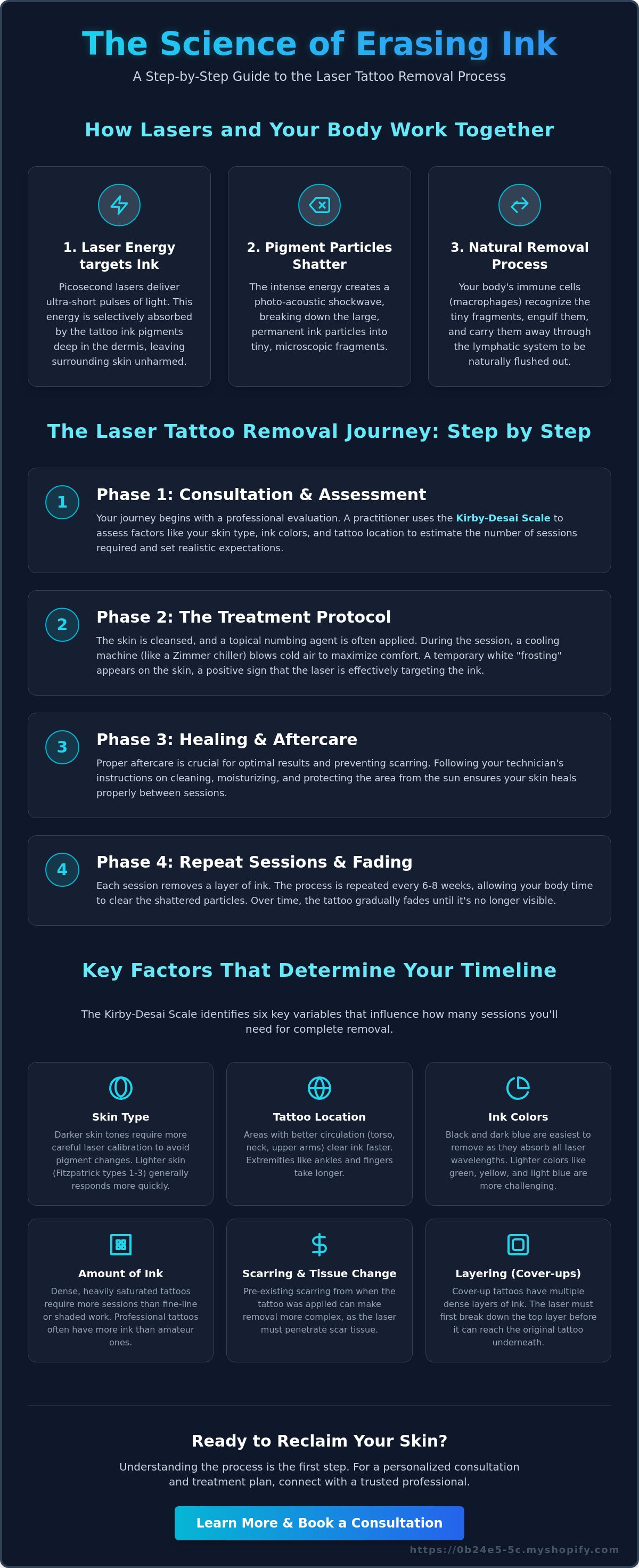
When the laser hits the ink, it creates a rapid heat expansion. This happens so quickly that it creates a shockwave, shattering the large ink particles into tiny fragments. This transition from "permanent" to "removable" is the core of the laser tattoo removal process step by step. Once the ink is broken down, those same macrophages that failed before can finally succeed. They pick up the microscopic debris and move it through the lymphatic system for natural excretion. Pulse duration is critical during this phase. If the pulse is too long, heat spreads to the skin cells and causes damage. If it's short enough, only the ink is affected.
One session is rarely enough because ink is often applied in layers. The laser effectively peels back these layers of pigment session by session. The top layer of ink absorbs the energy first, shielding the pigment underneath. Only after the body clears the shattered top layer can the laser reach the deeper ink in subsequent appointments. This gradual reduction ensures the skin remains healthy while the tattoo slowly fades from view.
The Laser Tattoo Removal Process Step by Step
Moving from the biological theory of ink entrapment to physical removal requires a structured clinical approach. The laser tattoo removal process step by step is designed to maximize ink clearance while maintaining the structural integrity of your skin. This sequence ensures that every pulse of light is calibrated to your unique physiology and tattoo characteristics.
Phase 1: Consultation and Skin Assessment
The journey begins with a comprehensive medical history review and physical examination of the tattoo. Practitioners use the Kirby-Desai scale to provide an objective estimate of the number of sessions you'll require. This scale assigns numerical values to six specific factors: your skin type on the Fitzpatrick scale, the tattoo's location, ink colors used, the amount of ink present, any existing scarring, and whether the tattoo is layered. Tattoos located further from the heart, such as those on ankles or fingers, typically require more sessions due to slower blood circulation. This initial phase sets realistic expectations for either significant fading or total removal.
Phase 2: The Treatment Day Protocol
On the day of your session, the skin is thoroughly cleansed to remove oils or debris. A topical numbing agent is often applied to manage the sensation of the laser pulse, which many patients describe as the rapid snap of a rubber band. To further increase comfort, clinicians use Zimmer chillers to blow constant cold air onto the treatment area. During the active laser pass, you'll observe a phenomenon known as "frosting." This occurs when the laser's energy causes a rapid release of carbon dioxide from the skin, creating a temporary white, opaque appearance. This is a positive clinical indicator that the ink has successfully absorbed the energy. Patients should understand the benefits and risks of laser removal before beginning their first session to ensure they're prepared for the immediate post-treatment appearance.
Phase 3: The Lymphatic Elimination Cycle
The work doesn't end when the laser is turned off. Once the pigment is shattered into microscopic debris, your immune system begins the heavy lifting. Specialized white blood cells move into the area to engulf the fragmented ink. These cells then transport the particles through the lymphatic system for permanent elimination. This biological cleanup is why a 6 to 8 week wait between sessions is mandatory. If you treat the area too soon, you're targeting ink that your body hasn't had the chance to clear yet, which increases the risk of skin damage without improving results. Staying hydrated and maintaining active circulation can support this elimination phase. If you're ready to begin your journey, you can explore our professional laser tattoo removal services to schedule your assessment. This laser tattoo removal process step by step ensures your body has the time it needs to heal and clear ink efficiently.
Key Factors That Determine Your Removal Timeline
The duration of your treatment journey isn't a fixed number. It's a variable timeline influenced by your biology, the chemistry of the ink, and your lifestyle choices. Understanding the laser tattoo removal process step by step requires acknowledging that some tattoos simply leave the body faster than others. While technology does the initial work of shattering pigment, your body's efficiency in clearing that pigment determines the final result.
The Role of Ink Color and Depth
Ink color is perhaps the most significant variable in determining how many sessions you'll need. Black ink is the easiest to remove because it absorbs all laser wavelengths effectively. Red ink is also generally responsive to specific frequencies. However, vibrant greens, sky blues, and yellows are more challenging. These colors require specialized lasers that can target their unique absorption spectra. White ink presents a specific risk; it can oxidize and turn permanently dark or grey when hit by a laser pulse. Older tattoos often fade faster due to natural degradation, as the body has already spent years trying to break down the pigment. Professional tattoos are usually more difficult to remove than amateur ones because the ink is typically denser and placed deeper within the dermis.
Ink Removal Difficulty Ranking:
- Easiest: Black, Dark Blue, Brown
- Moderate: Red, Orange, Dark Purple
- Challenging: Green, Light Blue, Yellow, Neon colors
Skin Tone and the Fitzpatrick Scale
Safety is the primary concern when treating different skin tones. We use the Fitzpatrick scale to categorize how skin responds to heat and light. For patients with darker skin tones (Fitzpatrick types IV through VI), the laser must be carefully calibrated. If the settings are too aggressive, the laser might target the skin's natural melanin instead of the tattoo ink. This can result in hypopigmentation, which is the permanent lightening of the skin. According to the Mayo Clinic on tattoo removal, choosing a provider who understands color science and uses safe wavelengths, such as the 1064nm Nd:YAG laser, is essential for protecting the skin's integrity.
Location also dictates the speed of your results. Tattoos located on the chest, neck, or back tend to fade faster because they're closer to the heart and have superior blood circulation. In contrast, tattoos on the hands, ankles, or feet usually take longer to clear. Your health habits matter too. Smoking can significantly slow down the laser tattoo removal process step by step by constricting blood vessels and limiting the immune system's ability to transport shattered ink particles. Conversely, staying hydrated and maintaining an active lifestyle supports the lymphatic drainage necessary for a clear outcome.
Preparation and Aftercare: Ensuring Optimal Results
The success of the laser tattoo removal process step by step depends as much on your preparation and aftercare as it does on the laser technology itself. Clinical outcomes are significantly improved when the skin is in an optimal state before treatment and supported during the biological elimination phase. Adhering to professional protocols reduces the risk of adverse reactions and ensures the most efficient ink clearance possible.
Pre-Treatment Checklist for Bradenton Clients
Living in a high-UV environment like Florida requires specific logistical preparation. You must strictly avoid sun exposure on the treatment area for at least four weeks prior to your appointment. Tanned or sunburned skin contains higher levels of melanin, which can distract the laser from the ink and increase the risk of skin discoloration. Additionally, you should arrive with a clean, shave-free surface to allow the laser to reach the dermis without obstruction. What you wear to your session is equally important. Choose loose-fitting cotton clothing that won't rub against the treated area, as friction can irritate the skin immediately following the procedure. It's also necessary to review any medications with your provider, specifically those that increase photosensitivity or thin the blood, as these can impact the healing process.
Post-Session Healing and Skin Protection
Immediately following your session, the treated area will feel similar to a moderate sunburn. This sensation typically lasts for about 48 hours. During this initial window, you should focus on keeping the area cool and protected. While generic petroleum jelly is a common suggestion, we recommend medical-grade ointments that support the skin's barrier without trapping excessive heat. Blistering and scabbing are normal parts of the laser tattoo removal process step by step. These are signs that your body is reacting correctly to the shattered pigment. However, the "no picking" rule is absolute. Forcing a scab to peel before it's ready can lead to permanent scarring or infection, which complicates future sessions.
Long-term skin health between sessions is vital for maintaining the elasticity of the dermis. High-quality hydration and sun protection are your best tools during the six-to-eight-week waiting period. For a deeper look at recovery strategies and local resources, you can read our guide on Post-Treatment Care for Laser Removal. Consistent care ensures that your skin remains healthy enough to undergo the next round of treatment without delay. If you're ready to begin your journey with a professional team, you can schedule your laser tattoo removal session to receive a personalized treatment plan.
Professional Tattoo Removal at Organic Skin & Body Med Spa
Choosing the right facility is the final, most critical component of the laser tattoo removal process step by step. While the biological mechanisms of ink clearance remain the same, the precision of the technology and the expertise of the practitioner determine the safety and speed of your results. At Organic Skin & Body Med Spa, we provide a clinical environment that prioritizes skin health and procedural transparency for our Bradenton clients.
Advanced Laser Technology in Bradenton
Our facility utilizes advanced laser systems designed for high-precision pigment targeting. This technology allows us to address a wide spectrum of ink colors while minimizing heat transfer to the surrounding tissue. Safety is our primary objective. We calibrate our equipment based on the specific variables discussed earlier, such as your Fitzpatrick skin type and the density of your tattoo's ink. This customized approach ensures that each session is as efficient as possible. For clients seeking total skin rejuvenation following their removal journey, we often discuss how our laser expertise complements other advanced treatments like Morpheus8. Integrating radiofrequency microneedling can help improve skin texture and tone in areas where a tattoo once resided.
A Stress-Free Environment for Corrective Care
There is a significant difference between receiving treatment in a tattoo shop and a dedicated medical spa. Our environment is designed for corrective care, overseen by licensed professionals who understand the complexities of dermal health. We address the "Organic" difference by focusing on the skin's recovery. Laser treatment is inherently traumatic to the dermis; therefore, our protocols include supporting the skin's natural barrier and immune response throughout the laser tattoo removal process step by step. This holistic focus on recovery helps prevent the common pitfalls of removal, such as persistent redness or textural changes.
Our philosophy is rooted in functional, helpful communication. We provide clear directions for your pre-treatment preparation and post-session care to ensure you feel confident at every stage. We don't just focus on the removal of ink; we focus on the health of the skin that remains. If you're ready to start fresh, you can book your laser tattoo removal consultation in Bradenton at our East State Road 70 location. Our team will evaluate your tattoo, review your medical history, and establish a realistic timeline for your specific goals. Reclaiming your skin requires a professional partnership, and we're here to guide you through each clinical phase with precision and care.
Reclaiming Your Skin with Precision Technology
Navigating the laser tattoo removal process step by step requires patience and a commitment to clinical protocols. You now understand that ink clearance is a gradual biological journey that relies on the precision of light energy and the efficiency of your lymphatic system. By prioritizing sun protection and professional skin typing, you can achieve clear results while maintaining the integrity of your dermis. Success is a partnership between advanced technology and your body's natural healing capabilities.
Our expert medical aesthetics team in Bradenton, FL, is dedicated to providing safe and effective outcomes. We utilize advanced laser technology capable of addressing all ink types through personalized treatment plans. This ensures that your specific physiology and tattoo characteristics are always the primary focus during every session. We focus on transparency and functional care to guide you toward your desired outcome without ambiguity.
When you're ready to move forward, we're here to provide the direct and objective guidance you need for a successful transformation. Schedule Your Professional Tattoo Removal Consultation in Bradenton to begin your journey toward clear, ink-free skin today.
Frequently Asked Questions
Is the laser tattoo removal process painful?
How many sessions will I need to see full results?
Most patients require between 5 and 12 sessions for complete clearance. The exact number of treatments in the laser tattoo removal process step by step depends on the ink's density, the tattoo's age, and its location on your body. Professional tattoos typically require more sessions than amateur ones because the pigment is more concentrated and placed deeper within the dermal tissue.
Can all colors be completely removed?
Black and red inks respond most effectively to laser energy because they absorb the widest range of wavelengths. While advanced technology can target colors like green, sky blue, and yellow, these often require more sessions and specialized laser settings. Some fluorescent or neon inks may be more resistant to treatment. We'll evaluate your specific ink palette during your initial consultation to set realistic expectations.
Will laser tattoo removal leave a scar on my skin?
Scarring is an uncommon side effect when a licensed professional performs the procedure using properly calibrated equipment. The laser is designed to target pigment without damaging the surrounding skin cells. However, improper aftercare, such as picking at scabs or excessive sun exposure during the healing phase, can increase the risk of permanent textural changes. Following all post-treatment instructions is vital for maintaining skin integrity.
How much time should I wait between removal sessions?
A minimum waiting period of 6 to 8 weeks between appointments is mandatory. This downtime is a critical part of the laser tattoo removal process step by step because it allows your lymphatic system to transport the shattered ink particles out of the body. Treating the area too frequently doesn't speed up the results; instead, it increases the risk of skin irritation and potential damage to the dermis.
What happens if I have a tan on the day of my appointment?
If you have a tan on the treatment area, your session must be rescheduled. Tanned skin has higher levels of melanin, which can absorb the laser's energy and lead to burns or permanent hypopigmentation. We require patients to avoid sun exposure and tanning beds for at least four weeks before each session. This ensures the laser can safely and effectively target the tattoo ink rather than your skin's natural pigment.
Can I get a new tattoo over the area where I had a removal?
You can receive a new tattoo over the treated area once the skin has fully recovered. We recommend waiting at least 12 weeks after your final removal session before applying new ink. This waiting period ensures the dermis is healthy and the immune system has finished clearing the previous pigment. Many patients choose partial removal to fade an old design enough for a high-quality cover-up.
Is laser tattoo removal safe for all skin types?
Laser removal is safe for all skin types when the practitioner uses appropriate wavelengths for your Fitzpatrick scale rating. We utilize specific lasers, such as the 1064nm Nd:YAG, which are safer for darker skin tones because they bypass the melanin in the epidermis. Choosing a provider who understands color science is essential for preventing complications like hyperpigmentation or lightening of the natural skin tone during the corrective process.