

Approximately 24% of Americans with tattoos have at least one they regret, yet many hesitate to act because they fear the consequences of the treatment itself. It's natural to feel anxious about potential scarring or unexpected skin reactions when you first research the risks of laser tattoo removal. You want clear answers about what happens to your skin during the healing process and whether the procedure is truly safe for your specific skin type.
This clinical guide clarifies the biological mechanisms of ink fragmentation and the safety protocols used to protect your skin's integrity. You'll gain a thorough understanding of common skin responses versus rare complications, along with actionable steps to minimize your personal risk profile. We also outline the strict Florida Board of Medicine regulations and physician supervision requirements that govern these procedures in 2026. This information ensures you can move forward with confidence, knowing exactly how to identify a safe, high-standard environment for your laser tattoo removal or laser skin treatments.
Key Takeaways
- Learn how laser technology shatters ink into micro-fragments that your immune system naturally eliminates through biological processes.
- Distinguish between expected skin responses like frosting and the clinical risks of laser tattoo removal to manage your recovery expectations.
- Understand why avoiding sun exposure is the most important step you can take to prevent pigmentation changes during your treatment in Florida.
- Identify how clinical assessments of your skin type and medical history create a framework for safe and effective laser removal services.
- Discover how precise laser settings minimize skin trauma while targeting stubborn ink colors effectively across diverse skin types.
Understanding the Biological Risks: Where Does the Ink Go?
Laser tattoo removal is a clinical procedure that utilizes light energy to create a controlled skin injury. This process doesn't simply vaporize the ink into the air. Instead, it triggers a complex immune response within your body. By understanding the biological risks of laser tattoo removal, you can better appreciate why recovery time and overall health are critical factors in achieving a clear result.
The laser employs two primary mechanisms: photothermal and photoacoustic effects. Photothermal energy heats the pigment, while photoacoustic energy creates a rapid pressure wave that shatters the ink into microscopic particles. Once these particles are small enough, your body's natural defense systems take over. Various Tattoo removal techniques have evolved to maximize this fragmentation while protecting the surrounding tissue from thermal damage.
The lymphatic system acts as the primary transport network for this cellular debris. Because the shattered ink enters your systemic circulation, your liver and kidney health play a supporting role. These organs help filter and eliminate the waste products generated during the clearing process. If your immune system is compromised, the rate of ink clearance may decrease. This delay often necessitates a longer wait time between sessions to ensure the body isn't overwhelmed.
The Role of Macrophages in Ink Removal
Macrophages are specialized white blood cells that identify foreign substances in the skin. When the laser shatters the ink, these cells migrate to the site to clean up the particles. Phagocytosis is the biological process where specialized white blood cells, known as macrophages, engulf and digest shattered ink particles to transport them out of the dermal layer. The depth and density of your tattoo directly influence this biological workload. Denser ink requires more macrophage activity and multiple laser skin treatments to fully clear the area.
Systemic Absorption and Ink Toxicity Concerns
Patients often worry about ink poisoning as particles move through the body. While it's true that older tattoo inks sometimes contained high concentrations of heavy metals, modern laser technology is designed to minimize systemic stress. Picosecond lasers deliver energy so quickly that they limit thermal spread to surrounding healthy tissue. This precision prevents unnecessary trauma. While the ink is technically absorbed systemically, the gradual nature of the process allows a healthy body to process and expel these materials without the acute toxicity often feared in online myths.
Common Side Effects vs. Rare Clinical Complications
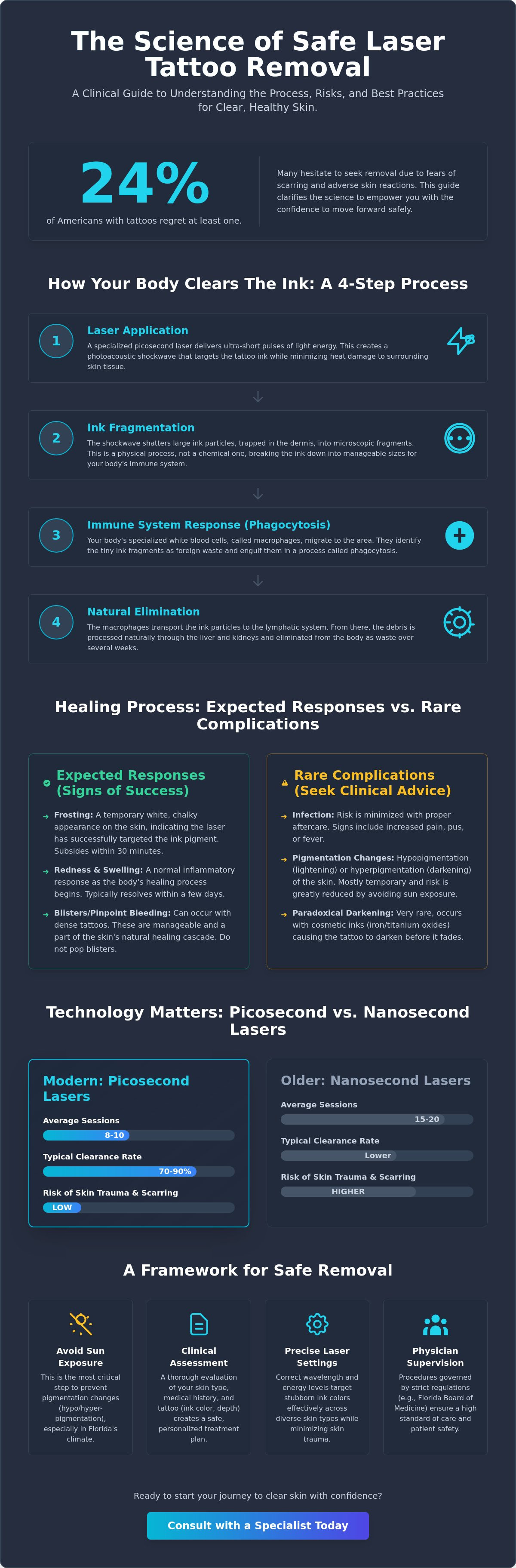
Patients often conflate standard biological responses with the actual risks of laser tattoo removal. It's essential to categorize these reactions to understand what constitutes a successful session versus a clinical complication. Expected responses include localized swelling, redness, and frosting. These aren't injuries. They're signs the laser energy interacted with the ink. Manageable side effects like small blisters or pinpoint bleeding may occur based on ink density. According to FDA guidance on tattoo removal, these reactions are common and typically resolve without intervention.
Rare complications require clinical attention. While rare, these specific risks of laser tattoo removal include secondary infections, allergic reactions, or paradoxical darkening. Darkening happens most frequently with cosmetic inks containing iron oxide or titanium dioxide. Modern picosecond lasers achieve 70-90% clearance with much lower scarring risk than older nanosecond models. Older technology often required 15-20 sessions. Picosecond lasers typically reach completion in 8-10 sessions. This limits cumulative skin trauma and reduces the window for potential adverse events.
Normal Healing: The 'Frosting' Phenomenon
You'll see a white, chalky appearance on the skin during your session. This is frosting. It occurs because rapid laser heat causes gas bubbles to form as the epidermis dehydrates. It's a positive indicator. Frosting confirms the laser reached the target pigment and triggered fragmentation. This effect is temporary and usually subsides within 15 to 30 minutes. It doesn't indicate a burn, but rather a successful photoacoustic reaction.
Pigmentation Changes: Hypo vs. Hyperpigmentation
Pigmentation shifts are a potential concern, especially for those with deeper skin tones. Hypopigmentation, or ghosting, happens when the laser affects natural melanin. This leaves a lighter patch where the tattoo once was. Hyperpigmentation is skin darkening caused by post-inflammatory responses. Most changes are temporary and resolve as the skin's cellular turnover continues. Practitioners adjust settings during laser removal services to protect surrounding tissue and maintain skin uniformity across different Fitzpatrick skin types.
The Florida Factor: Sun Exposure and Laser Risks in Bradenton
Living in Bradenton presents unique challenges for skin recovery during tattoo clearance. High UV levels make sun exposure the most significant external risk factor for those undergoing treatment. When skin is tanned, it contains higher levels of melanin. Most lasers used in removal can't differentiate effectively between tattoo pigment and natural melanin. This lack of distinction increases the risks of laser tattoo removal, specifically the likelihood of epidermal burns or lasting discoloration. Local residents are particularly susceptible to Post-Inflammatory Hyperpigmentation (PIH). This occurs when the skin produces excess pigment as a response to the heat of the laser combined with subsequent sun exposure. The FDA guide on tattoo removal risks highlights that skin discoloration is a primary concern for patients, especially in high-sun environments.
Heat related risks are also amplified by the local climate. High temperatures can exacerbate the body's natural inflammatory response after a session. Managing this inflammation is crucial to prevent long term skin damage. If the skin remains too hot for too long after a procedure, it can lead to deeper tissue trauma. Precise clinical protocols are necessary to mitigate these environmental factors and ensure the skin heals without complications.
Pre-Treatment Sun Protocols
Safety starts four weeks before your first session. You must adhere to a strict 'Four Week Rule' regarding sun exposure. Treating skin that's even slightly tanned increases the risk of blistering and scarring. We recommend physical blockers like Zinc Oxide or Titanium Dioxide. Unlike chemical sunscreens that absorb UV rays and convert them into heat, physical blockers reflect the light away. This prevents the skin's baseline temperature from rising before the procedure, which is essential for safe laser skin treatments.
Managing Heat and Humidity Post-Laser
Florida's humidity creates a breeding ground for bacteria. If your skin develops blisters after treatment, sweat can easily lead to a localized infection. It's vital to keep the treated area cool and dry. Wear loose, breathable cotton clothing to avoid friction. Avoid outdoor activities that cause excessive perspiration for at least 48 hours. Maintaining proper air circulation around the site reduces the biological risks of laser tattoo removal and supports a faster healing trajectory.
Minimizing Risks: A Framework for Safe Removal
A successful outcome begins with a comprehensive medical history review. This initial consultation is the most critical step in mitigating the risks of laser tattoo removal. We assess your skin's Fitzpatrick type, current medications, and any history of keloid scarring. Certain medications, like those that increase photosensitivity, can lead to adverse reactions if not disclosed. By establishing a clinical baseline, we ensure the treatment plan is calibrated to your specific physiological needs. This thorough assessment prevents complications before the laser even touches your skin.
Clinical precision relies on two primary settings: Pulse Duration and Fluence. Pulse duration refers to how long the laser beam stays on the skin. Shorter durations, measured in picoseconds, minimize the time heat spends in the tissue. This prevents the 'heat spread' that causes unintended burns. Fluence, or the energy density, must be adjusted as the tattoo fades. Using too much energy on a fading tattoo is a common mistake that increases risks of laser tattoo removal, such as permanent texture changes. If you observe spreading redness, localized heat, or yellow discharge within the first 48 hours, contact your provider immediately. These are early warning signs of a secondary infection that require prompt clinical intervention.
Selecting the Right Technology
Technology choice determines the safety margin of your procedure. Older Q-switched lasers operate in nanoseconds, which creates more thermal stress on the skin. Modern picosecond lasers are the 2026 industry standard because they use photoacoustic pressure to shatter ink without overheating the surrounding area. Multi-wavelength capabilities are also necessary to target different ink colors safely. For example, a 532nm wavelength is essential for red ink, while 1064nm is safer for darker skin tones. You can view Advanced Laser & RF Treatments to see how high clinical standards are maintained across various skin procedures.
The Clinical Aftercare Protocol
The first 24 hours after treatment is the 'Golden Window' for recovery. During this time, the skin is most vulnerable to external contaminants. Clean the area gently with mild soap and water, then pat dry with a clean towel. Never rub the site. We enforce a strict 'Hands-Off' rule. Picking at scabs or popping blisters creates a direct pathway for bacteria like staph and significantly increases the chance of permanent scarring. Support your body's lymphatic system by staying hydrated and avoiding tobacco. These lifestyle choices speed up the ink clearance process and improve your overall results. If you're ready to begin your journey with a safety-first approach, explore our laser removal services today.
Why Organic Skin & Body Med Spa Prioritizes Your Safety
At Organic Skin & Body Med Spa, we combine medical-grade precision with a functional approach to skin health. We recognize that managing the risks of laser tattoo removal requires more than just advanced hardware. It demands a medically supervised environment where every protocol is designed to protect your dermal integrity. Our team operates under strict clinical guidelines to ensure that each session moves you closer to clearance without compromising your skin's health. We focus on transparency and procedural excellence to provide a safe experience for every patient.
We specialize in treating diverse skin types according to the Fitzpatrick Scale. This expertise is vital in Bradenton, where year-round sun exposure alters skin sensitivity and baseline melanin levels. By assessing your skin's unique response to UV and heat, we adjust laser parameters to prevent hyperpigmentation or thermal injury. This integrated approach means we don't just look at the tattoo. We evaluate the biological status of your skin. Our medically supervised team monitors your progress at every stage, ensuring that your immune response remains healthy and effective throughout the clearing process.
The Bradenton Advantage
Our location provides a specialized advantage for local residents. We understand the specific environmental stressors of the Florida climate, from chronic sun damage to high humidity levels. Because tattoo clearance is a journey requiring multiple sessions, having a local provider who understands these regional variables is essential. You can learn more about our position in the local wellness community by reading about The Best Spas in Bradenton, FL. This local expertise ensures that your aftercare instructions are tailored to the actual conditions you'll face when you leave our facility.
Your Path to Ink-Free Skin
Your safety journey begins with a dedicated safety consultation. We review your medical history and perform a clinical skin assessment to identify any contraindications. This step is vital for minimizing the risks of laser tattoo removal before the first pulse is delivered. We then customize the pulse duration and energy settings of our picosecond technology to match your ink's depth and color profile. These 2026-standard lasers offer faster fragmentation with significantly less heat than older systems. This technology, combined with our professional oversight, provides a reliable path to achieving ink-free skin while maintaining the highest safety standards in the industry.
Achieving Clear Skin Through Clinical Precision
Successful ink clearance relies on a combination of biological understanding and strict environmental management. You now understand how your immune system processes fragmented pigment and why the Florida sun requires specific protective measures. By distinguishing between expected healing responses and actual clinical complications, you can navigate your treatment journey with realistic expectations. Effective results are a product of both advanced technology and patient compliance during the recovery phase.
Managing the risks of laser tattoo removal becomes significantly more predictable when you partner with a facility that prioritizes medical-grade standards. We utilize advanced picosecond laser technology and medically supervised technicians to ensure every procedure is calibrated for your specific skin type. Our team provides specialized care designed for the unique needs of Florida residents, focusing on long-term skin health and safety.
Your path to ink-free skin starts with a professional assessment. Book Your Free Laser Tattoo Removal Consultation in Bradenton Today to discuss your goals in a safe, clinical environment. You don't have to live with a tattoo you regret when a safe and effective solution is available.
Frequently Asked Questions
Is laser tattoo removal safe for all skin types?
Yes, laser removal is safe for all skin types when practitioners use wavelengths appropriate for your Fitzpatrick scale rating. Darker skin tones require specific settings, such as the 1064nm wavelength, to bypass natural melanin and target only the ink. This precision prevents thermal damage to the surrounding tissue. A clinical assessment ensures that the laser energy is calibrated to your skin's unique biological requirements.
Can laser tattoo removal cause permanent scarring?
Permanent scarring is rare with modern picosecond technology but remains a possibility if aftercare protocols are neglected. Picking at blisters or prematurely removing scabs creates a direct risk of tissue trauma. Excessive energy settings can also lead to permanent skin texture changes. Following a strict hands-off rule and keeping the treated site hydrated significantly reduces the likelihood of long-term scarring.
What are the long-term risks of laser tattoo removal?
Long-term risks of laser tattoo removal primarily involve permanent changes in skin pigmentation, such as hypo- or hyperpigmentation. Some patients may experience a ghosting effect where the skin remains lighter than the surrounding area after the ink is gone. These outcomes are often linked to cumulative UV exposure or improper device settings. Regular clinical monitoring helps identify these shifts before they become permanent.
How do I know if my tattoo removal is infected?
Signs of infection include spreading redness, increasing pain, yellow discharge, or localized heat that persists beyond 48 hours. While minor swelling is an expected response, these specific symptoms indicate a bacterial presence that requires clinical intervention. High humidity levels can increase this risk if the area isn't kept cool and dry. Contact your provider immediately if you observe any of these warning signs.
Does laser tattoo removal affect your immune system?
Laser removal doesn't damage your immune system, but it relies on your immune health to be effective. The laser shatters ink into microscopic particles so that macrophages can engulf and transport them to the lymphatic system for elimination. Your body's ability to clear ink depends on healthy cellular function. Staying hydrated and avoiding tobacco supports this biological clearance process throughout your treatment journey.
Can you get a tan while undergoing laser tattoo removal?
You should not get a tan on the treated area during your removal process. Tanned skin contains active melanin that absorbs laser energy, which significantly increases the risks of laser tattoo removal, including epidermal burns. You must protect the site with physical blockers like zinc oxide for at least four weeks before and after every session to ensure the skin remains stable.
Is it normal for a tattoo to look darker after the first laser session?
Yes, it's normal for certain inks to darken temporarily after an initial treatment session. This effect, known as paradoxical darkening, often occurs in cosmetic tattoos containing metallic oxides like iron or titanium. The laser energy changes the chemical state of the pigment particles. This darkening usually resolves in subsequent sessions as the laser continues to break down the altered ink for lymphatic clearance.
What should I do if I have an allergic reaction to the laser treatment?
Contact your provider immediately if you experience intense itching, hives, or systemic symptoms like respiratory distress. Allergic reactions can occur when the laser releases ink components that were previously dormant in your skin tissue. Your clinician may recommend antihistamines or adjust your future treatment schedule to manage the reaction. It's vital to report any unusual skin sensations during the first 24 hours after your session.