

The common belief that removing a tattoo is ten times more painful than getting one is a persistent myth that often prevents individuals from correcting past decisions. When you're considering a procedure to clear your skin, the most pressing technical question is usually what feels worse tattoo or removal. It's natural to feel anxious about the sensation of a laser, especially if your initial tattooing experience was uncomfortable or took place on a sensitive area of the body.
While the per-second intensity of a laser pulse is higher than a tattoo needle, the duration of the treatment is significantly shorter. You'll discover the objective truth about these sensations and how modern advancements, such as picosecond laser technology, make the process more manageable than you expect. This guide explains how different body parts react to treatment and outlines the professional options available to minimize discomfort during laser tattoo removal sessions. By understanding the technical reality of the procedure, you can approach your consultation with clear expectations and confidence.
Key Takeaways
- Learn why the brevity of a laser session, often lasting only two to five minutes, makes it more tolerable than the hours spent receiving a tattoo.
- Understand the technical shift from mechanical needles to high-speed picosecond light waves and how this impacts your body's stress response.
- Compare duration and intensity side-by-side to determine what feels worse tattoo or removal based on objective procedural data.
- Identify the specific pain-mitigation tools, such as advanced skin cooling systems and topical agents, that are used to ensure a manageable experience.
- Discover why modern laser technology requires fewer sessions to achieve clearance, effectively reducing the total time spent undergoing treatment.
The Sensation of Ink vs. Light: Defining the Pain
Understanding the physical reality of skin procedures requires a clear breakdown of how the body processes different types of stimuli. Many people ask what feels worse tattoo or removal, but the answer depends on how your nervous system reacts to mechanical versus thermal energy. While tattooing involves a physical object entering the skin, laser removal relies on light waves to interact with pigment. These processes create distinct sensory experiences that are not easily compared on a simple scale of one to ten.
The Mechanical Trauma of the Tattoo Needle
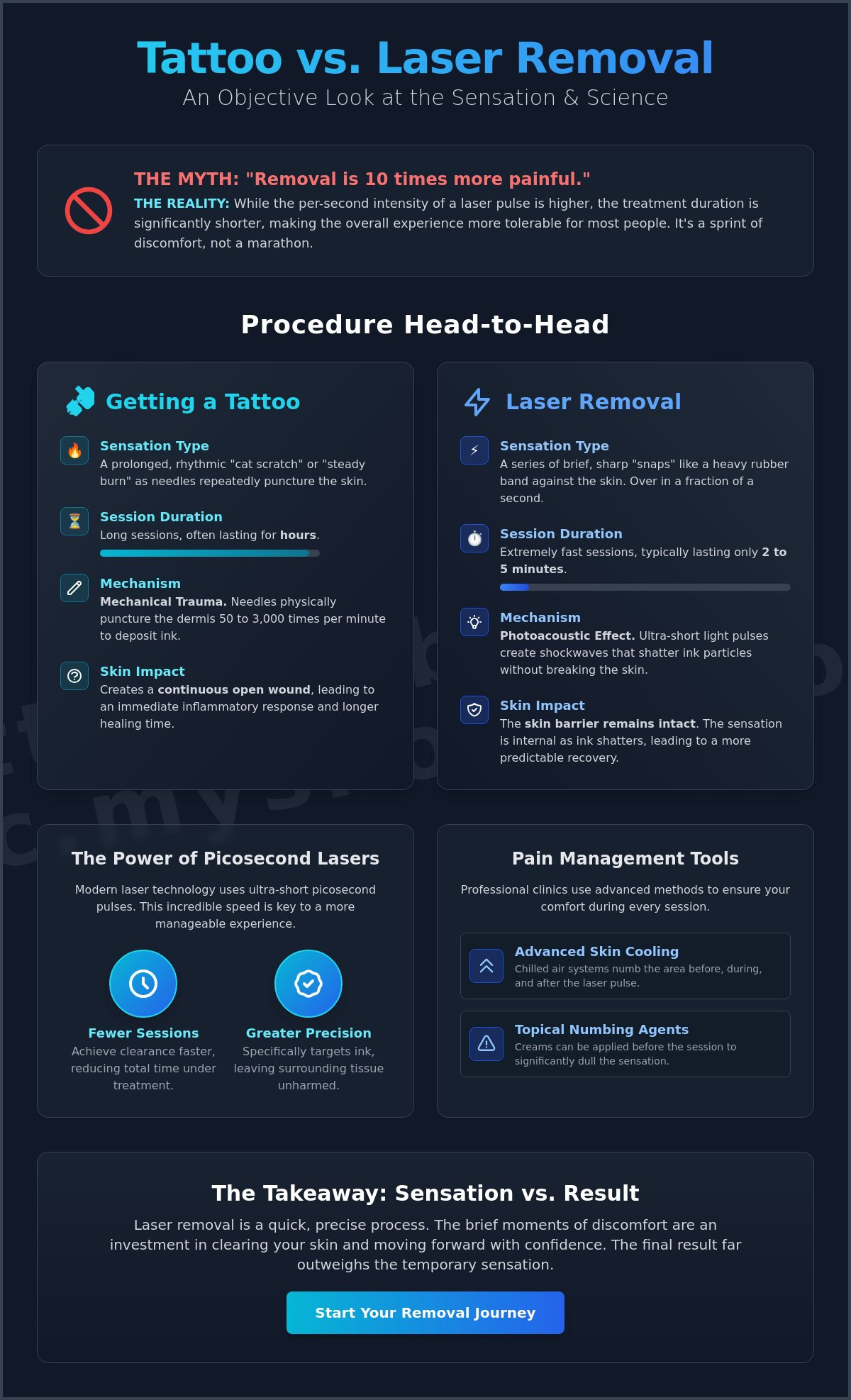
Tattooing is a process of repetitive mechanical trauma. A tattoo machine drives needles into the dermis at speeds ranging from 50 to 3,000 cycles per minute. This high-frequency puncturing creates a rhythmic sensation often compared to a constant cat scratch or a steady burn. Because the needle must deposit ink deep enough to be permanent, it triggers an immediate inflammatory response. The pain often starts as a manageable annoyance. It intensifies as the session continues and the skin becomes increasingly raw. Long sessions can lead to physical exhaustion as the body remains in a state of high alert for an extended period.
The Photoacoustic Effect of Modern Lasers
Laser removal operates on a completely different physical principle. Instead of mechanical punctures, it utilizes the photoacoustic effect. This occurs when concentrated light energy is delivered in extremely short pulses, creating a microscopic shockwave within the ink particles. This process shatters the ink into smaller fragments that the immune system then clears away. modern tattoo removal techniques are designed to be highly specific. The laser targets the pigment specifically. It doesn't burn the surrounding skin tissue. This precision is a hallmark of professional laser removal services.
Because the laser pulse is instantaneous, the sensation is sharp and localized. Most individuals describe it as a heavy rubber band snapping against the skin. Unlike the prolonged, grinding sensation of a tattoo needle, the laser's "snap" is over in a fraction of a second. When determining what feels worse tattoo or removal, consider the duration. The tattoo needle is a marathon of discomfort. The laser is a series of brief, high-intensity moments that conclude before the body's peak stress response occurs. This fundamental difference in timing often makes removal feel more tolerable to the average person. Professionals who specialize in skin pigmentation, such as the team at Advanced PMU, emphasize that understanding these physical principles is key to both successful application and eventual removal of permanent makeup.
Why Laser Removal Feels Different Than the Original Needle
The physical interaction between the skin and the removal tool differs fundamentally from the initial tattooing process. When determining what feels worse tattoo or removal, it's necessary to look at the depth and speed of the energy delivered. A tattoo needle physically breaches the epidermis to deposit ink in the dermis. In contrast, laser light passes through the top layers of skin without breaking the surface. The laser energy is delivered in picoseconds. This speed is much faster than a needle strike, which creates a sharp, sudden sensation rather than a prolonged grind.
The nature of the wound also dictates the level of discomfort. Tattooing creates a continuous open wound that requires significant healing time and carries a higher risk of irritation. Laser treatments keep the skin barrier intact. This means the sensation is entirely internal as the ink shatters. While the laser pulse is more intense for a split second, it lacks the lingering trauma of a needle repeatedly puncturing the skin. Understanding the risks of tattoo removal involves acknowledging that while the pulse is sharp, the lack of an open wound often leads to a more predictable recovery period.
Nerve Ending Activation: Needle vs. Laser
Your nervous system interprets these two procedures through different pathways. A tattoo needle stimulates pain receptors, known as nociceptors, through direct physical pressure and tearing. This results in a dull ache or a steady, burning sensation that can become exhausting over several hours. The laser stimulates these same receptors through rapid thermal expansion. This expansion creates a "bright sting" that is over almost as soon as it begins. The suddenness of this pulse is often what people find more surprising, but the brevity prevents the body from entering a full-scale pain cycle.
The Role of Ink Density and Color
The amount of ink in your skin directly influences how you perceive the laser. Heavily saturated tattoos with dense black ink absorb more laser energy during the first few sessions. This high absorption rate creates a more intense sensation because more "work" is being done to break down the pigment. As the tattoo fades, there's less ink to absorb the light, and the sensation typically becomes milder. Those interested in professional laser removal services often find that the speed of the procedure outweighs the initial shock of the laser pulse. The felt sensation is a direct correlation to energy absorption, making each subsequent session potentially more comfortable as the ink density decreases.
Tattoo vs. Removal: The Side-by-Side Comparison
When assessing what feels worse tattoo or removal, you must evaluate the time-to-pain ratio. A standard medium-sized tattoo often requires one to three hours of continuous needle work. In contrast, a laser session for that same tattoo typically concludes in two to five minutes. While the laser pulse carries a higher per-second intensity, it finishes before your body's physiological stress response reaches its peak. This radical brevity is the primary reason many individuals find the removal process more tolerable than the initial ink application.
Recovery timelines also differ significantly. Tattoo healing is a multi-week process involving scabbing, intense itching, and a high risk of ink loss if the area is disturbed. Laser recovery is generally faster. Most people experience redness and slight swelling similar to a mild sunburn for a few days, but the skin barrier remains largely intact. Medical experts at the Cleveland Clinic provide detailed insights on how tattoo removal feels, confirming that while the sensation is sharp, the procedural speed is a major advantage for patient comfort.
The "Sprint vs. Marathon" Analogy
The most accurate way to describe these sensations is to compare a marathon to a sprint. Getting a tattoo is the marathon. It requires steady endurance and the ability to manage a dull, grinding discomfort for a long duration. This prolonged exposure can lead to physical fatigue and a "raw" feeling as the needle passes over the same area multiple times. Laser removal is the sprint. It's a short, high-intensity burst of energy. You'll feel a series of quick snaps that are intense, but the session ends before you have time to grow exhausted. Most clients prefer the sprint once they realize the laser technician can clear a large area in the time it takes to fill out a single line of ink.
Pain Mapping: The Most Sensitive Areas
Body location influences your experience regardless of the method used. Bony areas and zones with high nerve density are more sensitive to both needles and lasers. High-sensitivity zones include:
- The ribs and sternum
- The spine and neck
- The inner bicep and armpit
- The tops of the feet and ankles
Conversely, areas with more muscle or fatty tissue, such as the outer arm, thighs, and upper back, are low-sensitivity zones. For Bradenton residents preparing for a session, managing environmental factors is key. Ensure you're well-hydrated and have eaten a balanced meal before your appointment. This stabilizes your blood sugar and helps your nervous system process the quick pulses of the laser more efficiently. When deciding what feels worse tattoo or removal on a sensitive area like the ribs, remember that five minutes of "sharp" sensation is often easier to navigate than two hours of "burning" discomfort.
Pain Management: How We Minimize Discomfort in Bradenton
Professional pain management protocols bridge the gap between technical necessity and patient comfort. When you're weighing what feels worse tattoo or removal, the availability of advanced numbing technology is often the deciding factor. Unlike a tattoo studio, a medical spa environment utilizes clinical-grade tools to dull the nervous system's response to the laser. These methods ensure the sensation remains manageable throughout the brief treatment window.
The Power of Cryo-Cooling Technology
The Zimmer Cryo system is a standard of care for laser removal services at Organic Skin & Body Med Spa. This device delivers a continuous stream of air chilled to -30°C directly to the treatment area. By blowing cold air on the skin before, during, and after the laser pulse, the system effectively numbs the nerve endings. This localized cooling protects the epidermis from thermal stress while allowing the laser energy to reach the ink particles deep within the dermis. It provides an immediate soothing effect that masks the sharp sensation of the laser, making the procedure feel much less intense than the original tattooing process.
Preparation Tips for a Stress-Free Session
Living in Florida requires specific precautions to ensure your skin is ready for laser treatment. While many wonder what feels worse tattoo or removal, the reality is that clinical preparation makes the laser session far more predictable than the original ink application. Follow these guidelines to optimize your comfort:
- Avoid direct sun exposure in Bradenton for at least four weeks prior to your session, as tanned skin is more sensitive to laser energy.
- Wear loose-fitting, breathable clothing to your appointment to prevent friction and irritation on the treated area afterward.
- Ensure the skin is clean and free of lotions, perfumes, or self-tanning products on the day of treatment.
The high humidity and heat in Florida can increase skin sensitivity, so staying out of the sun is vital for a smooth recovery. Discussing your skin history during a free consultation helps set realistic expectations and allows for a customized pain management plan. Schedule your laser removal services to begin your journey toward clear skin with a provider that prioritizes your comfort and safety.
Taking the Leap: Why the Result Outweighs the Sensation
The decision to undergo laser treatment is often a balance between physical apprehension and the desire for clear skin. When you evaluate what feels worse tattoo or removal, you must consider the long-term psychological outcome alongside the physical sensation. Getting a tattoo involves hours of rhythmic discomfort, but the regret of an unwanted design can last for decades. The brief sessions required for modern removal offer a path toward total clearance that often outweighs the temporary sharp pulses of the laser.
Research indicates that approximately 24% of Americans with tattoos have at least one they regret. For these individuals, the mental relief of seeing a permanent mistake fade is a powerful motivator. The physical process is no longer a valid reason to delay your goals. While the sensation is intense, it's a functional step toward reclaiming your skin's original appearance. Each session brings you closer to a result that provides lasting satisfaction, far exceeding the short-lived discomfort of the procedure itself.
The Evolution of Laser Technology in 2026
As of May 2026, picosecond technology has fully revolutionized the comfort and efficiency of the removal process. These advanced lasers deliver energy in ultra-short pulses, which creates a photoacoustic effect rather than a thermal one. This technical distinction is vital because it means there's less heat buildup in the surrounding skin tissue. Reduced heat leads to less irritation and a faster recovery period. Because these lasers break down ink particles into much smaller fragments than older Q-switched models, most clients require only 6 to 12 sessions for complete clearance. Utilizing professional aesthetician services ensures that your treatment follows current safety standards and uses the most effective equipment available for your specific skin type.
Your Next Steps at Organic Skin & Body Med Spa
The first step toward clear skin is understanding how your specific tattoo and skin type will react to the laser. Booking a patch test allows you to experience the sensation firsthand on a small, inconspicuous area. This experience removes the uncertainty regarding what feels worse tattoo or removal and helps you build confidence before committing to a full treatment plan. A patch test also allows your technician to observe how your skin responds to the laser energy, ensuring the settings are optimized for both safety and efficacy.
At our Bradenton facility, we develop personalized treatment plans based on the size, color, and age of your ink. We focus on transparency and procedural clarity so you know exactly what to expect at every stage of your journey. Don't let the fear of a brief sensation stop you from achieving the skin you want. Schedule your laser tattoo removal consultation today.
Moving Forward with Confidence and Clear Skin
Determining what feels worse tattoo or removal often comes down to the difference between endurance and speed. While the laser pulse is sharp, its execution is over in minutes rather than the hours required for tattooing. This fundamental shift in duration, combined with modern clinical protocols, makes the path to clear skin far more accessible than many realize. You don't have to let the memory of a long, uncomfortable tattooing session prevent you from seeking a professional solution.
Our Bradenton facility utilizes advanced Zimmer Cryo-Cooling systems to provide maximum comfort by numbing the skin during the procedure. Our expert technicians understand how to treat various Florida skin types using state-of-the-art laser technology for faster, more effective results. You don't have to live with a design that no longer reflects your identity. Take the first step toward a clean slate by choosing a provider that prioritizes technical precision and patient care.
Book Your Professional Laser Tattoo Removal Consultation in Bradenton to discuss your specific goals and see how our technology can work for you. Reclaiming your skin is a straightforward process when you have the right technical support and a clear understanding of the procedure.
Frequently Asked Questions
Is laser tattoo removal more painful than getting the tattoo?
Laser tattoo removal involves a sharper sensation than getting inked, but the treatment concludes much faster. While some wonder what feels worse tattoo or removal, the brevity of the laser session often makes it more tolerable. A tattoo is a long endurance of discomfort. The laser is a series of quick snaps that finish before your body's stress response peaks. This makes the overall experience less exhausting for most clients.
How long does a typical tattoo removal session last?
A typical session for a medium-sized tattoo lasts between two and five minutes. Smaller designs may take less than sixty seconds to treat. This is a radical difference from the original tattooing process, which often requires hours of needle work. The speed of the procedure is one of the primary reasons patients find the sensation manageable. You'll spend more time in the waiting room than under the laser.
Does the location of the tattoo change the pain level of removal?
Yes, anatomical location significantly impacts the sensation of the laser. Areas with thin skin over bone, such as the ribs, spine, and ankles, are more sensitive to the energy pulses. Fleshy areas like the outer thighs or upper arms tend to be more comfortable. Your technician can adjust the cooling protocols based on the specific sensitivity of the treatment area to ensure the process remains within your comfort level.
Can I use numbing cream before my laser tattoo removal appointment?
You can absolutely use topical numbing agents to dull the sensation of the laser. These creams are applied before the session to desensitize the top layers of the skin. When combined with advanced cooling systems like the Zimmer Cryo, the sharp "snap" of the laser is significantly reduced. This dual approach to pain management ensures that you can remain relaxed throughout the brief duration of the procedure.
Will the laser burn my skin during the removal process?
Modern laser technology does not burn the skin. Instead, it uses ultra-short pulses of light to create a photoacoustic effect that shatters ink particles. The laser is calibrated to target specific pigment colors while leaving the surrounding skin tissue intact. This precision minimizes thermal damage and reduces the risk of scarring. You may experience temporary redness, but this is a natural inflammatory response rather than a burn.
What does the skin feel like immediately after a removal session?
Immediately after a session, the treated area typically feels like a mild sunburn. You might notice slight swelling, redness, or a "frosted" appearance on the skin, which is a temporary reaction to the gas bubbles released during the ink shattering process. These sensations generally subside within a few hours to a few days. Following proper aftercare instructions helps manage any lingering heat or sensitivity in the area.
How many sessions will I need before the tattoo is completely gone?
Most individuals require between 6 and 12 sessions for complete tattoo removal. The exact number depends on the age of the tattoo, the depth of the ink, and your body's ability to clear the shattered particles. While the total timeline is a journey, modern picosecond lasers often achieve results faster than older technology. Each session is spaced several weeks apart to allow the skin to heal and the immune system to work.
Does the color of the tattoo ink affect how much the removal hurts?
Ink color plays a major role in the sensation of the laser. Darker pigments like black and dark blue absorb the most energy, which can lead to a more intense sensation during the initial sessions. As the ink fades, there's less pigment to absorb the light, and the sensation often becomes milder. When considering what feels worse tattoo or removal, remember that higher energy absorption means the laser is effectively breaking down the most stubborn ink.