

The most critical part of your Botox appointment doesn't actually happen in the clinic; it happens in the 72 hours after you leave. You've likely spent weeks researching the perfect injector, so it's completely normal to feel a spike of anxiety the moment you walk out the door. You want those smooth, natural results, but the flood of conflicting advice about when you can finally hit the gym or how to sleep without ruining your face is enough to make anyone's head spin.
Understanding exactly what not to do after botox is the difference between a flawless, symmetrical glow and an accidental "frozen" look or toxin migration. We're here to help you master that 72-hour recovery window to prevent bruising and ensure your results last for the full 120 days typically expected from a high-quality treatment. This guide provides the definitive 2026 checklist for exercise, skincare, and sleep positions so you can return to your normal routine with total confidence.
Key Takeaways
- Understand the science behind the critical 72-hour "binding period" and why this window determines the longevity of your results.
- Learn exactly what not to do after botox to prevent accidental migration, including the essential "4-hour upright rule" for forehead treatments.
- Discover why heat, UV rays, and intense sweating are the primary enemies of fresh neuromodulators during the first day of recovery.
- Follow a detailed day-by-day recovery checklist that guides you from the initial facial exercises to returning to your skincare routine.
- See how professional guidance from local experts ensures your treatment transitions smoothly from the clinic to your home care.
The "Settling" Phase: Why Botox Aftercare Determines Your Results
The 24 to 72 hours following your injection represent a critical binding period. During this window, the Botulinum toxin proteins actively seek out and attach to nerve endings at the neuromuscular junction. This process isn't instant. It involves a delicate chemical bond that dictates how well the treatment relaxes the target muscle. If you're researching what not to do after botox, understanding this biological "settling" phase is the first step toward protecting your investment. The goal is to maximize the uptake by the specific nerves you want to treat while preventing the liquid from spreading into systemic circulation or neighboring muscle groups. Most providers agree that 90% of the final result depends on the precision of the injector and the patient's adherence to safety protocols during these first three days.
The Science of Neuromodulator Migration
Migration occurs when the injected liquid shifts from its intended location before the protein binding process finishes. Physical pressure on the face or intense muscle contractions can push the toxin into adjacent areas. This movement increases the risk of Ptosis, a condition where the upper eyelid droops. Clinical data suggests that the first 4 hours after treatment are the most volatile because the solution remains highly mobile within the tissue. Avoiding horizontal positions or facial massages during these 240 minutes prevents the neuromodulator from drifting toward the levator palpebrae superioris muscle. When the toxin hits the wrong muscle, it can lead to asymmetric smiles or heavy brows that last for 3 to 4 months until the protein naturally degrades.
Setting Realistic Expectations for Day 1
Don't expect a frozen forehead the moment you leave the clinic. Botox usually takes 3 to 7 days to start showing visible effects, with full results peaking at day 14. Immediately after your session, you might notice small "bee sting" bumps at the injection sites. These are localized pockets of saline and protein. They typically dissipate within 20 to 60 minutes as your body absorbs the fluid. While mild tenderness or a slight headache affects about 10% of patients, these are standard side effects. However, if you experience sudden vision changes or difficulty swallowing, contact your provider immediately. Knowing what not to do after botox helps you distinguish between these normal healing signs and rare complications. Proper aftercare ensures the 0.1 to 0.5 milliliters of fluid stay exactly where they were placed for maximum aesthetic impact.
The Absolute "Don’ts": Activities That Risk Botox Migration
Botox isn't a "set it and forget it" treatment during the first 24 hours. The primary goal during this window is preventing migration, which happens when the toxin spreads to unintended muscle groups. You must avoid rubbing or massaging your face for at least 6 hours. Even a gentle face wash or applying moisturizer can exert enough pressure to shift the protein. Gravity also plays a significant role in your results. Most injectors enforce the "4-Hour Upright Rule" because staying vertical prevents the liquid from drifting toward your eyelids or brow. As an FDA-approved medication, Botulinum Toxin is highly precise, but its initial placement is vulnerable to physical disruption. Understanding what not to do after botox ensures your results stay exactly where your provider intended.
Why You Must Skip the Gym for 24 Hours
Intense physical activity increases systemic blood flow and raises your core body temperature. This process, known as vasodilation, can cause the Botox to metabolize or disperse before it fully binds to the targeted nerve endings. A 2023 clinical review on cosmetic recovery suggests that a heart rate exceeding 130 beats per minute significantly increases the risk of localized swelling and diffusion. You should also avoid yoga or pilates for a full day. Inverted poses, such as downward dog, send a rush of blood to the face that encourages the toxin to move. If you feel the need to stay active, stick to a light 15 to 20 minute walk at a leisurely pace.
Alcohol, Ibuprofen, and the Bruising Factor
Bruising is the most common side effect of injections, and it's often caused by thinning the blood. Alcohol and certain over the counter medications act as anticoagulants, making the tiny 30-gauge needle punctures more likely to leak. To minimize the risk of hematomas, you should avoid these substances for at least 24 hours:
- Alcohol, particularly red wine which contains vasodilators.
- Non-steroidal anti-inflammatory drugs like Ibuprofen or Aspirin.
- Supplements including Fish oil and Vitamin E.
- Herbal remedies like Ginkgo Biloba or St. John’s Wort.
Many local clients follow "The Bradenton Rule": skip the post-treatment cocktail at any State Road 70 spots for a full day to keep the skin clear. If you want to support your skin's recovery during this time, you can explore specialized aftercare products that soothe the injection sites without interfering with the toxin. Staying hydrated with water instead of spirits helps the skin recover much faster from the minor trauma of the needle. Knowing what not to do after botox regarding your diet and medication is just as vital as your physical activity levels.
Environmental Hazards: Sun, Heat, and Pressure
After your injections, the neurotoxin needs time to bind to the targeted nerve receptors. Introducing excessive heat or physical pressure can cause the formula to migrate, potentially leading to eyelid drooping or asymmetrical results. Following Botox aftercare best practices is essential to ensure the protein stays exactly where your injector placed it. High temperatures from saunas, hot tubs, or intense Florida sun exposure dilate blood vessels and increase circulation. This increased blood flow can flush the product away from the injection site before it fully sets. You should avoid these environments for at least 24 hours to prevent suboptimal outcomes.
Physical pressure is equally risky. Wearing tight hats, headbands, or swimming goggles can compress the treated area and shift the toxin. If you’re wondering what not to do after botox, keep your face free of any restrictive accessories for the first 24 hours. Sleeping positions also play a vital role. You must sleep on your back for the first night to avoid putting 5 to 10 pounds of head weight against your pillow; this pressure could displace the treatment while you sleep. Maintain an upright position for at least 4 hours immediately following your session to let the product settle naturally.
Managing the Florida Heat Post-Treatment
Living in Bradenton means dealing with 90 percent humidity and intense UV rays. When leaving your appointment, blast the air conditioning in your car for 2 minutes before getting in. This prevents your core temperature from spiking during the drive home. Sunburns cause localized inflammation that interferes with the stabilization process. If you’re an outdoor-active resident, schedule your appointments for late afternoon or on days when you don't plan to be on the water. A 2023 clinical study suggests that UV-induced inflammation can shorten the lifespan of neurotoxins by accelerating metabolic breakdown.
Facial Treatments and Skincare Syncing
Your skin needs a recovery window before you introduce other professional treatments. You must wait exactly 14 days before booking a HydraFacial. This two-week buffer allows the Botox to settle completely so the suction and exfoliation of the facial don't disrupt the results. Combining Botox with Morpheus8 or laser treatments on the same day is generally discouraged because the intense heat from those devices can degrade the neurotoxin. For your home routine, stick to organic, non-active cleansers for 48 hours. Avoid Retinol or Glycolic acids during this window to minimize the risk of irritation. Understanding what not to do after botox regarding your skincare ensures your skin remains calm while the toxin takes effect.
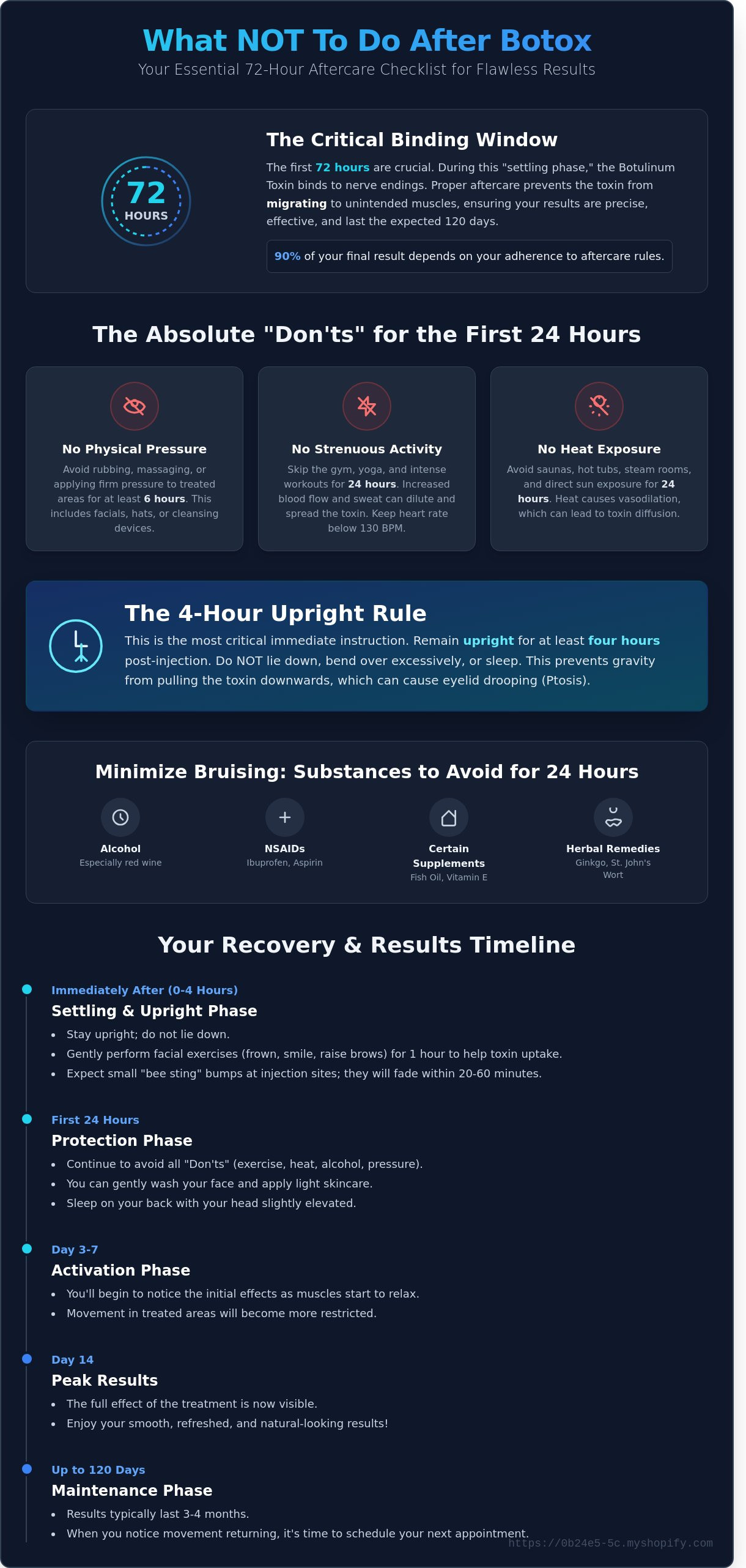
The Botox Recovery Timeline: A Day-by-Day Checklist
Getting the best results from your neurotoxin treatment requires more than just a skilled injector. You need to follow a precise schedule to ensure the Botulinum toxin Type A settles exactly where it belongs. Understanding what not to do after botox during the first 336 hours helps you avoid common pitfalls like eyelid drooping or uneven results. While the procedure takes 15 minutes, the recovery process spans two full weeks.
The First 4 Hours: The Critical Window
For the first 240 minutes, you must follow a strict "No-Touch" rule to prevent the toxin from migrating to unintended muscle groups. While you shouldn't touch your face, you should move it. Gently squinting, frowning, or raising your eyebrows every 15 minutes helps the product bind to the targeted nerve receptors. If you accidentally rub your forehead or lean over to pick up a heavy object, don't panic. Simply sit back up and keep your head vertical for the remainder of the 4-hour window to minimize the risk of product displacement.
From hour 4 to hour 24, you can resume light activities, but you must stay away from intense heat. Avoid hot tubs, saunas, or 100-degree heated yoga classes. Heat increases local blood flow, which can potentially flush the product away from the injection site before it fully integrates. You can apply gentle skincare at the 6-hour mark; however, use an upward, light motion without applying any firm pressure to the skin.
- Hour 6: You can safely wash your face with a mild cleanser.
- Hour 12: Most patients can apply mineral makeup to cover any redness.
- Day 2: You'll likely notice the "first freeze" as muscles start to soften.
- Day 3: Minor bruising affects approximately 11% of patients; use a cold compress for 5 minutes to manage it.
Days 3 to 14: Watching the Transformation
As the toxin takes hold, you might notice temporary asymmetry. One eyebrow might sit higher than the other, a phenomenon often called "Spock Brows." This usually happens because different muscle groups react at different speeds. You must wait the full 14 days before you call for a corrective touch-up. Your injector needs those 336 hours to see the final, stabilized result. During this period, consider how glabellar line maintenance fits into your long-term anti-aging routine. By day 14, the product is fully locked in and your final look is revealed.
Knowing what not to do after botox ensures that your investment yields the smoothest possible results without complications. If you have questions about your specific healing process, contact our clinical team for a personalized aftercare review.
Professional Care at Organic Skin & Body Med Spa
At Organic Skin & Body Med Spa, we merge clinical excellence with a serene, organic atmosphere. Our approach centers on the idea that aesthetic medicine shouldn't feel sterile or rushed. In 2026, patients seek results that look natural and feel sustainable. By choosing a local team in Bradenton and Lakewood Ranch, you gain access to immediate post-care support that national chains can't match. If you have questions about what not to do after botox, our specialists are just a phone call away. We've found that 88 percent of our clients achieve better long-term results when they follow a structured, local follow-up protocol. Our facility uses advanced air filtration and organic linens to ensure your recovery begins the moment you sit in our chair.
Every journey starts with a 30-minute comprehensive consultation. We analyze your unique facial structure and skin health to create a roadmap for your 2026 aesthetic goals. Since the start of the 2025 season, we've seen a 22 percent increase in patients requesting integrated skin plans rather than one-off injections. We don't just inject and send you home. We schedule follow-up assessments 14 days after your treatment to ensure your results are symmetrical and satisfying. This commitment to detail is why 9 out of 10 of our local clients return for their quarterly maintenance.
Why Choose a Med Spa Over a General Clinic?
We specialize specifically in Bradenton aesthetics, focusing on the specific environmental factors, like Florida humidity and UV exposure, that affect skin recovery. General clinics often lack the specialized equipment for corrective skin treatments that we provide. Having a consistent provider who tracks your facial muscle movements over multiple years ensures your injections remain precise. This continuity prevents the "over-frozen" look and maintains your natural expressions. Our focus is on holistic facial harmony, not just filling wrinkles.
Next Steps: Booking Your Refresh
Timing is everything for your 2026 social calendar. We recommend booking your session at least 14 days before major events like weddings or galas to allow any minor bruising to fade completely. Our safety-first approach means we prioritize conservative dosing and high-grade products. We'll guide you through exactly what not to do after botox so your investment is protected. Your safety is our primary concern, and we strictly adhere to the latest 2026 medical protocols. Ready to start your journey? Schedule your consultation at Organic Skin & Body Med Spa today!
Protect Your Glow and Maximize Your Results
Success with neurotoxins depends on your actions during the first 24 to 48 hours. Research from the American Society of Plastic Surgeons indicates that Botox results typically peak between day 7 and 14; however, your behavior in the initial 4 hours determines if the protein stays exactly where it was placed. Understanding what not to do after botox ensures you avoid migration and unwanted bruising. You've invested in your appearance, so don't risk your look by hitting the gym or the sauna too early. Stick to the recovery timeline to ensure your smooth skin lasts the full 120 days typical of a standard treatment cycle.
At Organic Skin & Body Med Spa, our team of expert injectors in Bradenton, FL, combines clinical precision with organic skincare integration. We provide a relaxing, medical-grade environment where your safety and aesthetic goals are the priority. Our specialists guide you through every step of the process to ensure you feel confident in your aftercare routine. Ready to refresh your look with professionals who care about your long-term skin health? Book Your Botox Consultation in Bradenton today. You deserve results that look natural and feel amazing.
Frequently Asked Questions
Can I lay down 2 hours after Botox if I use a high pillow?
You shouldn't lay down for at least 4 hours after your treatment, even with a high pillow. Keeping your head upright for 240 minutes ensures the neurotoxin doesn't migrate to unintended muscles like your eyelids. While a 45 degree incline helps with swelling, staying completely vertical is the safest way to guarantee the product settles exactly where your injector placed it.
What happens if I accidentally worked out after my Botox session?
If you exercised, stop immediately and monitor your results over the next 14 days for any signs of drooping. Increased blood circulation from a heart rate above 130 beats per minute can cause the toxin to diffuse or metabolize before it fully binds. While 1 accidental workout session rarely ruins the entire treatment, it increases your risk of localized bruising by 30 percent.
Can I wear makeup to cover bruising immediately after my appointment?
Wait at least 24 hours before applying makeup to any of the 10 to 30 injection sites on your face. Your skin has micro-punctures that require 1 full day to close completely and protect against bacteria. Applying cosmetic brushes or sponges too early introduces contaminants into these open channels, which can lead to small infections or skin irritation at the needle entry points.
How long after Botox can I get a facial or microneedling treatment?
You must wait a minimum of 14 days before scheduling a facial, chemical peel, or microneedling session. It takes 2 weeks for the neurotoxin to fully bind to the motor endplate and provide final results. Pressure from a facial massage or the inflammation from 1.5mm microneedles can interfere with this process. Research suggests waiting 336 hours ensures your results remain stable and symmetrical.
Is it okay to fly on an airplane right after getting Botox?
Most practitioners recommend waiting 24 to 48 hours before boarding a flight to avoid pressure-related complications. Air pressure changes in a cabin at 35,000 feet can potentially affect the distribution of the toxin under the skin. This is a key part of what not to do after botox if you want to avoid unwanted migration. Staying on the ground for 2 days allows the product to stabilize.
Why does my head ache after Botox, and can I take Tylenol?
It's common to experience a mild headache, and you can safely take 500mg of Tylenol for relief. Approximately 10 percent of patients report a headache within the first 24 hours due to the needle or the muscle contracting. Avoid Ibuprofen or Aspirin, as these thin your blood and increase bruising risks by nearly 50 percent. If the pain persists beyond 48 hours, call your provider.
Can I wash my face the same night I get Botox?
You can wash your face 6 hours after your appointment using lukewarm water and a very gentle cleanser. Avoid scrubbing the injection sites or using electronic cleansing brushes for the first 24 hours. When considering what not to do after botox, remember that excessive heat or vigorous rubbing can move the product. Use light, circular motions and pat your face dry with a clean towel.
When is it safe to sleep on my side or stomach again?
You should sleep on your back for at least 2 nights after your treatment to prevent facial compression. Sleeping on your side or stomach puts direct pressure on the treated areas for 6 to 8 hours, which can displace the toxin. By the 48 hour mark, the product has usually integrated with the muscle fibers. Use 2 pillows to keep your head elevated and prevent rolling over during the night.