

The expensive jar of "crepe" cream sitting on your vanity cannot fix the underlying structural collapse causing your skin to look like crinkled paper. You've likely noticed that while standard wrinkles form from repetitive muscle movement, crepey skin feels thin, fragile, and stubbornly resistant to standard moisturizers. It's frustrating to invest in high-end drugstore products only to see zero change in the mirror before heading out in summer attire. Identifying the best treatment for crepey skin requires a shift in focus from surface-level hydration to medical-grade collagen induction.
Professional interventions provide the structural changes that topical creams cannot achieve. Heat-based technologies are particularly effective because they trigger a controlled thermal injury in the deep dermis. This process forces the body to produce new elastin and collagen fibers. Premier facilities like Skin and Tonic specialize in these advanced aesthetic and skin rejuvenation treatments to remodel the skin's internal architecture effectively. For most patients, the best treatment for crepey skin involves a series of sessions rather than a single visit. Cumulative results are standard; the skin's density improves over several months as new proteins develop. Choosing the right procedure depends on your tolerance for downtime and the severity of the tissue laxity.
You'll discover the most effective professional and topical treatments to restore skin elasticity and eliminate the crinkled look for good. This article provides a clear comparison of at-home maintenance versus clinical procedures like RF microneedling and Morpheus8. We'll examine how these technologies, including advanced tools from Mesoskinline Australia, address dermal thinning and provide the functional data you need to choose a protocol that produces measurable results.
Key Takeaways
- Identify the biological mechanisms behind skin thinning and the specific breakdown of collagen and elastin that leads to a crinkled appearance.
- Distinguish between topical maintenance and corrective procedures to determine the best treatment for crepey skin based on your specific level of dermal laxity.
- Compare the outcomes of advanced clinical technologies, including Morpheus8, for remodeling skin texture and improving elasticity.
- Establish a structured maintenance phase to protect your clinical results and extend the longevity of professional skin treatments.
- Learn how professional aesthetician services integrate organic skin care with laser and microneedling technology to achieve comprehensive skin restoration.
Understanding Crepey Skin: Causes and Biological Indicators
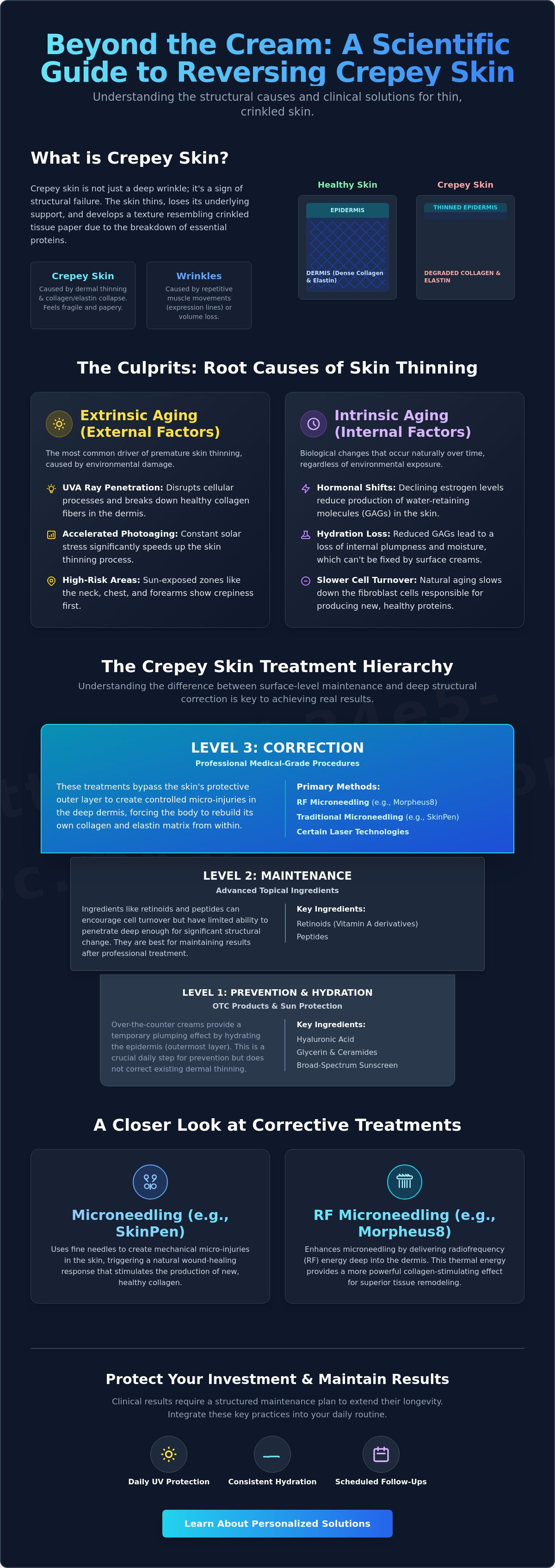
Crepey skin is defined by a distinct thinning of both the dermis and the epidermis. It's fundamentally different from standard expression lines or deep wrinkles. While expression lines stem from muscle movement and wrinkles often follow volume loss, crepiness indicates a structural failure of the skin's matrix. This condition results in a texture that resembles crinkled paper or fine cross-hatching. The primary biological mechanism is the depletion of collagen and elastin. These proteins function as the skin's scaffolding and elastic bands. When they degrade, the skin loses its density and its ability to retract after stretching. Determining the best treatment for crepey skin requires an understanding of whether the damage is intrinsic, extrinsic, or a combination of both.
The Role of UV Exposure and Photoaging
Extrinsic damage is the most common driver of premature skin thinning. UVA rays penetrate the dermal layer and disrupt the cellular processes responsible for fiber synthesis. This cumulative damage, often referred to as photoaging, leads to the irregular thickening of elastic fibers and the breakdown of healthy collagen. In high UV index environments like Florida, this process is significantly accelerated. The skin doesn't just age; it thins at a faster rate due to constant solar stress. High-risk areas include the neck, chest, and forearms. These sun-exposed zones often show signs of crepiness years before the protected skin on the body. Prevention is useful, but once the structure is compromised, professional intervention is necessary to rebuild the lost density.
Hormonal Shifts and Hydration Loss
Intrinsic aging involves biological changes that occur regardless of environmental factors. Declining estrogen levels are a major contributor to skin thinning. Estrogen directly influences the production of glycosaminoglycans (GAGs), which are molecules that attract and hold water in the skin. When GAG levels decrease, the skin loses its internal plumpness and hydration. This creates a visual distinction between simple dryness and structural crepiness. Dry skin is a surface issue that responds to heavy creams. Structurally crepey skin remains visible even when the surface is moisturized because the underlying support is gone. The best treatment for crepey skin in these cases focuses on stimulating the fibroblasts to produce new, healthy proteins rather than relying solely on topical hydration. This approach addresses the root cause of the "crinkled paper" look.
Topical vs. Professional: The Crepey Skin Treatment Hierarchy
Effective skin restoration requires a realistic understanding of product limitations. The best treatment for crepey skin depends on whether the goal is to prevent future damage, maintain current texture, or correct existing laxity. Most over-the-counter solutions fall into the maintenance category because they cannot penetrate the stratum corneum. This outermost layer of the skin serves as a biological shield. It's designed to keep external substances out. Consequently, most topical molecules are too large to reach the deep dermis where collagen and elastin reside. Medical-grade collagen induction, such as professional microneedling and RF treatments, is required to bypass this barrier and trigger structural repair.
Clinicians generally categorize interventions into a three-tier hierarchy. Prevention focuses on environmental protection. Maintenance involves surface-level hydration. Correction utilizes energy-based devices or mechanical stimulation to remodel the tissue from within. If you only apply products to the surface, you're treating the symptom rather than the biological cause of the thinning. Understanding this hierarchy helps you allocate your skincare budget toward procedures that offer a measurable return on investment.
When OTC Creams Are Enough
Over-the-counter products are highly effective for prevention and maintenance in the early stages of skin aging. Ingredients like hyaluronic acid, glycerin, and ceramides work by drawing moisture into the epidermis. This creates a temporary plumping effect that smooths out fine lines. It's a functional solution for "dry skin" that mimics the look of crepiness. However, this is a hydration-based fix. It doesn't rebuild the skin's scaffolding. These topicals are best used as a daily support system rather than a corrective tool for significant dermal thinning.
The Limits of Retinoids and Peptides
Retinoids and peptides are often marketed as the ultimate firming agents. Vitamin A derivatives are excellent for increasing cell turnover and improving surface texture. They're vital for smoothing the skin. But there's a clear distinction between smoothing and tightening. While retinoids can thicken the epidermis over time, they rarely provide enough stimulus to fix deep dermal laxity in the neck or arms. Peptides may support the skin's environment, but they cannot replace the massive collagen loss associated with intrinsic aging. For true tightening, the skin requires a more aggressive stimulus than a topical serum can provide.
The Best Professional Treatments for Crepey Skin in 2026
Professional interventions provide the structural changes that topical creams cannot achieve. Heat-based technologies are particularly effective because they trigger a controlled thermal injury in the deep dermis. This process forces the body to produce new elastin and collagen fibers. Unlike surface-level products, these treatments remodel the skin's internal architecture. For most patients, the best treatment for crepey skin involves a series of sessions rather than a single visit. Cumulative results are standard; the skin's density improves over several months as new proteins develop. Choosing the right procedure depends on your tolerance for downtime and the severity of the tissue laxity.
RF Microneedling (Morpheus8)
Radiofrequency (RF) microneedling represents a significant advancement in non-surgical skin tightening. Devices like Morpheus8 combine physical microneedling with thermal energy. The needles create precise channels while the RF heat coagulates sub-dermal fat and tightens the connective tissue. This dual-action approach effectively "shrink-wraps" the skin from the inside out. It's an ideal solution for difficult areas where the skin is naturally thinner, such as the knees, upper arms, and neck. If you're unfamiliar with the technology, understanding what is Morpheus8 can help you evaluate its role in structural repair. Most clinical protocols recommend a series of three to six treatments to reach maximum efficacy.
Fractional Laser Resurfacing
Laser skin treatments utilize light energy to create thousands of microscopic thermal zones in the skin. These "fractions" of treated tissue are surrounded by untreated skin, which accelerates the healing process. Ablative lasers are more aggressive and remove thin layers of skin, requiring a recovery timeline of seven to ten days. Non-ablative lasers leave the surface intact and involve minimal downtime, though they often require more sessions to match the results of ablative options. Both methods are highly effective for refining texture and thickening the epidermis. The choice between them usually depends on your skin type and how much recovery time you can accommodate in your schedule.
Skin Boosters and Biostimulators
Injectable treatments have evolved beyond simple wrinkle relaxation. Biostimulators work by triggering the body's natural collagen production over several months. This adds subtle volume and improves the overall "snap" of the skin. Similarly, skin boosters provide deep, long-lasting hydration by delivering hyaluronic acid directly into the intradermal layer. These injectables are often the best treatment for crepey skin when used in tandem with energy-based devices. Combining a biostimulator with RF microneedling addresses both the surface texture and the underlying structural thinning simultaneously. This multi-layered strategy provides more comprehensive results than any single modality used in isolation.
Prevention and Maintenance: Protecting Your Results
Securing long-term results after a corrective procedure requires a transition into a structured maintenance phase. While energy-based devices rebuild the skin's internal matrix, daily environmental stress can quickly undo these gains if the protective barrier is not maintained. The best treatment for crepey skin is only as effective as the post-procedure regimen that follows it. This phase focuses on preserving newly formed collagen and preventing the recurrence of dermal thinning. If you are looking for local support in the Gulf Coast area, reviewing the ultimate guide to spas in Bradenton can help you identify facilities that offer professional-grade preservation services. Consistency in topical application and lifestyle choices determines how many years your clinical results will last.
Several lifestyle factors accelerate collagen degradation and should be managed during the maintenance phase. High sugar consumption leads to glycation, a process where sugar molecules attach to collagen fibers and cause them to become brittle. Chronic dehydration also plays a significant role; it makes the skin appear thinner and less resilient. Avoiding these triggers while adhering to a clinical skincare protocol ensures that the skin remains thick and elastic. To establish a personalized maintenance protocol, schedule an assessment with a licensed aesthetician to discuss your specific skin health needs.
Advanced Sun Protection Strategies
Florida’s UV index frequently reaches extreme levels, making advanced sun protection the most critical component of skin maintenance. Standard sunscreen is often insufficient for preventing the return of crepiness. You must use a broad-spectrum SPF 50+ every day, regardless of cloud cover. UVA rays penetrate glass and clouds, causing steady degradation of elastin fibers. Pairing your SPF with antioxidants like Vitamin C or Vitamin E provides a secondary layer of defense. These vitamins neutralize free radicals generated by heat and light before they can damage the dermal scaffolding. For high-exposure outdoor activities, physical barriers like UPF-rated clothing offer more reliable protection than topical lotions alone.
Professional Facials and Skin Health
Regular aesthetician services are necessary to sustain the hydration levels required for healthy skin. Procedures like HydraFacials maintain the skin barrier by infusing the tissue with antioxidants and hyaluronic acid. This deep delivery of nutrients supports the glycosaminoglycans mentioned earlier, which are essential for moisture retention. Chemical peels also serve a functional purpose in a maintenance routine. By removing dead surface cells, they encourage steady cell turnover and ensure that your topical products can penetrate effectively. A professional-grade hydration strategy prevents the "dry skin" look from evolving back into structural crepiness over time.
Personalized Crepey Skin Solutions at Organic Skin & Body Med Spa
Organic Skin & Body Med Spa provides a specialized clinical environment for individuals seeking to reverse the structural thinning of the dermis. Located in Bradenton, our team implements a methodology that balances organic skin care with high-performance medical technology. This approach ensures that the skin’s biological needs are met while achieving the deep-tissue remodeling necessary for corrective results. Determining the best treatment for crepey skin involves more than selecting a single procedure; it requires a tailored plan that addresses the specific environmental damage common to the Gulf Coast region. Our practitioners focus on transparency, providing clear expectations for how each technology interacts with your skin's current condition.
Our practitioners often address multiple aging concerns during a single treatment cycle to maximize efficiency. While the primary focus remains on restoring elasticity, many patients also seek to resolve localized issues such as glabellar lines or deep forehead wrinkles. By integrating cosmetic injectables with RF & microneedling, we provide a multi-dimensional strategy for facial rejuvenation. This ensures that both the surface texture and the deeper muscular contractions are managed effectively. It's a functional approach that prioritizes the overall structural health of the tissue over temporary fixes.
Our Advanced Technology Suite
The facility is equipped with a suite of energy-based devices designed for non-invasive but high-impact results. Morpheus8 is a cornerstone of our corrective protocols, utilizing fractional radiofrequency to target sub-dermal layers and stimulate intense collagen production. For patients requiring skin tightening with minimal thermal stress, TempSure RF provides a functional alternative that stimulates collagen synthesis through controlled heating. These technologies are administered in a medical-grade environment that prioritizes safety and procedural precision. Our focus remains on regenerative aesthetics, which leverages the body’s own repair mechanisms to thicken the epidermis and improve the "snap" of the skin.
Aestheticians at our med spa utilize organic skin care during professional treatments to support the skin's recovery and long-term health. These botanical formulations provide the essential nutrients needed for cellular repair without the use of harsh synthetic additives. This integration of nature and science allows for effective treatment even on sensitive areas like the neck and chest where crepiness is most prominent. It's a steady, informative process designed to guide you through a sequence of improvements that result in a more resilient skin matrix.
Booking Your Consultation in Bradenton
A professional skin analysis is the first step toward achieving measurable improvement in skin density. During your consultation, an aesthetician will evaluate your current level of dermal laxity and identify the specific biological indicators of your skin's aging process. This assessment allows us to recommend the best treatment for crepey skin based on your unique anatomy and history of sun exposure. You can schedule your appointment by contacting our Bradenton office directly or visiting our booking portal. We invite you to experience a results-driven approach to skincare that focuses on long-term structural health rather than temporary surface fixes.
Restoring Structural Integrity to Your Skin
Addressing the "crinkled paper" look requires moving beyond the vanity mirror and into a clinical setting. True correction happens when you bypass the surface barrier to stimulate deep-tissue remodeling. While topical products provide essential daily hydration, energy-based devices like Morpheus8 and fractional lasers offer the most reliable path to thicker, more resilient skin. Identifying the best treatment for crepey skin depends on your specific level of dermal thinning and your commitment to a professional maintenance protocol. Our expert aestheticians utilize advanced Morpheus8 and laser technology to deliver corrective results within a relaxing medical spa environment in Bradenton, FL. This combination of science and professional care provides a functional solution for those ready to move past ineffective drugstore creams. You can regain the "snap" and density of healthy skin with a targeted, medical-grade approach. Book Your Professional Skin Consultation in Bradenton Today to begin your personalized restoration plan.
Frequently Asked Questions
Can crepey skin be reversed without surgery?
Yes, non-surgical interventions like RF microneedling and laser treatments can effectively reverse skin thinning. These procedures induce a healing response that rebuilds the skin's structural matrix. While they don't provide the immediate removal of excess tissue seen in surgery, they offer a functional way to thicken the dermis and restore elasticity through natural collagen production.
How long does it take to see results from Morpheus8 for crepey skin?
Most patients observe initial changes in skin texture within three weeks of their first session. However, the most significant improvements in skin density and tightness develop over three to six months. This timeline reflects the biological period required for the body to synthesize new collagen and elastin fibers.
Is there a specific diet that helps with skin elasticity?
A diet high in Vitamin C, proline, and glycine provides the necessary precursors for collagen synthesis. Antioxidant-rich foods also help protect existing fibers from oxidative stress caused by environmental factors. While nutrition supports the regenerative process, it functions best as a supplement to professional-grade skin treatments rather than a standalone fix.
Will drinking more water fix crepey skin?
Increased water intake improves epidermal hydration but doesn't correct structural crepiness. Drinking water resolves surface dehydration, which can mimic the look of fine lines. True crepey skin involves a loss of elastin and collagen scaffolding that requires clinical intervention to repair and thicken the skin's deeper layers.
What is the best age to start professional skin tightening treatments?
Starting treatments in your 30s or early 40s is often ideal for preventative maintenance. Early intervention allows you to maintain higher levels of skin density before significant age-related collagen loss occurs. However, professional treatments remain highly effective for older individuals seeking to correct established thinning on the neck, arms, or face.
Are professional treatments for crepey skin painful?
Sensations during professional treatments are typically managed with high-strength topical numbing creams. Patients often report a feeling of intense heat or a light snapping sensation during the procedure. The discomfort level is temporary and usually subsides shortly after the session is completed, requiring little to no downtime.
How much do professional treatments for crepey skin typically cost?
Costs for clinical procedures depend on the technology used, the size of the treatment area, and the total number of sessions in your protocol. A personalized assessment is necessary to determine the financial investment required for your specific goals. Rates vary by region and provider expertise; you should request a detailed quote from your local med spa.
Can I treat crepey skin on my body and face at the same time?
You can treat multiple areas during a single appointment to achieve comprehensive results. This approach is frequently used to address the best treatment for crepey skin on the face, neck, and décolletage simultaneously. Treating multiple zones in one session ensures a consistent improvement in skin quality and elasticity across the body.