

What if the most effective path to a defined jawline doesn't involve a surgeon's scalpel, but rather your body's own biological response to controlled thermal energy? As we move into 2026, the debate over RF skin tightening vs facelift has shifted from a question of which is better to which mechanism fits your specific biological needs. You might feel overwhelmed by the technical jargon or worry that choosing the wrong path could lead to an unnatural, "over-pulled" appearance. It's common to feel anxious about the recovery time and hidden costs associated with invasive surgical procedures.
This article provides a technical, transparent comparison of these two distinct approaches to facial rejuvenation. You'll discover the specific differences in technology, recovery timelines, and expected outcomes to determine if non-invasive RF technology or surgical intervention is the right choice for your skin. We'll examine the ROI of biological collagen investment through tools like Morpheus8 or TempSure versus the structural mechanical repair of a surgical facelift. By the end, you'll have a clear framework for deciding which procedure aligns with your goals for natural-looking rejuvenation and a tighter profile.
Key Takeaways
- Contrast the biological investment of RF skin tightening vs facelift surgery to determine which method aligns with your aesthetic goals and skin condition.
- Discover the technical differences between dermal remodeling through RF energy and the deeper SMAS-layer manipulation performed during a surgical rhytidectomy.
- Analyze recovery timelines by comparing the 2-4 days of social downtime for non-invasive procedures with the 2-4 weeks required for surgical healing.
- Identify your candidacy based on skin laxity levels to ensure you select the treatment path that provides the highest return on investment for your age group.
- Understand the benefits of a tiered approach that utilizes Morpheus8 and cosmetic injectables to achieve a refreshed appearance without the risks of general anesthesia.
Understanding Facial Aging: RF Tightening vs. Surgical Intervention
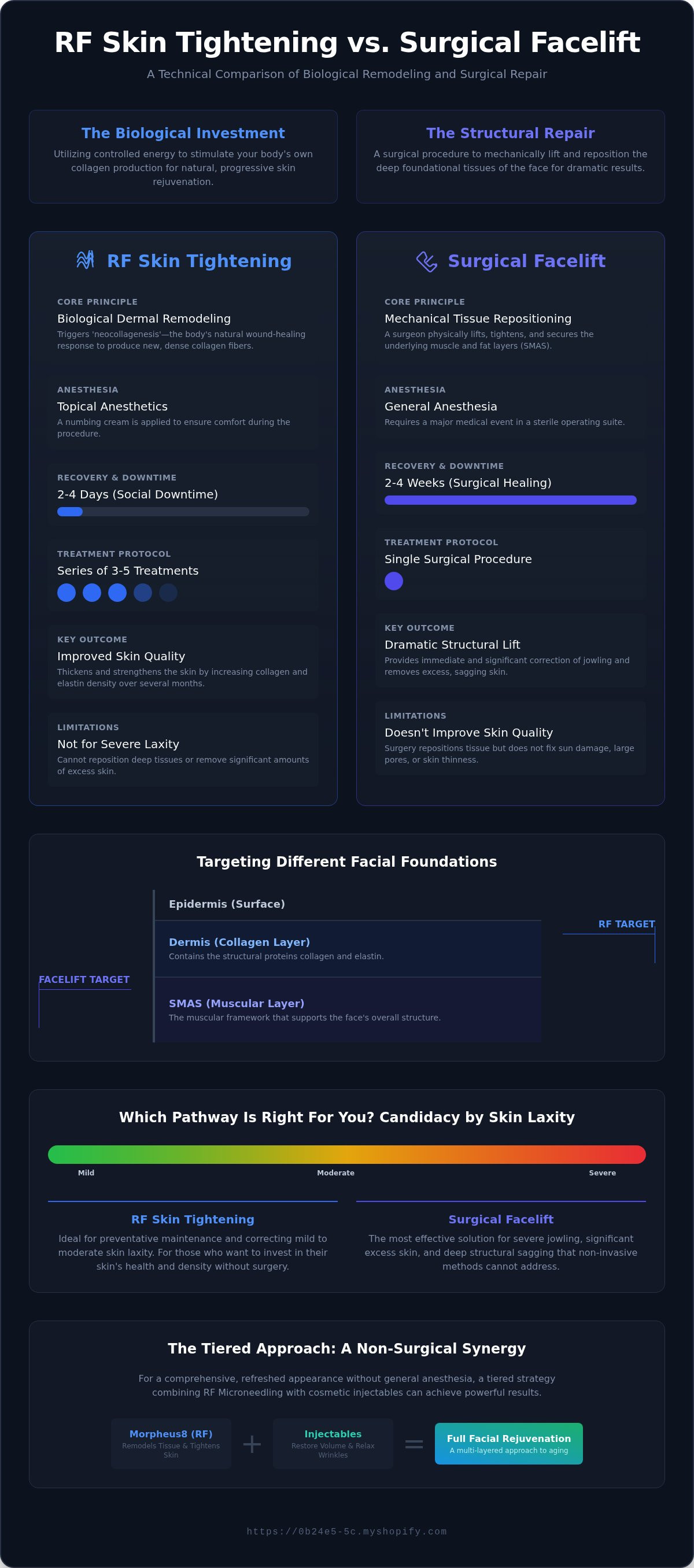
Facial aging is a multi-dimensional process that involves more than just surface-level wrinkles. It's primarily driven by skin laxity, which is the progressive loss of structural proteins like collagen and elastin. These proteins act as the scaffolding for your face. When they deplete, the skin loses its ability to snap back, leading to sagging and a loss of definition. To evaluate the choice of RF skin tightening vs facelift, you must first understand the two primary layers involved in facial aging: the dermis and the SMAS muscular layer.
The dermis is the thick layer of living tissue below the epidermis that contains blood capillaries, nerve endings, and hair follicles. This is where collagen production happens. Beneath the dermis lies the Superficial Musculoaponeurotic System (SMAS). This muscular framework supports the overall structure of the face. While Radio-frequency skin tightening is a heat-based energy used for biological dermal remodeling, a surgical facelift is a mechanical repositioning of these deep tissues. One focuses on the health and thickness of the skin, while the other addresses the structural foundation.
The Biological Mechanism of RF Energy
RF technology works by delivering electrical currents into the dermis to create controlled thermal injury. When the tissue reaches a specific temperature, it triggers a natural wound healing response. This process, known as neocollagenesis, forces the body to produce new, denser collagen fibers over several months. It's a biological investment in your skin's future density. For those requiring deeper intervention, Morpheus8 provides a deep-tissue RF microneedling solution. It combines physical needles with RF energy to remodel adipose tissue and tighten the skin from within. This approach is ideal for preventative maintenance or correcting moderate laxity without a scalpel.
The Structural Mechanism of Surgery
A surgical facelift, or rhytidectomy, focuses on the SMAS layer rather than just the skin surface. During this invasive procedure, a surgeon physically lifts and secures the underlying muscle and fat. This mechanical repair is the most effective way to address severe jowling or significant excess skin. However, it's vital to recognize a key distinction: surgery removes skin, but it doesn't improve the quality of the skin that remains. It doesn't fix sun damage, large pores, or thinning tissue. While a facelift provides immediate structural changes, it lacks the cellular rejuvenation benefits found in energy-based treatments. Choosing RF skin tightening vs facelift often comes down to whether you need to repair the structural "foundation" or thicken the biological "insulation" of your skin.
Comparing the Procedures: RF Technology vs. The Scalpel
Comparing the physical experience of RF skin tightening vs facelift surgery reveals two entirely different medical pathways. One is a physiological stimulation performed in an office setting; the other is a structural overhaul requiring a sterile operating suite. The logistical requirements and physiological impacts of these choices differ significantly, beginning with the method of pain management and ending with the duration of the procedure itself.
RF Skin Tightening: Non-Invasive Protocols
A typical session begins with a thorough cleaning of the skin and the application of topical anesthetics. This ensures the patient remains comfortable during the 45-minute procedure. In a med spa environment, devices like TempSure RF use a specialized wand to deliver bulk heating to the dermal layers. Patients often describe the sensation as a deep, warm massage. This thermal energy causes immediate collagen contraction, providing a subtle "glow" right away. However, the real transformation occurs through a series of 3-5 treatments. This protocol is the gold standard for building cumulative collagen density. While these devices are cleared for use, it's vital to stay informed. Reviewing the FDA safety communication on RF microneedling highlights why professional expertise is required to avoid complications like thermal injury.
The Surgical Facelift: Invasive Protocols
A surgical rhytidectomy is a major medical event that demands intensive preparation. It must occur in an accredited surgical facility and requires general anesthesia or heavy IV sedation. Unlike the quick office visit for RF, surgery lasts between 4 and 6 hours. The surgeon creates precise incisions along the hairline, extending around the ears and often under the chin. These access points allow for the manual repositioning of the SMAS layer and the excision of redundant skin. The closure involves intricate sutures, and the surgeon may place temporary drains to manage post-operative fluid. Patients must also account for pre-surgical testing and the necessity of a designated caregiver for the first 24 hours of recovery.
The decision between RF skin tightening vs facelift surgery involves weighing the convenience of a non-surgical session against the permanent, albeit more intense, nature of surgery. If you're interested in exploring how heat-based technology can refresh your profile, you can schedule a professional skin assessment to see if you're a candidate for RF.
Results, Recovery, and Longevity: A Side-by-Side Analysis
The practical choice between RF skin tightening vs facelift often rests on how much time you can step away from social and professional obligations. While surgery provides a definitive structural reset, it demands a significant physiological recovery period. In contrast, RF technology offers a biological improvement with minimal disruption to your daily schedule. The following table outlines the technical differences in outcome expectations.
| Feature | RF Skin Tightening (e.g., Morpheus8) | Surgical Facelift |
|---|---|---|
| Downtime | 2-4 Days (Social Downtime) | 2-4 Weeks (Clinical Recovery) |
| Longevity | 1-2 Years (with maintenance) | 10-15 Years |
| Scarring | None | Permanent (Hidden in hairline) |
| Result Onset | 3-6 Months (Cumulative) | Immediate (Peak at 6 months) |
Downtime and Healing Expectations
Healing from RF treatments follows a predictable, rapid path. On day one, you'll likely experience redness similar to a moderate sunburn. By day two or three, minor swelling and faint "grid marks" from the microneedling pins may appear as the skin begins its remodeling phase. Most patients return to their full social schedule by day four. Surgical recovery is far more intensive. The first week involves managing heavy bruising, significant swelling, and meticulous incision care. While you may feel physically capable of light activity within 10 days, most patients require at least two to four weeks before they feel comfortable appearing in public without camouflage makeup.
Long-Term Maintenance and Aging
Longevity varies based on the chosen pathway's mechanism. RF results are cumulative. Because the body takes time to synthesize new proteins, you won't see peak results until three to six months after your final session. To maintain these results, annual "booster" sessions are recommended to counteract the natural decline of collagen. Surgery is a "one and done" procedure with a lifespan of roughly 10 to 15 years, but it involves a higher initial physical toll. In Bradenton, the intense Florida sun poses a risk to both options. UV exposure accelerates the breakdown of new collagen and can darken surgical scars. Consistent use of medical-grade sun protection is mandatory to protect your investment. Neither option stops the clock; they simply reset your starting point to a more youthful state.
The Candidate Test: Which Pathway Is Right for You?
Determining the superior option in the RF skin tightening vs facelift debate requires an objective assessment of your current skin laxity grade. Professionals categorize laxity into three levels: mild, moderate, and severe. Mild laxity involves slight softening of the jawline. Moderate laxity includes visible jowling and skin thinning. Severe laxity is characterized by significant skin folds and deep structural sagging. Your specific grade serves as the primary indicator for which technology will provide the best return on investment.
The "sweet spot" for RF skin tightening generally falls between the ages of 30 and 55. During this window, the body's collagen-producing mechanisms are still robust enough to respond to thermal stimulation. Once a patient crosses the "surgical threshold," typically around age 55 or after significant weight loss, the skin often lacks the elasticity required for non-invasive retraction. Lifestyle factors like chronic sun exposure in Bradenton or a history of smoking also degrade skin quality. These factors potentially push a candidate toward surgical intervention earlier than expected because the biological response to heat is diminished.
The Ideal RF Tightening Candidate
Candidates for RF treatments often present with early-stage jowling or crepey skin texture on the neck. These individuals typically prefer gradual, natural-looking improvements that develop over several months rather than an overnight transformation. This pathway is particularly functional for busy professionals. They require a solution that doesn't involve the two weeks of seclusion associated with surgical healing. If your goal is preventative maintenance or mild correction, energy-based remodeling is the logical choice.
When to Consider a Surgical Facelift
Surgical intervention becomes the necessary choice when skin aproning or a "turkey neck" is present. These conditions involve redundant skin that RF energy cannot physically retract. Similarly, heavy facial fat pads that have migrated downward require the mechanical repositioning only a surgeon can provide. Candidates must be willing to undergo general anesthesia and accept a longer recovery period in exchange for a dramatic, structural shift. While we don't perform these procedures, we recognize they are the gold standard for severe structural sagging.
If you're unsure where you fall on the laxity scale, you can book a professional skin analysis to receive a personalized treatment recommendation.
The Non-Surgical Pathway in Bradenton: Why Organic Skin & Body?
Organic Skin & Body Med Spa in Bradenton provides a specialized environment for those navigating the RF skin tightening vs facelift decision. Our facility focuses on high-tech, non-invasive alternatives within a stress-free, medical aesthetics setting. We prioritize a tiered approach to facial rejuvenation that addresses aging at multiple levels. This often involves combining radiofrequency treatments with Injectables to achieve what is frequently termed a "liquid facelift" effect. This strategy addresses both skin laxity and volume loss simultaneously without the need for surgical incisions. A professional consultation is the first step in this process. During this meeting, our specialists grade your specific level of laxity to ensure the chosen modality will deliver the results you expect. Because Florida skin faces unique challenges from high UV indices, we customize our protocols for Morpheus8 and TempSure RF to maintain skin integrity while maximizing collagen production.
Advanced Modalities: Morpheus8 and TempSure
Our Bradenton specialists utilize Morpheus8 for patients requiring deep subdermal remodeling. This technology allows for precise fractional treatment, reaching depths that standard topical treatments cannot access. It provides a functional solution for those seeking significant contouring and fat remodeling without the risks associated with general anesthesia. For patients who prefer a completely needle-free experience, TempSure RF offers comfortable, non-invasive tightening. It uses bulk heating to stimulate collagen contraction with no downtime. We prioritize long-term skin health over temporary "quick fixes." Our goal is to provide a biological improvement that strengthens the skin's structure from the inside out, ensuring a natural appearance that respects your unique facial anatomy.
Your Next Steps to Rejuvenation
Preparation for your consultation is a straightforward process. Patients should prepare to discuss their aesthetic history and specific areas of concern, such as jawline softening or changes in neck texture. Ask your aesthetician about the expected number of sessions and how to integrate RF into your existing skincare routine for optimal maintenance. Consistent use of organic, corrective products can enhance the results of your energy-based treatments and protect the new collagen your body produces. When you are ready to move forward with a personalized assessment, you can visit our State Road 70 location. We provide a transparent evaluation of your skin's needs, helping you determine if RF skin tightening vs facelift surgery is the appropriate path for your current stage of aging. This functional approach ensures you receive the most effective care for your specific biological profile.
Choose Your Path to Facial Rejuvenation
Deciding between RF skin tightening vs facelift surgery requires a logical evaluation of your skin's biological needs and your personal lifestyle constraints. If you require a structural repositioning of deep tissues and can commit to a multi-week clinical recovery, a surgical referral may be your best course. However, if your goal is to build long-term dermal density and correct moderate laxity without the risks of general anesthesia, non-invasive energy modalities provide a highly functional alternative.
Organic Skin & Body Med Spa is an award-winning facility in Bradenton, FL, specializing in advanced treatments like Morpheus8 and TempSure RF. Our specialists focus on creating a relaxing, stress-free environment where your skin health is the primary priority. We provide the technical expertise necessary to remodel your profile while maintaining a natural, refreshed appearance. You don't have to navigate these complex technological choices alone.
Take the next step toward a more defined jawline and tighter neck by speaking with a professional. You can Schedule Your Non-Surgical Consultation in Bradenton to receive a personalized assessment of your skin laxity grade. We look forward to helping you achieve your aesthetic goals with clarity and confidence.
Frequently Asked Questions
Is RF skin tightening painful compared to a facelift?
RF skin tightening is significantly less invasive and involves less discomfort than a surgical facelift. The debate over RF skin tightening vs facelift reveals that RF uses topical numbing agents to ensure patient comfort during the 45-minute procedure. You'll feel a warm, prickling sensation. A facelift requires general anesthesia and involves a clinical recovery period. While RF is manageable in an office setting, surgery is a major medical event with different pain management requirements.
How many RF treatments equal the results of one facelift?
It's technically inaccurate to equate a specific number of RF sessions to one facelift because the mechanisms differ. RF skin tightening focuses on dermal remodeling and collagen production, while a facelift mechanically repositions the SMAS layer. Most patients achieve optimal biological results with a series of 3-5 treatments. However, for severe skin laxity, even multiple RF sessions won't replicate the structural excision of a surgical rhytidectomy.
Can I get RF skin tightening if I have already had a facelift?
You can certainly receive RF treatments after a previous surgical procedure. Many patients use Morpheus8 or TempSure RF to maintain their surgical results and improve skin texture, which a facelift doesn't address. Surgery repositions the foundation, but RF improves the biological quality of the skin surface. We recommend waiting until you are fully cleared by your surgeon before beginning energy-based treatments to ensure the underlying tissues have healed completely.
Will insurance cover RF skin tightening or a facelift in Florida?
Insurance providers in Florida generally don't cover RF skin tightening vs facelift surgery. Both procedures are categorized as elective cosmetic treatments rather than medically necessary interventions. Patients should plan for these as out-of-pocket investments in their aesthetic goals. We provide transparent consultations to help you understand the total investment required for a full series of non-invasive treatments compared to the one-time cost of a surgical referral.
What is the best age to start RF skin tightening to avoid a future facelift?
The most effective age to begin preventative RF skin tightening is between 30 and 55. Starting in this window allows you to capitalize on your body's natural collagen production levels. By thickening the dermis early, you potentially delay the need for more invasive structural repairs later in life. Once you reach the surgical threshold of age 55 or older, the biological response to heat-based energy may be less robust.
How long do I need to stay out of the Bradenton sun after RF treatments?
You must avoid direct Bradenton sun exposure for at least 48 to 72 hours following an RF session. The heat from the treatment makes your skin temporarily more photosensitive, increasing the risk of hyperpigmentation. We advise wearing a wide-brimmed hat and applying medical-grade SPF 30 or higher daily. For intense outdoor activities like boating or beach visits, wait at least two weeks to protect your new collagen from UV degradation.
Can RF microneedling like Morpheus8 melt facial fat?
Morpheus8 can remodel subdermal adipose tissue when used at specific depths. This fat melting capability is a technical feature used to contour areas like the jawline or submental region. It's essential that a qualified specialist performs the treatment to avoid unwanted volume loss in areas like the cheeks. Our Bradenton facility prioritizes precise settings to ensure we only target fat where it's aesthetically beneficial for your facial profile.
What happens if I am not a candidate for RF tightening?
If your skin laxity is graded as severe, you might not be an ideal candidate for RF technology. In these scenarios, we discuss alternative non-surgical options like cosmetic injectables to restore volume. If your goals require the removal of significant excess skin, we'll suggest a consultation with a plastic surgeon. Our priority is providing a transparent assessment so you don't invest in a procedure that won't meet your structural expectations.