

While many assume the laser does all the heavy lifting, the final success of your laser tattoo removal for cover up depends almost entirely on your biological recovery. If your skin doesn't heal perfectly, your next piece of art could be compromised by underlying texture changes or scarring. It's understandable to feel anxious about the itching and discomfort that follow a session, or to feel confused by the endless list of recommended healing ointments.
You want clear, healthy skin that's ready for a fresh design as quickly as possible. This guide delivers a professional, step-by-step protocol to master your home-care routine, prevent permanent skin damage, and accelerate the ink-fading process. We'll examine the specific products required for safe healing, explain how to manage common side effects, and provide a clear timeline for your recovery at our Bradenton facility. By following these precise instructions, you can move forward with your skin goals with absolute confidence.
Key Takeaways
- Learn how to manage the critical first 24 hours by properly handling medical dressings and using controlled cold compresses to reduce localized heat.
- Discover the correct transition from protective bandages to open-air healing and the specific fragrance-free cleansers required for tissue integrity.
- Understand why strict UV protection and humidity management are essential when preparing for laser tattoo removal for cover up in the Florida climate.
- Gain insights into how hydration and lymphatic health accelerate the metabolic processing of shattered ink particles to speed up your results.
- Identify the professional protocols used at a medical-grade med spa to ensure your recovery remains on track without permanent texture changes.
The Critical First 24 Hours: Immediate Post-Laser Care
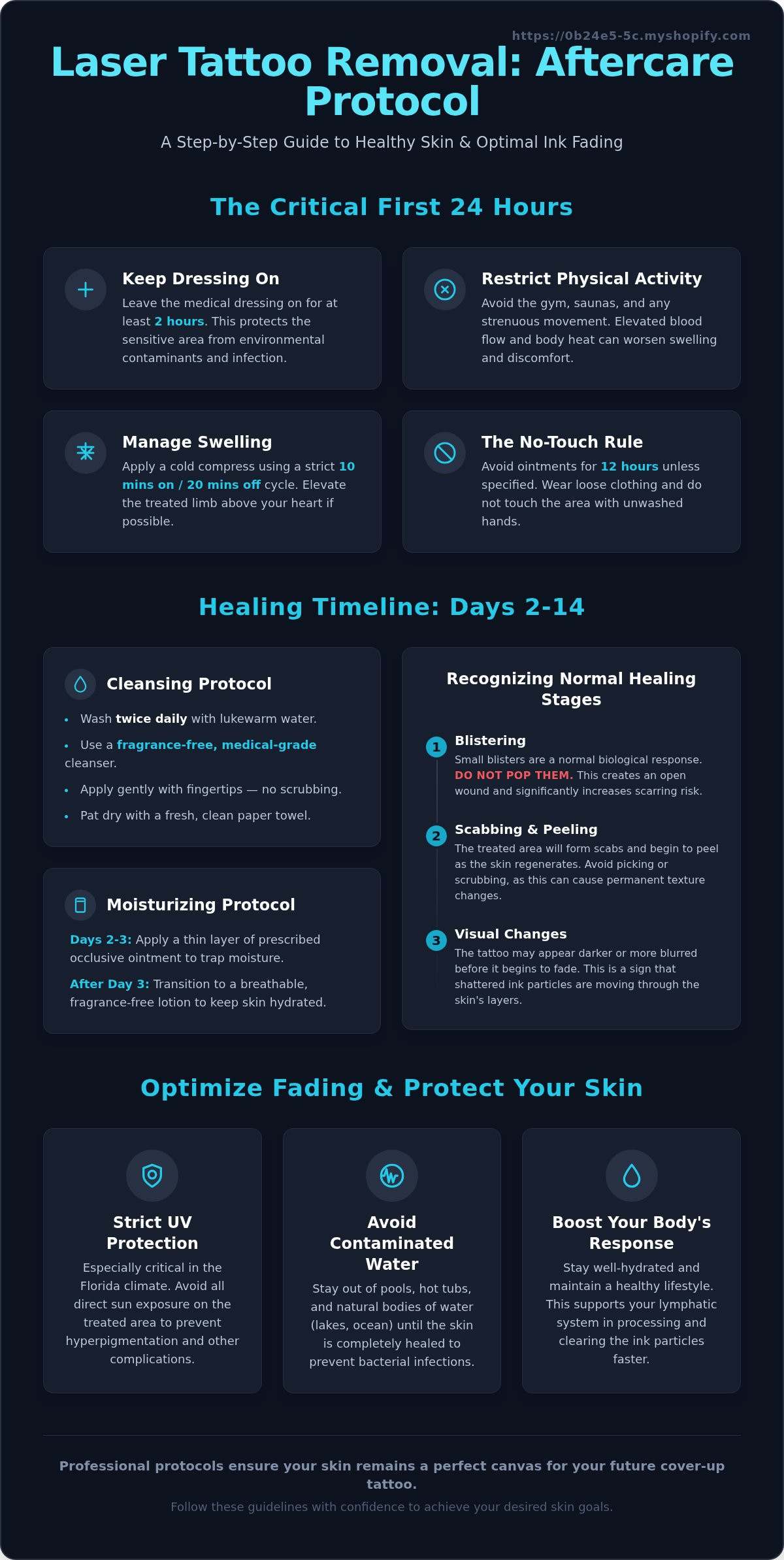
The first 24 hours serve as the foundation for your entire recovery process. During this window, the skin is highly reactive to the thermal energy used during the session. Effective management during this time ensures that the Tattoo removal process proceeds without complications like hyperpigmentation or permanent texture changes. Your technician will apply a medical dressing immediately after the treatment. You must keep this bandage in place for at least two hours. This barrier protects the site from environmental contaminants while the skin's natural defenses are temporarily compromised. Removing it too early increases the risk of infection and irritation.
Restricting physical activity is mandatory during this first day. Increased blood flow and elevated body temperature can exacerbate swelling and lead to significant discomfort. You should avoid the gym, saunas, and any strenuous movement. This resting period allows the body to focus on the inflammatory response necessary for breaking down ink without placing unnecessary stress on the local tissue. When you prioritize rest, you create the best biological conditions for your skin to process the shattered ink particles.
Managing Initial Swelling and Redness
It is normal to experience a sensation similar to a severe sunburn immediately after your appointment. To manage this, apply a controlled cold compress to the area. You must follow a strict protocol of 10 minutes on and 20 minutes off. This specific timing prevents potential skin burns or frostbite from the cold source. If the treatment was performed on an arm or leg, keep that extremity elevated above the level of your heart. This simple mechanical adjustment uses gravity to reduce fluid buildup and internal pressure. While redness and slight swelling are standard, they should begin to subside within the first day if these protocols are followed correctly.
The No-Touch Rule for New Laser Sites
The treated skin requires a sterile and undisturbed environment to begin the healing phase. Do not apply any topical creams, lotions, or ointments for the first 12 hours unless your provider gives you a specific medical-grade product. The skin needs to release residual heat, and heavy ointments can trap that heat and lead to blistering. Friction is another significant risk factor you must manage. Wear loose, breathable clothing to prevent fabric from rubbing against the site. When preparing for laser tattoo removal for cover up, maintaining the skin's original texture is paramount. Avoid touching the area with unwashed hands to prevent bacterial transfer. Keeping the site clean and undisturbed during this initial phase ensures the skin remains healthy for your future tattoo application.
The Healing Timeline: What to Expect in Days 2 to 14
Between days two and fourteen, your skin moves from an acute inflammatory state to a regenerative phase. Once you remove the initial dressing, the focus shifts to open-air healing. This allows the tissue to breathe and prevents the accumulation of excess moisture that could lead to maceration or infection. You may notice small blisters forming. While they can look alarming, they're a normal biological response. According to the FDA on tattoo removal safety, these reactions are part of the body's natural response to the procedure. You must never pop or drain these blisters. Doing so creates an open wound that significantly increases the risk of scarring. For those undergoing laser tattoo removal for cover up, avoiding textural changes is critical for the success of the future tattoo.
Cleansing and Moisturizing Protocol
Maintaining a clean site is essential but requires a gentle approach. Use lukewarm water and a fragrance-free, medical-grade cleanser twice daily. You should use your fingertips to lightly wash the area, avoiding any scrubbing motion that could dislodge developing scabs. Pat the area dry with a clean paper towel rather than a cloth towel to minimize bacterial exposure. For the first 48 to 72 hours, use a thin layer of an occlusive ointment to trap moisture. After this initial period, transition to a breathable, fragrance-free lotion to prevent the skin from becoming overly softened. If you have questions about specific product compatibility, our team at Organic Skin & Body Med Spa can provide guidance on professional-grade selections.
Recognizing Normal Healing Stages
The visual appearance of your tattoo will change significantly throughout the second week. While the initial frosting subsides quickly, scabbing and peeling are the primary features of this stage. It's common for the tattoo to look darker or more blurred before it starts to fade. This occurs as the shattered ink particles move through different layers of the dermis. For those utilizing laser tattoo removal for cover up, this temporary darkening is a sign that the ink's being successfully processed by the body. Itching is a sign of healthy tissue regeneration, but scratching can compromise the skin barrier and lead to infection. If the itching becomes intense, apply a fragrance-free moisturizer or a cool, dry compress to the site. The sunburn sensation typically resolves by day five, though the skin may remain sensitive to touch for the remainder of the two-week period.
Florida-Specific Protection: Managing Sun and Water in Bradenton
Living in Bradenton requires a specific approach to recovery due to the region's intense UV exposure and high humidity. While the laser does the work of breaking down ink, the Florida environment can actively work against your skin's healing process. For those pursuing laser tattoo removal for cover up, protecting the integrity of the skin is the highest priority. If the treated area is compromised by sun damage, the subsequent tattoo application may be delayed. The final aesthetic results could also be diminished by uneven skin tone or texture changes that interfere with new ink saturation.
UV Protection and Hyperpigmentation
Sun exposure is the most significant external threat to successful laser recovery. When UV rays hit laser-treated skin, they trigger melanin production as a defense mechanism. This can result in hyperpigmentation, where the skin becomes permanently darker; or hypopigmentation, where it loses color. Both conditions make it difficult for a tattoo artist to achieve consistent results during a cover-up. According to the Mayo Clinic's guide to tattoo removal, skin sensitivity is heightened for several weeks following a procedure. You must wait at least four weeks before exposing the site to direct sunlight. In Bradenton, a physical barrier is your best defense. Wear UPF 50+ clothing whenever you're outdoors. If the area must be exposed, apply a mineral-based sunblock containing zinc oxide or titanium dioxide. These provide a physical shield without the chemical irritation found in standard sunscreens.
Water Safety and Infection Prevention
The Gulf of Mexico and local Bradenton pools are off-limits during the initial healing phase. Standing water, whether in a hot tub or the ocean, contains bacteria that can easily penetrate the skin while it's scabbing or blistering. You should avoid submerged soaking for at least two weeks or until the skin has fully closed. Showering is permissible; however, you shouldn't let the water pressure hit the treated site directly. High humidity also presents a unique challenge in Florida. Excess moisture can lead to skin maceration, where the tissue becomes soft and breaks down prematurely. If you find yourself sweating due to the heat, gently pat the area dry with a clean paper towel immediately. Keeping the site dry is essential for the formation of healthy scabs, which protect the underlying tissue as it regenerates. Proper moisture management ensures your skin remains a perfect canvas for your upcoming cover-up work.
Optimizing Your Results: Lifestyle Factors That Speed Up Fading
The laser treatment itself is only the catalyst for ink reduction. The actual removal occurs within your body's immune system as it works to clear the foreign particles. For those preparing for laser tattoo removal for cover up, optimizing these internal biological processes can reduce the total number of sessions required. While the laser shatters the ink into microscopic fragments, your body must then transport and eliminate those fragments through its natural waste-clearing channels. If you don't support your metabolic health during this time, the fading process can become stagnant.
Smoking is one of the most significant lifestyle barriers to successful fading. Nicotine acts as a vasoconstrictor, narrowing blood vessels and reducing the efficiency of your circulatory system. This restricted blood flow slows down the migration of immune cells to the treated area, which can significantly extend your recovery timeline. Conversely, moderate exercise improves systemic circulation, helping your blood and lymph move more effectively to clear debris. While you should avoid heavy sweating for the first 48 hours to protect the skin barrier, light walking in the days following your session encourages the metabolic activity required for ink clearance.
Supporting Your Lymphatic System
White blood cells, specifically macrophages, engulf the shattered ink particles and transport them to the lymph nodes for permanent filtration. To support this biological work, you must maintain high levels of hydration. Consuming 2 to 3 liters of water daily ensures that your lymphatic fluid remains thin and flows easily, which is essential for efficient particle transport. Once the surface of the skin has fully healed and scabbing is no longer present, you may use gentle, manual massage techniques at home to stimulate flow. Physical stimulation encourages local lymphatic drainage and prevents fluid stagnation around the treated site.
Nutrition for Skin Regeneration
Your diet directly impacts how quickly your skin recovers its structural integrity. Vitamin C and Zinc are critical components for collagen synthesis, helping the dermis repair itself after the thermal stress of a laser session. Incorporating anti-inflammatory foods, such as leafy greens and berries, helps manage residual swelling and supports the immune response. Maintaining optimal skin health through professional treatments like a how often should you get a hydrafacial routine ensures your skin remains resilient throughout the process. A healthy skin barrier is more efficient at processing ink for laser tattoo removal for cover up and provides a superior foundation for your future design. If you're ready to begin your journey toward a clean canvas, you can schedule a consultation with our specialists to discuss a personalized treatment plan.
Professional Support at Organic Skin & Body Med Spa
Successful outcomes for laser tattoo removal for cover up require a partnership between the client and a clinical provider. Our facility at 8523 East State Road 70 provides a medical-grade environment designed for corrective skin treatments, offering a professional alternative to traditional tattoo shops. We provide every Bradenton client with transparent aftercare protocols and access to the same professional-grade skincare products used in the best spas in bradenton fl. This clinical approach ensures that your skin remains healthy and functional throughout the entire fading process.
The 6 to 8 week interval between sessions is a non-negotiable requirement for your safety. This time allows the immune system to fully transport ink particles and gives the dermis enough time to recover its structural integrity. While most side effects are manageable at home, you should contact us if you observe specific red flags. These include systemic symptoms like fever, spreading redness that moves beyond the treatment site, or a yellow discharge from the skin. Identifying these signs early allows for professional intervention to prevent permanent scarring.
Why Choose Our Bradenton Facility?
Choosing a medical aesthetics environment for your procedure offers several safety advantages. Our staff is trained in advanced laser safety protocols and focuses exclusively on non-invasive, corrective procedures. We understand that preparing for a cover-up is a technical process that requires the skin to be as close to its original state as possible. By operating in a stress-free, medical setting, we ensure that your treatment is both precise and comfortable. Our commitment to high-tech laser and RF treatments provides you with the most efficient path toward your new tattoo goals.
Booking Your Next Session
Our providers track your progress through every stage of the removal process. We maintain detailed records of your skin's response to adjust laser settings for both safety and maximum ink clearance. When you arrive for your next appointment, wear loose clothing that provides easy access to the treated area. You should also ensure you're well-hydrated and have eaten a meal to maintain steady blood sugar levels during the session. If you're ready to take the next step in your skin transformation, you can Schedule your laser tattoo removal consultation in Bradenton today. We'll help you create a customized timeline that prepares your skin for the highest quality cover-up results.
Preparing Your Skin for a Fresh Canvas
Successful laser tattoo removal for cover up relies on a disciplined approach to biological recovery. By managing the critical first 24 hours and strictly adhering to Florida-specific UV protection, you ensure your skin remains a viable canvas for future artwork. Your internal health plays a vital role in this process. Maintaining high hydration levels and supporting lymphatic function helps your body eliminate shattered ink particles more efficiently.
Organic Skin & Body Med Spa provides professional, transparent care in a relaxing, medical-grade environment. As a top-rated medical aesthetics facility in Bradenton, FL, we specialize in high-tech laser and RF skin treatments that prioritize tissue integrity. Our expert staff ensures that every procedural need is met with precision and clarity. If you're ready to begin your journey toward clear skin, our team is here to guide you through every stage of the healing process.
Book Your Laser Tattoo Removal Consultation in Bradenton today to receive a personalized treatment plan. Your commitment to these professional aftercare protocols will lead to the fastest possible recovery for your next design.
Frequently Asked Questions
How long does it take for a tattoo to heal after a laser session?
Most clients experience surface-level healing within 10 to 14 days after a session. During this time, the skin may scab, peel, or blister. However, the biological process of ink removal continues for several weeks as the lymphatic system transports particles. We require a minimum of 6 to 8 weeks between appointments to ensure the dermis has fully recovered. This timeline is essential for maintaining skin integrity during laser tattoo removal for cover up.
Can I go to the beach in Bradenton after my tattoo removal treatment?
You should avoid Bradenton beaches and the Gulf of Mexico for at least 14 days following your treatment. Submerging the treated area in salt water or pool water introduces bacteria to a compromised skin barrier, which increases the risk of infection. Additionally, the high UV index in Florida can cause permanent hyperpigmentation on healing skin. If you must be outdoors, keep the site covered with UPF clothing or a physical mineral sunblock.
What happens if I pop a blister after my laser treatment?
Popping a blister creates an open wound and significantly increases the risk of infection and permanent scarring. Blisters act as a sterile, natural bandage for the underlying tissue while it regenerates. If a blister breaks accidentally, you should clean the area with fragrance-free soap and apply a thin layer of antibiotic ointment. Protecting the skin's texture is vital if you're planning a laser tattoo removal for cover up in the future.
Is it normal for my tattoo to look darker after the first session?
It is common for a tattoo to appear darker or more defined immediately after the first few sessions. This occurs because the laser shatters deep ink pigments into smaller fragments; these then migrate closer to the skin's surface. As your immune system begins to process and clear these particles, the tattoo will gradually start to fade. This temporary darkening is a functional sign that your laser tattoo removal for cover up is progressing correctly.
What kind of ointment should I use on my laser-treated skin?
You should use a fragrance-free, medical-grade occlusive ointment for the first 48 to 72 hours to keep the site hydrated. After the initial inflammatory phase, you can transition to a plain, fragrance-free moisturizing lotion. Avoid products with active ingredients, scents, or alcohols, as these can cause chemical irritation. Our specialists at Organic Skin & Body Med Spa provide professional-grade products that support the skin barrier without trapping excess heat or bacteria during your recovery.
When can I start exercising again after tattoo removal?
You should wait at least 48 hours before engaging in strenuous physical activity or heavy exercise. Physical exertion increases blood flow and body temperature, which can exacerbate swelling and lead to the formation of larger blisters. Sweat can also irritate the treated site and introduce bacteria to the healing skin. Once the initial redness and heat have subsided, you may resume light activities, provided the treated area remains clean and dry.
Can I get a HydraFacial or other treatment while my tattoo is healing?
You may receive other treatments like a HydraFacial or cosmetic injectables on unrelated areas of the body while your tattoo heals. However, we don't perform any elective skin treatments directly over the laser site until it has fully recovered. Maintaining a clear separation between treatment zones prevents cross-contamination and ensures each procedure achieves optimal results. Our aestheticians can help you coordinate a schedule that balances your tattoo removal with other skin rejuvenation goals.
What are the signs of an infection after laser tattoo removal?
You should monitor the site for specific indicators of infection that require professional attention. Normal healing involves localized redness and swelling; however, spreading redness, red streaks, or skin that feels increasingly hot to the touch are concerning signs. Other red flags include a yellow or greenish discharge, a foul odor, or the development of a fever. If you observe any of these symptoms, contact our Bradenton facility immediately for a clinical assessment of the area.