

What if the permanent ink on your skin didn't have to define your future? For many, the initial excitement of a new tattoo eventually shifts into a sense of social embarrassment or persistent anxiety. It's a common experience to feel trapped by a design that no longer aligns with your personal or professional identity. If you're currently researching what to do if you hate your tattoo, you've likely encountered a confusing mix of DIY myths and conflicting advice that only adds to your stress.
The reality is that tattoo regret is a clinical condition that requires a technical, phased solution. We've developed this guide to provide a transparent, medically-backed roadmap for addressing unwanted ink. You'll learn about the advanced laser removal technology used in our Bradenton facility and how to establish a predictable timeline for your results. We will outline the transition from initial regret to a successful cover-up or completely clear skin through professional clinical consultation. This structured approach ensures you move forward with clarity and objective facts regarding your skin rejuvenation options.
Key Takeaways
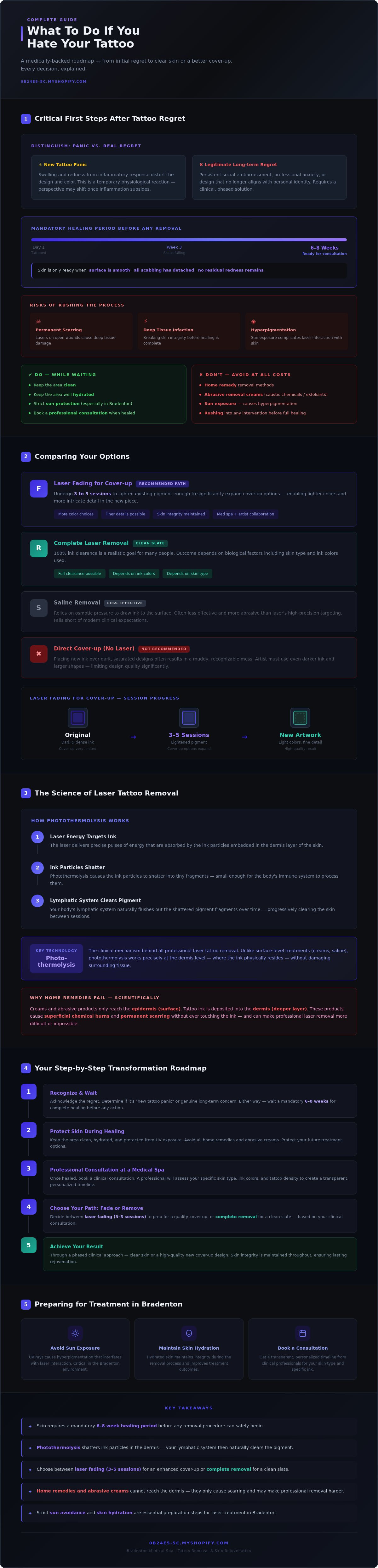
- Skin requires a mandatory healing period of six to eight weeks before any removal procedure can safely begin.
- Learn exactly what to do if you hate your tattoo by evaluating the clinical differences between total laser removal and fading for a future cover-up.
- Laser technology uses photothermolysis to shatter ink particles, allowing your body's lymphatic system to naturally clear the pigment.
- Preparation for treatment in Bradenton includes strict sun avoidance and skin hydration to maintain skin integrity during the removal process.
- Professional consultations at a medical spa provide a transparent timeline and a functional roadmap for your specific ink and skin type.
Navigating Tattoo Regret: The Critical First Steps
Regret often follows the initial application of permanent ink. This emotional response is frequently a reaction to the sudden change in physical appearance. When considering what to do if you hate your tattoo, the first step is to recognize that your feelings are a common part of the process. Immediate panic is a physiological and psychological reaction that requires a calm, clinical perspective to manage effectively.
The Psychology of the 'New Tattoo Panic'
It's essential to distinguish between a temporary "new tattoo panic" and legitimate, long-term regret. During the first few days, your body is in an inflammatory state as it responds to the trauma of the needles. This swelling and redness can distort the design and color, leading to a distorted perception of the final result. Once the inflammation subsides and the skin settles, your perspective may shift. Tattoo regret is a manageable aesthetic concern that can be addressed through logical, clinical steps.
Why You Must Wait for Complete Healing
You cannot begin the removal process immediately after getting inked. The skin requires a mandatory healing period, typically six to eight weeks, before any intervention. During this time, your immune system is actively working to seal the wound and settle the ink particles into the dermis. Attempting to use medical lasers on an open wound or scabbing skin poses severe risks, including permanent scarring and deep tissue infection.
While researching various tattoo removal methods, you'll find that clinical standards prioritize skin integrity above all else. Your skin is ready for a professional consultation only when the surface is smooth, the scabbing has completely detached, and no residual redness remains. Rushing this timeline can compromise the ultimate success of the removal process.
Immediate Care and Safety Warnings
While you wait for the healing period to conclude, you must maintain standard aftercare. This includes keeping the area clean, hydrated, and protected from the sun. In the Bradenton environment, UV protection is critical. Exposure to the sun can lead to hyperpigmentation, which complicates how laser technology interacts with your skin later.
You must avoid "home remedies" or abrasive removal creams. These products often contain caustic chemicals or physical exfoliants that don't reach the dermis where the ink resides. Instead, they cause superficial chemical burns and permanent scarring. Using these unverified methods can make professional laser removal more difficult or even impossible. Focus on maintaining healthy skin while you evaluate your long-term options. Understanding what to do if you hate your tattoo starts with protecting your skin's current health so that future treatments remain viable.
Comparing Your Options: Removal, Fading, and Cover-ups
When you realize you're unhappy with your ink, the path forward involves choosing between total elimination and artistic modification. Understanding what to do if you hate your tattoo requires a comparison of clinical outcomes versus cosmetic adjustments. Many people assume a cover-up is the simplest route. However, placing new ink over a dark, saturated design often results in a muddy, recognizable mess that fails to resolve the original issue.
Saline removal is another common suggestion, yet it often falls short of modern clinical expectations. This method relies on osmotic pressure to draw ink to the surface, which is frequently less effective and more abrasive than the high-precision targeting of laser energy. While "living with it" remains an option, it doesn't address the psychological discomfort or social embarrassment associated with unwanted ink. For those seeking a permanent change, professional intervention offers more predictable and skin-safe results.
Laser Fading for Superior Cover-up Results
Dark or dense tattoos severely limit a tattoo artist's ability to create a new, high-quality design. Without intervention, an artist must use even darker ink and larger shapes to hide the original work. Laser fading changes this dynamic. By undergoing three to five sessions, you can lighten the existing pigment enough to expand your cover-up options significantly. This process allows you to choose lighter colors and more intricate details for your new piece. Working with a med spa and a tattoo artist in tandem ensures the skin is prepped for new ink without compromising its integrity.
Complete Laser Removal: A Clean Slate
For those who want the ink gone entirely, complete laser removal is the objective. Achieving 100% ink clearance is a realistic expectation for many, though it depends on several biological factors. Your skin type and the specific colors of the ink play a major role in the timeline. Black and dark blue pigments typically respond faster than vibrant greens or yellows. Success requires a patient, phased approach to allow the body to process the shattered ink safely.
You can consult with Organic Skin & Body Med Spa to receive a professional evaluation of your specific tattoo. Their clinical experts provide a functional roadmap based on your skin's unique needs and the technical requirements of your ink. This transparent assessment helps you understand exactly what to do if you hate your tattoo and how to achieve a clean slate. If you're ready to explore these paths, a professional consultation is the most logical next step for your skin health.
The Science of Laser Tattoo Removal Technology
Laser removal operates on the principle of selective photothermolysis. This process involves using specific wavelengths of light to target ink particles without damaging the surrounding skin tissue. When the laser energy hits the pigment, it creates a rapid thermal expansion that shatters the ink into microscopic fragments. Once these particles are small enough, your body's lymphatic system recognizes them as foreign waste. Your immune cells then naturally flush these fragments out of your system over several weeks following the treatment.
Modern technology has evolved from older Q-switched lasers to advanced picosecond systems. While Q-switched lasers deliver energy in nanoseconds, picosecond lasers measure pulses in trillionths of a second. This increased speed creates a mechanical pressure wave that pulverizes ink more effectively with less heat transfer to the skin. It's a technical advantage that reduces the risk of thermal damage and supports better skin rejuvenation throughout the removal process. If you don't use the correct technology for your specific ink type, the results may be inconsistent or require significantly more sessions.
How Lasers Target Specific Ink Colors
The success of your treatment depends on the physics of light absorption. Black ink is the easiest to treat because it absorbs all laser wavelengths effectively. In contrast, vibrant colors like green or blue require specific wavelengths to achieve fragmentation. Modern clinical lasers utilize multiple wavelengths to ensure that even stubborn pigments are addressed. Understanding these technical requirements is a key part of determining what to do if you hate your tattoo when the design contains a complex color palette.
Factors That Influence Your Removal Timeline
Clinicians use the Kirby-Desai scale to estimate the number of sessions required for clearance. This scale accounts for several variables that dictate how quickly your body can process the ink. If you are wondering what to do if you hate your tattoo, assessing these biological factors is essential for setting realistic expectations.
- Ink Density: Professional tattoos often have more ink deposited deeper into the dermis than amateur ones, requiring more passes to break down the layers.
- Location: Tattoos located closer to the heart benefit from better blood circulation. This increased flow speeds up the removal of shattered ink fragments. Areas like ankles or fingers typically take longer to fade due to reduced circulation.
- Metabolic Health: Since your lymphatic system does the heavy lifting, your individual health and hydration levels influence the speed of clearance.
Maintaining skin integrity is a priority throughout this timeline. Advanced laser skin treatments and RF & microneedling can be used in a broader skin health plan to ensure the area remains smooth and healthy after the ink is gone.
A Step-by-Step Plan for Your Tattoo Transformation
Moving from the science of ink fragmentation to practical application requires a structured, clinical approach. If you are currently deciding what to do if you hate your tattoo, the first step is scheduling a professional consultation. This initial meeting allows a technician to evaluate your ink density, skin type, and the age of the tattoo. These factors determine the technical settings of the laser and provide a realistic estimate of the sessions required for your desired outcome.
Preparation is vital for procedural success. You must prioritize skin hydration and strict sun avoidance for at least four weeks before your appointment. In the Florida climate, this often requires a change in daily habits. Tanned skin contains higher levels of melanin, which can interfere with the laser's ability to target pigment effectively. By maintaining your natural skin tone, you reduce the risk of adverse reactions and ensure the laser energy is absorbed primarily by the ink.
Finding the Right Provider in Bradenton, FL
Choosing a medical spa over a standard tattoo shop ensures your procedure occurs in a sterile, medically-supervised environment. This distinction is critical for maintaining skin integrity and ensuring procedural safety. When researching spas in Bradenton FL, look for facilities that specialize in advanced laser technology. Ask your technician about their experience with various ink colors and their specific protocols for post-treatment care. A transparent provider will offer a clear explanation of the risks and a functional timeline for your results.
Tattoo Removal Aftercare in the Florida Sun
The Florida sun poses a significant challenge for laser patients. UV exposure on treated skin can lead to hyperpigmentation or permanent scarring, as the skin is highly sensitive during the healing phase. You must use medical-grade SPF and physical barriers like clothing to protect the treated area at all times. To support overall skin health, many clients integrate their removal plan with other advanced services. For instance, scheduling HydraFacials for surrounding skin areas can help maintain moisture and clarity during the months-long removal process.
During your first session, expect a sensation similar to a rubber band snapping against the skin. The treatment is typically fast, and you will notice a temporary white "frosting" on the surface of the ink. This is a normal reaction indicating the laser has successfully shattered the pigment. Following the session, follow all instructions regarding topical ointments and bandage changes. Avoiding physical irritation and keeping the area clean are the most effective ways to prevent complications. If you are ready to begin, schedule your laser removal consultation to receive a personalized roadmap for your skin. Knowing what to do if you hate your tattoo becomes much simpler once you have a professional plan in place.
Why Choose Organic Skin & Body Med Spa for Removal
Selecting a clinical environment for your treatment is the most important decision you will make when determining what to do if you hate your tattoo. Organic Skin & Body Med Spa in Bradenton provides a formal, transparent, and highly functional setting for laser procedures. Unlike a standard tattoo shop, our facility operates under medical supervision to prioritize your skin integrity. We focus on delivering objective results through precise technical application, ensuring that every session moves you closer to your aesthetic goals without unnecessary risks.
Our facility is located on East State Road 70 in Bradenton, Florida. We understand the specific needs of local residents, especially regarding the management of skin health in a high-UV environment. By choosing a medically-supervised med spa, you benefit from professional protocols designed to minimize downtime and prevent complications like hyperpigmentation. Our approach is straightforward: we provide the clear directions and clinical expertise necessary to resolve tattoo regret effectively.
Our Advanced Laser Removal Process
Safety is the primary focus of our removal process. Every session follows strict clinical protocols to ensure the laser energy is delivered accurately and safely. We prioritize patient comfort by using cooling techniques and precise pulse adjustments based on your skin's real-time response. This level of care is essential for maintaining the texture and health of your dermis throughout the clearing process.
In addition to laser removal services, we offer advanced skin-improving technologies to support your transformation. If your skin requires structural rejuvenation after the ink is removed, we provide treatments like Morpheus8. This RF microneedling technology can help improve skin texture and firmness, ensuring the area looks its best once the pigment has faded. Our technicians communicate every procedural need clearly, so you always understand the technical status of your treatment plan.
Your Journey to Clearer Skin Starts Here
Correcting tattoo regret requires a logical, step-by-step approach. Our staff provides a supportive yet direct environment where facts and results take precedence. We don't offer vague promises; instead, we provide a predictable roadmap based on the specific characteristics of your unwanted ink. This functional perspective helps reduce the anxiety often associated with visible, unwanted tattoos.
The solution for what to do if you hate your tattoo begins with a professional assessment. We invite you to visit our Bradenton location for a personalized consultation. During this meeting, we will evaluate your tattoo and provide a clear, objective plan for removal or fading. Take the first step toward clear skin by contacting Organic Skin & Body Med Spa today to schedule your clinical skin assessment.
Take Control of Your Skin's Future
Addressing tattoo regret requires a transition from emotional distress to logical action. Understanding what to do if you hate your tattoo involves respecting the biological healing process and choosing a clinical solution over unverified home remedies. Whether you seek a complete removal or a faded base for a superior cover-up, modern laser technology offers a functional path to restore your skin's appearance. Every successful transformation begins with a clear, medically-backed roadmap.
Organic Skin & Body Med Spa provides a professional, clinical medical spa setting for individuals throughout the Bradenton and Lakewood Ranch community. Our expertise in advanced laser skin rejuvenation ensures that your procedure is managed with technical precision and transparency. By following a structured plan and prioritizing medical-grade aftercare, you can achieve predictable results and healthy skin. If you are ready to move forward, Book Your Laser Tattoo Removal Consultation in Bradenton today. We provide the clear directions and expertise needed to help you reclaim your skin with confidence.
Frequently Asked Questions
How many sessions will it take to remove my tattoo?
Laser tattoo removal typically requires a series of treatments to achieve full clearance. Most clients require between five and ten sessions, though the exact number depends on factors like ink density, age, and placement. We use the Kirby-Desai scale to provide a functional estimate during your initial consultation. Spacing sessions six to eight weeks apart allows your lymphatic system to flush away shattered ink particles effectively.
Does laser tattoo removal hurt more than getting the tattoo?
The sensation of laser removal is often compared to the snap of a rubber band against the skin. While some discomfort is expected, the procedure is significantly faster than the original tattooing process. We prioritize patient comfort by using cooling techniques during the session. Most individuals find the brief treatment manageable, especially given the technical precision of modern picosecond laser technology used in our clinical environment.
Can you remove a tattoo that was just done yesterday?
You cannot treat a tattoo that was applied yesterday because the skin is still an open wound. If you are wondering what to do if you hate your tattoo immediately after getting it, you must wait at least six to eight weeks for complete healing. Attempting laser removal on unhealed skin increases the risk of permanent scarring, infections, and poor ink clearance results during the removal process.
Will laser removal leave a scar on my skin?
Modern laser technology is designed to target ink without damaging the surrounding tissue, which minimizes the risk of scarring. Most instances of scarring are actually pre-existing from the original tattoo application or result from improper aftercare. Following our clinical instructions regarding sun avoidance and topical care ensures your skin integrity remains intact throughout the entire removal process at our Bradenton facility. We prioritize long-term skin health in every session.
Is it possible to only fade a tattoo for a cover-up?
Fading a tattoo for a future cover-up is a common and effective clinical goal. This process typically requires three to five sessions to lighten the pigment enough for an artist to apply a new design. By reducing the saturation of the original ink, you gain more flexibility in choosing lighter colors and more detailed artwork for your replacement tattoo. This approach ensures a higher quality aesthetic result.
What should I avoid doing immediately after a laser removal session?
You should avoid direct sun exposure, excessive heat, and physical irritation for at least 48 hours after a session. This includes staying out of hot tubs, saunas, and swimming pools to prevent infection. In the Florida climate, using medical-grade SPF and physical barriers is essential to prevent hyperpigmentation. Do not pick or scratch any temporary frosting or scabbing that occurs on the treated area during the healing phase.
How much does laser tattoo removal typically cost in Florida?
The cost of laser removal varies based on the size of the tattoo and the total number of sessions required for clearance. Every tattoo is unique, so we do not provide standardized pricing without a professional assessment. During a consultation at our East State Road 70 location, we provide a transparent evaluation of your specific procedural needs to help you plan your removal journey with clear, objective facts.
Can all colors of tattoo ink be fully removed?
While black and dark blue inks are the easiest to remove, most colors can be addressed with specific laser wavelengths. Black ink absorbs all wavelengths, making it highly responsive to treatment. Vibrant colors like green, yellow, and bright blue are more technically challenging and may require additional sessions. Understanding these technical limitations is a key part of what to do if you hate your tattoo when the design involves complex pigments.