

What if the most successful part of your first laser treatment is actually invisible to the naked eye? Most people expect to see their ink vanish instantly, but the reality of tattoo removal after 1 session is often a mix of temporary skin changes and very subtle fading. You might feel a sense of frustration when you don't see immediate results, especially after dealing with the initial discomfort and swelling. It's completely normal to feel impatient when the mirror doesn't reflect the progress you imagined.
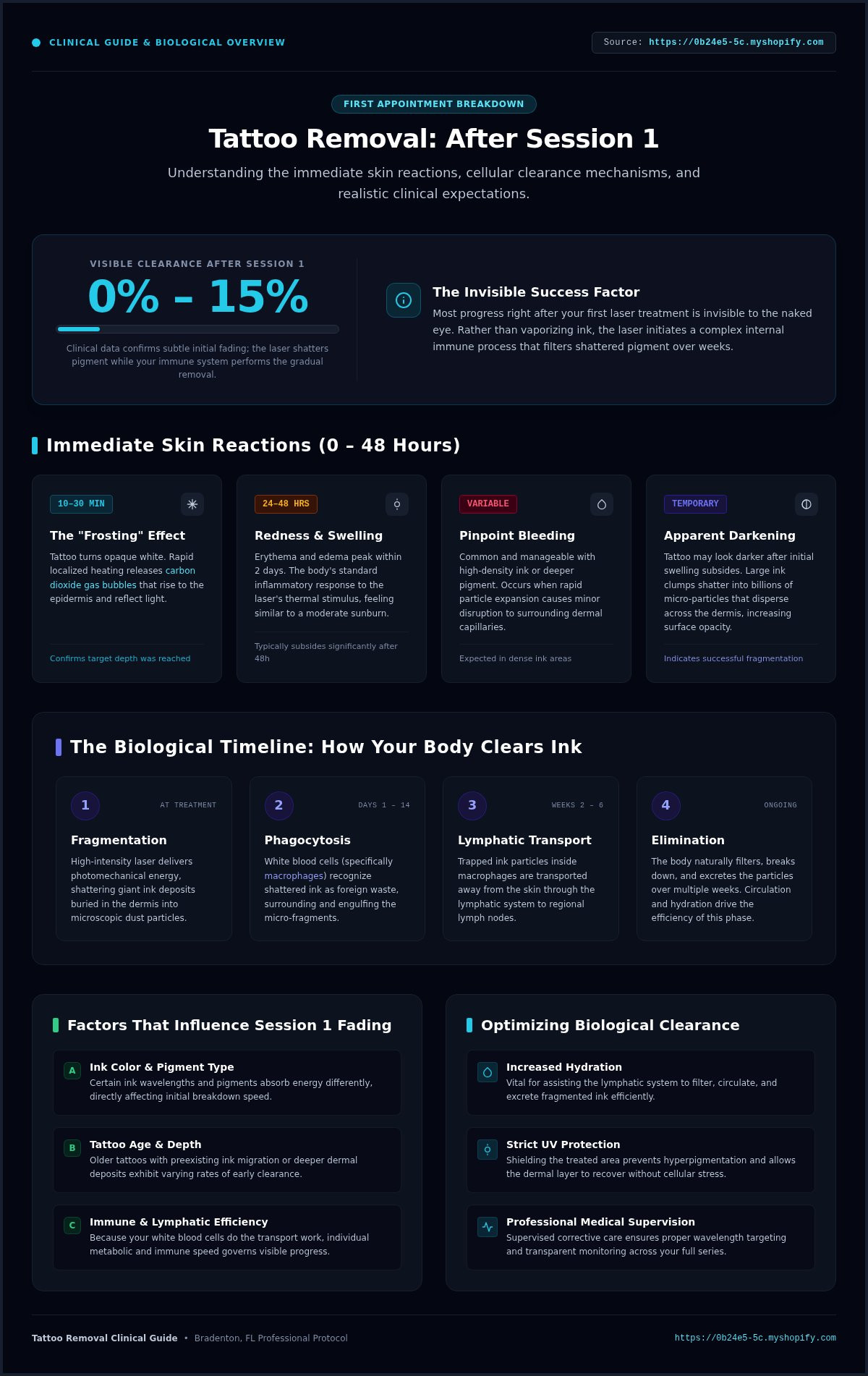
This article provides a transparent look at the biological process triggered by your first appointment. You'll learn why your immune system, not just the laser, is the primary driver of ink clearance. We'll examine why clinical data shows that many patients see between 0% and 15% visible clearance after their initial visit. By understanding the science of frosting and the macrophage response, you can set realistic expectations for your full treatment series. We'll also outline the necessary aftercare steps to ensure your body clears the shattered ink as efficiently as possible.
Key Takeaways
- Understand the "frosting" effect and why skin turns white for up to 30 minutes immediately following the laser-ink interaction.
- Learn how your immune system drives tattoo removal after 1 session by identifying and transporting shattered ink fragments through the lymphatic system.
- Discover how variables like ink color and tattoo age influence the visible fading you can expect to see in the weeks following your first appointment.
- Identify critical aftercare steps, such as increased hydration and strict UV protection, to optimize the biological clearance of ink particles.
- Recognize the importance of professional medical supervision in Bradenton to ensure safety and transparency throughout the corrective skin treatment process.
Immediate Reactions: What Your Skin Looks Like Right After Session 1
The immediate reaction to a laser treatment can be startling for first-time clients. Within seconds of the laser pulse hitting the skin, the treated area often undergoes a dramatic visual transformation. This is a critical stage of tattoo removal after 1 session where the skin exhibits a specific set of biological and chemical responses to the high-intensity light. While these reactions might appear alarming, they are standard indicators that the laser energy has successfully interacted with the pigment buried in your dermis. Professional practitioners look for these signs to confirm the treatment's efficacy.
The Science of Frosting
One of the most prominent reactions is "frosting," a phenomenon where the tattoo surface turns a bright, opaque white. This occurs because the laser causes a rapid localized heating of the ink particles, leading to the release of carbon dioxide gas. These microscopic gas bubbles rise to the surface of the epidermis, creating a temporary "shield" that reflects light and makes the skin look frosted. It's a clear signal that the laser has successfully reached the target depth.
This reaction is a positive clinical sign. It confirms that the laser wavelength has reached the target ink and triggered the necessary photomechanical fragmentation. Because this white layer acts as a physical barrier, it prevents further laser penetration during that specific pass. Patients should feel reassured that frosting is transient; it typically resolves within 10 to 30 minutes as the gas is reabsorbed or dissipated. Understanding the mechanisms of laser tattoo removal helps clarify why this phase is a necessary precursor to the actual fading process.
Redness and Pinpoint Bleeding
Once the frosting subsides, the skin will transition into a more traditional inflammatory phase. You can expect localized edema (swelling) and erythema (redness) that often feels similar to a moderate sunburn. These reactions usually peak within the first 24 to 48 hours. It's the body's natural response to the minor thermal stimulus provided by the laser.
In some cases, especially with high-density ink or deeper pigment layers, you might observe pinpoint bleeding. This is a common and manageable reaction. It happens when the rapid expansion of ink particles causes minor disruptions to the surrounding capillary structures. While redness is expected, you should monitor the area for signs of excessive irritation that extend far beyond the treatment border. Most of these initial symptoms begin to fade significantly after the first two days.
A common source of confusion regarding tattoo removal after 1 session is the appearance of the ink once the frosting and initial swelling fade. It's frequent for the tattoo to look darker or more vivid than it did before the treatment. This happens because the laser shatters large ink clumps into billions of smaller particles. These microscopic fragments disperse across the dermal layer, temporarily increasing the surface opacity. This doesn't mean the treatment failed; it means the ink is now in a state where your immune system can begin the work of removal.
The Biological Timeline: How Your Body Processes Ink After the First Treatment
The laser doesn't actually remove the ink from your body; it simply initiates a biological chain reaction. During your initial appointment, the laser's high-intensity light pulses penetrate the skin to reach the ink particles. This starts a complex, multi-step internal process that continues long after you leave the med spa. Understanding this timeline helps manage expectations regarding the visual progress of tattoo removal after 1 session.
- Step 1: Fragmentation. The laser utilizes photomechanical energy to shatter large ink clumps into microscopic dust. These particles are now small enough for your immune system to handle.
- Step 2: Phagocytosis. Your white blood cells, specifically macrophages, identify the shattered ink as foreign waste. They surround and ingest these microscopic fragments.
- Step 3: Lymphatic Transport. Once the ink is trapped within the macrophages, it's carried through the lymphatic system to your regional lymph nodes.
- Step 4: Elimination. Your body naturally filters and excretes these particles over several weeks. This is why hydration and circulation are so important for success.
The FDA guidance on tattoo removal options and results confirms that this is a multi-phased process. It requires the body to physically move the pigment out of the dermis, which is not an instantaneous event. If you're ready to begin this process with professional guidance, our team offers expert laser removal services in a clinical environment.
Why You Don't See Instant Fading
Visible fading happens during the 6 to 8 weeks between your appointments, not during the laser session itself. The lymphatic system acts as the body's primary cleanup crew for shattered tattoo ink. Think of the first session like breaking up a large boulder into smaller rocks; it's much easier for your immune system to move the tiny pieces than the original solid mass. Because the body can only process a certain amount of ink at once, the first pass often focuses on the densest, most superficial layers of pigment.
The Importance of the Waiting Period
Patience is the most critical factor in avoiding permanent skin damage or scarring. While it's tempting to schedule sessions closer together, treating the area again too soon can cause significant tissue trauma without actually speeding up the fading. Your skin needs time to fully recover from the initial inflammatory response and complete the ink transport cycle. Clinical evidence shows that ink clearance is rate-limited by your immune system, not by the frequency of laser pulses. Giving your body the full recommended waiting period ensures the skin remains healthy and receptive for the next phase of the removal series.
Factors That Influence Fading After Your First Session
While the biological mechanisms of ink clearance are universal, the visible degree of tattoo removal after 1 session varies significantly between patients. Medical professionals utilize the Kirby-Desai tattoo removal scale to predict these outcomes. This clinical tool assesses specific variables like skin phototype, ink density, and anatomical location to provide a realistic timeline for each individual. Understanding these factors helps you interpret why your results might differ from another person's experience.
Several key variables dictate how quickly your body responds to the initial laser pass:
- Ink Color: Black and red pigments absorb laser energy most efficiently due to their broad absorption spectra. Conversely, blues, greens, and vibrant yellows often require specific wavelengths and show less initial movement.
- Tattoo Age: Older tattoos have often already begun to break down through natural immune responses over the years. This makes the ink easier for your white blood cells to transport once it's shattered.
- Ink Density: Professional tattoos feature heavy pigment saturation driven deep into the tissue. Amateur work usually involves less ink and inconsistent depth, which typically breaks down faster.
- Placement: Proximity to the heart is a vital success factor. Tattoos on the chest, neck, or back benefit from higher vascularity and faster lymphatic drainage than those on your extremities.
Ink Depth and Composition
Professional tattoo artists use specialized equipment to drive ink into the deeper layers of the dermis to ensure the design remains permanent. During your first session, the laser primarily targets the most superficial layers of this pigment. Also, the chemical makeup of the ink matters. Some pigments contain metallic compounds like titanium dioxide or iron oxide. These can react to the laser by darkening before they eventually fade. This reaction, often seen in white or flesh-toned inks, is a standard part of the corrective process.
The Role of Circulation
Your lymphatic system relies on healthy blood flow to transport shattered ink fragments to the lymph nodes for elimination. This is why tattoos on the distal extremities, like ankles or fingers, are notoriously slow to fade. The circulation in these areas isn't as robust as in the torso or neck. You can help maximize the results of tattoo removal after 1 session by staying active. Moderate exercise and proper hydration stimulate the circulatory system, which assists your body in clearing the microscopic debris more efficiently. Avoid smoking, as it significantly constricts blood vessels and can slow your progress by up to 70% over time.
Aftercare: How to Maximize the Results of Session 1
Proper aftercare serves as the critical bridge between your clinical appointment and visible ink clearance. While the laser does the work of fragmentation, your body's physiological response determines the final outcome of tattoo removal after 1 session. Following a strict protocol ensures the skin heals without complication and the lymphatic system operates at peak efficiency. Neglecting these steps can lead to skin texture changes or delayed fading.
Several foundational habits influence your recovery speed:
- Hydration: Water intake is essential for maintaining lymph fluid volume. This allows macrophages to transport shattered ink particles to the lymph nodes more effectively.
- Sun Protection: In the Bradenton area, intense year-round UV exposure is a significant risk factor. You must keep the treated area covered or use a mineral-based SPF 50+ to prevent post-inflammatory hyperpigmentation or hypopigmentation.
- Physical Activity: Light movement encourages circulation, which aids in ink removal. However, you should avoid heavy sweating and high-intensity workouts for the first 48 hours to prevent excess irritation.
- Skin Integrity: Blisters or crusts are normal inflammatory responses. You must never pick at these areas, as doing so increases the risk of permanent scarring and secondary infection.
The First 48 Hours
During the initial recovery phase, focus on maintaining a clean, sterile environment for the treated skin. Clean the area twice daily with mild, fragrance-free soap and lukewarm water, patting it dry gently. Apply a thin layer of a recommended professional ointment to keep the skin hydrated, but avoid thick, occlusive layers that prevent the tissue from breathing. If you experience significant swelling or localized heat, apply a cold compress for 10-minute intervals to manage the discomfort and reduce edema.
Lifestyle Habits for Faster Fading
Your overall health directly impacts the number of sessions required for complete clearance. Clinical data indicates that smokers experience a 70% decrease in tattoo clearance rates across a treatment series compared to non-smokers. This occurs because nicotine constricts blood vessels and compromises the immune system's efficiency. Maintaining a healthy immune environment through proper nutrition and sleep leads to faster results and fewer total appointments. For those interested in maintaining their overall skin health during this process, you can learn how often should you get a hydrafacial to support a clear, healthy complexion.
If you're ready to begin your journey toward clear skin with professional guidance, you can book your laser removal services today.
Professional Laser Tattoo Removal in Bradenton, FL
Selecting a qualified facility is as critical as the technology itself. In Bradenton, Florida, a professional medical aesthetics environment ensures that all safety protocols are strictly followed. While the visible results of tattoo removal after 1 session are often subtle, the initial assessment sets the foundation for your entire journey. Practitioners must customize laser settings based on your Fitzpatrick skin type and the specific chemical composition of your ink. This level of precision is only available in a clinical setting where staff operate under medical supervisory protocols. In Florida's intense UV climate, professional oversight is even more important to prevent complications like hyperpigmentation. A medical-grade environment ensures your skin is properly assessed before and after every pulse.
Why Organic Skin & Body Med Spa?
Organic Skin & Body Med Spa provides a stress-free environment for non-invasive corrective skin treatments. The facility focuses on long-term skin health by combining advanced laser technology with professional expertise. Beyond laser removal services, the spa offers a wide range of sophisticated aesthetic procedures, including Morpheus8. This demonstrates a comprehensive understanding of skin remodeling and tissue health. By integrating organic skincare principles into the post-treatment recovery phase, the team ensures your skin remains resilient and healthy throughout the entire removal series. You'll find the atmosphere helpful and straightforward, focusing on clarity and clear directions for your aftercare.
A professional consultation serves as the only reliable way to establish a realistic timeline for your specific tattoo. During this initial visit, practitioners utilize clinical scales to analyze variables like ink density and anatomical placement. This transparency is vital for managing the expectations of tattoo removal after 1 session, as it clarifies why the process is a marathon rather than a sprint. We don't promise 100% removal in a single visit because the biological timeline of your body dictates the pace of the results.
Your Next Steps in Bradenton
If you're ready for a personalized assessment, visit our spa located at 8523 East State Road 70. Moving from the first session to a comprehensive removal plan involves closely monitoring your body's immune response. As you progress into session 2 and beyond, your practitioner will adjust the laser parameters to target deeper pigment layers that were previously shielded by superficial ink. For those who are new to the region or researching local aesthetic options, The Ultimate Guide to Spas in Bradenton offers valuable context on finding high-quality medical-grade care. Setting up your series now ensures that you maintain the momentum required for the best possible ink clearance over time.
Starting Your Journey Toward Clear Skin
Understanding the internal biological timeline of tattoo removal after 1 session is essential for maintaining a realistic perspective on your progress. The initial phase focuses on pigment fragmentation and the activation of your immune response rather than immediate ink elimination. While temporary reactions like frosting or swelling can be surprising, they indicate that the laser energy has successfully reached the target dermis. Your body requires the full six to eight week waiting period to transport shattered ink through the lymphatic system effectively.
Our expert laser technicians in Bradenton, FL, provide a safe, medical-grade environment for your corrective procedures. We develop personalized treatment plans for all ink types to ensure skin health remains the primary priority throughout the process. If you're ready to begin the series with professional oversight, schedule your laser tattoo removal consultation at our Bradenton Med Spa today. Taking the first step with clear expectations and clinical support ensures you have the guidance needed for successful long-term results. We look forward to helping you achieve your aesthetic goals.
Frequently Asked Questions
Will my tattoo be gone after the first session?
Complete removal won't occur after a single visit. Laser tattoo removal is a multi-step process that requires a series of treatments to achieve full clearance. The initial session primarily targets the most superficial layers of pigment. While the laser shatters these particles, your immune system needs several weeks to transport them out of the dermis. Most patients require 8 to 12 sessions for complete results depending on ink density and color.
Why does my tattoo look darker after the first laser treatment?
It is common for a tattoo to appear darker or more vivid immediately following your initial treatment. This happens because the laser shatters large, concentrated ink clumps into billions of microscopic particles. These smaller fragments disperse across the dermal layer, which temporarily increases the surface opacity of the ink. This reaction is a normal part of the process and indicates that the pigment has been successfully fragmented for your immune system to clear.
Is it normal to have blisters after one session of laser tattoo removal?
Superficial blistering is a standard inflammatory response after your first treatment. These fluid-filled bubbles form as the skin reacts to the thermal energy delivered by the laser. While they may look concerning, they are a sign that your body is initiating the healing process. You must not pick, pop, or scratch these blisters, as doing so increases the risk of infection and permanent scarring. Keep the area clean and follow all professional aftercare instructions.
How long should I wait between my first and second session?
Clinical protocols require a minimum waiting period of 6 to 8 weeks between your first and second sessions. For individuals with darker skin types or high-density ink, extending this gap to 10 or 12 weeks is often recommended. Your immune system is the rate-limiting factor in ink clearance; it needs ample time to transport shattered pigment to the lymph nodes. Scheduling treatments too close together increases the risk of tissue damage without accelerating the fading process.
Can I exercise after my first tattoo removal treatment?
You should avoid high-intensity exercise and heavy sweating for the first 24 to 48 hours after your appointment. Excessive heat and perspiration can irritate the treated area and potentially lead to infection or prolonged swelling. Once the initial inflammatory phase subsides, light physical activity is actually beneficial. Movement stimulates the circulatory and lymphatic systems, which helps your body clear the microscopic ink fragments more efficiently during the weeks following your treatment.
Does the first session of tattoo removal hurt more than the others?
Many patients find the first session involves the most significant sensation because the ink density is at its highest point. As the pigment clears in subsequent visits, there is less target material for the laser to interact with, which often reduces the level of discomfort. We utilize professional cooling methods and advanced technology at our Bradenton facility to ensure the experience is as comfortable and stress-free as possible for every client.
What happens if I don't see any change after the first session?
It is normal to observe zero visible clearance immediately after your initial appointment. The primary goal of tattoo removal after 1 session is to fragment the densest superficial ink layers and trigger an immune response. Clinical data shows that visible fading typically ranges from 0% to 15% after the first pass. Significant lightening usually becomes evident starting around the third or fifth session as the deeper layers of pigment are systematically targeted and removed.
Is one session enough to fade a tattoo for a cover-up?
One session is rarely enough to sufficiently fade a tattoo for a high-quality cover-up. Most tattoo artists require the original ink to be significantly lightened to ensure the new design isn't compromised by the old pigment. While tattoo removal after 1 session begins the fading process, you will likely need a short series of treatments to achieve the necessary transparency. A professional consultation will help determine the specific number of sessions required based on your goals.