

Your metabolism, not just the calendar, determines when your lip filler disappears. Most patients expect a fixed timeline, yet the reality is that how long does lip filler last depends on a complex interaction between the specific product used and your body's unique chemistry. It's common to feel concerned about the cost-to-longevity ratio or fear that your results might migrate before you've reached your aesthetic goals. Navigating the differences between various brand names often adds to this confusion.
This 2026 guide clarifies the biological factors that influence filler breakdown and provides a roadmap for maximizing your investment. You'll discover how different FDA-approved brands like Juvéderm and Restylane perform over time and what steps you can take to maintain a predictable maintenance schedule. We'll examine the latest industry standards for achieving natural-looking volume and explain how our Bradenton med spa helps you achieve lasting, functional results. Understanding these technical details ensures your expectations align with clinical reality, allowing for a more strategic approach to your cosmetic injectables.
Key Takeaways
- Learn exactly how long does lip filler last based on the 6 to 12-month industry standard and why the aesthetic peak often differs from the total duration of the product.
- Understand how your metabolic rate and skin elasticity directly impact the speed at which your body absorbs hyaluronic acid fillers.
- Compare the durability and firmness of leading formulas like Restylane and Juvéderm to select the product best suited for your desired volume and lip movement.
- Discover practical maintenance strategies, such as the "Micro-Touch-Up" approach and UV protection, to maximize your investment in cosmetic injectables.
Understanding the Typical Lifespan of Hyaluronic Acid Lip Fillers
Hyaluronic acid (HA) serves as the gold standard for Lip augmentation procedures due to its safety profile and reversibility. It's a naturally occurring sugar molecule in the human body that attracts and retains moisture. In the context of cosmetic injectables, it provides predictable volume and structure. Unlike semi-permanent or permanent options, which carry higher risks of migration or long-term complications, HA fillers are temporary. This characteristic is beneficial because it allows for adjustments as facial features change with age. The primary mechanism behind the disappearance of the product is metabolic breakdown. Your body produces an enzyme called hyaluronidase, which gradually dissolves the filler material over time.
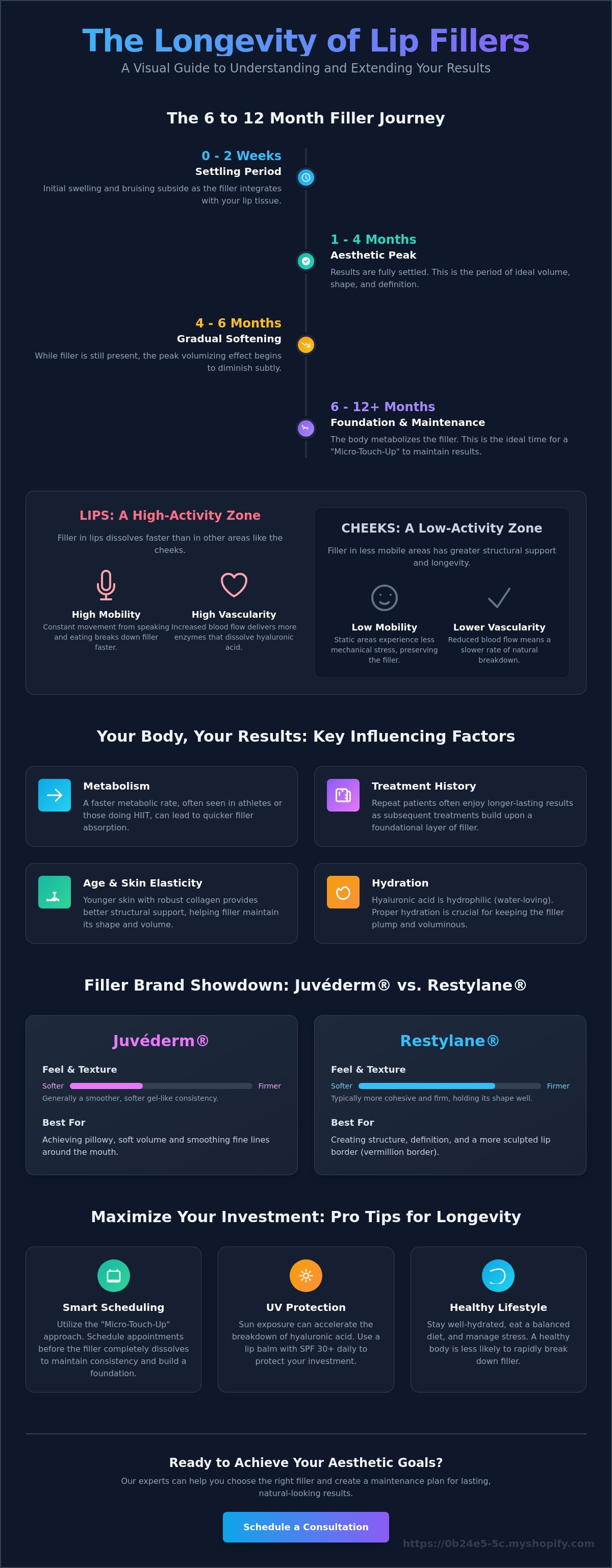
While many patients ask how long does lip filler last, the answer requires a distinction between the product's presence and its aesthetic peak. Clinical data suggests that most HA fillers remain in the tissue for 6 to 12 months. However, the visible fullness or the specific shape achieved immediately after treatment often begins to soften before the product is completely gone. Patients frequently notice a decrease in the initial results around the four or five-month mark. The filler is still providing structural support at that stage, but the peak volumizing effect has started to diminish.
The 6 to 12 Month Window: What to Expect
The timeline for lip filler follows a specific trajectory from injection to absorption. The first two weeks are considered the settling period. During this time, initial swelling and potential bruising subside, allowing the gel to integrate with your natural lip tissue. For first-time patients, the body may process the filler slightly faster. This occurs because the tissue hasn't previously been expanded to hold the gel. Repeat clients often experience longer-lasting results. They build a foundational layer of filler that resists rapid absorption. Stable results typically persist for several months before the gradual metabolic decline becomes noticeable.
Why Lip Fillers Dissolve Faster Than Cheek Fillers
Lips are a high-mobility area, which significantly impacts product longevity. Constant movement from speaking, eating, and facial expressions creates mechanical stress on the filler material. This physical manipulation causes the gel to break down more quickly than it would in static areas like the cheeks or temples. The lips are also one of the most vascularized areas of the face. The dense network of blood vessels in this region facilitates a higher rate of metabolic activity. Increased blood flow delivers more enzymes to the area, accelerating the natural dissolution process. Because of these factors, lip treatments generally require more frequent maintenance than other facial injections.
Biological and Lifestyle Factors That Influence Filler Longevity
Individual biology plays a critical role in determining the duration of aesthetic results. While clinical averages provide a baseline, your body's internal chemistry often dictates the actual timeline. Reviewing FDA information on dermal fillers confirms that while these products are approved for safety, their longevity is subject to biological degradation. Understanding how long does lip filler last requires looking beyond the syringe and into individual lifestyle habits and metabolic functions.
The Role of Individual Metabolism
Every person produces hyaluronidase, the natural enzyme responsible for breaking down hyaluronic acid. Individuals with higher metabolic rates typically process this enzyme more efficiently, which can shorten the window of how long does lip filler last. This is particularly evident in patients who participate in high-intensity interval training (HIIT) or professional athletics. For those who want to learn more about TrYumph Fitness and their approach to metabolic health, it is worth noting that frequent, intense physical activity increases systemic circulation and metabolic turnover, potentially leading to faster filler absorption. Active Bradenton residents should manage their expectations accordingly; they may require touch-ups closer to the six-month mark rather than the twelve-month estimate.
Age and skin elasticity also influence the visual outcome. Younger skin with robust collagen levels provides better underlying support for the filler gel. As skin loses elasticity over time, the filler may appear to "settle" or lose its definition more quickly. Additionally, hydration is a functional requirement for HA fillers. Since hyaluronic acid is hydrophilic, it requires adequate systemic water levels to remain plump. Dehydration can cause the lips to appear smaller, even if the filler material is still present in the tissue.
Lifestyle Habits and Lip Health
Environmental factors in Florida present specific challenges for dermal health. UV radiation from consistent sun exposure degrades the skin's structural proteins and can accelerate the breakdown of cosmetic injectables. Nicotine use also restricts blood flow and introduces oxidative stress, which negatively impacts the longevity of the product. Supporting the delicate lip border with professional skincare is essential for maintaining results. Integrating professional organic facials can improve the health of the perioral area, creating a better environment for the filler to remain stable.
Maintaining a healthy skin barrier helps protect your aesthetic investment. Consistent moisture and sun protection prevent the premature degradation of the dermal matrix surrounding the injection site. If you're ready to discuss a personalized plan, exploring our options for cosmetic injectables is the first step toward achieving your aesthetic goals. By addressing both internal biology and external stressors, you can maximize the lifespan of your treatment.
Comparing Filler Brands: Restylane® vs. Juvéderm® Durability
Selecting the appropriate product is as vital as the injection technique itself when determining how long does lip filler last. Patients often prioritize product chemistry because the manufacturing process dictates how the body interacts with the gel. Different manufacturers use unique cross-linking processes to bind hyaluronic acid molecules together, creating a stable gel that resists enzymatic breakdown. A primary metric used by practitioners is "G-Prime," which refers to the gel's resistance to deformation. A high G-Prime filler provides significant structural support; a lower G-Prime filler offers a softer, more integrated feel. Consulting a comprehensive Guide to Injectable Fillers reveals that the choice between brands often comes down to the patient's anatomical needs and the desired level of projection.
Restylane® Kysse: Engineered for the Lips
Restylane Kysse is specifically engineered for the high-mobility environment of the lips. It utilizes XpresHAn Technology, a manufacturing process that creates a flexible gel. This allows the filler to move naturally during speech and expressions without appearing stiff or artificial. Clinical studies have documented that these results can persist for up to 1 year. Because of its efficient integration, many patients find they require less total volume to achieve their aesthetic goals compared to traditional fillers. This efficiency contributes to a more natural look while maximizing the duration of the enhancement.
Choosing the Right Formula for Your Goals
Selecting a formula based on how long does lip filler last involves more than just picking the densest gel. Not all fillers are created equal. Restylane Silk is designed for subtle enhancement and the correction of fine perioral lines. In contrast, Restylane Lyft provides more robust structure for patients seeking significant definition. It's a common misconception that a thicker filler automatically translates to a longer lifespan. In the lips, a filler that is too rigid may break down unevenly due to constant muscle movement. Our Bradenton experts evaluate your unique lip anatomy and tissue elasticity to select the formula that offers the best balance of longevity and natural movement. This customized selection ensures that the product remains in place, preventing the migration often feared by first-time patients.
Practical Tips to Extend the Life of Your Lip Injections
Achieving a long-lasting result requires more than just a successful injection session. While your internal metabolic rate is a primary driver of how long does lip filler last, your daily habits during the first 48 hours and throughout the following months significantly influence the product's stability. Proper maintenance protects the structural integrity of the hyaluronic acid gel, preventing premature degradation caused by external stressors. By following a functional aftercare protocol, you ensure the filler integrates seamlessly with your natural tissue.
The Florida Factor: Protecting Your Investment from UV
Living in high-UV environments like Sarasota and Bradenton presents a specific challenge for dermal filler longevity. UV radiation triggers the production of free radicals and oxidative stress within the skin, which can accelerate the breakdown of hyaluronic acid chains. To mitigate this, daily use of an SPF-rated lip balm is mandatory. Standard skin sunscreen often fails to provide adequate coverage for the mucosal tissue of the lips. Wearing wide-brimmed hats and seeking shade during peak sun hours further preserves the dermal matrix. This proactive approach prevents the environmental "melting" effect that many Florida residents experience with their cosmetic treatments.
Topical support also plays a vital role in maintaining the HA barrier. Medical-grade lip treatments containing antioxidants and peptides help reinforce the skin's surface, providing a protective layer that locks in moisture. Because hyaluronic acid molecules are hydrophilic, they rely on systemic hydration to remain volumized. Consistent water intake ensures these molecules stay plump and effective. If you're looking to enhance your overall dermal health, you can schedule a consultation for cosmetic injectables to develop a personalized maintenance plan.
Post-Treatment Dos and Don’ts
The first week following your appointment is the most critical period for product integration. You should avoid high-heat environments, such as saunas, steam rooms, and hot yoga sessions, for at least seven days. Excessive heat causes vasodilation, which increases blood flow to the face and can exacerbate swelling or trigger faster metabolic processing of the new filler. Similarly, heavy cardiovascular exercise should be postponed for 24 to 48 hours. Increased blood pressure during the early stages of healing may disrupt the settling process of the gel.
Manipulation of the treatment area is another factor to consider. Unless your provider specifically instructs you to perform a gentle massage to smooth a minor lump, it's best to leave the area alone. Excessive touching or pressing on the lips can cause the product to shift before it has fully bonded with the surrounding tissue. Following these declarative instructions ensures that the initial how long does lip filler last timeline is maximized rather than shortened by avoidable post-treatment errors.
Scheduling Your Maintenance: The Organic Skin & Body Approach
Effective maintenance transitions from reactive to proactive care. Just as you would rely on a specialist like Northside Automotive for routine mechanical servicing to ensure the longevity of a vehicle, the most successful long-term aesthetic results come from a strategic maintenance schedule rather than waiting for the product to disappear completely. A "Micro-Touch-Up" strategy involves adding smaller amounts of filler at regular intervals. This method maintains a consistent volume and prevents the cycle of dramatic deflation followed by a noticeable refill. By managing the transition phases, you ensure your aesthetic remains stable and natural.
A holistic approach to facial rejuvenation often includes combining fillers with other skin health treatments. For example, learning how often should you get a HydraFacial can help you maintain the skin's hydration levels, which directly supports the appearance of your cosmetic injectables. Clear, hydrated skin provides a better canvas for lip volume, ensuring the edges of the filler remain crisp and the surface of the lips stays smooth. This comprehensive care model addresses both the underlying structure and the surface health of the tissue.
When to Book Your Follow-Up
The "50% rule" is a practical standard for scheduling follow-up appointments. You should book your next session when you feel approximately half of the initial volume has been metabolized. Waiting until the filler is entirely gone means your practitioner must start from a baseline of zero, which often requires more product and higher costs. Regular touch-ups create a cumulative effect. Over multiple sessions, the hyaluronic acid helps support natural collagen production and creates a foundational layer that resists rapid absorption. To stay objective, track your results with monthly photos. Self-perception can be unreliable, but side-by-side images provide clear evidence of when the product is beginning to soften.
Comprehensive Facial Aesthetics in Bradenton
Achieving a balanced look often requires looking beyond the lips. Addressing neighboring concerns, such as glabellar lines, ensures that your facial expressions remain harmonious. If the lips are volumized but the surrounding skin shows signs of significant aging or dynamic wrinkling, the results may appear disconnected. A holistic med spa environment allows for a coordinated treatment plan that addresses multiple signs of aging simultaneously. Understanding how long does lip filler last in your specific case requires consistent observation and professional guidance. We invite you to schedule a personalized consultation at our Bradenton facility to establish your aesthetic goals for 2026 and develop a predictable maintenance roadmap.
Strategic Planning for Your 2026 Aesthetic Goals
Achieving lasting lip volume requires a functional understanding of your body's metabolic processes and the specific properties of the filler selected. While the answer to how long does lip filler last typically falls within the 6 to 12-month range, your personal results depend on lifestyle factors like UV exposure and metabolic rate. Using high-quality products such as Restylane Kysse ensures natural movement, while a consistent "Micro-Touch-Up" strategy prevents the total loss of volume between sessions. This proactive approach allows for a predictable maintenance schedule and maximizes your investment in cosmetic injectables.
Our top-rated med spa serves the Bradenton and Sarasota communities with expert providers who specialize in Restylane and other advanced formulas. We prioritize transparency and clinical precision to help you reach your desired outcomes without the risk of migration or overfilling. If you're ready to develop a personalized aesthetic plan for natural, balanced results, we're here to guide you through every stage of the process. Book Your Lip Filler Consultation in Bradenton Today to secure your appointment and maintain your look throughout the year. We look forward to helping you achieve your long-term aesthetic vision with confidence.
Frequently Asked Questions
Does lip filler last longer the second time you get it?
Yes, repeat patients often notice that their results persist longer than after their initial treatment. This occurs because the previous product hasn't completely metabolized, providing a foundational layer for the new injection. Additionally, the presence of hyaluronic acid can stimulate localized collagen production. Over time, this cumulative effect creates a structural base that requires less volume to maintain the desired aesthetic.
Can I make my lip filler permanent?
No, hyaluronic acid fillers are designed to be temporary and biodegradable. While permanent options like silicone injections or surgical implants exist, they are not recommended due to significantly higher risks of infection, migration, and permanent tissue damage. The temporary nature of HA fillers is a critical safety feature. It allows for adjustments as your facial structure changes with age, ensuring your results remain harmonious over time.
How much does lip filler typically cost in Bradenton, FL?
Costs for lip filler treatments in the Bradenton and Sarasota area vary based on the specific brand used and the expertise of the provider. National clinical data in 2026 indicates that average prices typically range from approximately $699 to $743 per syringe. Patients should prioritize the clinical skill of the injector and the quality of the product over the lowest price to ensure the safety and longevity of their results.
Will exercise make my lip filler dissolve faster?
High-intensity exercise can potentially accelerate the rate at which your body metabolizes filler. Individuals with very high metabolic rates, such as marathon runners or those participating in daily high-intensity interval training, may find that their results soften sooner than more sedentary patients. This is due to increased systemic circulation and higher enzymatic activity. Understanding how long does lip filler last requires accounting for these individual activity levels.
What happens to my lips after the filler completely dissolves?
Your lips will return to their natural, pre-treatment state once the hyaluronic acid has been fully absorbed by your body. There is no permanent stretching of the skin if the filler was injected in appropriate volumes by a professional. In some instances, the slight boost in collagen production triggered by the injection process may leave the lips appearing slightly more hydrated than they were before your first treatment.
Is there a specific diet that helps lip filler last longer?
There is no "magic diet" for filler longevity, but high hydration levels are essential for maintaining volume. Since hyaluronic acid is hydrophilic, it requires adequate systemic water levels to remain plump and integrated. Reducing your intake of inflammatory foods and maintaining a diet rich in antioxidants can also support overall dermal health. These habits help protect the skin's structural integrity and the stability of the cosmetic injectables.
How can I tell if my filler has migrated or just dissolved?
Determining how long does lip filler last involves distinguishing between natural absorption and migration. Dissolution manifests as a gradual, even loss of volume across the treated area. Migration occurs when the product moves beyond the vermilion border, often creating a shelf-like appearance or a "filler mustache" above the lip. A professional clinical assessment is necessary to confirm if the product has moved or simply metabolized over time.
Can I get my lip filler dissolved if I don’t like the results?
Yes, hyaluronic acid fillers can be safely dissolved using an enzyme called hyaluronidase. This enzyme breaks down the cross-linked bonds of the filler gel, typically within 24 to 48 hours of the injection. This reversibility is a primary reason why HA fillers are the industry standard. It provides an added layer of safety and flexibility, allowing practitioners to correct issues or remove the product entirely if the patient is dissatisfied.