

What if you could achieve a deep pore extraction and a radiant glow without the standard three days of post-facial redness? For those with reactive skin, the fear of chemical burns or chronic inflammation often makes professional aesthetician services feel like a gamble. You likely struggle with persistent dehydration despite using heavy creams, yet you avoid traditional peels that could trigger a flare-up.
We understand that your skin requires a precise, objective approach rather than a one-size-fits-all solution. This guide demonstrates how a hydrafacial for sensitive skin functions as a modular therapy where every step is adjusted for your specific reactivity. You'll learn how the patented Vortex-Fusion technology provides deep cleansing and intense hydration while remaining gentle enough for the most delicate complexions.
The customizable nature of this system allows for the integration of specialized boosters from brands like Alastin and Circadia, which target fine lines and dullness without irritation. We'll outline the procedural steps and the science behind the "glass skin" glow to help you determine if this treatment aligns with your skincare goals.
Key Takeaways
- Learn why medical-grade hydradermabrasion is a safer alternative for reactive skin than traditional manual extraction methods.
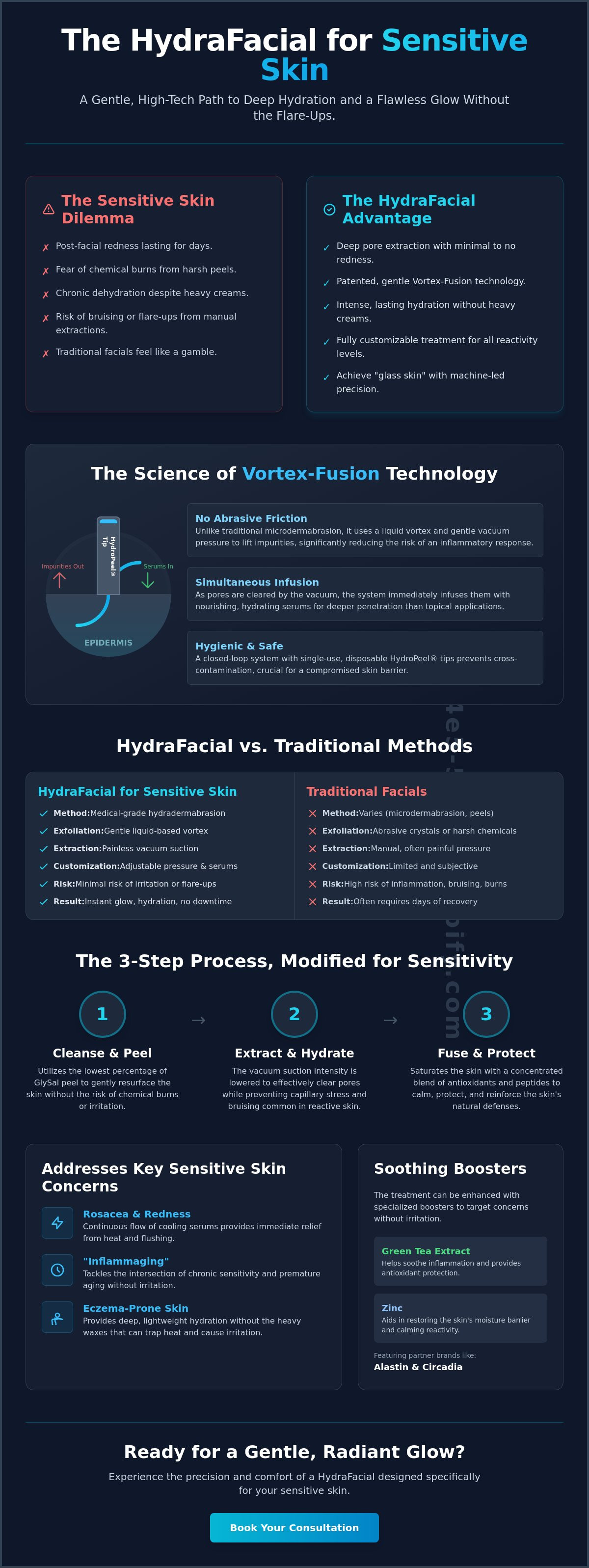
- Understand how the Vortex-Fusion system makes a hydrafacial for sensitive skin possible by using vacuum pressure instead of abrasive friction.
- Identify specific booster ingredients like Green Tea extract and Zinc that help soothe inflammation and restore the skin's moisture barrier.
- Follow a professional pre-treatment checklist to prepare your skin for a successful consultation and procedure.
- Evaluate the advantages of machine-led precision in achieving "glass skin" results without the risk of bruising or post-facial flare-ups.
What is a HydraFacial for Sensitive Skin? Understanding the Gentle Glow
A hydrafacial for sensitive skin is a medical-grade procedure that utilizes Hydradermabrasion technology to resurface the complexion without the trauma of traditional methods. While standard facials often rely on manual extractions or harsh abrasives, this system uses a patented vacuum-based process to cleanse, extract, and hydrate simultaneously. Sensitive skin isn't a fixed condition; it's a broad spectrum that includes everything from temporary environmental reactivity to chronic conditions like rosacea. The 2026 iteration of this technology focuses on modular precision, allowing practitioners to adjust every parameter of the treatment to accommodate these varying degrees of sensitivity.
Non-invasive exfoliation is critical for maintaining a healthy skin barrier. When the barrier is compromised, the skin loses moisture rapidly and becomes more susceptible to irritants. By using liquid-based exfoliation, the treatment removes dead skin cells and debris while immediately replenishing the moisture levels. This prevents the "stripped" feeling that often follows more aggressive aesthetician services.
The Three-Step Process Modified for Sensitivity
The core protocol is intentionally adjusted to minimize stress on reactive tissues. During the Cleanse and Peel stage, practitioners select the lowest percentage of GlySal. This ensures gentle resurfacing without the risk of chemical burns. The Extract and Hydrate phase follows, where the vacuum's suction intensity is lowered to prevent capillary stress and bruising. Finally, the Fuse and Protect step saturates the skin with a concentrated blend of antioxidants and peptides. This final infusion reinforces the skin's natural defenses and provides a calming finish that reduces post-procedural redness.
Common Sensitive Skin Concerns Addressed
This customized approach is particularly effective for managing specific inflammatory concerns. For rosacea-prone skin, the continuous flow of cooling serums provides immediate relief from heat and visible flushing. It also targets "inflammaging," a term used to describe the intersection of chronic sensitivity and premature aging. By delivering hydration deep into the skin without using heavy, occlusive waxes, the treatment is also suitable for eczema-prone complexions. These individuals often struggle with traditional products that trap heat; however, the lightweight, nutrient-rich serums used here provide long-lasting hydration without the weight or irritation of standard creams.
The Science of Vortex-Fusion: Why It Is Safe for Reactive Skin
Vortex-Fusion technology distinguishes this procedure from traditional resurfacing methods. The system utilizes specific HydroPeel® Tips, which feature a patented spiral design. These tips aren't uniform; they range in texture to accommodate different skin tolerances. For a hydrafacial for sensitive skin, practitioners typically select the smoothest tips to ensure the process remains non-abrasive. This technical precision ensures that the exfoliation is effective without being traumatic to the epidermis.
The physics of the "vortex" effect is the core safety feature for reactive skin. Traditional microdermabrasion relies on physical friction or crystals to scrape the skin's surface. In contrast, the HydraFacial creates a localized vacuum. This vacuum generates a liquid swirl that lifts impurities out of the pores without the need for aggressive mechanical scrubbing. Because there's no friction, the risk of an inflammatory response is significantly reduced. This process also allows serums to reach deeper layers of the epidermis than a standard topical application. When the vacuum clears the pore, the infusion step immediately fills that space with nourishing fluids.
Hygiene is a critical factor for patients with a compromised skin barrier. The HydraFacial operates as a closed-loop system. Every tip is single-use and disposable, and the serums are delivered through a sealed fluid path. This prevents cross-contamination and ensures that no environmental irritants are introduced during the procedure. If you're interested in exploring these aesthetician services, understanding this technical framework is the first step toward a safe treatment plan.
Pressure Control and Customization
The aesthetician maintains real-time control over the treatment parameters. They monitor the skin's vascular response and adjust the vacuum intensity accordingly. This is particularly important for thinner skin around the periorbital area and the neck, where high suction could cause capillary stress. Unlike over-the-counter scrubs that can cause micro-tears, the HydraFacial provides a controlled exfoliation that leaves the skin surface intact and calm. This level of customization makes the hydrafacial for sensitive skin a reliable option for those who usually react poorly to manual treatments.
Chemical vs. Mechanical Exfoliation for Sensitivity
Mechanical exfoliation using beads or husks can be unpredictable and jagged. The HydraFacial replaces this with a gentle, self-neutralizing blend of salicylic and glycolic acids. This chemical approach is often safer because it dissolves the "glue" between dead skin cells uniformly. It performs deep pore cleansing while maintaining the integrity of the acid mantle. This ensures the skin's natural pH remains balanced, which is vital for preventing post-treatment sensitivity and ensuring long-term barrier health.
HydraFacial vs. Traditional Facials: Choosing the Right Path
Traditional facials often fail to meet the needs of reactive complexions due to the variability of human touch. While a skilled professional provides value, the physical pressure applied during manual extractions can lead to localized trauma, bruising, and prolonged inflammation. A hydrafacial for sensitive skin replaces this variable pressure with machine-led precision. The system maintains a consistent vacuum level, ensuring that every area of the face receives the same level of care without the risk of over-extraction.
Efficiency is another significant differentiator. A standard medical-grade session typically concludes in 30 to 45 minutes, whereas a traditional facial may require 60 to 90 minutes to achieve similar deep-cleansing results. This reduced treatment time minimizes the period during which the skin is actively manipulated, further lowering the chance of a flare-up. Most clients experience immediate social readiness, while traditional facials frequently necessitate a recovery period to allow post-extraction inflammation to subside. If you don't want to deal with days of peeling or redness, the automated approach is the superior choice.
Why Sensitive Skin Often Rebels Against Manual Facials
Standard protocols often begin with heavy steam to soften the pores. For individuals with rosacea or heat-sensitive skin, this heat triggers vasodilation and intense flushing that can last for days. The physical squeezing required for manual extractions also presents a high risk of post-inflammatory hyperpigmentation (PIH), particularly in darker sensitive skin tones. Because the hydrafacial for sensitive skin is a "cool" treatment that uses room-temperature serums and vacuum suction, it avoids these thermal and physical triggers entirely.
Comparing Professional Exfoliation Methods
Choosing between different aesthetician services depends on your specific goals and barrier health. Dermaplaning uses a surgical blade to remove dead skin and vellus hair; while effective, it may be too stimulating for those with active inflammatory conditions. Microneedling, such as SkinPen, creates controlled micro-injuries to stimulate collagen, which requires a higher tolerance for downtime than a vortex-based treatment. Determining often you should get a HydraFacial depends on your specific skin barrier strength and how quickly your pores accumulate debris. For most reactive types, a monthly session provides the necessary maintenance without over-stressing the tissue.
Customizing Your Treatment: Boosters and Serums for Irritation
The standard protocol serves as a foundational framework, but the modular nature of a hydrafacial for sensitive skin allows for the integration of concentrated boosters. These aren't general moisturizers; they're clinical formulations designed to address specific physiological concerns. For reactive skin, the goal is to deliver active ingredients without triggering an inflammatory response. The system's ability to swap these serums mid-treatment ensures that your skin receives exactly what it needs at each stage of the process.
Key ingredients like Centella Asiatica and Green Tea extract are frequently utilized for their antioxidant and soothing properties. Zinc is also a vital addition for its ability to reduce visible redness. Hyaluronic Acid (HA) plays the most critical role in repairing a compromised skin barrier. Clinical data from May 2026 confirms that specialized boosters, such as Hydralock HA, can increase skin hydration by three times. This intense infusion is essential for those who experience chronic tightness or dehydration. To further calm the tissue, Red LED light therapy is applied at the end of the session. It works by reducing erythema and supporting cellular repair, while Blue LED light is reserved for those needing antibacterial support without the use of harsh topical drying agents.
If you're ready to design a protocol tailored to your reactivity, you can explore our specialized Hydrafacials to see which customization options best suit your skin type.
Top HydraFacial Boosters for Redness and Sensitivity
Several boosters from recognized brands like ZO Skin Health and Circadia are specifically engineered for sensitive complexions. Rozatrol is a primary choice for rosacea-prone skin, as it targets the triggers of visible flushing. Protec Plus acts as a shield against environmental stressors, which is vital for skin with a weak natural defense system. The Circadia Chrono-Peptide booster is also effective; it encourages cellular repair and renewal cycles without the irritation often associated with traditional anti-aging serums.
The Florida Factor: Protecting Your Results in Bradenton
Preparing for Your HydraFacial in Bradenton: Expert Care
Success with a hydrafacial for sensitive skin begins with proper preparation. At least 48 hours before your scheduled appointment, you must discontinue the use of active topicals. This includes retinoids, salicylic acid, and glycolic acid. Avoiding excessive sun exposure is also mandatory. In the high UV environment of Florida, even moderate sun damage can increase skin reactivity during the extraction phase. Arriving with a calm, non-irritated base ensures that the aesthetician can maximize the infusion of hydrating serums without causing discomfort.
Post-care is equally critical for maintaining results. You must apply a physical SPF daily to protect the newly resurfaced skin. Chemical sunscreens can sometimes cause irritation on freshly treated tissue; therefore, mineral-based zinc or titanium dioxide is preferred. Understanding the local climate is essential. High humidity and intense heat require specific product choices that won't clog pores while the skin is in its most absorbent state. Seeking guidance from established spas in Bradenton, FL ensures that your post-treatment regimen accounts for these specific environmental variables.
Your First Visit to Organic Skin & Body Med Spa
During your initial consultation, we conduct a digital skin analysis. This objective assessment identifies areas of barrier weakness and dehydration before the first suction is applied. It allows the practitioner to calibrate the equipment to your specific tolerance levels. Once the procedure is complete, you can examine the "Gunkie" jar. This container holds the liquid waste from the vortex extraction, providing a transparent view of the sebum and debris removed from your pores. This visit also serves to integrate the treatment into a broader aesthetic plan. For instance, we can address specific concerns like glabellar lines or overall texture improvements through a combination of professional services.
Scheduling and Maintenance
Consistency is the primary driver of long-term skin health. For reactive types, monthly sessions provide cumulative benefits without overwhelming the skin's recovery capacity. Over time, this regular deep hydration strengthens the moisture barrier, making the skin less prone to environmental flare-ups. You can bundle your treatment with other gentle options, such as LED therapy, to enhance the calming effects. This multi-layered approach ensures that the skin remains clear and hydrated regardless of seasonal shifts. If you're ready to proceed, you can Book your sensitive-skin HydraFacial in Bradenton here to begin your customized rejuvenation journey.
Achieve Lasting Skin Clarity and Hydration
Integrating a hydrafacial for sensitive skin into your long-term wellness routine provides a controlled method for resurfacing without the trauma of physical abrasives. The ability to modulate vacuum pressure and select specific boosters ensures that your skin barrier remains intact while receiving medical-grade nourishment. By choosing a procedure that avoids heat and manual friction, you eliminate common triggers for inflammation and post-treatment redness. This technical approach is particularly effective for managing the specific environmental stressors found in the Florida climate.
Our facility on East State Road 70 in Bradenton offers customized organic skincare protocols backed by over 12 years of medical aesthetic experience. We focus on procedural transparency and functional results to help you achieve your desired outcomes without unnecessary downtime. If you're ready to stabilize your reactive complexion and restore a healthy, resilient glow, Schedule Your Personalized HydraFacial Consultation in Bradenton. We're here to provide the precise care your skin requires for optimal health.
Frequently Asked Questions
Can a HydraFacial cause a rosacea flare-up?
A HydraFacial is generally safe for rosacea because it avoids thermal triggers like steam that often cause flare-ups. The procedure uses cooling serums and adjustable suction to minimize vascular stress. Specialized boosters like Rozatrol are specifically formulated to target visible redness and soothe sensitive tissue during the session. This makes it a functional alternative to more aggressive aesthetician services that might trigger a negative response.
Will my skin be red after a HydraFacial?
Most clients experience minimal redness that typically subsides within one hour of the treatment. Unlike traditional facials that involve manual extractions, the vortex technology is non-traumatic. You'll likely leave with a radiant glow rather than inflammation. This immediate social readiness is a primary reason why the hydrafacial for sensitive skin is preferred by those with reactive complexions who can't afford days of downtime.
Is HydraFacial better than microneedling for sensitive skin?
Choosing between these treatments depends on your specific goals. Microneedling, such as SkinPen, creates controlled micro-injuries to stimulate collagen and requires a recovery period. A HydraFacial is a non-invasive resurfacing treatment that focuses on hydration and debris removal without needles. For those with a compromised barrier or high reactivity, the HydraFacial provides a gentler path to rejuvenation with zero risk of scarring or prolonged irritation.
Can I get a HydraFacial if I have active eczema on my face?
You should avoid receiving treatment directly on active eczema patches or broken skin. While the serums are hydrating, the suction and exfoliation steps can irritate an open flare-up. It's best to wait until the eczema is in a dormant phase before scheduling your session. Your aesthetician can perform a digital skin analysis to identify these areas and work around them to treat the rest of your complexion safely.
How long do the results of a HydraFacial last on sensitive skin?
The immediate "glow" typically lasts between five and seven days. However, the deeper hydration and improved skin texture often persist for up to four weeks. Clinical data suggests that the Hydralock HA booster can increase hydration by three times. Regular monthly sessions provide cumulative benefits by strengthening the skin barrier and maintaining clear pores, which is vital for long-term health in reactive skin types.
What ingredients in a HydraFacial should I avoid if I am highly reactive?
Highly reactive individuals should avoid higher concentrations of glycolic or salicylic acids during the peel phase. We typically utilize the lowest percentage of GlySal to ensure gentle resurfacing without chemical burns. You must also disclose any known allergies to shellfish or aspirin. Some serum ingredients are derived from these sources; therefore, identifying these sensitivities during your consultation is a mandatory step for procedural safety.
Can I go in the sun immediately after a HydraFacial in Florida?
You must avoid direct sun exposure for at least 48 hours following your procedure. The fresh layer of skin is highly vulnerable to UV damage, which is a significant concern in the Florida heat. Always apply a physical mineral SPF of 30 or higher to protect your results. Failing to use proper sun protection can lead to post-inflammatory hyperpigmentation or a return of the redness you sought to treat.
Is the suction of a HydraFacial safe for thin or aging skin?
The suction levels are fully adjustable and safe for thin or aging skin. Practitioners monitor the skin's vascular response in real-time to ensure the vacuum pressure doesn't cause capillary stress or bruising. This controlled approach allows for effective pore cleansing and nutrient infusion without compromising the integrity of delicate tissue. It's a reliable method for delivering antioxidants deep into the epidermis where they are most effective.