

Achieving 100% hair-free skin forever after just one series of treatments is a common misconception that often leads to unnecessary frustration. While modern technology provides significant results, maintaining a smooth appearance requires strategic laser hair removal maintenance sessions to address dormant follicles that may activate due to hormonal shifts or natural growth cycles. You've likely invested significant time into your initial sessions, and it's understandable to feel concerned when a few stray hairs reappear. You don't have to worry about your progress disappearing or needing to pay for a full new series of treatments.
This guide provides a transparent look at why touch-ups are a functional necessity for long-term success. We'll outline the optimal 2026 maintenance schedule and explain how multi-wavelength lasers ensure your skin remains clear. You'll gain professional guidance on coordinating these sessions with a licensed provider to protect your investment and maintain permanent hair reduction.
Key Takeaways
- Understand the critical distinction between permanent hair removal and permanent reduction to manage your long-term expectations.
- Learn why laser hair removal maintenance sessions are typically required once or twice per year to target follicles that were previously dormant.
- Identify how biological factors such as hormonal shifts and skin type influence your specific touch-up schedule.
- Discover how the three phases of hair growth dictate the timing of your treatments for maximum efficacy.
- Find out how seeking professional oversight at a local med spa ensures your follow-up care remains consistent and effective.
What Are Laser Hair Removal Maintenance Sessions?
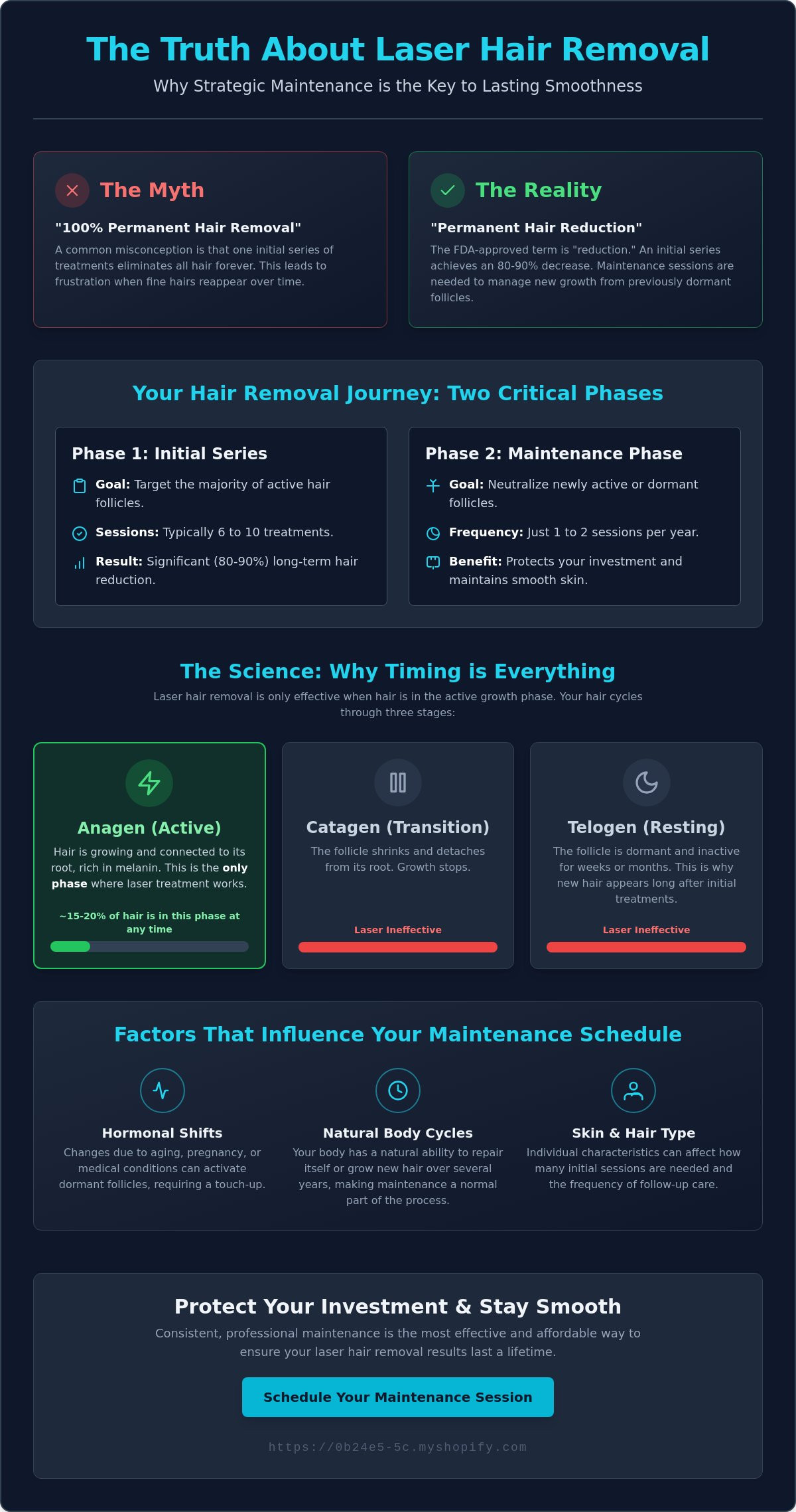
Laser hair removal maintenance sessions are periodic treatments scheduled after a client completes their initial series of 6 to 10 treatments. While the primary series targets the majority of active hair follicles, some follicles remain dormant or resistant during those first few months. Maintenance serves as a clinical follow-up to ensure these follicles don't regain their growth capacity. These sessions are a functional part of the process, ensuring that the results achieved during the initial phase remain consistent over the long term.
The FDA classifies laser hair removal as a method of permanent hair reduction rather than permanent hair removal. This distinction is vital for transparency and setting realistic expectations. Permanent reduction means that while the number of hairs in a treated area will significantly decrease, the body may still produce a small amount of fine, light hair over time. Consistent laser hair removal maintenance sessions address this regrowth before it becomes visible or problematic.
Investing in these touch-ups is a functional financial strategy. A full series of treatments requires a significant commitment of both time and resources. If a client ignores regrowth for several years, the follicles may recover to a point where a complete new series of 6 to 10 sessions is required. By contrast, a single maintenance session once or twice a year keeps the skin smooth at a fraction of the cost and time. These appointments are typically much shorter because they target isolated areas of regrowth rather than the entire surface area treated during the initial phase.
Initial Series vs. Maintenance Phase
The initial series focuses on capturing every follicle during its active growth stage. Maintenance is the strategic management of hair follicle cycles. It's a proactive measure designed to neutralize follicles that were resting during your first year of treatment. You shouldn't wait for hair to become thick or dark again before booking; instead, follow a set schedule to maintain the clinical status of your results.
Why Results Are Not 100% Permanent
Human biology is dynamic. The body possesses a natural ability to repair itself or activate new follicles due to significant hormonal changes, aging, or metabolic shifts. Even with high-quality laser technology, these biological factors can trigger minimal regrowth over several years. Maintenance sessions utilize medical-grade lasers to suppress these emerging follicles effectively. This ensures that the 80% to 90% reduction achieved during your first year remains stable and your skin stays clear.
The Science of the Hair Growth Cycle and Regrowth
The effectiveness of laser technology depends entirely on the biological state of the hair follicle at the time of treatment. Human hair grows in asynchronous cycles, meaning every individual hair on your body is in a different stage of development. To understand the necessity of laser hair removal maintenance sessions, you must first understand these three distinct phases:
- Anagen (Active Growth): The hair is firmly attached to the bulb and has a rich supply of melanin. This is the only stage where laser treatment is effective.
- Catagen (Transition): The hair follicle shrinks and detaches from the dermal papilla, stopping active growth.
- Telogen (Resting): The follicle is dormant. The old hair eventually sheds, and the follicle remains inactive for weeks or months.
Laser energy targets the pigment (melanin) in the hair shaft. During the Anagen phase, this energy travels down the hair to the follicle's base, where the heat permanently damages the germ cells responsible for regrowth. Because only about 15% to 20% of your hair is in the Anagen phase at any given time, a single session cannot address every follicle. This biological reality is why The Science of Hair Regrowth indicates that maintenance is a standard clinical requirement for long-term suppression. The "dormant follicle" phenomenon explains why you might see new growth months or years after your initial series. These aren't "repaired" follicles but rather follicles that were in the Telogen phase during your previous treatments and have recently transitioned into the Anagen phase.
The Anagen Phase Advantage
Melanin absorption is highest when the hair is actively growing and connected to the root. When you schedule your maintenance sessions at the first sign of early regrowth, the laser can more effectively reach the germ cells. This proactive approach ensures that new growth is neutralized before the follicle matures and strengthens. If you're noticing new growth, you can schedule your next laser removal services appointment to address these active follicles immediately.
Why Dormant Follicles Reactivate
Your body maintains a natural healing response that can occasionally trigger follicle activity. Increased blood flow to specific areas or changes in nutrient delivery can provide the environment necessary for a dormant follicle to begin a new growth cycle. While the laser destroys the follicles it hits during the active phase, it can't affect those that aren't currently producing a hair. Biological shifts, such as those related to aging or health changes, can wake these resting follicles, making periodic laser hair removal maintenance sessions necessary to maintain a hair-free status.
Frequency: How Often Do You Need Maintenance?
Most clients require laser hair removal maintenance sessions once or twice per year to sustain their results. This frequency isn't arbitrary; it aligns with the natural speed of follicle recovery and the transition of dormant hairs into the active growth phase. According to the Mayo Clinic, Why Maintenance is Necessary is because the procedure targets permanent reduction rather than total elimination. If you skip these sessions for more than 24 months, you risk allowing dormant follicles to fully mature. This neglect often necessitates a partial restart of the initial series, which is less efficient than a single annual touch-up.
Maintenance by Body Area
The timing of your appointments depends heavily on the specific area being treated. Different regions of the body have varying growth cycle lengths and hormonal sensitivities. For example, facial hair is highly influenced by endocrine activity. Consequently, facial hair tends to cycle faster than body hair, and clients treating the upper lip or chin should plan for a check-in every 4 to 6 months.
Areas like the legs and arms have significantly longer resting phases. Most individuals find that a 12-month interval is sufficient for these regions. The bikini area and underarms possess high hair density and deeper follicles, typically requiring a mid-range frequency of every 6 to 9 months to keep the skin clear. Understanding these variations helps you avoid over-scheduling or waiting too long between visits.
Signs You Are Ready for a Touch-Up
You don't need to wait for a specific date on the calendar if you use the "Observation Rule" to monitor your skin. Identifying early signs of regrowth allows for more effective treatment during the Anagen phase. Look for these specific indicators:
- Texture changes: New growth often appears as fine, light "peach fuzz" rather than the coarse terminal hair you had before treatment.
- Patchy regrowth: You notice sparse clusters of hair in areas that were previously completely clear.
- Event preparation: Many clients schedule laser hair removal maintenance sessions in early spring to ensure optimal smoothness throughout the summer months.
By following a proactive schedule, you maintain the clinical status of your results. This functional approach prevents the need for more intensive corrective treatments in the future.
Factors That Influence Your Maintenance Schedule
Individual biology and environmental conditions dictate the specific frequency of your laser hair removal maintenance sessions. While body area provides a baseline for scheduling, external and internal variables can accelerate or delay follicle reactivation. Understanding these factors allows you to adjust your expectations and prepare your skin for the most effective outcome.
Hormones and Hair Growth
Androgens are the primary hormones responsible for stimulating hair follicles. Significant fluctuations in these hormone levels can cause dormant follicles to enter the Anagen phase unexpectedly. Conditions such as Polycystic Ovary Syndrome (PCOS), pregnancy, or menopause often lead to increased hair growth in areas like the chin, upper lip, and abdomen. If you have a known hormonal imbalance, you may require more frequent touch-ups to manage the persistent activation of resting follicles. Strategic management of these sessions ensures that hormonal shifts don't reverse the progress made during your initial treatments.
Sun Exposure in Florida
Living in the Bradenton and Sarasota area presents unique challenges for laser hair removal. Laser technology identifies hair by targeting the contrast between the pigment in the hair and the pigment in the skin. When you have a tan, the melanin levels in your skin increase, which can lead the laser to target the skin surface instead of the follicle. This increases the risk of thermal injury or suboptimal results.
You must avoid direct sun exposure and tanning beds for at least two weeks before your appointment. Consistent use of SPF 30+ is a functional requirement for residents in this climate to protect the treatment area. For those seeking professional care that adheres to these safety protocols, reviewing The Ultimate Guide to Spas in Bradenton, FL can help you identify facilities that prioritize local skincare standards.
Other factors also play a role in your maintenance timeline:
- Skin and Hair Contrast: Higher contrast between dark hair and light skin typically results in more efficient energy absorption, potentially extending the time between sessions.
- Medications: Supplements like biotin or certain prescription medications designed to stimulate hair growth can interfere with the suppression of follicles.
- Healing Response: Some individuals possess a more robust biological healing response, which may lead to faster follicle recovery.
If you're noticing changes in your growth patterns due to these factors, you can book your next laser removal services session to address the new growth before it becomes dense. Proactive scheduling remains the most effective tool for maintaining long-term smoothness.
Professional Laser Hair Removal in Bradenton, FL
Selecting a local facility for your laser hair removal maintenance sessions ensures that your follow-up care remains consistent and professionally supervised. At Organic Skin & Body Med Spa, we utilize a functional approach to permanent hair reduction that prioritizes clinical precision and skin health. By maintaining a relationship with a dedicated Bradenton provider, you ensure that your treatment history is documented, allowing for more accurate adjustments to your maintenance schedule as your hair growth patterns evolve over time.
Our facility integrates various aesthetician services to support overall skin health. For example, many clients choose to coordinate their laser appointments with other professional skin treatments. You can learn more about optimizing your skin's appearance by reading about Hydrafacials, which provide deep cleansing and hydration that complements the smooth results of laser removal. This integrated strategy ensures that your skin remains healthy, clear, and vibrant between your scheduled touch-ups.
Our Advanced Laser Technology
We utilize medical-grade technology designed for safety and precision. The devices used in our sterile environment feature integrated cooling systems to maintain patient comfort throughout the procedure. This technology allows for the effective treatment of various skin types while minimizing the risk of thermal injury. Because these are non-invasive procedures performed under expert oversight, you can return to your daily activities in Bradenton immediately following your session. Our focus remains on providing a technical standard of care that exceeds general spa services.
Your Personalized Maintenance Plan
Every individual requires a different frequency for their laser hair removal maintenance sessions. We develop a customized scheduling plan based on your unique biological response and hair growth cycles. During your evaluation, we provide transparent communication regarding the number of sessions needed to maintain your specific results. We don't use a one-size-fits-all timeline; instead, we monitor your progress to ensure you receive treatments only when they are clinically necessary.
If you're ready to evaluate your current hair reduction status and establish a professional maintenance routine, we invite you to visit our spa on East State Road 70. Our team provides the professional guidance necessary to protect your initial investment in laser removal. You can book a consultation to discuss your needs and ensure your skin stays smooth throughout the year. For more information on our full range of available procedures, you can explore our laser removal services and start your personalized plan today.
Secure Your Long-Term Smoothness
Maintaining permanent hair reduction is a strategic process that requires consistent oversight rather than occasional guesswork. By understanding the biological shifts that trigger follicle reactivation, you can proactively manage your skin's health. Implementing regular laser hair removal maintenance sessions ensures that dormant hairs are neutralized before they become visible or coarse. This functional approach protects your initial investment and prevents the need for a more intensive series of treatments in the future. It's the most efficient way to ensure your skin remains smooth regardless of hormonal changes or environmental factors.
Our facility in Bradenton, FL, provides the medical-grade laser technology and expert aestheticians necessary to maintain your results in a relaxing, professional environment. We focus on providing transparent guidance to help you navigate your unique growth patterns with precision. You don't have to manage regrowth alone or risk the progress you've already achieved through your initial sessions. Schedule Your Laser Maintenance Consultation at Organic Skin & Body Med Spa to evaluate your current hair reduction status. We're here to help you sustain your results with clarity and professional care.
Frequently Asked Questions
Is laser hair removal truly permanent?
Laser hair removal results in permanent hair reduction rather than total elimination. The FDA defines this as a long-term, stable reduction in the number of hairs regrowing after a treatment regime. While the laser destroys a significant portion of active follicles, your body can still activate dormant follicles due to biological shifts. Most clients experience an 80% to 90% reduction in growth after their initial series.
How much do laser hair removal maintenance sessions cost?
The cost for touch-up appointments depends on the size of the treatment area and the specific technology utilized. Smaller areas like the upper lip typically require less time and resources than larger areas like the full back or legs. You should consult with your provider for specific rates, as maintenance is often priced differently than the initial treatment series. Factors such as geographical location and the provider's expertise also influence the final price.
What happens if I skip my maintenance sessions?
Skipping scheduled laser hair removal maintenance sessions allows dormant follicles to transition into the active growth phase without suppression. Over time, this hair may become coarser and more visible as the follicles regain their strength. If you wait several years between appointments, you might require a partial or full restart of the original treatment series to regain your previous results. Proactive scheduling prevents this regression and maintains your skin's smoothness.
Can I shave between maintenance treatments?
Yes, you can shave as often as necessary between your maintenance appointments. Shaving doesn't interfere with the laser's ability to target the follicle because the root remains intact below the skin surface. You must avoid waxing, plucking, or threading, as these methods remove the hair root entirely. Without a root, the laser cannot effectively deliver heat to the germ cells during your next session.
Does laser hair removal maintenance hurt as much as the first time?
Maintenance sessions are generally more comfortable than the initial series of treatments. Because there is significantly less hair density in the area, there is less melanin available to absorb the laser's heat. Modern devices also feature advanced cooling systems that protect the skin surface and minimize discomfort. Most clients describe the sensation as a light snap against the skin rather than the more intense heat felt during earlier sessions.
How many maintenance sessions will I need over my lifetime?
The number of laser hair removal maintenance sessions required varies based on individual factors like genetics and hormonal activity. Most people find that one or two sessions per year are sufficient to maintain clear skin. As you age or experience metabolic shifts, your needs might change. Consistent follow-up care allows your provider to adjust the frequency based on your specific regrowth patterns and long-term goals.
Is maintenance effective for light-colored or fine hair?
Laser technology is most effective on hair that contains sufficient melanin for the laser to target. Fine "peach fuzz" or hair that is very light blonde, red, or grey contains less pigment, making it harder for the laser to destroy the follicle. If your regrowth consists entirely of very fine, light hair, your provider will evaluate whether continued maintenance will provide clinical benefits or if a different approach is necessary.
Can I get a maintenance session if I have a tan?
No, you shouldn't receive laser treatment if you have a recent tan from sun exposure or tanning beds. Tanned skin contains higher levels of melanin on the surface, which can cause the laser to target the skin instead of the hair follicle. This increases the risk of side effects like blistering or hyperpigmentation. You should wait for the tan to fade completely and ensure your skin has returned to its natural baseline before scheduling your next session.