

What if your "permanent" mistake didn't have to dictate the design of your next masterpiece? Many individuals feel trapped by old ink, fearing that a cover-up will inevitably result in a dark, saturated blob that lacks detail. You likely want a fresh start but feel frustrated by the potential timeline or uncertain about how laser treatments might affect your skin's integrity for future work. These concerns are valid, as the success of your new art depends heavily on the state of the underlying tissue.
Choosing professional tattoo fading for cover up bradenton is a strategic decision that prioritizes artistic freedom over a quick fix. This guide explains how professional laser fading expands your cover-up options and ensures your new Bradenton tattoo looks exactly as intended. We will detail the procedural steps for achieving a "blanker" canvas, the necessary recovery periods between sessions, and the technical communication required between your laser technician and tattoo artist to achieve a high-quality result.
Key Takeaways
- Learn how lightening existing ink prevents "muddy" cover-ups and allows for greater detail and color in your new artwork.
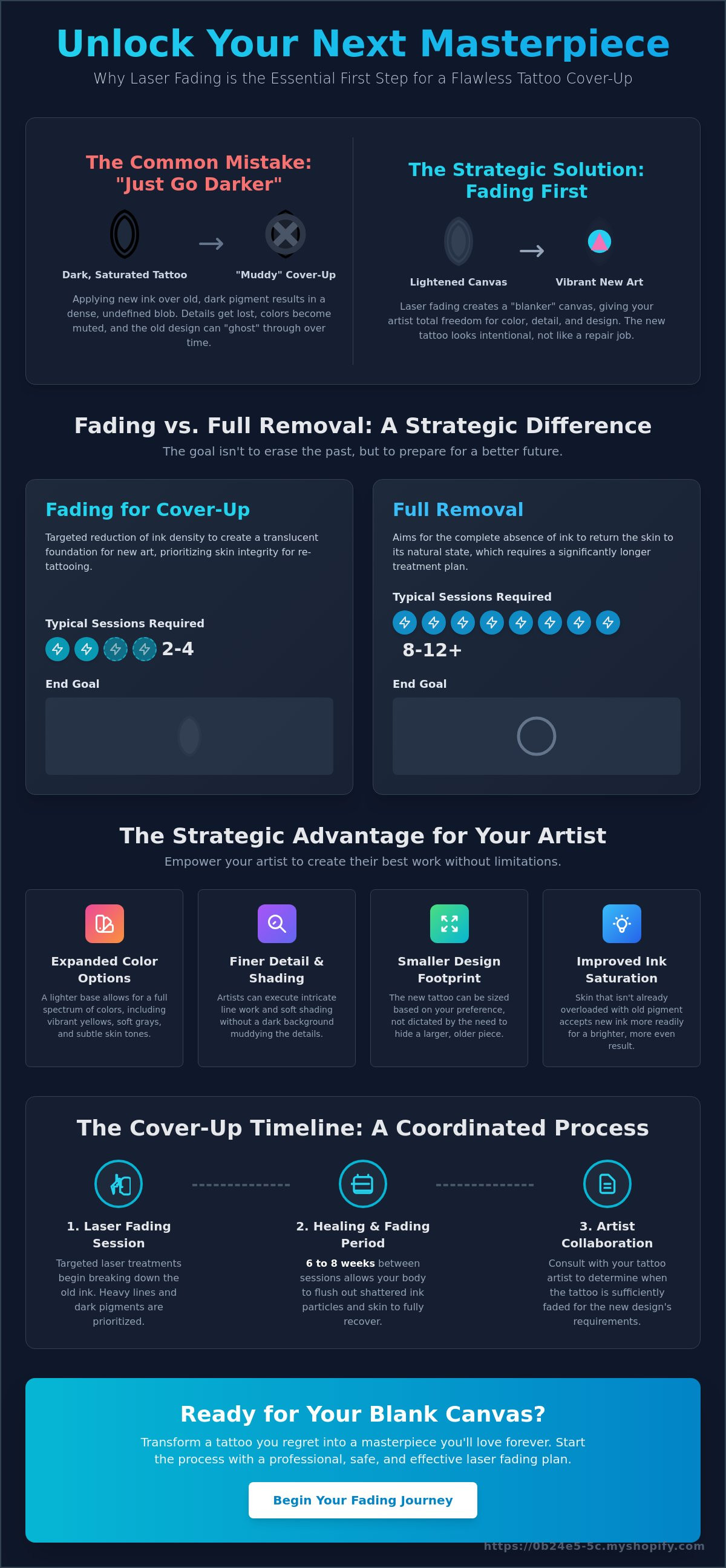
- Understand why tattoo fading for cover up bradenton often requires approximately 50% fewer sessions than a complete removal process.
- Discover how photo-acoustic laser technology targets ink pigments while maintaining the skin integrity necessary for future tattooing.
- Identify the essential steps for coordinating with your tattoo artist and scheduling sessions at the recommended 6 to 8 week intervals.
- Gain insight into why a clinical med-spa environment provides the safest and most effective setting for advanced laser removal services.
The Role of Laser Fading in Successful Tattoo Cover-Ups
A cover-up tattoo is often viewed as a simple solution to hide a previous mistake. However, the reality of skin anatomy means that new ink doesn't sit on top of the old ink like paint on a wall. Instead, pigments mix within the dermis. If the existing tattoo is dark or highly saturated, the new colors will inevitably blend with the old ones, often resulting in a muddy or distorted appearance. Utilizing tattoo fading for cover up bradenton allows you to avoid these aesthetic compromises by reducing the concentration of old pigment before the new art is applied.
This process shifts the focus from hiding a flaw to creating an intentional piece of art. When you lighten the original work, you provide the tattoo artist with a "blanker" canvas. This reduces the pressure to use only dark blues and blacks for the new design. Scientific advancements in Tattoo removal methods have made it possible to target specific layers of ink without compromising the skin's health. This transition from regret to preparation is a critical psychological step. It transforms the procedure from a corrective necessity into a proactive stage of the creative process.
Why "Just Go Darker" Isn’t Always the Answer
Many believe that simply applying a larger, darker tattoo will solve the problem. This approach often fails over time. Old pigments can "ghost" through lighter highlights in the new piece, especially as the skin ages. If you don't fade the original ink, your color palette remains restricted. Vibrant yellows, reds, or soft greys simply won't show up over a saturated black tribal piece. Fading prevents ink migration and ensures the longevity of the new design. It stops the old ink from eventually bleeding through and ruining the clarity of your new investment.
The Strategic Advantage for Your Tattoo Artist
A tattoo artist can work more effectively when they aren't fighting against heavy saturation. Strategic fading reduces the "cover-up footprint." This means your new tattoo doesn't have to be massive just to distract from what lies beneath. Benefits for the artist include:
- Expanded color options: Lightening the base allows for a full spectrum of pigment choices.
- Finer detail: Artists can execute intricate line work and soft shading without background interference.
- Smaller overall design: The new piece can be sized according to your preference rather than the size of the old tattoo.
- Improved saturation: The skin accepts new ink more readily when it's not already overloaded with pigment.
Collaborative planning between our laser removal services and your chosen tattoo studio ensures the fading is stopped at exactly the right moment. This synergy results in a professional outcome that looks like original art rather than a repair job. It creates a technical environment where the artist can focus on their vision instead of damage control.
Fading vs. Full Removal: Understanding the Strategic Difference
While complete tattoo removal aims for a total absence of ink, tattoo fading for cover up bradenton focuses on a targeted reduction in pigment density. This distinction is vital for managing both your timeline and aesthetic expectations. Complete removal typically requires between 8 and 12 sessions to clear all visible traces. In contrast, fading for a cover-up often requires 50% fewer sessions, with many clients achieving a suitable base in just 2 to 4 treatments. The technical goal isn't to erase the past but to shatter the most concentrated ink particles to create a translucent foundation. Adhering to guidelines from the FDA on tattoo removal safety ensures that these procedures remain non-invasive and preserve the skin's integrity for future work.
The endpoint of your treatment is determined specifically by the requirements of your new design. If you intend to cover an old piece with a dark, traditional style, you might only need minimal lightening. However, if your goal is a watercolor or fine-line piece, the base must be significantly lighter to prevent the old pigments from interfering with the new palette. If you're ready to begin the process, you can explore our laser removal services to see how we facilitate these transitions through precise clinical protocols.
Targeting Specific Pigments for Lightening
During the fading process, technicians prioritize heavy line work over light shading. Shading often dissipates within one or two sessions, but dense outlines require more focused energy to break down. Certain colors, such as vibrant reds or deep greens, may need specific laser wavelengths to ensure they don't "ghost" through your new art. Maintaining the skin's natural texture is the highest priority. We adjust laser settings to ensure the area remains healthy and "tattooable" in the future, avoiding the scar tissue that can sometimes result from aggressive, non-professional removal attempts.
Determining the "Cover-Up Ready" State
A thorough consultation is necessary to align the laser technician's work with the tattoo artist's vision. You'll know the ink is sufficiently broken down when the dark, saturated areas become patchy and translucent. This state allows the new pigment to sit in the dermis without being overwhelmed by the old colors. Tattoo fading is a procedural preparation for new pigment implantation. Once the technician and the artist agree that the saturation is low enough, the skin is allowed to heal completely before the new tattooing begins.
Advanced Laser Technology for Fading Ink in Bradenton
Effective tattoo fading for cover up bradenton relies on advanced photo-acoustic energy rather than simple thermal heat. Traditional lasers often rely on heat to burn away pigment, which can damage the surrounding skin tissue and create scar tissue. Modern technology utilized in clinical settings delivers ultra-short pulses of energy that create a mechanical pressure wave. This wave shatters the ink into microscopic particles without overheating the dermis. Understanding how laser tattoo removal works helps clarify why this method is superior for maintaining skin health. By preserving the skin's natural texture, you ensure the area remains receptive to new pigment implantation later.
Wavelength variety is equally important for addressing the diverse ink colors found in modern tattoos. Different pigments absorb specific light frequencies. For instance, black ink responds best to a 1064nm wavelength, while reds and oranges require a 532nm setting. Using a single-wavelength laser often leaves behind stubborn "ghost" images that interfere with new art. Professional-grade equipment allows for precise adjustments based on the Fitzpatrick scale, ensuring safety for all skin types. This technical precision prevents hyperpigmentation or hypopigmentation, which is especially critical for residents in high-UV regions like Manatee County.
Laser Precision and Skin Health
Maintaining a healthy dermis is the primary goal during the fading process. If the skin is scarred or compromised, the new tattoo artist will struggle with ink retention and line clarity. Photo-acoustic lasers minimize thermal damage, keeping the skin supple. Once the ink is shattered, your body's lymphatic system naturally clears the debris over several weeks. This biological process is the reason why sessions must be spaced out. Choosing professional tattoo fading for cover up bradenton ensures you're using technology designed for this specific physiological response rather than "budget" options that may use outdated, high-heat equipment.
Local Considerations for Bradenton Residents
Living in Florida presents unique challenges for laser procedures due to constant sun exposure. UV rays increase melanin production, which can interfere with how the laser identifies tattoo pigment. Residents traveling along State Road 70 or spending time at Lakewood Ranch must prioritize sun protection. We recommend keeping the treatment area covered or using a high-SPF zinc-based blocker for at least two weeks before and after each session. If you've spent the weekend at Bradenton beaches, it's vital to wait until any tan or sunburn has completely subsided. Laser treatments on freshly tanned skin significantly increase the risk of surface burns and pigment changes. Scheduling your sessions during periods of lower outdoor activity helps ensure the safest and most effective results.
The Cover-Up Timeline: Coordinating with Your Artist
Successful tattoo fading for cover up bradenton requires a synchronized effort between the clinical technician and the tattoo artist. The process begins with an initial consultation where both professionals evaluate the existing ink's saturation and the complexity of the proposed design. This ensures the technician knows exactly how much pigment to remove, while the artist understands the limitations of the current skin site. Following this, the execution of fading sessions begins. These are typically spaced 6 to 8 weeks apart to allow the body to process and eliminate the shattered ink particles. Coordination at this stage prevents unnecessary sessions and ensures the fading aligns with the artistic requirements of the new piece.
Progress is monitored after each session to adjust the laser settings and determine if the desired level of translucency has been reached. Some tattoos may respond quickly, while others with dense black ink require more persistence. Once the technician observes that the ink has reached the target density, a mandatory healing period is initiated. Final clearance is only granted when the skin has fully stabilized. This meticulous coordination prevents the artist from working on compromised tissue, which is essential for a professional result. To begin this strategic journey, you can schedule your initial assessment through our laser removal services.
Spacing Sessions for Maximum Efficacy
Rushing the fading process leads to diminishing returns and unnecessary skin stress. The laser shatters the ink, but your body's immune system does the actual removal. This biological clearance continues for months after a single treatment. Adhering to an 8-week spacing protocol optimizes this natural cycle. It ensures the skin has recovered from the laser's energy before the next application, maintaining the structural integrity of the dermis. Shortening this window doesn't speed up the fading; it only increases the risk of surface irritation and slows down the immune response.
The Mandatory Wait Time Before New Ink
A 6 to 12 week healing period is required after your final laser session before new ink can be applied. This duration allows the dermis to return to a baseline state where it can effectively hold new pigment. Tattooing too soon carries significant risks, including poor ink saturation, potential scarring, or excessive inflammation. The "blank canvas" requires a fully recovered immune response before re-tattooing. If the tissue is still actively clearing old debris, the new ink may not settle correctly. This can lead to a blurred appearance or premature fading of the new artwork, undermining the entire purpose of the cover-up strategy.
Professional Laser Tattoo Removal at Organic Skin & Body Med Spa
Organic Skin & Body Med Spa provides a clinical environment that effectively bridges the gap between artistic vision and medical precision. We view tattoo fading for cover up bradenton as one component of a comprehensive skin health journey. Our professional staff includes trained technicians who understand the physiological requirements of the dermis. This ensures that every laser session is conducted with the ultimate goal of preserving tissue health for future ink. We prioritize transparency in our protocols, providing clear expectations for residents throughout Manatee and Sarasota counties who seek functional results for their cover-up projects. Our facility is designed to offer a helpful and straightforward experience, focusing on technical clarity and procedural safety.
Choosing a medical spa for your laser removal services ensures that your treatment is integrated into a broader framework of skin care. We don't just focus on the ink; we focus on the health of the organ being treated. This approach is vital for anyone planning to re-tattoo the area. If the skin is poorly managed during the fading process, the final cover-up will suffer. By choosing a professional setting, you're ensuring that the transition from old ink to new art is handled with the necessary clinical oversight.
A Relaxing and Clinical Environment
Our facility offers a sterile, professional alternative to traditional tattoo environments. We employ medical-grade protocols to manage client comfort and ensure optimal healing. This clinical focus extends beyond removal; we integrate aftercare guidance that supports the skin's recovery and long-term health. You can learn more about how we utilize advanced technology in our article on Advanced Skin Rejuvenation: Morpheus8 & Lasers. By maintaining high safety standards, we minimize the risk of complications that could delay your new tattoo. Our location is easily accessible for those in Bradenton, Lakewood Ranch, and Sarasota, providing a convenient hub for your fading needs. We focus on providing a steady, informative rhythm to your treatment plan so you always know the status of your skin.
Your Path to a Better Cover-Up Starts Here
Preparing for a cover-up is a multi-stage process that begins with a detailed assessment. During your initial consultation for tattoo fading for cover up bradenton, we evaluate the age, depth, and color of your existing ink. We recommend bringing reference images or sketches of your intended new tattoo to this meeting. This allows our technicians to align the fading strategy with your artist's specific requirements, ensuring the old ink is lightened exactly where it matters most. To understand how our clinical approach fits into the local landscape of wellness and aesthetic care, please review The Ultimate Guide to Spas in Bradenton, FL. Booking your session is the first step toward transforming an old regret into a high-quality piece of art. Our team remains committed to providing the technical foundation your skin needs for a successful transformation. We provide clear directions for your aftercare to ensure your skin remains a viable canvas for your chosen artist.
Achieve Artistic Freedom for Your Next Tattoo
Strategic tattoo fading for cover up bradenton transforms a restrictive, saturated design into a versatile canvas for your next piece of art. By utilizing photo-acoustic technology to lighten old pigments, you provide your tattoo artist with the creative latitude needed for vibrant colors and intricate details. This clinical approach prioritizes the long-term health of your skin, ensuring that the dermis remains receptive to new ink or specialized Cosmetic and regenerative skin and scalp treatments. Successful results depend on a transparent timeline and professional communication between our technicians and your chosen tattoo artist.
Our facility is located conveniently on East State Road 70 in Bradenton. We employ medical-grade laser technology for precise ink targeting, and our expert staff is trained in aesthetic laser procedures and skin safety protocols. You don't have to settle for a dark, muddy cover-up when a better technical solution exists. Take the first step toward your new artistic vision today and ensure your skin is prepared for a high-quality transformation.
Schedule Your Free Tattoo Fading Consultation in Bradenton
Frequently Asked Questions
How many sessions will I need to fade my tattoo for a cover-up?
Most clients require between two and four sessions for effective tattoo fading for cover up bradenton. This is significantly fewer than the eight to twelve sessions typically needed for full removal. The exact count depends on the original ink's depth and the specific level of lightness your tattoo artist requires for the new design. A consultation helps establish a precise timeline based on your unique skin and ink profile.
Does fading a tattoo for a cover-up hurt more than getting the tattoo?
Most individuals report that laser fading feels similar to a rubber band snapping against the skin. While the sensation is intense, the sessions are extremely brief and often last only a few minutes. This is a much shorter duration than the hours required for a standard tattooing session. We focus on procedural efficiency to ensure your comfort throughout the treatment.
How long do I have to wait between laser sessions and my new tattoo?
You should wait six to eight weeks between individual laser sessions to allow your immune system to clear the shattered ink. Once the fading process is complete, a mandatory wait of six to twelve weeks is necessary before applying new ink. This ensures the dermis has fully stabilized and recovered its ability to hold new pigment effectively for the cover-up.
Can all colors be faded enough for a cover-up?
Modern laser technology can fade almost all ink colors, though some respond more quickly than others. Black and red pigments generally break down the fastest. Greens, blues, and vibrant purples may require specific wavelengths and additional sessions to reach a translucent state. Our technicians adjust the laser settings to address the specific color palette of your existing tattoo.
Will laser fading cause scarring that prevents a new tattoo?
Professional laser fading using photo-acoustic energy is designed to preserve skin integrity and prevent scarring. Unlike older thermal lasers, this technology shatters ink without overheating the surrounding tissue. Maintaining a healthy, supple skin texture is the primary technical goal. This ensures the area remains a viable canvas for your artist to implant new pigment without interference from scar tissue.
Is tattoo fading more affordable than full tattoo removal?
Fading is generally more cost-effective than full removal because it requires fewer clinical sessions. Since the goal is a targeted reduction in ink density rather than total clearance, you'll spend less time in the treatment chair. This strategic approach allows you to allocate more of your budget toward the high-quality artistry and detail of your new cover-up tattoo.
Do I need a referral from my tattoo artist for fading?
You don't need a formal referral, but we strongly encourage open communication with your tattoo artist. Coordinating the level of tattoo fading for cover up bradenton ensures the technician lightens the ink to the exact degree the artist needs. Bringing a sketch or reference of your new design to your consultation helps us tailor the fading process to your specific artistic goals.
What should I avoid doing between my laser fading sessions?
You must strictly avoid sun exposure and tanning beds on the treatment area between sessions. UV rays increase melanin, which can lead to surface burns or pigment changes during laser application. Additionally, don't pick at any crusting or scabs that form after a session. Keeping the skin hydrated and protected from the Florida sun is essential for a safe and successful recovery.