

Achieving deep dermal clearing doesn't require stripping your epidermal barrier or enduring days of visible flaking and social downtime. If you constantly battle stubborn blackheads, enlarged pores, and rough texture, you've likely hesitated to book intensive clinical facials out of concern over post-treatment irritation. Understanding what does a hydrafacial do for your skin requires looking past commercial marketing buzzwords to evaluate the underlying engineering. Rather than relying on abrasive mechanical grit or aggressive acid peels, this modality pairs pneumatic vortex suction with simultaneous liquid infusion to dislodge impactions while actively protecting the skin's moisture balance.
In this clinical overview, you'll discover the precise biological mechanisms behind patented vortex-fusion technology and how it delivers corrective results without tissue trauma. We outline the complete three-step procedural protocol, examine peer-reviewed clinical trial data on hydration and acne reduction, and provide clear parameters on treatment frequency so you can make an informed decision for your skin barrier.
Key Takeaways
- Discover the mechanical principles of vortex-fusion technology, revealing exactly what does a hydrafacial do for your skin without causing barrier trauma or epidermal flaking.
- Learn how the standardized three-step protocol combines liquid chemical exfoliation, automated pneumatic extractions, and antioxidant delivery into a continuous clinical workflow.
- Identify which dermatological concerns respond directly to hydradermabrasion, distinguishing between immediate superficial radiance and conditions requiring deeper structural remodeling.
- Evaluate objective clinical differences between HydraFacial, traditional microdermabrasion, and standalone chemical peels to determine which treatment fits your recovery tolerance.
- Understand recommended treatment cadences aligned with the skin's cellular turnover cycle, along with the necessity of professional aesthetician barrier assessments before treatment.
Understanding the Science: What Does a HydraFacial Do for Your Skin?
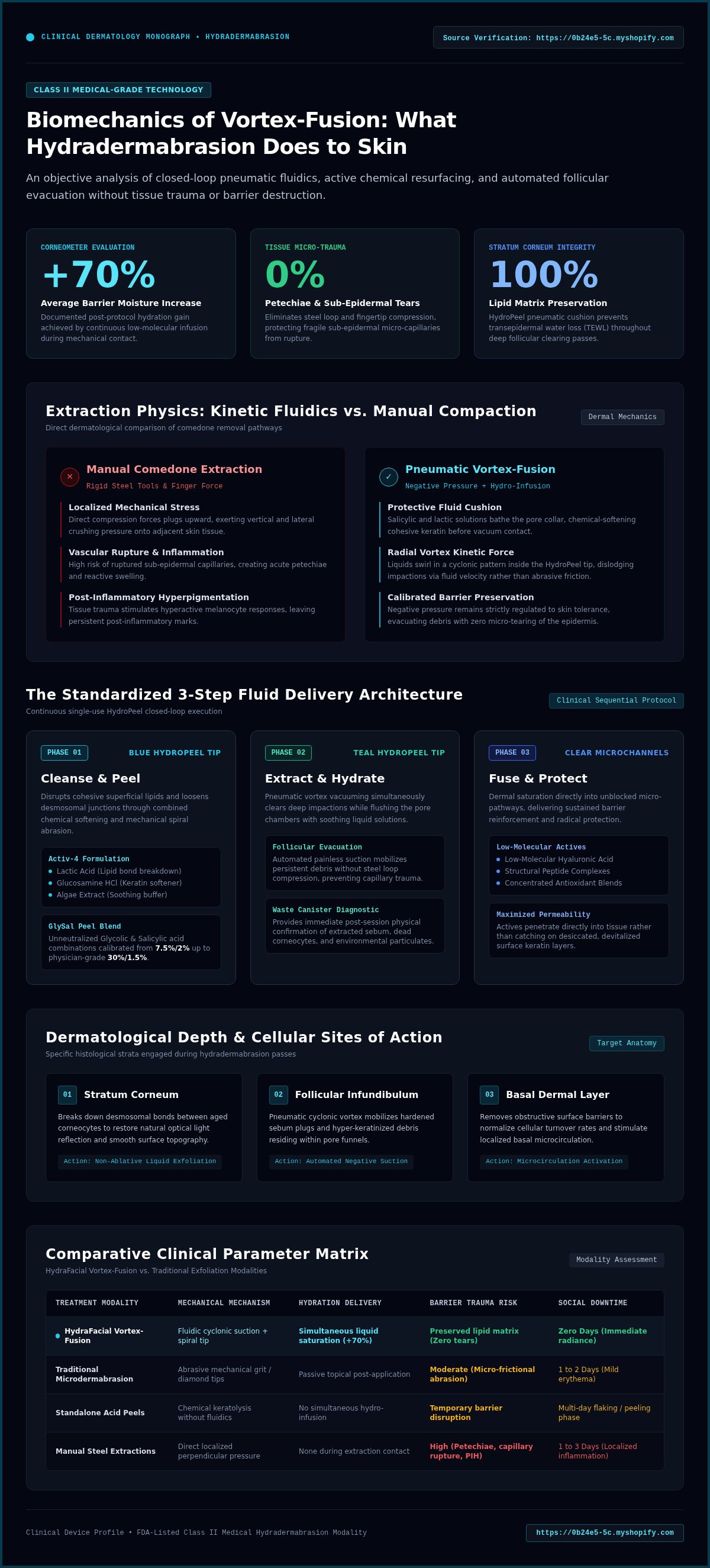
The patented vortex-fusion handpiece generates a liquid cyclonic force that lifts follicular debris, solidified sebum, and environmental particulates out of the pores. Simultaneously, the system saturates the newly cleared dermal microchannels with low-molecular hyaluronic acid, antioxidants, and peptide complexes. Corneometer measurements show an average 70% increase in skin barrier moisture levels following this protocol. By delivering continuous hydration during mechanical abrading, the treatment prevents transepidermal water loss and leaves the lipid matrix completely intact.
The Mechanism of Hydradermabrasion vs. Manual Extraction
Manual comedone extraction relies on rigid steel loops or direct fingertip pressure to force sebum plugs upward. This localized mechanical stress frequently ruptures sub-epidermal capillaries, creating petechiae, inflammation, and potential post-inflammatory hyperpigmentation. HydraFacial eliminates tissue compression through regulated pneumatic suction.
- Fluid cushion: Salicylic and lactic acid solutions bathe the pore entrance, softening keratin plugs before vacuum contact.
- Radial vortex motion: Liquid swirls within the HydroPeel tip, dislodging impactions through kinetic fluid energy rather than friction.
- Barrier preservation: Negative pressure remains calibrated to skin tolerance, evacuating clogged pores without micro-tearing the epidermis.
Cellular Turnover and Stratum Corneum Exfoliation
Keratinocytes migrate from the basal layer to the stratum corneum, eventually shedding as dead corneocytes during standard epidermal turnover. Environmental stressors and biological aging impede this natural desquamation, creating rough surface topography and dull light reflection. Non-abrasive liquid exfoliation gently dissolves the desmosomal bonds anchoring these devitalized cells.
The 3-Step HydraFacial Process: From Deep Cleanse to Hydration
Executing a clinical HydraFacial involves a sequential, closed-loop fluid delivery protocol. Rather than applying serums sequentially with cotton pads, the platform uses dedicated single-use HydroPeel tips that continuously saturate the dermal surface while vacuuming away cellular waste. This simultaneous delivery ensures the stratum corneum remains fully lubricated during every pass, eliminating the discomfort and erythema typical of mechanical extractions. At the end of the session, patients can inspect the device's waste canister, which provides clear visual confirmation of evacuated sebum, dead corneocytes, and follicular debris.
Step 1: Cleanse and Peel Through Gentle Resurfacing
The protocol begins with the blue HydroPeel tip dispensing Activ-4, a specialized formulation combining lactic acid and glucosamine HCl with algae extract. This phase breaks down superficial lipid bonds and softens cohesive keratin. The provider immediately follows with an application of the GlySal Peel ampoule, an unneutralized blend of glycolic acid and salicylic acid available in strengths from 7.5%/2% up to physician-grade 30%/1.5%. The spiral edges of the tip physically abrade devitalized cells while the acid solution penetrates follicular entrances without triggering the aggressive peeling associated with standalone chemical peels.
Step 2: Extract and Hydrate via Painless Suction
Transitioning to the teal HydroPeel tip, the aesthetician increases vacuum pressure to target areas prone to persistent congestion, such as the nasal bridge, chin, and central forehead. During this step, the handpiece delivers Beta-HD Clear, an aqueous solution formulated with salicylic acid, honey extract, and Spiraea ulmaria flower extract.
- Sebum liquefaction: Salicylic acid solubilizes oil deposits within the sebaceous ducts.
- Automated suction: Fluid vortex force pulls out softened comedones and blackheads painlessly.
- Anti-inflammatory calming: Botanical honey extracts soothe local micro-vessels, preventing post-extraction inflammation.
Step 3: Fuse and Protect with Antioxidant Infusion
The concluding phase employs the clear HydroPeel tip alongside Antiox+ or Antiox-6 formulations. This step infuses low-molecular-weight hyaluronic acid, green tea extract, arnica, and mineral complexes directly into newly opened microchannels. These potent bio-actives deliver radical scavenging protection, which supports collagen synthesis and reinforces cellular integrity against environmental damage. The resulting lipid-compatible seal curbs post-procedure transepidermal water loss to sustain a visible glow for five to seven days.
Understanding what does a hydrafacial do for your skin throughout this sequence illustrates why clinical oversight matters. At Organic Skin & Body Med Spa, our licensed medical aestheticians assess your skin barrier before calibrating tip speeds and acid percentages. If you want to experience this three-stage protocol firsthand, explore our professional Hydrafacials tailored to support long-term skin health.
Key Skin Concerns a HydraFacial Corrects and Improves
Assessing what does a hydrafacial do for your skin across varying dermatological presentations requires distinguishing between temporary surface effects and cumulative structural improvements. Because the system doesn't rely on thermal energy or aggressive mechanical abrasion, it carries minimal risk of triggering post-inflammatory hyperpigmentation. This safety profile makes it clinically viable across Fitzpatrick skin types I through VI without requiring melanin-suppressing preparatory regimens.
Congestion, Acne, and Enlarged Pore Refining
Chronic congestion stems from follicular hyperkeratinization and compacted sebum, which create low-oxygen environments where Cutibacterium acnes flourishes. Evacuating oxidized lipid plugs immediately reduces the visible diameter of enlarged pores. In a clinical trial published in the Journal of Clinical and Aesthetic Dermatology (NCT05932732), subjects completing a bi-weekly clarifying protocol achieved an 80% reduction in facial erythema and inflammatory papules. Evaluators documented that patients with clear or almost clear skin rose from 20% to 65%. For active papular breakouts, providers lower the negative vacuum pressure to avoid irritating inflamed tissue.
Fine Lines, Dehydration, and Skin Elasticity
Sun Damage, Hyperpigmentation, and Uneven Tone
Uniform liquid resurfacing lifts localized clusters of pigmented corneocytes, gradually evening out mottled dyspigmentation and early lentigines. In sun-drenched environments like Florida, sustained ultraviolet exposure combined with high humidity accelerates lipid peroxidation and photodamage. Aesthetician oversight is vital here; professionals often incorporate targeted brightening boosters containing concentrated antioxidants to block tyrosinase pathways. Evaluating what does a hydrafacial do for your skin in high-UV regions highlights its role as a preventative shield, clearing environmental pollutants and halting solar degradation before permanent elastosis sets in.
HydraFacial vs. Alternative Treatments: Clinical Comparison
Selecting an aesthetic procedure requires understanding the level of intentional tissue trauma each modality employs. While ablative modalities rely on controlled thermal or physical injury to stimulate deep dermal remodeling, HydraFacial focuses on gentle follicular evacuation and surface replenishment. Clarifying what does a hydrafacial do for your skin compared to alternative clinical treatments ensures you match your corrective goals with realistic recovery windows.
HydraFacial vs. Traditional Diamond Microdermabrasion
HydraFacial vs. Medium-Depth Chemical Peels
Medium-depth chemical peels containing trichloroacetic acid (TCA) deliberately coagulate epidermal proteins, triggering significant desquamation that lasts 5 to 10 days. HydraFacial uses buffered GlySal solutions that self-neutralize and exit through the suction handpiece before triggering visible peeling. Clients managing social schedules, professional events, or sensitive skin profiles benefit far more from non-invasive hydradermabrasion than from the intense flaking and strict downtime of medium chemical resurfacing. If you want to learn more about non-surgical skin treatments that restore radiance without aggressive trauma, exploring professional treatment options will help you make the right choice for your lifestyle.
Complementing Advanced Procedures: Microneedling and RF
HydraFacial serves as an ideal baseline modality that synergizes with deeper structural treatments. Cleansing dead surface corneocytes prior to collagen induction therapy optimizes needle glide and allows uniform penetration. For patients targeting deeper tissue laxity and subdermal adipose remodeling, learning what is Morpheus8 provides insight into how radiofrequency energy remodels deeper dermal layers. Medical aestheticians typically schedule HydraFacials 7 to 10 days before microneedling or fractional laser therapies to purge follicles and maximize baseline hydration.
Understanding what does a hydrafacial do for your skin within a multi-modality regimen allows for precise treatment sequencing. If you want to build a comprehensive clinical plan spanning superficial hydradermabrasion to advanced collagen remodeling, schedule an aesthetician consultation at Organic Skin & Body Med Spa to evaluate your barrier needs.
Treatment Protocols, Post-Care, and Professional Guidance
Ideal Session Frequency for Sustained Skin Health
Keratinocytes desquamate on an approximate 28 to 30-day biological cycle. Aligning appointments with this renewal schedule prevents dead cells from reforming dense plugs within follicular channels. Review full scheduling details in our guide on how often should you get a hydrafacial to evaluate therapeutic versus maintenance cadences. While standard skin maintenance demands monthly appointments, clients managing active, stubborn papular congestion often start with bi-weekly sessions for their first six treatments before tapering to a four-week rhythm.
Essential Pre- and Post-Treatment Guidelines
Preparing the tissue ensures safe fluid dynamics without excess erythema. Clients must pause prescription tretinoin, tazarotene, and over-the-counter AHA/BHA exfoliants for 48 hours prior to treatment. If you receive cosmetic neurotoxins or dermal fillers, maintain a 10 to 14-day clearance window to avoid shifting injected products.
- First 24 hours: Avoid heavy aerobic exercise, steam rooms, and saunas to prevent localized sweat-induced irritation.
- First 48 hours: Avoid applying active chemical topicals, retinoids, and granular physical scrubs.
- Daily protection: Apply broad-spectrum physical SPF 30+ every morning to shield newly exposed basal layers from UV damage.
Selecting a Qualified Med Spa in Bradenton, FL
Equipment efficacy depends entirely on operator technique. In humid, sun-intensive coastal areas, aestheticians must carefully inspect the client's barrier before selecting vacuum levels and peel strengths. Marine-derived allergens demand attention as well; formulas containing glucosamine HCl derived from marine shells require alternative protocol adjustments for shellfish-sensitive individuals. Review regional standards across local providers in the ultimate guide to spas in Bradenton FL. To experience fully customized hydradermabrasion protocols overseen by medical aestheticians, contact Organic Skin & Body Med Spa today.
Elevating Your Long-Term Dermal Health
Evaluating what does a hydrafacial do for your skin reveals how pneumatic vortex-fusion technology bridges the gap between gentle surface pampering and intensive corrective dermatological care. By clearing stubborn sebum plugs and devitalized corneocytes while infusing antioxidant solutions directly into open follicular pathways, this multi-step protocol resolves active congestion, refines pore diameter, and restores hydration balance without the social downtime or barrier flaking of aggressive mechanical modalities.
Sustained clinical outcomes depend on professional oversight and consistent cadences matched to your natural cellular desquamation cycle. As a licensed medical aesthetics facility in Bradenton, Florida, Organic Skin & Body Med Spa provides comprehensive corrective skin solutions overseen by dedicated aesthetic professionals. We calibrate medical-grade vortex delivery and customized clinical formulations to meet your unique epidermal needs, defending your barrier against intense Florida heat and humidity. Take control of your complexion and schedule your clinical HydraFacial consultation with Organic Skin & Body Med Spa today.
Frequently Asked Questions
Does a HydraFacial hurt or require topical numbing?
No, a HydraFacial doesn't cause pain and requires no topical numbing agents. Most clients describe the sensation as a cool, damp paintbrush moving smoothly across the face paired with light suction. Because dedicated liquid solutions constantly lubricate the contact zone, the procedure avoids the sharp pinching, bruising, or capillary damage commonly experienced during manual comedone extractions or dry microdermabrasion.
How quickly will I see visible results after a HydraFacial?
Visible improvements in skin tone, luminosity, and pore congestion appear immediately after completing the session. You leave the clinic with plumper, deeply hydrated tissue and a noticeable radiance rather than the blotchy redness typical of aggressive mechanical facials. When evaluating what does a hydrafacial do for your skin on the day of treatment, immediate stratum corneum hydration and evacuated pore debris create an instant smoothing effect.
Can a HydraFacial cause skin breakouts or purging?
Mild post-treatment purging can occur occasionally if deep, pre-existing sub-clinical impactions accelerate toward the surface. Because chemical peeling solutions and pneumatic suction speed up epidermal desquamation, dormant microcomedones may temporarily emerge as small whiteheads within 24 to 48 hours. This transient response clears quickly as cellular turnover normalizes, paving the way for significantly reduced inflammatory lesions and clearer dermal tissue over subsequent sessions.
Is a HydraFacial safe for sensitive skin or rosacea?
Yes, a HydraFacial is safe for reactive skin and mild rosacea when customized by a licensed medical aesthetician. Providers can adjust vacuum intensity, bypass aggressive acid peel steps, or replace tips with gentler alternatives. The infusion of soothing botanical extracts like honey, arnica, and green tea actively cools localized flushing. However, individuals experiencing severe, inflamed cystic flare-ups or open rosacea pustules should consult their aesthetician before proceeding.
Can I wear makeup immediately following my HydraFacial session?
You should avoid wearing makeup for the remainder of the treatment day, ideally waiting at least 12 to 24 hours before cosmetic application. The treatment deeply purges follicular openings and saturates dermal microchannels with antioxidants and hyaluronic acid. Applying heavy foundations, synthetic powders, or contaminated brushes immediately afterward re-introduces bacteria and pigments into open pores, blunting procedural benefits and increasing the risk of acute irritation.
What is the main difference between a regular facial and a HydraFacial?
How long do the skin-hydrating results of a HydraFacial last?
The immediate dermal hydration and radiant surface glow typically persist between five and seven days following a single procedure. Long-term cellular benefits, including refined pore diameter and smoother epidermal texture, endure for several weeks as the skin continues its renewal cycle. Sustaining these structural improvements requires scheduled sessions spaced four weeks apart, synchronized with natural keratinocyte turnover to prevent the re-accumulation of oxidized lipids.