

Rushing the process of getting rid of a new tattoo before the skin has fully healed is the primary cause of avoidable, permanent scarring. It's natural to feel an immediate sense of anxiety or intense regret when a new aesthetic choice doesn't meet your expectations. You likely want the ink gone as quickly as possible to resolve the discomfort of seeing it every day. However, the skin needs a specific biological recovery period before any corrective measures can safely begin.
This guide explains the physiological requirements for removing fresh ink and why professional laser technology remains the only reliable method for achieving clear skin. You'll learn the exact timeline for when your removal journey can start, which is typically six to eight weeks after the initial application. By understanding the science of skin rejuvenation and the precision of modern laser systems, you can move forward with the assurance that your skin can return to its original state without unnecessary damage. We will outline the necessary steps to manage your skin health while preparing for a successful professional intervention.
Key Takeaways
- Understand why immediate ink removal is biologically impossible and why the skin requires a mandatory six to eight week healing period before any treatment can begin.
- Discover how the structural differences between the epidermis and dermis dictate the technical process of getting rid of a new tattoo safely.
- Evaluate the critical safety differences between FDA-cleared laser technology and hazardous at-home methods that cause severe tissue damage and infection.
- Learn how to prepare for your professional consultation and why avoiding sun exposure is necessary to prevent procedural delays.
- Explore the clinical advantages of addressing tattoo regret in a professional medical spa environment that prioritizes long-term skin health and rejuvenation.
Can You Remove a New Tattoo Immediately?
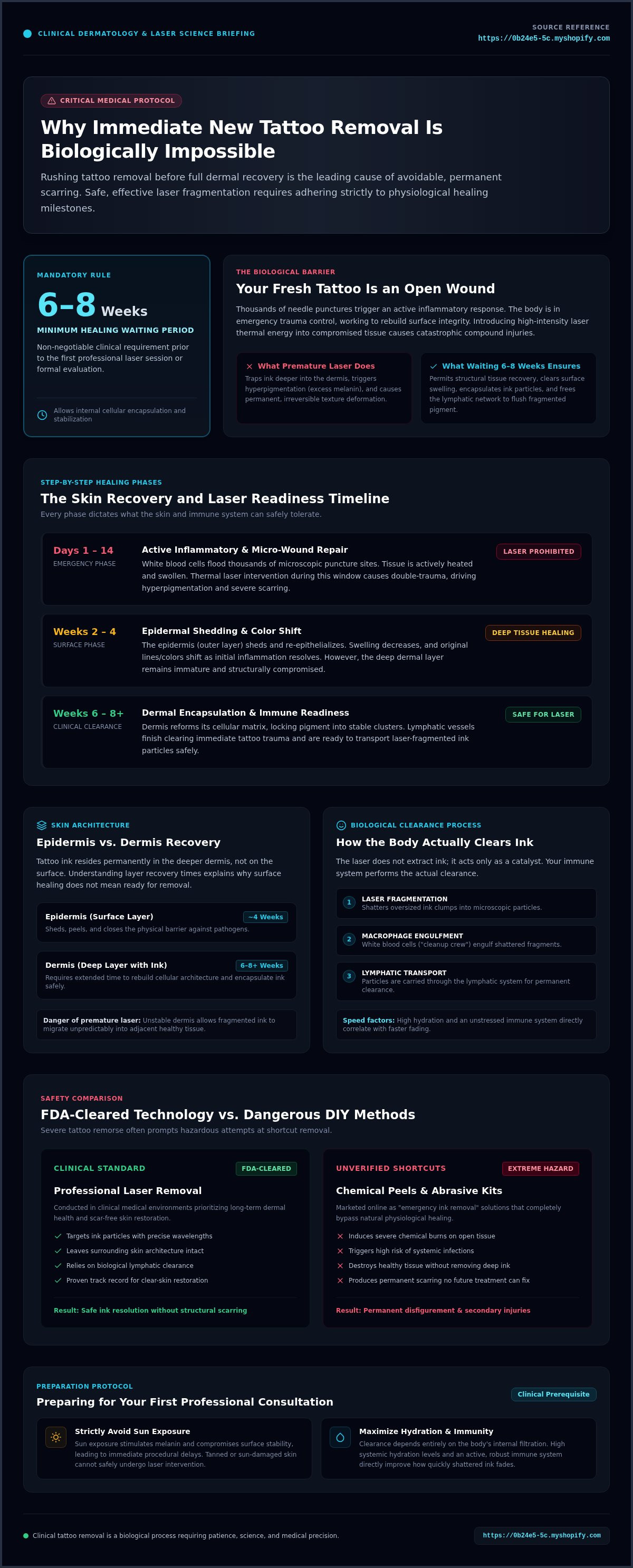
Immediate removal of a fresh tattoo is biologically impossible without risking significant, permanent scarring. When you first consider getting rid of a new tattoo, it's vital to recognize that your skin is currently an open wound. The tattooing process involves thousands of needle punctures that trigger a natural inflammatory phase. During this stage, the body focuses on closing the surface layer and managing the initial trauma. Attempting a laser session at this point would introduce high-intensity thermal energy to compromised tissue. This often traps ink deeper into the dermis or causes irreversible texture changes that no future treatment can fix.
Professional consensus requires a full healing cycle before the first laser session begins. Rushing the process doesn't just damage the skin; it also reduces the effectiveness of the removal itself. If the tissue is still swollen or actively healing, the laser cannot accurately target the ink particles. This clinical necessity ensures that the skin is structurally sound enough to withstand the fragmentation of ink without creating secondary injuries. Getting rid of a new tattoo requires patience to ensure the dermis remains healthy enough for a successful clear-skin outcome.
The Reality of Tattoo Remorse
Intense regret often follows a new aesthetic choice, creating a psychological urge to act immediately. This "new tattoo regret" is a recognized phenomenon, but acting on it prematurely leads to poor results. The initial appearance of a tattoo is not its final state. As the epidermis sheds and the inflammatory swelling subsides over the first month, the colors and lines frequently shift. You must avoid any "emergency" removal methods advertised online, such as chemical peels or abrasive home kits. These unverified shortcuts bypass the biological healing process and lead to chemical burns or systemic infections.
Defining the Mandatory Waiting Period
A full healing cycle is the professional prerequisite for any intervention. Most clinicians establish a six to eight week waiting period before the first consultation or treatment. This duration allows the immune system to stabilize after the initial ink deposition. While modern tattoo removal methods are highly effective, they rely on the body's ability to transport shattered ink particles through the lymphatic system. If the lymphatic system is already busy managing the inflammation from the tattoo application, it won't be able to clear the laser-treated ink efficiently. The settling period is the time required for the dermis to encapsulate the ink, ensuring the laser can target stable particles rather than dispersed, fluid ink.
The Biology of Tattoo Ink and Skin Healing
Skin is a multi-layered organ, and tattoo ink resides deep within the dermis. While the epidermis, or surface layer, heals and sheds in about four weeks, the dermis requires significantly more time to recover from the trauma of needle penetration. When you're getting rid of a new tattoo, the biological state of the dermis is the most important factor. Treating the skin while it is still inflamed can cause the ink to migrate into adjacent healthy tissue. This happens because the cellular structure hasn't yet reformed to hold the pigment in place. Waiting for the skin to settle ensures the laser can target precise ink clusters without causing collateral damage to the surrounding skin architecture.
The Inflammatory Response
In the first 14 days after a tattoo, the body is in an emergency repair mode. White blood cells flood the site to manage the microscopic wounds created by the tattoo artist. Introducing intense laser heat to this already heated and traumatized environment is a recipe for complications. It often leads to hyperpigmentation, where the skin produces excess melanin in response to the double trauma. This results in dark patches that can be just as difficult to treat as the ink itself. A professional approach involves waiting for the inflammatory phase to conclude, ensuring the skin is ready for safe and effective tattoo removal.
How Your Body Clears Ink
The laser is only the catalyst for removal; the immune system performs the actual clearance. Macrophages, a type of white blood cell, act as the body's cleanup crew. They attempt to engulf the ink particles, but original tattoo ink is usually too large for them to move. The laser shatters these particles into smaller fragments, finally allowing the macrophages to transport them to the lymphatic system. This process requires a healthy, stable internal environment to be effective. Factors like high hydration levels and a strong immune response directly correlate with how fast the ink fades. For those ready to begin this biological process, seeking expert laser removal services ensures that your body’s natural clearing mechanisms are supported by the right technology. Getting rid of a new tattoo is a partnership between advanced optics and your own biological recovery systems.
Professional Laser Removal vs. Dangerous DIY Methods
When you're exploring options for getting rid of a new tattoo, you must distinguish between clinical safety and home experimentation. Laser technology remains the only FDA-cleared method for safely eliminating unwanted ink. Other methods, though frequently advertised as cheaper or faster alternatives, often result in permanent tissue damage that complicates all future corrective attempts. Clinical precision is required because tattoo ink isn't just on the surface; it's embedded in the structural layers of your skin.
Why Lasers are the Gold Standard
Modern laser systems, specifically Q-switched and Picosecond lasers, operate by delivering ultra-short pulses of energy. These pulses are measured in nanoseconds or picoseconds, which is fast enough to shatter ink particles without heating the surrounding tissue to the point of burning. Advanced laser treatments, much like understanding what is morpheus, prioritize maintaining skin integrity through targeted energy delivery. Choosing professional tattoo removal procedures ensures that wavelength specificity is utilized to target specific ink colors safely. For example, certain wavelengths are absorbed by black ink, while others are necessary for stubborn blues or greens. This level of customization prevents the generalized heat damage associated with non-professional methods.
The Hidden Dangers of Home Remedies
The "Salabrasion" myth suggests that scrubbing the skin with salt can lift ink to the surface. In reality, this process only destroys the protective epidermis. It creates a direct pathway for staph infections and leads to deep-tissue scarring that permanently alters skin texture. Tattoo removal creams are similarly ineffective because they're unable to penetrate deep enough to reach the dermis where the ink resides. These products often rely on unregulated acids that cause chemical burns rather than ink clearance. If you use these products, you risk creating a layer of scar tissue that acts as a shield, making it significantly harder for a professional laser to reach the remaining ink later.
Home "emergency" kits often promise instant results, but they frequently cause permanent hypopigmentation, leaving white, ghost-like patches where the skin's natural pigment has been destroyed. Professional oversight is the only way to ensure the skin remains healthy throughout the process. When getting rid of a new tattoo, the goal isn't just to remove the ink, but to preserve the skin so it looks as though the tattoo was never there. Rushing into unregulated DIY methods almost always guarantees the opposite result.
Preparing for Your First Professional Removal Session
Getting rid of a new tattoo is a biological process that begins weeks before the laser touches your skin. Your internal health directly dictates how quickly the shattered ink particles leave your body. You should prioritize high hydration levels to support the lymphatic system, which acts as the primary waste removal pathway for the ink. If you smoke, reducing or quitting is recommended because nicotine constricts blood vessels and significantly slows the clearance rate. A healthy circulatory system ensures that white blood cells can efficiently reach the treatment area to begin the removal process once the laser has done its work.
Sun protection is a mandatory requirement for any successful session. A tan or sunburn increases melanin levels in the epidermis, which creates a barrier that absorbs laser energy meant for the ink. This competition for energy leads to skin burns or permanent pigment changes rather than ink fading. You must keep the tattoo site covered or treated with high-SPF protection for at least four weeks leading up to your appointment. If the skin shows signs of active sun damage or recent exposure, your technician will delay the procedure to prioritize your safety and skin integrity.
The Consultation Framework
The initial meeting involves a technical evaluation of the ink density and color profile. Because new tattoos typically have high ink saturation, the technician must calibrate the laser to handle the concentrated pigment without overwhelming the tissue. You'll discuss your medical history and specific skin sensitivities to ensure the equipment settings are optimized for your unique physiology. Setting realistic expectations is a core part of this framework. While you may want the ink gone immediately, the skin requires six to eight weeks between sessions to process the fragmented particles and recover fully. Schedule your professional laser removal consultation to establish your personalized treatment timeline.
Pre-Treatment Skin Care
Maintaining the health of the target area ensures the skin is resilient enough for the procedure. You should avoid using retinols, glycolic acids, or harsh chemical exfoliants near the tattoo site for at least two weeks before your session. These ingredients thin the epidermis and increase the risk of adverse reactions to the laser energy. Instead, focus on gentle Organic Skin Care routines that use hydrating, non-irritating ingredients. You must treat the area exactly as if you were managing a fresh sunburn by avoiding excessive heat, friction, or topical irritants. Keeping the skin calm and hydrated allows the laser to penetrate effectively without causing unnecessary surface trauma. Getting rid of a new tattoo successfully depends on this foundation of skin health and professional oversight.
Expert Tattoo Removal in Bradenton, Florida
Organic Skin & Body Med Spa in Bradenton provides advanced laser tattoo removal in a professional, stress-free environment. We recognize that residents in Lakewood Ranch and the surrounding areas need a reliable partner when getting rid of a new tattoo. Our facility focuses on non-invasive corrective treatments that prioritize skin health above all else. By choosing a medical spa environment, you benefit from clinical-grade technology operated under strict safety protocols. This professional oversight is the most effective way to prevent the scarring and pigmentation issues that often arise from less regulated environments.
A Stress-Free Environment for Corrective Care
Addressing the immediate anxiety of tattoo regret requires more than just a laser; it requires a supportive and relaxing spa setting. We understand the emotional impact of a permanent aesthetic choice that no longer aligns with your vision. Choosing a facility that adheres to the highest spas in bradenton fl standards ensures that your corrective care is both safe and effective. Our trained aesthetic experts provide the necessary oversight to adjust laser parameters based on your skin's real-time response, ensuring the dermis remains intact throughout the removal cycle. This technical precision reduces the risk of long-term damage while managing the psychological stress of the correction process.
Beyond Removal: Restoring Your Skin
The removal process is successful only if the underlying skin is preserved and restored. Beyond the laser sessions, we offer a suite of services designed to ensure your skin texture remains smooth and healthy. For instance, RF & Microneedling or SkinPen treatments can be utilized once the ink is cleared to address any minor textural irregularities. We also integrate our expertise in Organic Skin Care to support the post-laser healing phase, using high-quality ingredients that calm the skin and promote rapid recovery. This holistic approach ensures that getting rid of a new tattoo doesn't leave behind a roadmap of the removal process.
If you're ready to begin your journey toward clear skin, the first step is a comprehensive initial assessment at our Bradenton location. During this session, we evaluate the ink density and skin condition to create a structured timeline for your treatments. We strictly adhere to the biological requirement of a six to eight week healing period before starting any laser work, ensuring your skin is fully prepared for the procedure. Residents of the Bradenton area can rely on our expertise to handle tattoo regret with clarity and professional precision.
Restoring Your Skin Through Professional Oversight
Managing the anxiety of a new aesthetic choice requires a commitment to biological patience. While the urge to act quickly is natural, the safety of your skin depends on waiting for the full six to eight week healing cycle to conclude. Attempting to accelerate the process through unregulated home methods only increases the risk of permanent scarring and infection. Getting rid of a new tattoo successfully is a clinical journey that relies on advanced laser technology and a healthy immune response to clear fragmented ink particles.
Organic Skin & Body Med Spa provides a professional medical spa environment for residents in the Bradenton, FL community seeking corrective care. Our approach integrates technical precision with a focus on long-term skin health to ensure the best possible aesthetic outcome. If you're ready to take the next step toward clear skin, schedule your professional tattoo removal consultation at Organic Skin & Body Med Spa today. You don't have to live with a choice that no longer represents you, and we're here to guide you through a safe, effective restoration process.
Frequently Asked Questions
How long do I have to wait before I can start removing a new tattoo?
You must wait a minimum of six to eight weeks before starting the process of getting rid of a new tattoo. This waiting period is necessary because the tattooing process creates an open wound in the skin. The inflammatory phase must conclude and the dermis must fully encapsulate the ink before laser energy can be safely applied. Rushing this timeline significantly increases the risk of permanent scarring and hyperpigmentation.
Can a brand new tattoo be completely removed in one session?
No, a tattoo cannot be removed in a single session. Laser removal works by shattering ink particles so the immune system can clear them over several weeks. Most removals require between 6 and 15 sessions, depending on ink density and color. Because new tattoos typically have high ink saturation, they often require more sessions than older, faded tattoos. Expect a structured timeline rather than an immediate result.
Will removing a fresh tattoo cause more scarring than an old one?
Rushing into treatment while the skin is still inflamed will likely cause scarring. If you wait the recommended six to eight weeks, the risk of scarring from a professional laser is minimal. The danger lies in treating traumatized tissue that hasn't regained its structural integrity. Getting rid of a new tattoo safely requires the skin to be in a stable, non-inflammatory state to withstand the thermal energy of the laser.
Does laser tattoo removal hurt more on a new tattoo?
Recently healed skin can be more sensitive than skin that hasn't been tattooed in years. The sensation is often described as a rubber band snapping against the skin. While the pain isn't necessarily higher due to the age of the ink, the underlying tissue might still be recovering from the initial needle trauma. Professional technicians use cooling devices and topical numbing options to manage discomfort effectively during each session.
What should I do if I hate my new tattoo immediately?
If you experience immediate regret, your priority should be proper aftercare to ensure the skin heals without infection. Don't attempt to scrub the ink out or use unregulated removal creams, as these cause permanent damage. Keep the area clean and hydrated with gentle products. Once the mandatory healing period of six to eight weeks has passed, you can schedule a professional assessment at a medical spa to begin a safe laser removal plan.
Are there any 'emergency' removal methods that actually work?
There are no safe or effective emergency removal methods available for home use. Products marketed as "emergency" kits often contain harsh acids or require aggressive abrasion that leads to chemical burns. These methods fail to reach the dermis where the ink is stored and usually result in permanent texture changes. Professional laser technology is the only FDA-cleared method that can target ink without destroying the surrounding skin tissue.
What colors are the hardest to remove from a new tattoo?
Light blues, greens, and vibrant yellows are typically the most difficult colors to remove. These pigments require specific laser wavelengths that differ from those used for black or dark blue ink. Because new tattoos have very high pigment density, these stubborn colors may require additional sessions to achieve full clearance. Black ink remains the easiest to target because it absorbs all laser wavelengths more effectively than lighter, reflective colors.
Can I use numbing cream before my laser removal appointment?
Yes, you can use a topical numbing cream to improve comfort during your appointment. You should apply the cream approximately 45 to 60 minutes before the procedure begins, following the specific instructions provided by your technician. It's important to discuss any topical products with your aesthetician during the consultation to ensure they won't interfere with the laser's efficacy. Most professional facilities also utilize specialized cooling systems to protect the skin.