

Can mechanical pore extraction and clinical exfoliation actually soothe hypersensitive, flushing skin? When considering a hydrafacial for rosacea sarasota patients often face genuine hesitation. Living with chronic erythema and heat-induced flare-ups makes clinical skincare feel like an unpredictable gamble. You likely know the frustration of standard facials that promise a healthy glow, only to leave you with protracted stinging, increased capillary visibility, and uncomfortable pustular breakouts.
Your caution is entirely warranted, since an impaired epidermal barrier can't tolerate aggressive mechanical resurfacing. However, HydraFacial technology effectively manages reactive skin when vacuum settings, tip abrasion, and active infusions are clinically calibrated to individual vascular sensitivity. In this guide, we examine how customized protocols safely clear stubborn follicular congestion, infuse calming anti-inflammatory actives, and restore compromised skin barriers without triggering vasomotor flushing.
Key Takeaways
- Hydrodynamic fluid exfoliation bypasses the friction of traditional crystal microdermabrasion to safely support compromised stratum corneum barriers.
- Calibrating vacuum suction to minimal pressure levels protects fragile microcapillaries while infusing targeted anti-inflammatory actives.
- When evaluating a hydrafacial for rosacea sarasota residents must account for sub-tropical humidity, salt air, and intense UV indices during pre-treatment prep.
- Pneumatic vortex extractions clear follicular congestion and sebum without the capillary trauma associated with manual extraction methods.
- Selecting licensed medical aestheticians trained in vascular reactivity ensures clinical protocols are adapted to your specific rosacea subtype.
Evaluating HydraFacial for Rosacea: Clinical Safety and Barrier Dynamics
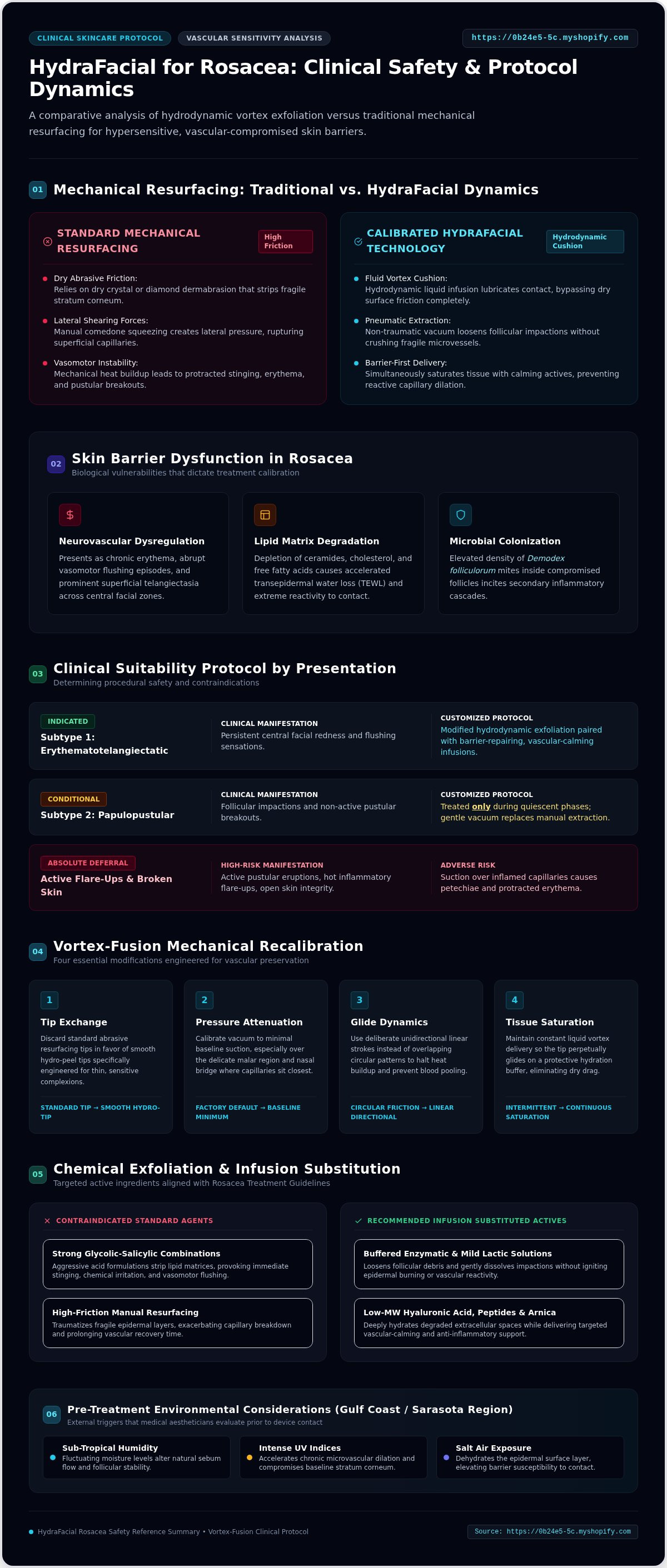
HydraFacial operates as a multi-step hydro-dermabrasion procedure that integrates mechanical cleansing, pneumatic extraction, and pressurized serum delivery. Unlike traditional mechanical dermabrasion that relies on dry friction, this modality uses a fluid vortex to loosen debris while saturating tissue. For clients researching a hydrafacial for rosacea sarasota providers must evaluate microvascular stability before applying vacuum pressure. High friction inevitably triggers vasomotor instability, whereas hydrodynamic fluid movement cushions the skin, preserving barrier equilibrium and preventing reactive capillary dilation.
Understanding Rosacea and Skin Barrier Dysfunction
The pathophysiology of Rosacea involves chronic neurovascular dysregulation that manifests as persistent erythema, sudden flushing, and visible telangiectasia. Healthy skin maintains an organized extracellular lipid matrix composed of ceramides, cholesterol, and free fatty acids. In reactive skin, this structure degrades, causing accelerated transepidermal water loss and hypersensitivity to external contact. Microbial factors compound this vulnerability; elevated densities of Demodex folliculorum mites often colonize compromised follicles, driving secondary inflammatory cascades and compromising the stratum corneum's defensive capacity.
Determining Candidate Suitability Across Rosacea Subtypes
A successful clinical outcome depends on categorizing presentation severity prior to device contact. Suitability varies significantly across clinical presentations:
- Subtype 1 (Erythematotelangiectatic): Characterized by persistent central facial redness and flushing. These clients benefit from modified hydrodynamic exfoliation paired with barrier-repairing, vascular-calming infusions.
- Subtype 2 (Papulopustular): Eligible only during quiescent, non-inflammatory phases. Gentle vacuum extractions clear follicular impactions without manual crushing forces.
- Absolute Contraindications: Practitioners must defer treatment during active pustular eruptions, hot inflammatory flare-ups, or whenever broken skin is present. Excessive suction over actively inflamed microcapillaries can provoke localized petechiae and prolong erythema.
Vortex-Fusion Mechanics: Customizing Protocol Settings for Reactive Skin
Standard HydraFacial protocols rely on factory default settings designed for resilient, sebum-dense complexions. Applying these aggressive parameters to reactive tissue causes mechanical trauma and exacerbates capillary fragility. When administering a hydrafacial for rosacea sarasota clinical aestheticians recalibrate every phase of the treatment. By replacing manual comedone extractions with calibrated pneumatic fluid extraction, the practitioner clears follicular debris without applying the lateral shearing forces that rupture superficial blood vessels.
Mechanical Adjustments: Vacuum Pressure and Tip Selection
Controlled mechanical delivery prevents vascular injury. Medical aestheticians exchange standard abrasive tips for specialized, smooth hydro-peel tips engineered specifically for sensitive skin types. Mechanical modifications focus on minimizing friction:
- Pressure Attenuation: Suction is reduced to baseline levels, particularly across the delicate malar region and nasal bridge where capillaries sit closest to the surface.
- Glide Dynamics: Practitioners use deliberate, unidirectional linear passes instead of overlapping circular patterns. This prevents localized heat buildup and stops unnecessary blood pooling.
- Continuous Saturation: Maintaining constant fluid delivery ensures the tip glides over a protective hydration layer rather than dragging across dry stratum corneum.
Formulation Customization: Calming Boosters and Serums
Standard peeling agents must be modified for vascular-compromised tissue. Strong glycolic-salicylic acid combinations are replaced with buffered enzymatic solutions or mild lactic acid formulations that loosen impactions without triggering stinging. Aligning with the American Academy of Dermatology's Rosacea Diagnosis and Treatment Guidelines, eliminating known topical irritants protects the skin from chemical-induced flushing.
Practitioners substitute aggressive resurfacing with targeted infusions rich in low-molecular-weight hyaluronic acid, calming peptides, arnica, and green tea polyphenols. These compounds actively suppress inflammatory cascades and strengthen cellular hydration. Maintaining adequate intervals between sessions ensures the stratum corneum fully rebuilds its protective lipids; consult our guide on how often should you get a hydrafacial to schedule barrier recovery. If you want to soothe persistent redness while clearing congestion, connect with our advanced aesthetic team to assess your skin's readiness.
HydraFacial vs Traditional Treatments for Rosacea-Prone Complexions
Selecting an aesthetic procedure for vascular-reactive skin requires balancing effective follicular clearance against mechanical irritation. Conventional aesthetic options frequently provoke vasomotor flushing due to unbuffered friction or thermal heat. Choosing a calibrated hydrafacial for rosacea sarasota provides a controlled, temperature-neutral alternative that safeguards epidermal integrity while removing cellular debris.
Comparative Modality Analysis
Different exfoliation methods impact the microvasculature through distinct mechanical pathways:
- Crystal or Diamond Microdermabrasion: Uses dry abrasive grit or diamond-encrusted wands. The resulting dry friction strips the damaged stratum corneum, creating sheer trauma that often leads to ruptured microcapillaries and protracted erythema.
- Standard Manual Facials: Typically rely on warm facial steam to soften sebum, which triggers sudden vasodilation and flushing. Subsequent manual pinch extractions exert focal pressure, frequently bruising delicate surrounding tissue.
- Customized HydraFacial: Employs continuous liquid vortex irrigation. The dynamic fluid layer eliminates friction between the treatment tip and the skin, vacuuming impurities directly into a closed-loop canister without tissue compression.
While hydro-exfoliation focuses on superficial pore clearance and barrier hydration, clients looking for deeper structural dermal remodeling can review what is morpheus to evaluate how targeted radiofrequency microneedling affects deeper tissue layers without disrupting surface epidermal layers.
Adjunctive Modalities: Red Light LED Therapy Integration
Clinical HydraFacial protocols for reactive skin often conclude with narrow-band red light LED therapy. This non-thermal photo-biomodulation step targets cellular cytochrome c oxidase, accelerating mitochondrial repair and suppressing pro-inflammatory cytokine cascades. The light energy stabilizes microvascular walls and rapidly calms post-procedure redness.
Practitioners can also incorporate low-pressure mechanical lymphatic drainage prior to cleansing. Chronic rosacea frequently impedes facial lymphatic clearance, creating persistent puffiness across the mid-face. Gentle directional suction stimulates lymphatic flow, easing tissue congestion and reducing underlying inflammation before active exfoliation begins. For individuals seeking broader restorative care alongside aesthetic treatments, holistic centers like soulfulwaves.com offer wellness sessions designed to reduce stress and support whole-body vitality.
Pre-Treatment Preparation and Gulf Coast Environmental Management
Preparing compromised tissue for clinical hydro-dermabrasion requires deliberate steps, particularly in Southwest Florida where high ambient heat accelerates dermal reactivity. When preparing for a hydrafacial for rosacea sarasota clients must stabilize their skin barrier days prior to device application. Patients must also differentiate between chronic baseline redness and an acute inflammatory episode. If you experience stinging pustules or burning papules on treatment day, clinical protocols require rescheduling until the vascular flare subsides.
Clinical Pre-Care Requirements
Systemic and topical factors directly influence how reactive capillaries respond to pneumatic suction. To minimize complications, adhere to these preparatory adjustments:
- Suspend Active Exfoliants: Discontinue prescription tretinoin, over-the-counter retinol, and topical alpha or beta hydroxy acids 3 to 5 days prior to your session to prevent epidermal stripping.
- Eliminate Mechanical Irritation: Avoid facial waxing, chemical depilatories, dermaplaning, and direct solar exposure for at least 7 days beforehand.
- Disclose Medications: Inform your provider about all active prescriptions, including topical metronidazole, ivermectin, or oral vascular medications, so your aesthetician can adjust fluid formulation and suction levels.
Managing Florida Climate Triggers
Southwest Florida's coastal environment presents unique environmental challenges for rosacea-prone skin. Intense solar radiation, elevated humidity, and airborne ocean salt irritate vulnerable barriers. Immediately following treatment, skin requires dedicated protection from external thermal triggers to prevent reflexive vasomotor flushing.
Avoid outdoor activities during peak daylight hours, hot yoga sessions, and saunas for at least 48 hours post-procedure. Shield healing tissue using a broad-spectrum physical sunscreen formulated with pure zinc oxide or titanium dioxide; chemical sunscreen filters absorb heat into the tissue and often trigger localized stinging. To lock in moisture against coastal humidity shifts and indoor air conditioning, apply fragrance-free barrier creams containing physiological ceramides and squalane.
Navigating climate triggers requires a structured approach tailored to your specific skin needs. Schedule a clinical skin consultation to evaluate your barrier health and plan a safe, customized treatment protocol.
Clinical Care and Tailored HydraFacial Protocols Near Sarasota
Achieving therapeutic benefits on reactive skin depends on clinician judgment rather than automated machine cycles. Generic spa facials treat every face identically, but vascular sensitivity demands real-time adjustment. When seeking a hydrafacial for rosacea sarasota patients should verify their provider's familiarity with microvascular conditions. Practitioners must understand cutaneous pathology to differentiate between simple follicular congestion and underlying vascular inflammation, adjusting pneumatic pressure and topical actives accordingly.
The Clinical Assessment and Custom Treatment Journey
Safe treatment starts with an objective barrier diagnostic rather than immediate exfoliation. During your initial assessment, your aesthetician inspects skin under magnification and polarized light to check capillary distribution, epidermal thinning, and localized lipid depletion. If necessary, a small test pass along the submandibular line evaluates reactive erythema thresholds.
Following assessment, your provider tailors the protocol. Gentle hydro-peel tips deliver low-concentration enzymatic formulas, followed by targeted peptide infusions to reinforce microcapillaries. Treatment finishes with medical-grade red light photo-biomodulation to soothe transient redness. For a wider perspective on local aesthetic centers, read the ultimate guide to spas in bradenton fl.
Locating Advanced Aesthetic Care for Sarasota Residents
Accessing specialized hydro-dermabrasion should not mean long, stressful commutes that elevate blood pressure and cause vascular flushing. Organic Skin & Body Med Spa sits at 8523 East State Road 70 in Bradenton. This clinical location offers a straightforward drive for clients traveling from downtown Sarasota, Lakewood Ranch, and University Town Center via Interstate 75 and the State Road 70 corridor.
Our quiet facility bridges corrective aesthetic protocols with restorative therapies. Licensed medical aestheticians trained in reactive skin management customize each session to protect your delicate epidermal barrier. To evaluate your skin and plan your customized protocol, connect with Organic Skin & Body Med Spa to schedule a one-on-one consultation.
Restore Your Barrier with Calibrated Clinical Care
Managing reactive skin doesn't require avoiding professional clinical exfoliation altogether. When evaluating a hydrafacial for rosacea sarasota clients can achieve refined pores, balanced moisture levels, and reduced flakiness by prioritizing bespoke treatment parameters. Attenuating vacuum suction, swapping harsh acid peels for gentle enzymes, and infusing anti-inflammatory peptides ensure your stratum corneum remains resilient against persistent erythema and coastal environmental triggers.
At Organic Skin & Body Med Spa, our licensed medical aestheticians specialize in corrective protocols designed specifically for reactive complexions. Using patented Vortex-Fusion technology calibrated with dedicated soothing boosters and medical-grade red light therapy, we adapt every step to your skin's vascular reactivity. Our clinical facility is conveniently located on State Road 70, easily serving residents throughout Bradenton, Lakewood Ranch, and Sarasota. Schedule your customized rosacea consultation at Organic Skin & Body Med Spa today to achieve a calm, clear complexion without triggering unwanted flushing.
Frequently Asked Questions
Can a HydraFacial cause a rosacea flare-up if my skin is highly sensitive?
Yes, a standard HydraFacial can trigger a flare-up if aggressive suction or harsh acids are applied to reactive tissue. When receiving a hydrafacial for rosacea sarasota clients must ensure mechanical settings are tailored to their vascular reactivity. Operating the device over active pustular eruptions or using abrasive tips can cause microvascular stress. When properly customized with reduced pressure and soothing solutions, the treatment cleanses pores without triggering inflammation.
What modifications are made during a HydraFacial specifically for rosacea patients?
Practitioners modify the treatment by reducing vacuum pressure, exchanging abrasive tips for smooth hydro-peel tips, and adjusting active topical serums. Suction is dialed down to baseline levels across the cheeks and nose to prevent capillary stress. Clinicians replace standard glycolic acid blends with buffered enzymes or mild lactic acid. In addition, practitioners infuse anti-inflammatory botanical complexes, peptides, and hyaluronic acid, often finishing with red LED photo-biomodulation to suppress redness.
Is the chemical peel step safe for someone with facial redness and broken capillaries?
The standard GlySal peel is not recommended for vascular-compromised skin, but customized enzymatic or buffered alternatives are entirely safe. Traditional aesthetic peels containing high percentages of unbuffered salicylic and glycolic acids strip impaired lipid barriers and provoke vasomotor flushing. For rosacea patients, clinical aestheticians bypass aggressive acid formulas. Instead, they apply buffered, low-concentration solutions that dissolve follicular impactions gently without burning, stinging, or damaging superficial blood vessels.
How quickly will facial redness subside after a customized HydraFacial treatment?
Rosacea patients should schedule sessions every four to six weeks rather than the standard monthly timeline. Reactive skin requires adequate downtime for stratum corneum lipids to fully regenerate. Scheduling a hydrafacial for rosacea sarasota residents on a four-to-six-week cycle prevents over-exfoliation while managing follicular debris and dry patches. Your aesthetician will evaluate your barrier recovery between sessions, adjusting intervals based on your skin's stability and local seasonal climate changes.
Can HydraFacial cure my rosacea or eliminate visible facial spider veins?
No, HydraFacial is not a cure for rosacea and cannot eliminate structural spider veins or telangiectasias. Rosacea is a chronic vascular condition requiring long-term lifestyle and clinical management. While hydro-dermabrasion cleanses pores, hydrates tissue, and reduces superficial background erythema, it cannot remove permanently dilated blood vessels. Eliminating prominent telangiectasias generally requires targeted vascular laser skin treatments or focused aesthetic procedures rather than fluid exfoliation.
What should I avoid doing immediately after a HydraFacial in the Florida heat?
You should avoid direct sun exposure, high-heat environments, and vigorous cardiovascular exercise for at least 48 hours. Southwest Florida's intense ultraviolet radiation and thermal humidity cause rapid vasodilation, which can trigger an acute flushing episode in post-procedure skin. Stay out of saunas, steam rooms, and outdoor midday heat. Always apply pure mineral sunscreen formulated with zinc oxide, and skip active topical medications like retinoids for three days post-treatment.