

You have a major event on the calendar and want to look your best, but the fear of visible bruising makes you hesitate to book your appointment. Learning how to avoid bruising from fillers is not just about luck; it's about following a precise clinical protocol. It's completely normal to feel anxious about looking "injured" or "overdone" after a cosmetic injectable treatment. You want the benefits of facial rejuvenation without the visible downtime that signals you've had work done.
This guide provides a transparent, functional strategy to minimize skin trauma and accelerate healing. We'll outline a clear checklist of medications and supplements to pause, explain the technical reasons why certain substances increase bleeding, and provide a recovery timeline to ensure you're camera-ready. By understanding these procedural needs, you can approach your next session with confidence in both your preparation and your injector's technique for a seamless result.
Key Takeaways
- Understand the physiological causes of hematomas and how injection tools interact with the facial vascular network to cause localized swelling.
- Implement a precise seven-day preparation window to manage elective blood-thinning agents and learn how to avoid bruising from fillers.
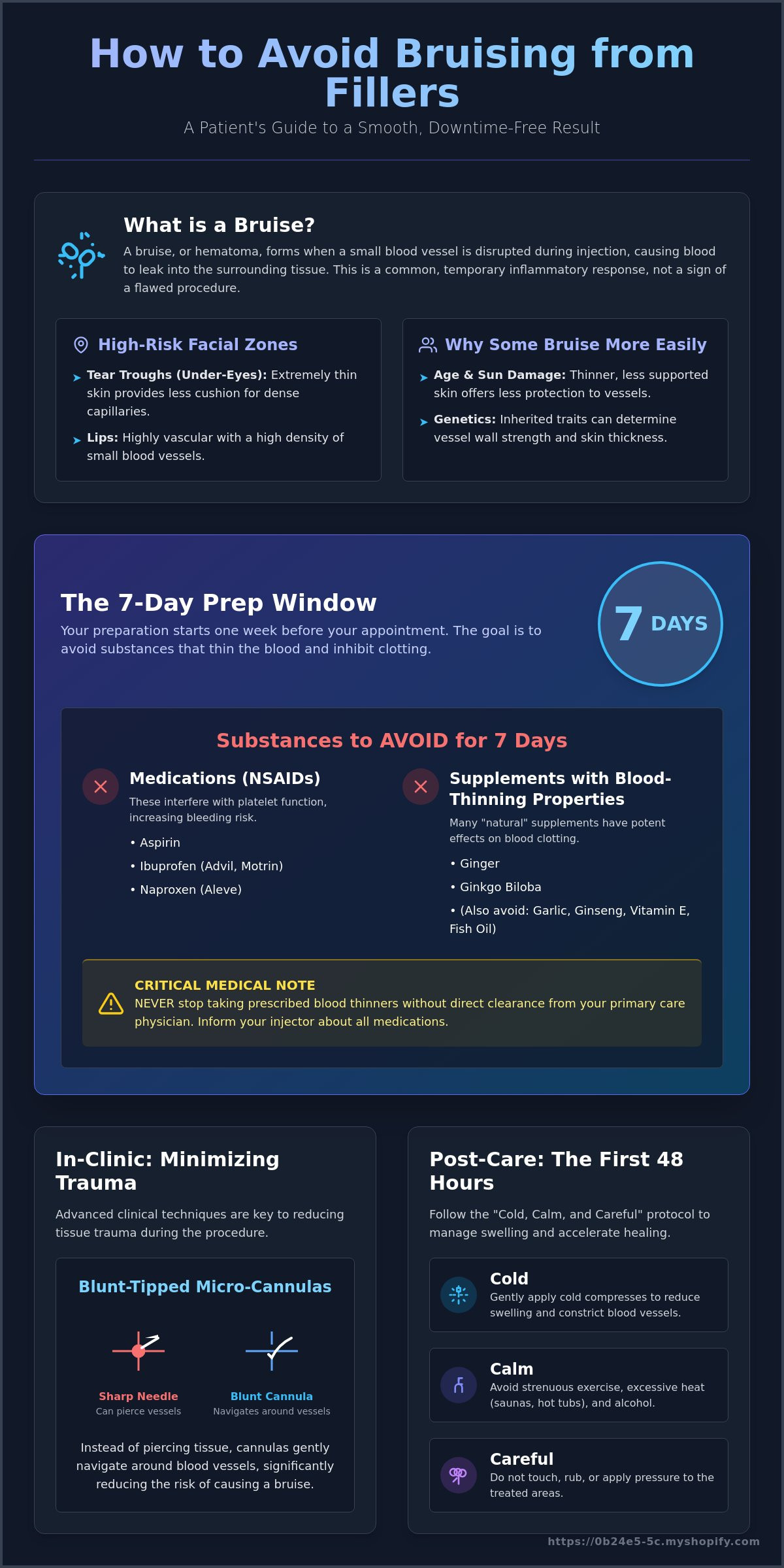
- Recognize how clinical techniques, such as the use of blunt-tipped micro-cannulas, reduce tissue trauma by navigating around blood vessels.
- Execute a "Cold, Calm, and Careful" post-treatment protocol to manage localized pressure and accelerate the healing process during the first 48 hours.
- Coordinate your pre-treatment steps with professional cosmetic injectables to achieve a refreshed result with minimal visible downtime.
Understanding the Physiology of Bruising After Dermal Fillers
A bruise, clinically referred to as a hematoma, is the visible result of blood leaking into the surrounding tissue after a small blood vessel is disrupted. During a cosmetic injectable procedure, the skin is breached by either a needle or a blunt-tipped cannula. While these tools are designed for precision, they must navigate a complex vascular environment. If a vessel is nicked or pierced, blood escapes into the interstitial space, creating the characteristic purple or blue discoloration. Understanding this biological process is the first step in learning how to avoid bruising from fillers.
Certain facial regions carry a higher risk of trauma due to their anatomical structure. The lips and the tear troughs are particularly prone to bruising because these zones feature a high density of capillaries and extremely thin skin. This provides less cushioning for the underlying vessels. It's vital to recognize that a bruise is a temporary inflammatory response. It doesn't indicate that the product is defective or that the placement was incorrect; rather, it's a common part of the spectrum of dermal filler side effects that can occur even in the best clinical conditions.
The Role of Facial Vascularity
The human face contains a remarkably dense network of capillaries and larger vessels that provide oxygen and nutrients to the skin. While medical training provides a map of standard anatomy, individual variations are frequent. An artery's path might deviate by several millimeters from one patient to the next. Because these vessels are often microscopic and hidden beneath layers of tissue, even the most skilled injector cannot always avoid every single capillary. The transition from a needle to a cannula can help, but the risk is never zero due to this intricate biological highway.
Why Some Patients Bruise More Than Others
Patient physiology significantly influences the likelihood of a hematoma. Age is a primary factor. As skin matures, it loses the structural support of collagen and elastin, leading to dermal thinning. Thinner skin offers less protection for blood vessels, making them easier to rupture. Beyond age, certain individuals possess vascular fragility, a condition where the vessel walls are naturally more delicate. This can be influenced by several factors:
- Genetics: Inherited traits often dictate skin thickness and vessel strength.
- Sun Damage: Chronic UV exposure weakens the skin's structural integrity over time.
- Skin Elasticity: Higher elasticity allows tissues to accommodate the filler material with less pressure on the vessels.
Knowing your personal risk factors helps in planning the necessary steps for how to avoid bruising from fillers through proper pre-treatment protocols.
Pre-Treatment Protocol: The 7-Day Prep Window
Preparation for your appointment begins exactly seven days before you sit in the injector's chair. This one-week window is critical for managing systemic factors that influence how your body responds to the minor trauma of a needle or cannula. One of the most effective strategies for how to avoid bruising from fillers is to temporarily eliminate substances that act as anti-platelet agents. Platelets are the components in your blood responsible for clotting. When their function is inhibited, even a microscopic nick to a capillary can result in a visible hematoma rather than a self-sealing event.
While many over-the-counter items are elective, you must never stop taking prescription blood thinners without direct clearance from your primary care physician. If you are on a medically necessary regimen for cardiovascular health, your injector will adjust their technique rather than risk your systemic safety. For elective supplements and medications, a strict seven-day pause is the clinical standard to how to avoid bruising from fillers and ensure the skin remains resilient during the procedure.
Medications and Supplements to Pause
Non-steroidal anti-inflammatory drugs (NSAIDs) are the primary contributors to post-injection bruising. You should avoid Aspirin, Ibuprofen (found in Advil and Motrin), and Naproxen (found in Aleve) for at least one week. These medications interfere with platelet aggregation, which increases the likelihood of bleeding beneath the skin. Clinical studies suggest that following a strict avoidance protocol helps to minimize bruising from fillers by allowing platelets to function normally.
Beyond standard medications, several "natural" supplements have potent blood-thinning properties. You should pause the "G" supplements: Ginger, Ginkgo Biloba, Garlic, and Ginseng. Additionally, Vitamin E and Fish Oil (Omega-3 fatty acids) are known to increase bleeding time. These are often hidden in multi-vitamins or herbal teas, so it's vital to check your labels carefully during the prep week. If you need to manage your cosmetic injectables schedule effectively, clearing these from your system is a functional necessity.
Dietary Adjustments and Alcohol
Your diet also plays a role in vascular behavior. Alcohol is a known vasodilator, which means it causes blood vessels to relax and expand. When vessels are dilated, they present a larger target for the needle and carry a higher volume of blood, significantly increasing the risk of a bruise. You should abstain from alcohol for at least 24 to 48 hours prior to your session. Conversely, incorporating pineapple into your diet several days early can be beneficial. Pineapple contains bromelain, a natural enzyme that supports anti-inflammatory processes and may help the body process minor trauma more efficiently.
Clinical Techniques That Minimize Injection Trauma
While your pre-treatment preparation is essential, the injector's clinical approach is the primary factor in managing tissue integrity during the procedure. Professional techniques for how to avoid bruising from fillers focus on reducing the number of skin penetrations and managing the behavior of local blood vessels. A controlled, methodical pace during product delivery ensures that the surrounding tissue isn't subjected to sudden pressure, which can cause capillaries to rupture. Expert providers prioritize these technical details to ensure the recovery process is as efficient as possible.
One effective method involves the use of specialized topical numbing agents that contain vasoconstrictors like epinephrine. When applied to the treatment area, these agents cause the small blood vessels to temporarily constrict or narrow. This physiological change makes the vessels smaller targets for the needle and reduces the volume of blood in the immediate area. Adhering to FDA guidance on dermal fillers regarding safety protocols ensures that these clinical tools are used effectively to enhance patient outcomes and minimize localized trauma.
Cannula vs. Needle: Which Is Best for You?
The choice of delivery tool significantly impacts the level of post-procedure bruising. A traditional needle is sharp and beveled, designed to pierce through tissue layers. While excellent for precision work and deep structural placement, it can easily cut through any small vessel in its path. In contrast, a micro-cannula is a flexible, blunt-tipped tube. Because the tip isn't sharp, it tends to slide around or push past blood vessels rather than piercing them. Using a cannula typically requires fewer entry points, which directly translates to less overall trauma and a lower risk of hematoma formation.
The Importance of Anatomical Knowledge
Safety in aesthetics is built upon a deep understanding of facial anatomy. Professional aestheticians at Organic Skin & Body Med Spa utilize their knowledge of the vascular network to navigate away from major arteries and veins. By identifying the specific planes where these vessels reside, they can place the product in the safest possible "sweet spot." Vascular mapping is the practice of identifying and avoiding the specific locations of key blood vessels to maximize safety and minimize trauma. This high level of technical proficiency is a cornerstone of how to avoid bruising from fillers while achieving a natural, refreshed aesthetic.
Immediate Post-Care: Managing the First 48 Hours
The 48 hours following your procedure are the stabilization phase. During this time, the filler material is settling into the tissue and the micro-trauma from the injection is beginning to heal. A "Cold, Calm, and Careful" approach is the most effective way to manage these initial hours. By controlling your environment and physical activity, you can significantly influence how to avoid bruising from fillers and ensure the swelling remains localized and minimal. Proper recovery management is just as important as the injection technique itself.
Elevation is a simple yet vital component of this recovery phase. When you lie flat, blood pressure in the facial vessels increases, which can exacerbate any minor bleeding or fluid accumulation. Keeping your head elevated on at least two pillows during sleep for the first two nights reduces this localized pressure. Additionally, you should begin using Arnica Montana immediately. This homeopathic supplement, available in both oral pellets and topical gels, supports the body's natural ability to clear bruising. For optimal results, apply the gel or take the pellets three to four times daily starting the afternoon of your treatment.
Beyond homeopathic options, focusing on systemic wellness can also support your recovery. Using a molecular hydrogen generator from Pureffect can help manage inflammation and support the body's natural healing processes from within.
Temperature Control and the Florida Heat
For residents in Bradenton, managing the local climate is a unique challenge during recovery. High temperatures cause vasodilation, where blood vessels expand to help the body cool down. This increased blood flow can worsen existing bruises or cause new ones to appear. You must avoid direct sun exposure, saunas, and steam rooms for at least 48 hours. A strict icing protocol is also necessary: apply a cold compress for 10 minutes on and 10 minutes off for the first six hours post-treatment. This helps constrict vessels and numbs the area to reduce discomfort.
Activity Restrictions and Pressure
Physical exertion is a primary risk factor for delayed bruising. High-intensity exercise raises your heart rate and blood pressure, which pumps a higher volume of blood into the recently treated tissues. You should avoid heavy lifting and vigorous cardio for at least 48 hours to prevent this surge. The treated area also needs to remain undisturbed. Avoid firm facial massages or "testing" the filler by pressing on the injection sites, as this can displace the product or cause additional trauma. To maintain the integrity of your results, schedule your cosmetic injectables at a time when you can commit to two weeks without dental work or aggressive facial treatments.
Professional Injectables at Organic Skin & Body Med Spa
We offer a comprehensive selection of cosmetic injectables tailored to meet individual aesthetic goals. Our practitioners utilize top-tier formulations, including the Restylane family of products, to achieve precise volume restoration and contouring. The selection of the specific product depends on the treatment area and the desired longevity of the results. Every appointment begins with a thorough assessment of your skin's condition and a review of your medical history to ensure all safety protocols are met. This objective evaluation allows us to select the most appropriate delivery method for your specific facial structure.
The initial consultation serves as a critical step in the preparation process. We use this time to identify potential vascular challenges and discuss your specific history with bruising or swelling. By establishing a baseline for your skin's health, we can provide targeted instructions on how to avoid bruising from fillers that are specific to your lifestyle and needs. This direct and transparent approach ensures that you're fully informed about the procedural requirements and the expected recovery timeline before the treatment begins.
Our Bradenton Aesthetic Philosophy
Our commitment to a "natural yet refreshed" aesthetic is the foundation of our practice. We believe that cosmetic enhancements should complement your existing features rather than mask them. Our facility is located at 8523 East State Road 70, making it a central hub for those seeking professional aesthetic care in the Lakewood Ranch and Bradenton areas. We integrate organic skincare philosophies into our clinical environment to support long-term skin health and resilience. For a broader look at the wellness landscape in our community, you can read our guide on spas in Bradenton, FL.
Scheduling for Success: The 2-Week Rule
If you have an upcoming event such as a wedding, gala, or professional photo session, scheduling is a functional priority. We strictly recommend the 14-day rule for all injectable treatments. This two-week window is necessary for the filler to fully integrate with your facial tissues and for any residual inflammatory response to resolve completely. During the first seven days, the product settles and initial swelling dissipates. The following seven days allow the skin to regain its natural texture and glow. Following this timeline is the most reliable way to manage how to avoid bruising from fillers while ensuring you're camera-ready for your special occasion.
Schedule your injectable consultation at Organic Skin & Body Med Spa today.
Achieve Seamless Aesthetic Results
Success with cosmetic injectables depends on a combination of diligent patient preparation and precise clinical execution. We have detailed the critical importance of the seven-day preparation window and the technical advantages of micro-cannula delivery. These procedural steps are essential components of how to avoid bruising from fillers, allowing you to return to your daily routine with minimal visible downtime. Understanding these physiological requirements ensures that your results are both safe and predictable.
For those interested in exploring more in-depth resources on skin health and aesthetic recovery, digital ebooks such as those found at digiflow-store-hub.com offer valuable guidance for maintaining professional results.
Our team provides a relaxing med spa environment in Bradenton where your safety and aesthetic goals are the priority. With expertly trained injectors and comprehensive post-care support, we guide you through every stage of the process to ensure a refreshed and natural appearance. You can trust our functional approach to deliver consistent results that align with your unique facial anatomy and health history.
Book Your Dermal Filler Consultation in Bradenton to begin your personalized treatment plan today. We look forward to helping you achieve your desired look with confidence and clarity.
Frequently Asked Questions
Is it normal to have small lumps or bumps after filler?
Yes, minor lumps or textural irregularities are common during the first 14 days as the filler material integrates with your facial tissues. These bumps often result from localized swelling or the product settling into the dermal layers. You should avoid firm pressure or massage during this period unless specifically instructed by your provider. If the lumps persist beyond two weeks, a follow-up appointment is necessary for a clinical assessment.
Can I take Tylenol if I have pain after my filler injection?
Yes, Tylenol (Acetaminophen) is the recommended medication for managing post-procedure discomfort. Unlike Ibuprofen, Aspirin, or Naproxen, Tylenol does not possess anti-platelet properties and won't increase your risk of bleeding. Using Tylenol ensures you can manage sensitivity without compromising your recovery protocol. Always follow the dosage instructions on the packaging or those provided by your healthcare professional during your consultation.
How long does bruising typically last after lip fillers?
Bruising in the lip area typically lasts between five to seven days, though it can take up to 14 days to resolve completely. The lips are highly vascular and have thin skin, which increases the likelihood of a visible hematoma. Understanding this timeline is a key part of learning how to avoid bruising from fillers by timing your appointments appropriately before major social engagements or professional events.
Does Arnica really help with bruising, and how should I use it?
Arnica Montana is a functional homeopathic supplement that supports the body's natural process of clearing blood from the interstitial tissue. It is available in oral pellets and topical gels. For the best results, you should begin usage on the day of your treatment. Arnica is a staple for patients researching how to avoid bruising from fillers because it helps stabilize the recovery process and may reduce the overall duration of discoloration.
Can I wear makeup to cover a bruise immediately after my appointment?
No, you should wait at least 24 hours before applying any makeup or skincare products to the treated area. The injection process creates microscopic channels in the skin that remain open for several hours. Applying cosmetics too early can introduce bacteria into these sites, leading to potential infection or prolonged inflammation. After the 24-hour mark, you may use a clean brush to apply concealer over any visible marks.
What should I do if a bruise seems to be getting worse after 48 hours?
If a bruise expands significantly, becomes increasingly painful, or is accompanied by heat and redness after 48 hours, contact your injector immediately. While most bruises peak at the two-day mark and then begin to fade, worsening symptoms can indicate a more serious vascular event or infection. A professional evaluation is required to ensure the tissue is healthy and the filler is not impinging on blood flow.
Will icing my filler make it dissolve faster?
No, applying cold compresses does not affect the chemical structure or longevity of the filler material. Icing is used strictly to manage the physiological response to the injection by constricting blood vessels and reducing inflammatory fluid buildup. It is a safe and effective method for managing comfort during the first 24 hours. Ensure the ice pack is wrapped in a clean cloth to avoid direct skin irritation or frostbite.
Can I fly on an airplane immediately after getting dermal fillers?
It is generally recommended to wait at least 24 to 48 hours before flying. The changes in cabin pressure can exacerbate localized swelling and may increase the severity of a bruise by affecting blood flow. Additionally, the dry air in an airplane cabin can dehydrate the skin, which is not ideal during the initial settling phase. If travel is necessary, maintain high hydration levels and avoid salty foods during the flight.