

What if the years of UV exposure written across your forehead and cheeks could be erased without invasive surgery? You likely feel that those persistent dark spots and the rough, leathery texture of your skin are permanent reminders of time spent under the Florida sun. It's frustrating when even the highest-coverage makeup fails to conceal uneven pigmentation. Clinical evidence suggests that microneedling for sun damage offers a path to genuine restoration by triggering the body's internal repair mechanisms.
We understand the anxiety that comes with visible skin damage and the desire for a clearer, more youthful complexion. This guide explains how professional microneedling treatments, including advanced options like SkinPen and Morpheus8, can result in up to 400% more collagen after six months to repair the dermal layer. You'll learn how this procedure addresses hyperpigmentation and fine lines to provide professional confirmation that your skin damage is indeed reversible. We will detail the 2026 standards for treatment frequency, expected outcomes, and the science behind this essential skin restoration technique.
Key Takeaways
- Understand how collagen induction therapy repairs the internal skin fibers that UV radiation breaks down over time.
- Learn how microneedling for sun damage reduces hyperpigmentation and rough textures by creating thousands of precise micro-channels.
- Compare the efficacy and recovery times of microneedling against chemical peels and fractional lasers to find your ideal treatment.
- Identify why professional devices like SkinPen and Morpheus8 are superior for achieving safe, medical-grade restoration.
- Discover the essential preparation and aftercare steps required to maximize your skin's healing and final results.
Understanding Sun Damage and the Role of Microneedling
Microneedling is a minimally invasive procedure technically known as Collagen induction therapy. It involves using a professional device equipped with fine needles to create controlled punctures in the skin's surface. These micro-injuries trigger the body's natural wound-healing response. For patients seeking microneedling for sun damage, this process is vital because UV radiation causes structural failure within the dermis. Prolonged exposure to ultraviolet rays breaks down the collagen and elastin fibers that provide skin its resilience and elasticity.
Sun damage manifests in several specific clinical ways. Solar lentigines, commonly known as sun spots, appear as darkened patches of pigment. Melasma presents as larger, symmetrical brown or gray-brown patches, often triggered by a combination of UV and hormonal shifts. Over time, chronic exposure leads to solar elastosis. This condition involves the accumulation of abnormal elastic tissue in the dermis, resulting in a thickened, yellowed, and deeply wrinkled appearance. While many individuals attempt to treat these issues with over-the-counter serums, topical products often fail to penetrate deep enough. They cannot reach the mid-to-deep dermal layers where the most significant structural damage resides.
The Impact of the Florida Sun on Skin Health
Residents in Bradenton and the Sarasota area face unique dermatological challenges. The Sunshine State provides high UV indices year-round, which means skin damage accumulates steadily rather than seasonally. This cumulative exposure accelerates photoaging, making professional intervention a necessity for those living in Florida for extended periods. Daily sunscreen use is a vital preventative measure, but it cannot reverse the deep cellular changes that have already occurred. Constant radiation weakens the skin's barrier and depletes its natural antioxidant reserves, leading to persistent texture issues and pigmentation that require clinical correction.
How Microneedling Targets Photoaging
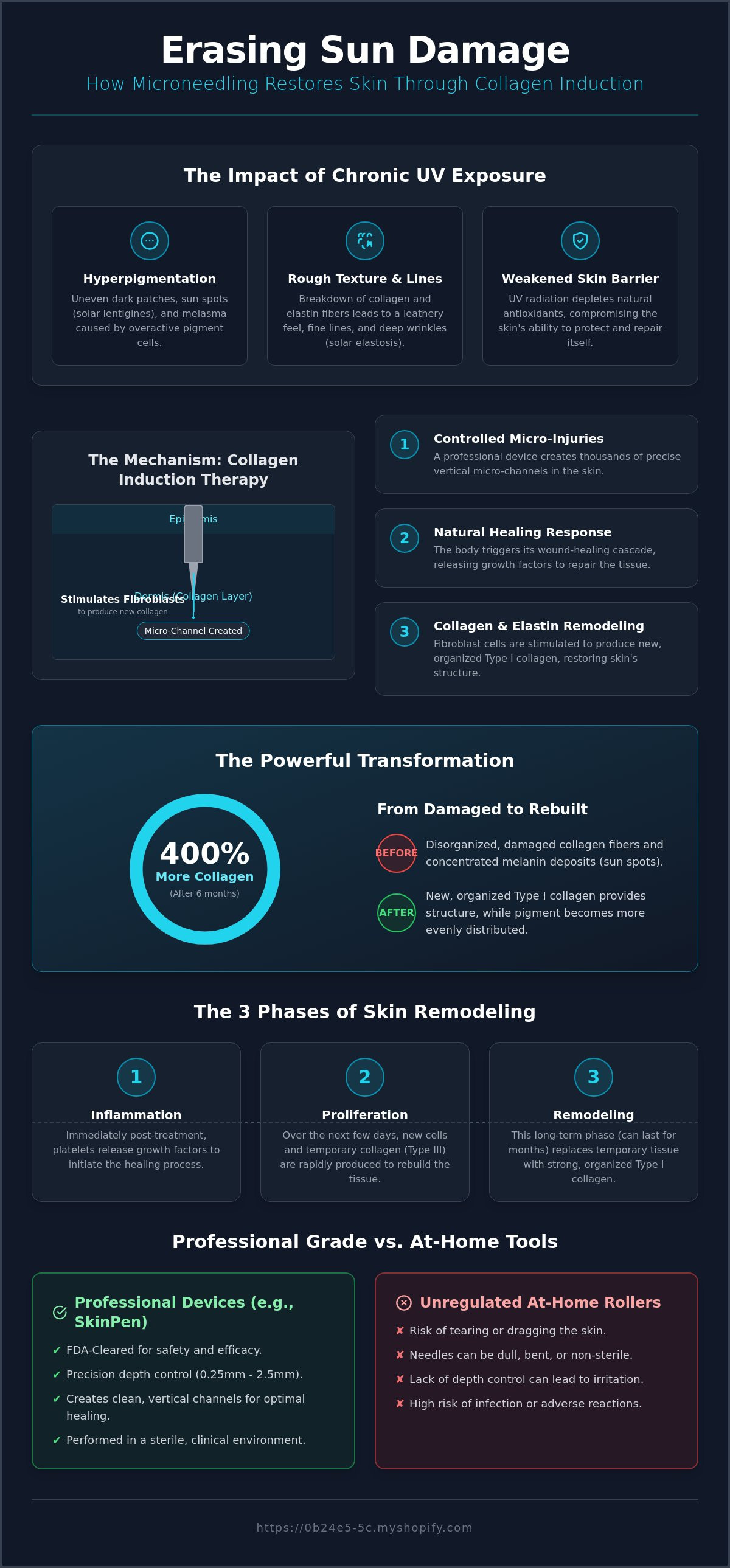
The primary mechanism of microneedling for sun damage involves stimulating cellular repair through mechanical stimulation. When the needles penetrate the skin, they break up the concentrated melanin deposits that form visible sun spots. This allows the body to reabsorb and redistribute the pigment more evenly. Simultaneously, the micro-channels stimulate fibroblasts to produce new, organized Type I collagen. This youthful collagen replaces the disorganized, damaged fibers characteristic of photoaged skin, leading to a smoother and more even complexion. Clinical research indicates that a series of treatments can result in up to 400% more collagen after six months, providing the structural support necessary to smooth out fine lines and surface irregularities.
The Science of Collagen Induction for Pigment and Texture
The efficacy of microneedling for sun damage relies on the biological interaction between the epidermis and the underlying dermis. While the epidermis serves as the visible barrier, the dermis contains the fibroblasts responsible for structural integrity. Clinical evidence found in a comprehensive review of microneedling confirms that mechanical stimulation triggers a predictable three-phase healing cascade. This process begins the moment the device creates thousands of precise micro-channels in the skin's surface.
The skin follows a specific sequence to repair these controlled injuries. First, the inflammatory phase occurs, where platelets release growth factors to initiate tissue repair. This is followed by the proliferative phase, where new cellular material and temporary collagen are produced. Finally, the remodeling phase takes place over several months. During this stage, the skin replaces temporary tissue with stronger Type I collagen, which is essential for correcting the deep-seated damage caused by UV radiation.
Sun damage often results in overactive melanocytes, the cells responsible for skin pigment. When these cells are damaged by UV rays, they produce uneven patches of color. Microneedling helps normalize this pigment production. By promoting rapid cellular turnover and improving intercellular communication, the procedure helps break up existing melanin clusters and encourages a more uniform skin tone. This biological reset is what allows the skin to regain its natural clarity without the use of harsh bleaching agents.
SkinPen: The Gold Standard for Sun-Damaged Skin
SkinPen is the first FDA-cleared microneedling device. Using medical-grade technology is critical for safety, as unregulated tools can cause uneven tearing or skin irritation. The device allows for precision depth control, ranging from 0.25mm to 2.5mm. This adjustability ensures that sensitive areas like the skin around the eyes receive gentle care, while denser areas like the cheeks get the depth required to reach deep UV damage. If you're ready to address these concerns, our RF & microneedling services provide a structured path to recovery.
Collagen vs. Elastin: Restoring the Skin Scaffold
Chronic UV exposure leads to solar elastosis, a condition where elastin fibers become thick and disorganized. This results in a leathery skin texture that doesn't bounce back. Microneedling forces the skin to remodel these dysfunctional fibers. As the dermal layer thickens and skin density increases, the internal "scaffold" of the face becomes more resilient. This improved density helps prevent the sagging and fine wrinkles associated with advanced photoaging, providing a smoother and more youthful surface.
Microneedling vs. Other Sun Damage Treatments
Selecting the correct modality for skin restoration depends on the depth of the damage and the patient's specific skin type. Chemical peels are frequently utilized for surface-level pigmentation issues. These treatments use acids to exfoliate the top layer of the epidermis. However, microneedling for sun damage offers a mechanical alternative that reaches the deeper dermal layers without the risk of chemical sensitivity or extensive peeling. Because it avoids harsh chemicals, it's often more tolerable for those with reactive skin.
Laser treatments utilize concentrated light and heat to resurface the skin. While effective, the thermal energy often leads to extended downtime and a higher risk of complications for certain individuals. Microneedling relies on mechanical resurfacing. This typically results in only 24 to 48 hours of redness, which is significantly shorter than the recovery period for many fractional lasers. Microneedling doesn't rely on intense heat, making it a safer option for patients with darker skin tones, specifically those categorized as Fitzpatrick IV through VI. Heat-based treatments can sometimes trigger post-inflammatory hyperpigmentation in these skin types. Mechanical micro-injuries are far less likely to disrupt melanocyte activity.
When to Choose Morpheus8 RF Microneedling
For patients experiencing more severe structural damage alongside sun-induced discoloration, combining technologies is often necessary. Morpheus8 integrates radiofrequency (RF) energy with traditional microneedling to target deeper tissues. This combination addresses skin laxity and deep wrinkles by delivering heat into the sub-dermal layers. This process stimulates more intense remodeling than standard needles alone. You can read more in our guide, What is Morpheus8?, for a detailed technical breakdown of how this system functions.
Synergy with Organic Skin Care and Facials
Professional skin restoration is most effective when integrated into a holistic care plan. The micro-channels created during a session significantly increase the absorption of corrective organic serums. This allows active ingredients to bypass the surface barrier. Maintaining these results requires consistent aesthetician services, such as professional facials or Hydrafacials, to keep the skin hydrated and clear of debris. Combining microneedling for sun damage with high-quality Organic Skin Care ensures that the skin remains resilient against future UV exposure while accelerating the healing of existing lesions.
The Treatment Journey: What to Expect and Aftercare
Preparing for microneedling for sun damage begins seven days before the clinical session. Patients must avoid direct sun exposure and discontinue the use of retinoids, vitamin C serums, or acid-based exfoliants to prevent increased sensitivity. These precautions ensure the skin is in a stable state for the procedure. Once the session begins, a professional applies a medical-grade topical numbing agent to manage comfort. The aesthetician then uses the SkinPen or Morpheus8 device to create the micro-channels required for cellular repair. Most sessions conclude within 30 to 60 minutes, depending on the size of the treatment area.
After the procedure, the skin typically displays erythema, which looks and feels similar to a moderate sunburn. This sensation is a normal biological response to the micro-injuries and indicates that the healing cascade has started. During the first 48 to 72 hours, the micro-channels remain partially open, making the skin highly susceptible to environmental pollutants and bacteria. You should avoid swimming pools, heavy exercise, and makeup application during this timeframe. This specialized protection ensures that the inflammatory response remains controlled and productive for skin restoration.
Step-by-Step Post-Treatment Protocol
For the first three days following your session, use only lukewarm water and a gentle, non-stripping cleanser. Avoid scrubbing or using mechanical brushes on the treated area. Physical sunscreens containing zinc oxide or titanium dioxide are non-negotiable in the Florida climate, as the skin's natural defenses are temporarily lowered. These provide a reflective barrier that doesn't irritate the healing tissue. You may typically resume your standard routine and use professional Organic Skin Care products after the initial 72-hour window or once all redness has subsided.
Managing Expectations: Timeline for Results
While some patients notice an immediate brightness or "glow" shortly after the procedure, this is often the result of temporary inflammation and increased blood flow. True restoration of sun-damaged skin requires patience and consistency. Addressing chronic UV damage involves remodeling deep layers of tissue, which cannot happen in a single visit. Each subsequent session builds upon the previous one to gradually thin out leathery textures and lift deep-seated pigment. Most professional protocols recommend a series of 3 to 6 treatments spaced 4 to 6 weeks apart. Peak collagen production occurs 4 to 12 weeks post-treatment.
Professional Skin Rejuvenation in Bradenton, FL
The clinical success of microneedling for sun damage depends heavily on the environment in which the procedure is performed. Because the treatment involves creating thousands of micro-channels in the epidermis, a sterile, medical-grade setting is essential to prevent secondary infections or complications. To understand the standards required for high-level care, you can learn more about Medical, Surgical, and Cosmetic Dermatological Services at reputable clinics. Professional facilities adhere to strict sanitation protocols that at-home devices cannot replicate. In the humid Florida climate, ensuring the skin remains protected from environmental pollutants during and immediately after the session is a priority for achieving optimal restoration.
Organic Skin & Body Med Spa provides a structured approach to corrective skin treatments that addresses the specific needs of Gulf Coast residents. Our practitioners understand that sun damage in the Bradenton and Sarasota area is often deep-seated due to year-round UV exposure. We don't simply treat the surface; we perform a detailed skin analysis to determine the depth of pigmentation and the degree of solar elastosis. This data allows us to calibrate devices like SkinPen or Morpheus8 to the exact parameters required for your unique dermal profile.
Why Choose Organic Skin & Body Med Spa?
We believe that clinical results shouldn't come at the expense of comfort. Our facility offers a stress-free, relaxing environment that bridges the gap between medical aesthetics and a tranquil spa experience. By integrating advanced technologies with high-quality organic skincare, we ensure that your skin receives the nutrients it needs to heal efficiently. Our reputation for excellence is reflected in our standing among the best spas in Bradenton, where we focus on providing functional, transparent care for all skin types.
Your Path to Sun-Safe Skin in Bradenton
Recovery is only the first step in your skin restoration journey. Long-term success requires a customized maintenance plan designed to prevent future UV damage while preserving the collagen gains achieved through microneedling. Our team provides professional guidance on daily protection and the use of corrective topicals that complement your clinical sessions. We focus on empowering residents to enjoy the Florida lifestyle without sacrificing their skin's health. If you're ready to address persistent dark spots and texture issues, schedule your SkinPen Microneedling consultation today to begin your personalized restoration plan.
Restore Your Skin's Resilience and Clarity
Reversing years of UV exposure requires more than just topical care. Professional microneedling for sun damage provides a mechanical solution that stimulates the body's internal repair mechanisms. By utilizing FDA-cleared SkinPen technology, you can effectively address hyperpigmentation and structural laxity without the extended downtime associated with more invasive procedures. This approach ensures that your skin's dermal scaffold is rebuilt with healthy, organized collagen fibers.
Our Licensed Medical Aestheticians are dedicated to providing precise, medical-grade treatments tailored to your specific needs. Located in the heart of Bradenton, FL, we focus on delivering functional outcomes for residents navigating the unique challenges of the Florida sun. You don't have to accept sun damage as a permanent condition. Taking the first step toward restoration allows you to reclaim a more even and youthful complexion. Book Your SkinPen Microneedling Session in Bradenton to begin your journey toward healthier, more resilient skin today.
Frequently Asked Questions
Is microneedling for sun damage painful?
Patients typically experience minimal discomfort during microneedling for sun damage because a medical-grade topical anesthetic is applied 20 to 30 minutes before the session. While you may feel a slight vibrating sensation or mild pressure, most individuals don't describe it as painful. After the numbing wears off, the skin feels similar to a mild sunburn for approximately 24 hours.
How many sessions of microneedling will I need for dark spots?
A series of 3 to 6 treatments is the standard recommendation for addressing stubborn dark spots and solar lentigines. These sessions are typically spaced 4 to 6 weeks apart to allow the skin's remodeling phase to complete. While some surface brightness appears after the first visit, deep-seated pigment requires multiple passes to break up melanin clusters and encourage even skin tone through cellular turnover.
Can microneedling make sun damage worse if I go in the sun?
Unprotected UV exposure during the first 72 hours after treatment can exacerbate existing damage or cause new pigment issues. The micro-channels created during the procedure leave the skin's barrier temporarily compromised. If you don't strictly adhere to a physical SPF regimen in the Florida sun, the inflammatory response can trigger excess melanin production, leading to darker spots rather than clearer skin.
Is microneedling better than laser for sun damage?
The choice between technologies depends on your skin type and desired downtime, though microneedling is often safer for darker skin tones. It doesn't use heat, which can trigger scarring or pigment changes in Fitzpatrick skin types IV through VI. It also offers a shorter recovery period than most fractional lasers. A professional analysis is necessary to determine which technology suits your specific structural damage.
How long does the redness last after a microneedling session?
Redness typically lasts between 24 and 48 hours following a professional session. This is a normal inflammatory response indicating that the healing process has begun. By the third day, the skin usually returns to its normal color, though some minor dryness or flaking may occur as the old epidermis sheds. You can typically return to work and social activities within two days.
Can I treat sun damage on my chest and hands with microneedling?
The skin on the chest and hands is highly responsive to microneedling for sun damage. These areas are often thinner and more prone to visible photoaging than the face, resulting in a crepey texture and age spots. The treatment works by thickening the dermis and smoothing out surface irregularities. Because these areas have fewer sebaceous glands, they may require more intensive hydration during the post-treatment phase.
Is microneedling safe for melasma caused by the sun?
Microneedling is a safe and effective option for melasma because it doesn't rely on heat, which is a common trigger for this condition. The mechanical action helps regulate melanocyte activity and improves the penetration of corrective organic serums. It's important to use controlled depths to avoid over-stimulating the skin. Combining this with a consistent medical-grade skincare routine helps maintain a stable, even complexion.
What is the best time of year in Florida to get microneedling?
The winter months are often the most convenient time for Florida residents to schedule their sessions. Between October and March, the UV index is slightly lower and outdoor activities are less frequent, making it easier to avoid the direct sun exposure required during the initial healing window. However, you can successfully undergo treatment at any time of year if you are committed to wearing a wide-brimmed hat and applying physical sunscreen daily.