

Approximately 24% of Americans with tattoos regret at least one of their designs. If you are among them, you likely feel frustrated by the slow results of older equipment or anxious about the pain and potential for permanent scarring. It's logical to seek a solution that prioritizes both efficiency and skin integrity. Understanding what laser is best for tattoo removal 2026 is essential for anyone who wants to clear their skin without compromising its health.
We recognize that your primary goals are complete ink removal and minimal recovery time. This guide provides a direct and objective analysis of the most advanced technologies currently available. We'll explain how the industry has shifted toward picosecond lasers and why using multiple wavelengths is necessary to address various ink colors effectively. You will learn how modern protocols ensure your treatment is fast, safe, and tailored to your specific skin type. This information is designed to help you make an informed decision about your dermatological care.
Key Takeaways
- Learn how modern selective photothermolysis allows for the destruction of ink particles without damaging the surrounding skin tissue.
- Identify what laser is best for tattoo removal 2026 by comparing the photo-acoustic efficiency of picosecond lasers against older nanosecond technology.
- Understand the technical necessity of matching specific laser wavelengths, such as 1064 nm, to the specific colors of your tattoo ink for optimal clearance.
- Discover how current numbing protocols and integrated cooling systems manage discomfort and support a predictable healing timeline.
- See the clinical advantages of performing laser removal within a professional facility that prioritizes long-term skin health and texture preservation.
The Evolution of Tattoo Removal Technology in 2026
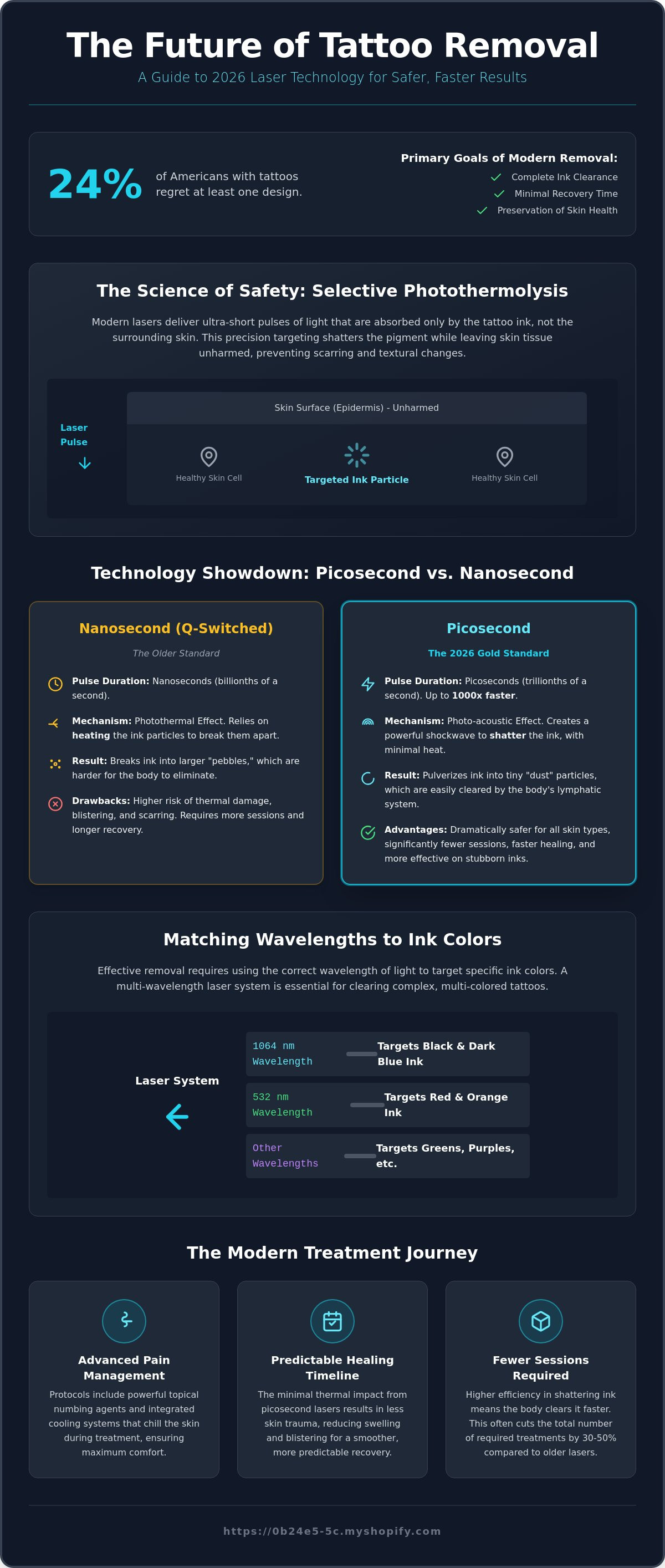
Aesthetic medicine has reached a pivotal point in 2026. For years, the primary concern for those seeking removal was the high risk of scarring or permanent skin damage. Modern systems have fundamentally changed this by utilizing a process known as selective photothermolysis. This method allows practitioners to deliver light energy that reacts exclusively with the tattoo pigment. Because the light is absorbed by the ink and not the skin, the surrounding tissue remains intact. Determining what laser is best for tattoo removal 2026 involves looking for devices that offer ultra-short pulse durations. These pulses occur in trillionths of a second, creating a powerful mechanical vibration that shatters ink into microscopic particles. This "skin-first" approach ensures that removal is effective while preventing long-term changes to the skin's natural texture.
Why Older Laser Models are Becoming Obsolete
Continuous-wave lasers and older nanosecond models are increasingly rare in high-end clinical settings. These devices often create excessive heat, which can lead to thermal damage, blistering, and significant downtime. In contrast, 2026 technology focuses on the "cold" shattering of ink particles. By reducing the time the laser beam stays in contact with the skin, practitioners can avoid the heat-related side effects that once made tattoo removal a high-risk procedure. The shift toward more precise energy delivery has made older models functionally obsolete for patients who prioritize skin health and minimal recovery periods.
The Role of Selective Photothermolysis
Selective photothermolysis is the targeting of specific pigments without heating surrounding tissue. Lasers identify the difference between exogenous tattoo ink and natural skin melanin by using specific wavelengths of light. This precision is particularly important for patients with darker skin tones. In the past, lasers often struggled to distinguish between dark ink and high levels of melanin, increasing the risk of hypopigmentation or scarring. The Evolution of Tattoo Removal Technology has introduced more sophisticated sensors and wavelengths. These advancements allow the laser to bypass the epidermis and target the ink directly, making the procedure safer and more inclusive than ever before. It's now possible to achieve complete clearance without the "ghosting" effects seen with previous generations of equipment.
Picosecond vs. Q-Switched Lasers: Which Wins in 2026?
The technical debate regarding what laser is best for tattoo removal 2026 focuses primarily on pulse duration. Q-switched lasers, the previous industry standard, deliver energy in nanoseconds, or billionths of a second. Picosecond lasers deliver energy in trillionths of a second. This difference in speed fundamentally changes how the laser interacts with tattoo ink. While nanosecond lasers rely on a photothermal effect to heat and break ink, picosecond technology utilizes a photo-acoustic effect. This creates a mechanical shockwave that shatters pigment without the same level of heat transfer to the skin. This distinction is critical for treating recalcitrant tattoos that have stopped responding to older equipment after several sessions.
A combination approach is often the gold standard in 2026 clinical environments. This strategy involves using the high-intensity thermal energy of a Q-switched laser for initial sessions on dense ink and transitioning to picosecond pulses for final clearance. By leveraging both technologies, practitioners can address tattoos at various stages of the fading process. This ensures that the ink is broken down effectively regardless of its depth or chemical composition. It's a method that prioritizes complete removal while maintaining the integrity of the dermal layers.
The Picosecond Advantage: Shattering vs. Heating
Picosecond pulses are so fast that they turn tattoo ink into a fine "dust" rather than the larger "pebbles" created by older models. These smaller particles are significantly easier for the body’s lymphatic system to process and eliminate. This increased efficiency often leads to faster clearance and a reduction in the total number of sessions required for full removal. When considering Pain Management and the Healing Timeline, the reduced thermal impact of picosecond lasers typically results in less skin trauma and a more predictable recovery. Patients don't experience the same level of localized heat, which minimizes the risk of post-procedural complications.
When Q-Switched Technology Still Holds Value
Despite the rise of newer technology, Q-switched lasers remain relevant for specific applications. They are highly effective for deep, dense black inks and simple amateur tattoos where a high-intensity pulse is beneficial for initial fragmentation. In many professional settings, hybrid platforms combine both technologies to optimize results for the patient. If you are seeking comprehensive laser removal services, a facility that utilizes both platforms often provides the most thorough results. This combination ensures that even the most stubborn pigments are addressed systematically without damaging the skin's natural texture.
Matching Laser Wavelengths to Your Tattoo Ink Colors
Wavelength selection is the most critical technical decision in the removal process. If the wavelength doesn't match the ink's absorption spectrum, the energy simply passes through or reflects off the pigment without breaking it. For instance, the 1064 nm wavelength is the industry standard for black and dark blue inks because it penetrates deep into the dermis. Conversely, the 532 nm wavelength is highly effective for red, orange, and yellow pigments. When determining what laser is best for tattoo removal 2026, you must ensure the device offers multiple wavelengths. Specialized frequencies like 755 nm or 694 nm are often necessary to address stubborn greens and light blues that other lasers might miss. These specific frequencies target colors that were historically considered permanent, providing a solution for even the most vibrant artwork.
The Challenge of Multi-Colored Tattoos
Complex designs require a multi-pass approach where the technician switches settings between different color fields. This precision is necessary because treating a red pigment with a wavelength meant for black ink is ineffective and potentially harmful. A significant risk in modern aesthetics is "ink darkening," which typically occurs with cosmetic tattoos or white pigments containing titanium dioxide. When exposed to certain laser energies, these pigments can oxidize and turn dark grey or black instantly. 2026 technology manages these transitions by utilizing lower energy densities and spot-testing to ensure the ink reacts predictably before full treatment begins. This systematic approach prevents permanent discoloration of the artwork.
Treating Tattoos on Diverse Skin Tones
Safety protocols for diverse skin tones have improved significantly, but they require strict adherence to wavelength physics. Patients with Fitzpatrick skin types IV through VI require the 1064 nm wavelength because its longer wavelength is less likely to be absorbed by natural skin melanin. Choosing an incorrect, shorter wavelength increases the risk of hypopigmentation, where the skin loses its natural color and creates a "ghost" of the original tattoo. A scholarly analysis of Picosecond vs. Q-Switched Lasers emphasizes that success depends on this precise wavelength calibration. Because every individual's skin chemistry and ink composition differ, a professional consultation is mandatory to evaluate your skin's response and set a personalized treatment plan. This ensures the removal is both effective and safe for your specific biological profile.
What to Expect: Pain Management and the Healing Timeline
Discomfort remains the most frequent concern for patients considering a procedure. While the sensation is often compared to a rubber band snapping against the skin, advancements in 2026 have significantly mitigated this experience. When determining what laser is best for tattoo removal 2026, the integration of auxiliary comfort systems is a vital metric. High-speed lasers reduce the total time the skin is under stress, which directly lowers the cumulative pain felt during a session. It's a faster process that prioritizes patient comfort alongside ink clearance.
The 2026 Numbing and Comfort Standards
Modern protocols prioritize patient comfort through a multi-layered approach. Practitioners typically employ medical-grade topical anesthetics that are applied 30 to 45 minutes before the procedure starts. During the treatment, sub-zero localized air cooling systems provide a continuous stream of chilled air to the treatment area. This numbs the nerves and protects the epidermis from thermal buildup. Because 2026 laser technologies utilize picosecond pulses, the duration of the actual laser application is often less than ten minutes for medium-sized tattoos, making the discomfort brief and manageable.
The Healing Process: Between Sessions
The immediate reaction to a laser pulse is a phenomenon called "frosting," where small gas bubbles rise to the skin's surface. This is a temporary effect that subsides within minutes. Over the following weeks, the treated area may experience redness or slight swelling as the body begins its recovery. The immune system, not the laser, does the final work of clearing shattered ink. For this reason, a minimum of 6 to 8 weeks is required between sessions to allow the lymphatic system to flush out the fragmented pigment effectively. Rushing this timeline doesn't speed up results and can increase the risk of skin irritation.
Living in Florida introduces a specific challenge known as the "Bradenton Factor." Managing sun exposure is critical for anyone undergoing laser tattoo removal in a high-UV environment. Sun-exposed skin has higher melanin levels, which can interfere with the laser's ability to target ink and increase the risk of surface burns. You must follow these aftercare steps to ensure a safe recovery:
- Apply a physical sunblock (zinc or titanium-based) to the area daily to prevent UV-induced pigment changes.
- Keep the treated skin hydrated with a thin layer of recommended ointment to support the dermal barrier.
- Avoid direct sunlight and tanning beds for at least two weeks before and after every session.
- Do not pick or scratch any scabs that form during the healing cycle to prevent permanent scarring.
Why Professional Laser Removal at Organic Skin & Body Med Spa is Different
Selecting a provider is as critical as choosing the technology itself. While technical specifications help determine what laser is best for tattoo removal 2026, the clinical environment and the practitioner's expertise dictate the final outcome. Organic Skin & Body Med Spa integrates medical-grade laser removal services with the supportive atmosphere of a professional med spa. This dual approach ensures that your treatment plan prioritizes skin health alongside ink clearance. Accessing a multi-service facility allows for a comprehensive strategy where skin preservation is managed through diverse modalities. It's a functional integration that prioritizes long-term dermatological health over simple pigment destruction.
To maintain high standards of care, professional facilities often rely on precise inventory management; for instance, using specialized labeling systems from DymoOnline ensures that all clinical supplies and patient-specific aftercare kits are correctly identified and organized.
The consultation serves as the most critical phase of the removal journey. During this initial meeting, we evaluate the age of the tattoo, the depth of the ink, and your individual skin physiology. This objective assessment allows us to set realistic expectations for the number of sessions required and the anticipated clearance levels. Transparency is a core value in our practice. We provide a clear roadmap for your treatment, ensuring you understand every technical and procedural step before the first pulse is delivered. This methodical preparation reduces anxiety and ensures that the removal process aligns with your specific aesthetic goals.
Expertise Beyond the Machine
A technician’s ability to read subtle skin reactions like erythema or edema is vital for safety. We focus on maintaining the structural integrity of your skin throughout the entire process. In cases where skin texture needs reinforcement due to the age of the tattoo or previous removal attempts, the application of Advanced Laser & RF Treatments can be highly beneficial. These protocols help ensure the dermis remains healthy and resilient even after multiple laser passes. Our facility is designed to provide a stress-free environment, which is essential for patients undergoing corrective procedures that require patience and precision.
Your Local Bradenton Specialists
Tattoo removal is a multi-session commitment that often spans several months. Selecting from the available spas in Bradenton, FL provides the logistical convenience necessary to maintain a consistent treatment schedule. Local specialists understand the specific needs of the Florida lifestyle, such as managing UV exposure during an active outdoor routine. We provide clear, transparent guidance on how to protect your skin between sessions to avoid complications like hyperpigmentation. Regular session management is easier when your provider is part of your local community. Book your transparent consultation at Organic Skin & Body Med Spa today to establish a personalized and effective removal protocol.
Achieving Clear Results with 2026 Laser Standards
The industry shift toward photo-acoustic picosecond technology has fundamentally improved the safety profile of ink clearance. Success depends on the precise application of wavelengths to match your specific ink colors while protecting the structural integrity of your skin. Determining what laser is best for tattoo removal 2026 involves looking beyond the individual machine to the clinical protocols that ensure a safe and predictable recovery cycle. Rushing the process isn't effective; it's the combination of advanced technology and your body's immune response that delivers final results.
We combine medical-grade advanced laser technology with a relaxing, organic med spa environment in Bradenton to provide a superior treatment experience. Our expert technicians specialize in corrective skin treatments and are trained to navigate the complexities of diverse skin tones and stubborn pigments. We prioritize objective results and clear communication throughout your entire healing journey. If you are prepared to move forward with a personalized removal plan, Schedule Your Professional Tattoo Removal Consultation in Bradenton. You can achieve complete clearance while maintaining the long-term health and texture of your skin.
Frequently Asked Questions
Which laser is most effective for removing tattoos in 2026?
Picosecond lasers are currently the most effective technology for removing unwanted ink. These devices utilize a photo-acoustic effect to shatter pigment into microscopic particles without the excessive heat associated with older nanosecond models. Determining what laser is best for tattoo removal 2026 depends on the system's ability to provide multiple wavelengths. This ensures that the laser can address a wide spectrum of ink colors effectively while maintaining the integrity of the surrounding skin tissue.
Is laser tattoo removal safe for all skin types?
Laser removal is safe for all skin types when the practitioner selects the appropriate wavelength for the patient's melanin levels. For individuals with darker skin tones, the 1064 nm wavelength is required because it bypasses the surface pigment to target the ink directly. This precision prevents complications such as hypopigmentation or permanent texture changes. A professional assessment is necessary to calibrate the laser settings to your specific Fitzpatrick skin type for optimal safety.
How many sessions will it take to completely remove my tattoo?
Most patients require between 6 and 10 sessions to achieve complete clearance of a tattoo. The exact timeline depends on factors such as the age of the tattoo, the depth of the ink, and the colors used in the design. Tattoos located closer to the heart often fade faster because the lymphatic system is more efficient in those areas. You must allow 6 to 8 weeks between appointments to let your body flush out the shattered particles.
Can 2026 lasers remove blue, green, and red ink?
Modern laser technology can effectively target blue, green, and red pigments using specialized wavelengths. Red ink typically responds well to the 532 nm wavelength, while difficult greens and blues require the 755 nm or 694 nm frequencies. In the past, these colors were considered permanent; however, picosecond pulses now break these pigments down into small enough fragments for the immune system to process. This capability allows for the removal of vibrant, multi-colored artwork.
What does the skin look like immediately after a laser removal session?
The treated area typically exhibits a white, chalky appearance known as "frosting" immediately after the laser pulse. This is a temporary reaction caused by rapid heating and the release of carbon dioxide from the skin. The frosting usually subsides within 15 to 30 minutes, leaving the skin looking red or slightly swollen. This appearance is similar to a mild sunburn and is a normal part of the inflammatory response that triggers ink clearance.
How much does laser tattoo removal cost in Florida?
Pricing for removal services in Florida is determined by the surface area of the tattoo and the complexity of the ink colors. When researching what laser is best for tattoo removal 2026, you should consider that more advanced picosecond technology may require a higher per-session investment but often results in fewer total treatments. Because every tattoo is unique, you should consult with a local provider to receive an accurate estimate based on your specific removal goals.
Will laser tattoo removal leave a scar?
Permanent scarring is rare with modern picosecond technology because the laser targets ink particles without damaging the dermal layer. Most instances of scarring are actually pre-existing marks from the original tattooing process that become visible as the ink fades. You can minimize the risk of new scars by following strict aftercare protocols, such as keeping the area hydrated and avoiding sun exposure. Professional technicians monitor skin reactions during every session to ensure the treatment remains within safe parameters.
Can I get a new tattoo over an area where one was removed?
It's possible to get a new tattoo over a treated area once the skin has fully recovered from the removal process. Many clients use laser treatments to fade an existing design in preparation for a cover-up. You should wait at least 8 to 12 weeks after your final laser session before applying new ink. This waiting period ensures that the skin's natural barrier is restored and the tissue is stable enough to hold new pigment effectively.